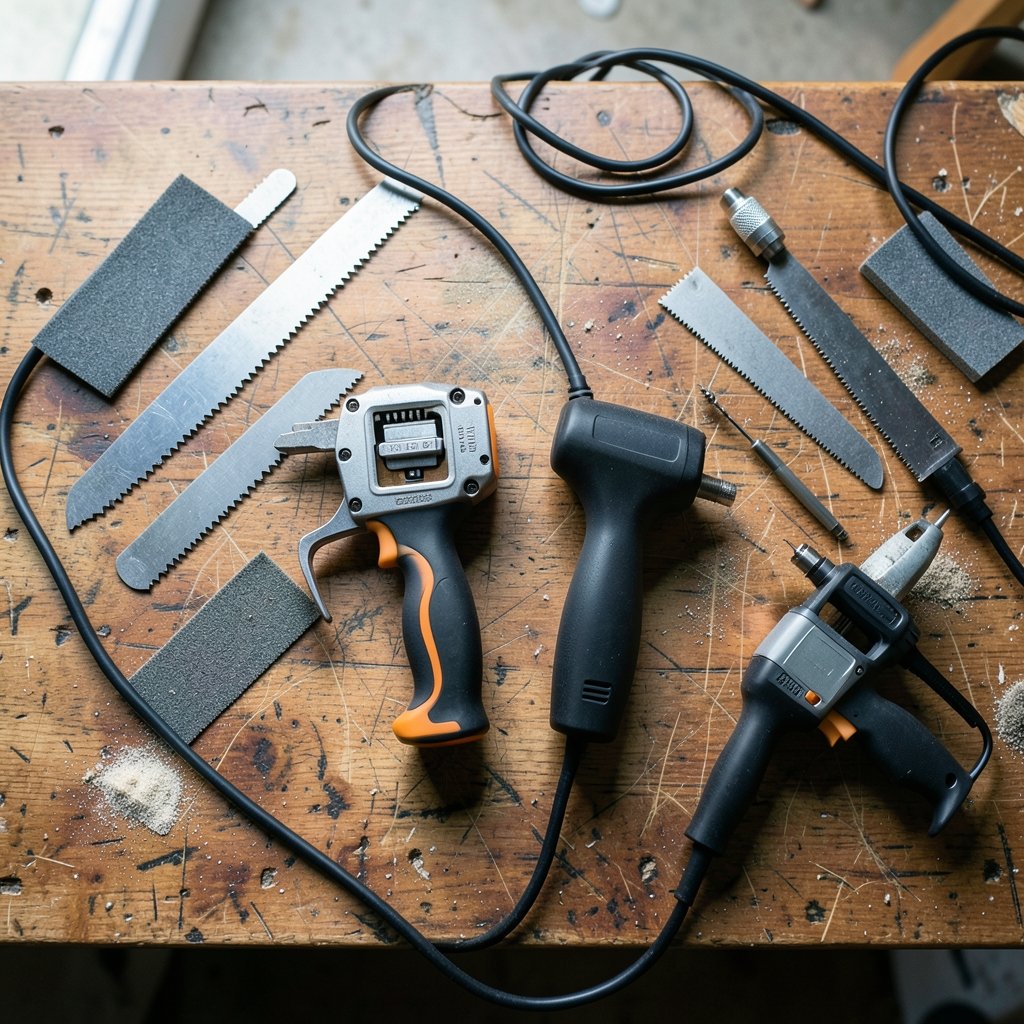
Quick Answer: Are expensive oscillating multi-tools worth it?
It depends. For daily trade work, a premium oscillating multi-tool can justify its price through lower vibration, faster blade changes, and better ergonomics, while occasional DIY users usually get more value from a mid-priced corded model plus a stock of quality blades.
Alternatives worth weighing include budget corded tools, which cut fine but buzz harder, and cordless bare tools, which add portability but tie buyers to a battery platform. A rotary tool or a compact reciprocating saw can also cover some jobs an oscillating tool handles.
Before buying, compare price, blade interface and running costs, vibration and noise levels, corded versus cordless power, ergonomics, and warranty support.
Why This Tool Category Splits Buyers So Sharply

Have you watched a carpenter cut a door casing flush to the floor in under a minute and wondered why anyone would pay four times more for a same-looking gadget? That question shapes the oscillating multi-tool debate. The tool works differently: it does not spin a blade or push a saw back and forth. It moves a small blade side to side through a tiny arc at very high speed. That motion lets it plunge straight into wood, cut flush against a surface, and reach corners no circular saw can touch.
The category was popularized by Fein, whose MultiMaster began life as a medical cast saw before tradespeople adopted it. Bosch and a crowd of rivals followed, and today the market runs from roughly $40 budget specials to premium models well past $200. The price gap is real, but the performance gap is narrower than the marketing suggests. The honest answer to whether the expensive tier pays off comes down to how often the tool leaves the drawer, what it cuts, and how much the buyer values their hands and ears.
What Extra Money Actually Buys
Strip away the branding and premium oscillating multi-tools tend to spend their price premium on a handful of concrete things. The first is vibration control. Oscillating tools rank among the noisiest, most vibration-heavy power tools on the market, and prolonged exposure to hand-arm vibration is a recognized occupational hazard. Premium models often use counterbalancing and better isolation to soften that buzz, which matters enormously for anyone holding the tool all day.
The second is blade-change speed. Cheap tools frequently require a hex key and a small ceremony to swap accessories. Better models use tool-free levers or quick-release interfaces, which saves minutes per job and, more importantly, reduces the temptation to keep using a dull blade.
The third is motor quality and sealing. Premium tools generally run cooler, survive dust better, and hold up under continuous load. The fourth is ergonomics: slimmer grips, better balance, and bodies that fit into tight cabinets without scraping knuckles.
What premium tools rarely deliver is dramatically faster cutting. Diminishing returns set in quickly in this category, and a $250 tool does not cut twice as fast as a $90 one. Buyers paying the premium are mostly buying comfort, convenience, and durability, not raw speed.
The Blade Bill Nobody Warns You About
Here is the mistake that catches almost every first-time buyer: they compare tool prices and forget the accessories. Oscillating blades wear out fast, especially in metal and hardwoods, and replacements typically cost anywhere from $5 to $20 or more each depending on type and brand. A weekend warrior who burns through a blade per project can easily spend more on blades in a year than the difference between a budget and a mid-range tool.
Blade interface compatibility compounds the issue. The older universal and OIS fittings still float around, but the modern Starlock system, developed by Bosch around 2016, standardizes mounting across brands and comes in tiered versions (Starlock, StarlockPlus, StarlockMax) matched to different power classes. Because the system is licensed to multiple manufacturers, buyers get a much wider menu of blades. That breadth matters: a tool with a proprietary or obscure fitting can become an orphan when the model is discontinued.
The practical rule is to budget for blades from day one. A sensible starting kit includes a couple of bi-metal blades for nails and general demolition, a fine-tooth wood blade, a scraper, and a sanding pad. Buying multi-packs and choosing the right blade for the material extends life far more than buying a fancier tool.
Corded vs. Cordless: Where the Money Goes
The corded-versus-cordless decision shapes the budget as much as the brand tier does. Corded models generally deliver consistent power and cost less. Cordless versions add genuine portability, which matters for plumbers and electricians working in crawlspaces and unfinished buildings, but they tie the buyer to a battery ecosystem and add cost if no batteries are already on the shelf.
| Factor | Budget corded | Premium corded | Cordless kit |
|---|---|---|---|
| Typical price band | Roughly $40 to $80 | Roughly $150 to $250+ | Roughly $100 to $300+ |
| Power consistency | Good | Excellent | Depends on battery |
| Vibration control | Basic | Usually better | Varies by model |
| Blade changes | Often keyed | Often tool-free | Often tool-free |
| Extra costs | Blades | Blades | Batteries, charger, blades |
| Best for | Occasional DIY | Daily trade use | Mobility and site work |
A useful comparison point: people weighing premium tools often do the same math on software subscriptions, asking whether paid tiers beat free ones. The same logic applies here, which is why guides like this breakdown of best AI tools under 20 month 2027 whats actually worth keep circling back to frequency of use as the deciding factor. A tool that runs weekly justifies investment; one that runs twice a year does not.
Who Should Actually Pay the Premium
The clearest case for premium is the professional who reaches for the tool most days. For a remodeler cutting door jambs, trimming installed baseboard, or undercutting casing for flooring, the combination of lower vibration, quick blade swaps, and a motor that shrugs off drywall dust translates directly into less fatigue and fewer breakdowns. Over a few years, that math works.
The second case is anyone with hand or wrist issues. Because hand-arm vibration is a documented hazard, a tool that transmits less of it is a health purchase as much as a convenience one. That argument holds even for hobbyists who use the tool in long weekend bursts.
For the occasional DIYer, the calculus flips. A mid-priced corded tool plus a generous blade assortment covers almost every household job: trimming door frames, cutting notches in drywall, slicing through stubborn PVC, and sanding in corners. The saved money buys better blades, and better blades matter more to cut quality than a fancier motor. The same frequency-over-features reasoning shows up in this roundup of best ai tools under 20 month 2027 whats actually worth, where occasional users are steered toward cheaper tiers for exactly the same reason.
Small gaming or maker projects follow a similar pattern. If the tool supports a side business building props or cabinets, the premium pays for itself in reliability. If it is a one-off project, it rarely does. That is the same conclusion reached in this analysis of whether paid AI tools for game development worth it small gaming project hold up for hobby-scale budgets: spend where volume justifies it, rent or borrow where it does not.
Common Mistakes That Waste Money
The first mistake is buying the cheapest tool and the cheapest blades. A bargain tool with soft blades produces ragged cuts, overheats, and convinces the owner the whole category is overrated. A modest tool with sharp, correct blades cuts cleanly and lasts years.
The second mistake is ignoring the blade fitting. Buyers who choose a tool with a proprietary mount discover later that replacement blades are scarce and pricey. Starlock-compatible tools avoid that trap, and checking compatibility before purchase takes two minutes.
The third mistake is buying cordless without batteries. A bare tool looks like a bargain until the charger and packs are added. Anyone already invested in a battery platform should stay inside it; anyone starting fresh should count the full kit price.
The fourth mistake is treating the tool as a saw replacement. Oscillating multi-tools excel at flush cuts, plunge cuts, and detail work. They are slow at ripping long boards, and forcing them into that role burns blades and motors alike. Matching the tool to the job protects both the budget and the tool.
How to Decide in Five Minutes
A quick decision process cuts through the marketing fog. First, count how often the tool will realistically be used in a year. Second, list the materials it will cut, since metal and hardwood chew through blades and demand more motor. Third, check the blade interface and price out a year of consumables. Fourth, handle the tool if possible, because vibration and grip matter more than spec sheets. Fifth, compare the full cost including batteries if going cordless.
Readers who enjoy structured comparisons will find the same checklist approach useful in this guide to top 7 ai knowledge base tools 2027 worth deploying, where total cost of ownership beats sticker price every time. The principle transfers directly: the purchase price is only the entry fee.
Conclusion
Expensive oscillating multi-tools are worth it for people who use them often, cut tough materials, or need to protect their hands from vibration. For everyone else, a mid-priced corded model paired with a healthy stock of quality blades delivers most of the performance for a fraction of the outlay. The tool’s magic is its flush-cutting, corner-reaching versatility, and even a budget version captures that. What the premium buys is comfort, speed of blade changes, and durability, and those only pay dividends with use. Buy for the work the tool will actually do, budget for blades from the start, and check the fitting before falling for a shiny body.
Frequently Asked Questions
Is a cheap oscillating multi-tool good enough for home DIY?
For most household jobs, yes. A budget corded tool handles door trimming, drywall notching, and PVC cutting fine. The catch is vibration and blade changes, which are rougher on cheap models. Pairing an inexpensive tool with quality blades closes most of the performance gap.
Do expensive oscillating multi-tools cut faster?
Not dramatically. Premium models mostly improve vibration control, ergonomics, blade-change speed, and motor durability. Cutting speed differences exist but are modest, and diminishing returns set in quickly. Buyers paying more are usually buying comfort and longevity rather than raw speed.
What is the Starlock blade system and why does it matter?
Starlock is a standardized blade-mounting interface developed by Bosch around 2016, with tiered versions matched to different power classes. It is licensed to multiple brands, so blades are widely available. Choosing a Starlock-compatible tool avoids being locked into scarce, expensive proprietary blades.
How much should I budget for replacement blades?
Plan for roughly $5 to $20 or more per blade depending on type and brand, and expect faster wear in metal and hardwoods. Over a year, blade costs can rival the price difference between budget and mid-range tools. Multi-packs and matching the blade to the material keep costs down.
Is cordless worth the extra cost over corded?
Only if portability matters. Cordless tools suit site work and tight spaces without outlets, but they add battery and charger costs unless a compatible platform is already owned. Corded models deliver consistent power for less money and suit most home workshops.
Can an oscillating multi-tool replace a circular saw?
No. Oscillating tools excel at flush cuts, plunge cuts, and detail work in tight spots, but they cut slowly along long boards. Forcing one into ripping duty burns through blades and overheats the motor. Treat it as a detail and finishing tool that complements a saw.