What if the $35 rotary tool on the shelf does almost everything the $120 one does, and the only real difference is how long it lasts and how many collets come in the box? That’s the uncomfortable truth about this corner of the power tool market. Rotary tools are simple machines: a motor, a chuck, a speed dial, and a housing. The gap between cheap and expensive is rarely about whether the bit spins. It’s about bearings, heat, runout, and whether you can still buy a replacement battery in two years.
This guide cuts through the spec-sheet noise. It covers what budget rotary tools genuinely do well, where they quietly fail, which specs matter and which are marketing filler, and how to spend your money so the tool survives longer than the first project.
What a budget rotary tool actually is
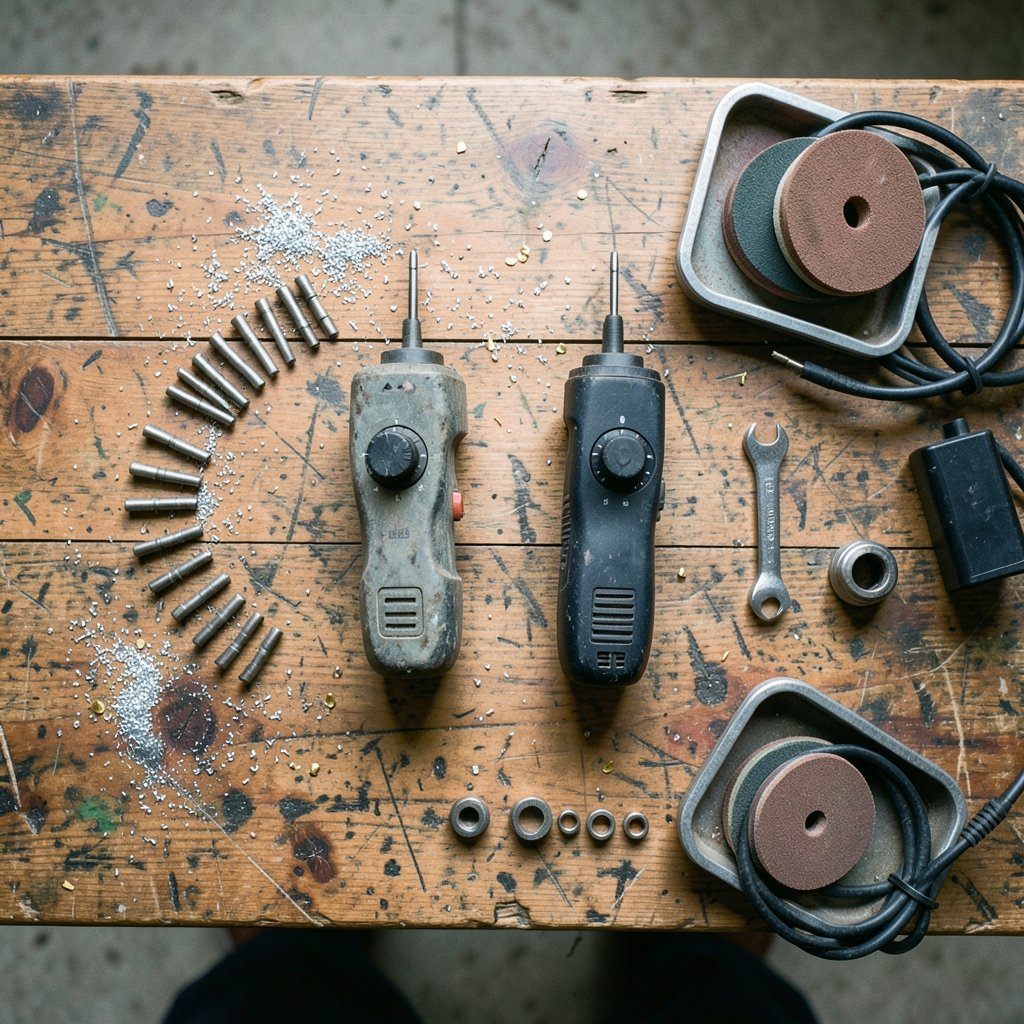
A rotary tool is a small handheld power tool with a spinning chuck that accepts bits for cutting, grinding, sanding, polishing, and drilling. The category was essentially created by Dremel, which introduced the first handheld high-speed rotary tool in 1932. That origin story matters for buyers because it explains the accessory ecosystem: most bits, cut-off wheels, and polishing heads are built around a 1/8-inch (3.2 mm) shank, which is why third-party accessory kits are broadly cross-compatible across brands.
Budget models split into three rough groups:
| Type | Typical voltage/power | Best for | Main trade-off |
|---|---|---|---|
| USB-rechargeable cordless | 3.6 V to 4.8 V | Light sanding, polishing, craft work | Low torque, stalls under load |
| 12 V cordless | 12 V | Trim work, light cutting away from outlets | Battery availability varies wildly |
| Corded | Roughly 120–170 W | Sustained cutting, grinding, drilling | Needs a cord, more noise |
Corded budget tools generally deliver more sustained torque than small cordless ones. That single fact should drive most buying decisions. If the tool will live on a bench, corded wins almost every time.
The specs that matter, and the ones that don’t

Manufacturers love big numbers. Here’s how to read them.
Speed range and the variable-speed dial
Budget rotary tools commonly offer variable speed in roughly the 8,000–35,000 RPM range, usually via a dial. Some very cheap models are single-speed, which is a genuine limitation, not a minor one. Different materials want different speeds: plastics melt at high RPM, hard metals need speed plus patience, and polishing compounds work best slow. A single-speed tool forces you to control everything through pressure, which is exactly how beginners burn through bits.
Look for a dial you can turn while the tool runs. Dials that only adjust before startup are annoying but workable.
Collets: the quiet dealbreaker
Most rotary tools use collets sized in inches (commonly 1/8″, 3/32″, 1/16″) or metric equivalents (3.2 mm, 2.4 mm, 1.6 mm). Budget tools often ship with fewer collets, which limits bit choice. A tool that only accepts 1/8″ shanks will reject a huge share of fine drill bits and detail burrs.
Practical advice: before buying, check the box contents for at least two collet sizes, and confirm you can buy individual collets separately. Collets are cheap. Being locked out of half the accessory market is not.
Wattage claims
Wattage figures vary widely between manufacturer listings and independent tests, and they rarely translate cleanly into real-world performance. A 170 W tool with good bearings will out-cut a 200 W tool with sloppy ones. Treat wattage as a rough class indicator, not a ranking.
Safety listing
Corded power tools sold in the US are typically listed to UL 62841-1, the US adoption of IEC 62841-1, the safety standard for hand-held motor-operated electric tools. Budget imports may lack recognized listing, and marketing copy is often unclear about it. This is a real differentiator, not paperwork. A recognized mark means the tool passed testing on insulation, grounding, and thermal limits. If you can’t find the mark on the tool or in the listing, assume it isn’t there.
Where budget tools genuinely hold up
Rotary tools are forgiving because the work is usually light and intermittent. A budget unit handles these jobs about as well as a premium one:
- Polishing and cleaning. Metal, plastic, and jewelry polishing is low-load work. Any tool with a decent speed range does it well.
- Light sanding. Drum sanders on wood and drywall patches don’t demand much torque.
- Cutting soft materials. Plastic, thin aluminum, and drywall with a cut-off wheel are all fair game.
- Engraving and detail work. Low load, high RPM, short bursts.
- Craft and hobby work. Where the tool runs for two minutes at a time, heat never becomes an issue.
The pattern is consistent: short, light, intermittent tasks are where budget rotary tools shine. The failures cluster around sustained cutting, hard metals, and anything that keeps the motor running hot for minutes at a stretch.
Where they fall apart, and how to spot it early
Three failure modes account for most budget rotary tool disappointments.
Bearing slop and runout. Cheap bearings let the shaft wobble. You notice it as vibration, a bit that wanders, and cut-off wheels that shatter more often than they should. Test for it in the store if you can: spin the tool at low speed and feel the housing. Excessive vibration is a warning sign, not a quirk.
Heat and duty cycle. Small motors in budget housings have short duty cycles. Running one continuously for ten minutes on metal will cook it. The fix is discipline: cut in short passes, let the tool idle and cool, and never block the vents.
Proprietary batteries with no spares. Cheap cordless rotary tools often use proprietary or non-standard cells and lack spare-battery availability, which shortens usable life dramatically. A cordless tool with a sealed, unreplaceable battery is a disposable tool. Before buying cordless, search for the replacement battery as a separate product. If you can’t find one for sale, walk away.
How to buy well on a small budget
A few habits separate buyers who get years of service from buyers who get three weekends.
- Buy corded if the tool stays home. More sustained torque, no battery decay, no charger to lose.
- Confirm collet sizes in the box. Two or more sizes, and check that singles are sold separately.
- Check the safety mark. Look for a recognized listing on the tool body or in the product documentation.
- Budget for accessories separately. The tool is half the purchase. A decent bit set, cut-off wheels, and a mandrel matter more than the motor’s badge.
- Skip the biggest accessory bundle. Giant kits pad the box with low-quality bits. A smaller, better set plus a few quality consumables beats 200 pieces of filler.
- Verify battery availability before going cordless. Search for the spare part by name.
- Keep receipts and test early. Run the tool through a full speed sweep in the first week, while returns are still easy.
Common mistakes that shorten a budget tool’s life
These come up again and again, and most are avoidable.
- Pressing too hard. Rotary tools cut with speed, not force. Pressure slows the bit, generates heat, and wears the motor. Let the bit do the work.
- Using the wrong bit for the material. A wood bit on metal glazes over and overheats. Match the accessory to the job.
- Running full speed on plastics. Friction melts the material and gums the bit. Slow down.
- Skipping eye and hearing protection. Rotary tools are loud, and cut-off wheels fail. Hearing protection is commonly recommended, and safety glasses are non-negotiable.
- Ignoring the vents. Covered vents equal cooked motor. Hold the tool so air flows.
- Storing it with a bit chucked tight. Collets deform over time under constant compression. Loosen between sessions.
If you’re managing a broader tool or software budget alongside this purchase, the same discipline applies: spend on the parts that do the work, not the packaging. The logic in this breakdown of cloud budgeting tools that actually stop overspending maps surprisingly well onto workshop spending.
Corded vs cordless: the honest comparison
| Factor | Budget corded | Budget cordless (3.6–12 V) |
|---|---|---|
| Sustained torque | Stronger | Weak, stalls under load |
| Portability | Tied to an outlet | Genuinely free |
| Lifespan | Long, few wear parts | Limited by battery |
| Spare parts | Brushes, cords available | Battery often unavailable |
| Noise | Louder | Quieter |
| Best use | Bench work, cutting, grinding | Craft, polish, quick fixes |
For most buyers, the corded budget tool is the better first purchase. Add a small USB-rechargeable unit later for light craft work if portability turns out to matter.
Matching the tool to the job
A rotary tool is rarely the only tool you need, and knowing when to reach for something else saves both money and frustration. For heavy material removal, an angle grinder is the right answer. For precision drilling in wood, a drill press beats any rotary tool. Rotary tools earn their place in tight spaces, detail work, and mixed-material jobs where swapping one bit is faster than swapping one machine.
That same “right tool for the job” thinking shows up everywhere. Teams comparing software often discover the cheaper option wins on specific tasks and loses on others, which is exactly the pattern in this look at Canva alternatives where other tools actually win. The lesson transfers: buy for your actual workload, not the category leader’s reputation.
Accessories: where the real money goes
The tool is the cheap part. Consumables are where budgets quietly drain.
Cut-off wheels are the biggest offender. Fiberglass-reinforced wheels last far longer than the thin unbranded ones bundled in cheap kits, and they fail more predictably. Buy them in packs. Mandrels wear out and should be treated as consumables too. Sanding drums lose grit fast on wood. Polishing wheels load up and need cleaning.
A sensible starter kit for a budget rotary tool:
- One pack of reinforced cut-off wheels
- Two mandrels
- A small assortment of sanding drums in two grits
- One felt polishing wheel plus compound
- A set of small drill bits in the shank size your collets accept
- One carbide burr for deburring metal
That list costs less than a premium tool and covers most real jobs.
Maintenance that doubles a budget tool’s lifespan
Budget tools respond well to basic care. Blow dust out of the vents after each session, especially after sanding. Check the collet for burrs and replace it if bits wobble. Inspect the cord for nicks on corded models. On cordless units, don’t leave the battery fully drained for long periods, and charge it before storage rather than after.
One more habit worth building: keep the tool’s manual. Budget brands change model numbers constantly, and the manual is often the only place the collet sizes and duty cycle are documented. If you’re tracking purchases across a household or small shop, the approach in this guide to cloud cost management tools that actually cut your bill is a useful reminder that small recurring costs, like consumables, deserve the same scrutiny as big ones.
Conclusion
The best budget rotary tool isn’t the one with the biggest number on the box. It’s the one with a variable-speed dial you can reach, at least two collet sizes, a recognized safety listing, and a power source you can actually live with. Corded models deliver more sustained torque for bench work; small cordless units earn their keep for light craft tasks. Everything else is detail.
Spend deliberately: buy the tool that fits your real workload, put the savings into quality consumables, and treat the motor with a little respect. A $40 rotary tool cared for properly will outlast a neglected $120 one, and it will do it while you’re still learning what all the bits are for. That’s the whole trick. Buy sensibly, cut at speed instead of pressure, and let the tool cool down. The rest is practice.
Frequently Asked Questions
Are cheap rotary tools worth buying?
Yes, for light and intermittent work. Polishing, sanding, engraving, and cutting soft materials are all low-load jobs where a budget tool performs close to a premium one. The calculus changes for sustained cutting and hard metals, where heat and bearing quality become the limiting factors.
What size collet do most rotary tool bits use?
The common accessory shank diameter for the category is 1/8 inch (3.2 mm), which is why many third-party bit sets are cross-compatible across brands. Budget tools often ship with fewer collets, so confirm the box includes multiple sizes before buying.
Is a corded or cordless budget rotary tool better?
Corded tools generally deliver more sustained torque and have fewer wear parts, making them the better choice for bench work and cutting. Cordless 3.6 V to 12 V models are convenient for craft work but stall under load, and cheap cordless units often lack spare-battery availability.
What speed should I use on a rotary tool?
Budget rotary tools commonly offer variable speed in roughly the 8,000–35,000 RPM range. Use lower speeds for plastics and polishing, and higher speeds for hard materials with light pressure. Cutting is done with speed, not force, so pressing harder mostly generates heat.
How can I tell if a budget rotary tool is safe?
Corded power tools sold in the US are typically listed to UL 62841-1, the US adoption of IEC 62841-1 for hand-held motor-operated electric tools. Budget imports may lack recognized listing, and marketing copy is often unclear. Look for the mark on the tool body or in the product documentation.
How long should a budget rotary tool last?
Lifespan depends mostly on duty cycle and battery availability. A corded budget tool used in short passes with clean vents can last years. A cordless unit with a sealed, non-replaceable battery is effectively disposable once the cell degrades, which is why checking for spare batteries before purchase matters so much.