
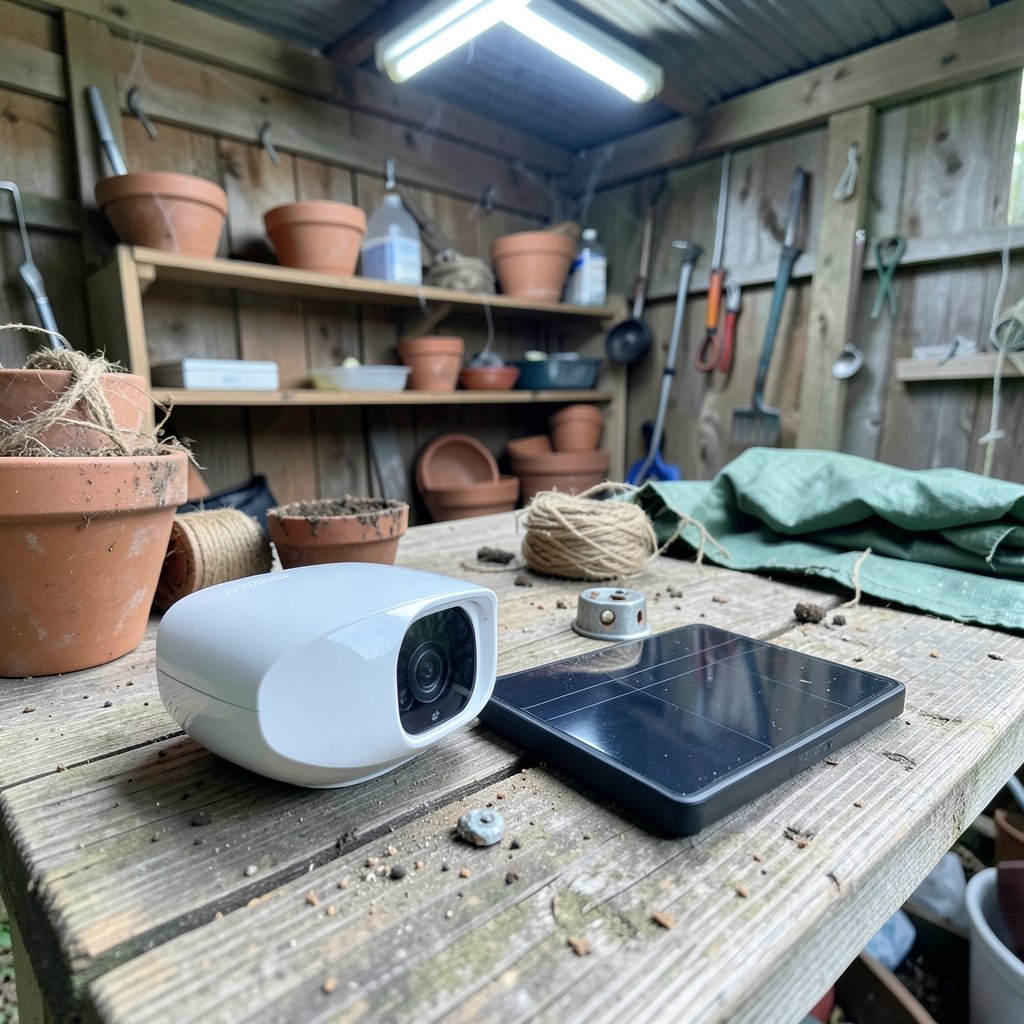
What if the camera guarding your driveway dies at 2 a.m. because its battery drained, its Wi-Fi dropped, or its app quietly moved motion alerts behind a paywall? That is the real test of a wireless outdoor camera, and it is the question most buyers forget to ask until after installation. The 2027 crop of wireless cameras is broader than ever, spanning solar-powered 4K units, Wi-Fi 6 long-range kits, and budget 2K models with local storage. This roundup narrows the field to eight specific options, explains who each one suits, and flags the limitation that matters before you buy.
Comparison Table: Wireless Outdoor Cameras at a Glance
| Camera or System | Resolution | Power | Standout Strength | Main Tradeoff |
|---|---|---|---|---|
| Lybuorz 5G Solar Camera | 4MP | 8000mAh battery + solar | True wire-free setup with WiFi 6 dual-band | Solar charging depends on sunlight |
| 2K Solar 4-Pack System | 2K | Solar + battery | Pan-tilt coverage across four cameras | 2K, not 4K, detail |
| Tapo SolarCam C402 Kit | 1080p | Solar + battery | Local microSD storage, easy placement | Lower resolution than rivals |
| Arlo four-camera kit | 2K | Battery | Deep smart-home integration | One-month Arlo Secure trial only |
| AlkiVision solar PTZ | Not stated | Solar-assisted | 360° coverage where wiring is impractical | Struggles in shaded spots |
| Kasa 2K outdoor camera | 2K | Wired/battery options | Subscription-free AI features | 5GHz-only networks limit placement |
| Ring Floodlight Cam Wired Plus | Not stated | Wired | Familiar lighting and Alexa controls | Not truly wireless |
| PoE+ 4K PTZ dome | 4K | PoE+ | 20x optical zoom, 328 ft IR | Requires a PoE+ switch and cabling |
1. Lybuorz 5G Solar Outdoor Camera: Best for Genuinely Wire-Free Installation
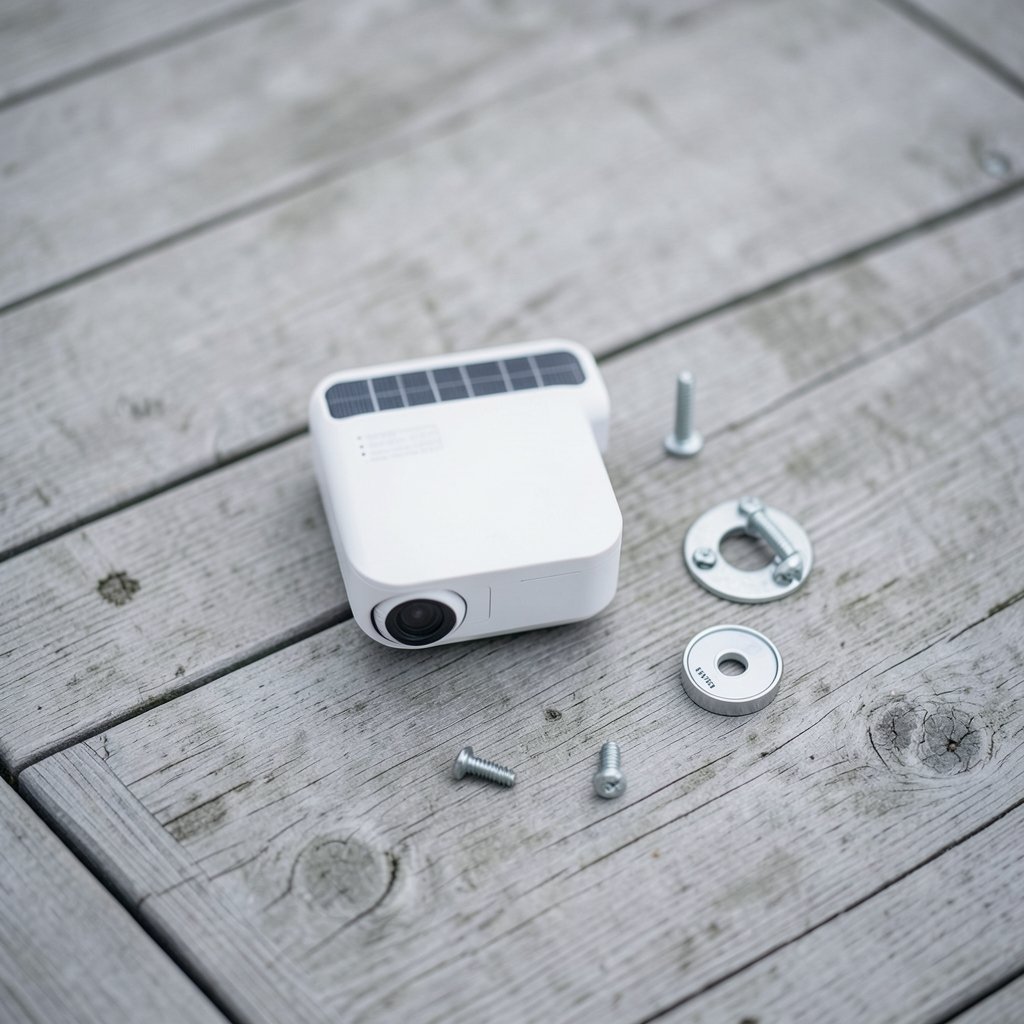
The Lybuorz 5G Solar Outdoor Wireless Security Camera is built for people who have no outlet near the mounting spot and no appetite for an electrician’s bill. Its 8000mAh battery paired with a solar panel means no wiring and no frequent recharging, and WiFi 6 dual-band support keeps the connection steadier than older single-band radios manage. Setup runs through Bluetooth and a QR code, which is about as painless as pairing gets.
Video lands at 4MP HD with both infrared and full-color night vision, and the smart PIR sensor combines with AI detection to cut down on nuisance alerts by identifying human movement specifically. That matters more than raw resolution: a camera that pings you every time a raccoon crosses the lawn gets ignored within a week.
The limitation is the one every solar camera shares. Charging depends on direct sunlight, so a north-facing wall under a deep eave will leave you hauling the unit indoors to top it up. If shade is unavoidable at your mounting point, a security camera infrared reflection fix guide is worth reading before you commit, because glare and placement problems compound quickly outdoors.
2. 2K Solar Four-Camera System: Best for Covering a Whole Property
One camera rarely covers a full yard, and this four-pack system tackles that problem directly. Each unit offers 2K color night vision with a built-in spotlight, remote pan-tilt-zoom through the app, and IP65 weatherproofing. The detachable solar panel keeps each camera topped up, and the 360° pan-tilt range means you can sweep a wide area rather than staring at a fixed slice of fence.
The PIR plus AI human detection reduces false triggers, and real-time two-way talk lets you speak to a delivery driver without opening the door. Storage is flexible, with local and cloud paths available, and Alexa compatibility ties it into a broader smart home.
Here is the honest catch: 2K is fine for recognizing a face at 20 feet and weak for reading a license plate at 60. If plate capture matters, this is not the kit. Also budget time for mounting four cameras properly rather than rushing the job in an afternoon.
3. Tapo SolarCam C402 Kit: Best Budget Solar Option With Local Storage
The Tapo SolarCam C402 Kit suits buyers who want outdoor coverage without routing power, and it does so at the entry end of the market. The included solar panel and built-in battery make placement far easier than a plug-in camera like the Blink Mini 2. Person detection, activity zones, and two-way audio cover the essentials for watching an entry or a yard.
Two details make it interesting. First, full-color night vision shows more detail than a basic monochrome view. Second, microSD support gives you a local recording option that does not depend on the cloud, which is the single best way to avoid a subscription. That theme runs through the best outdoor security cameras without subscription, and it is worth understanding before you pick a brand.
The tradeoff is resolution. At 1080p, it offers noticeably less detail than the 2.5K Wyze Cam v4, so it is a coverage camera rather than an identification camera. Solar charging also depends on direct sunlight and moderate temperatures.
4. Arlo Four-Camera Kit: Best for Smart-Home Integration
For households already deep in a connected ecosystem, this four-camera Arlo kit offers 2K coverage across the property with broad smart-home integration. It is the pick for people who want cameras to trigger lights, routines, and voice assistants rather than sit in a separate app.
The catch is the trial. The kit includes one month of Arlo Secure, and after that, features many buyers assume are standard may require a plan. Check exactly what stays free before buying. If 4K detail is the priority instead, the Arlo Ultra is the better match within the same family.
5. AlkiVision Solar PTZ: Best for 360° Coverage in Awkward Spots
The AlkiVision is a solar-assisted 360° pan-tilt camera aimed at locations where wiring is genuinely impractical. Its appeal is simple: one unit sweeps an entire side yard instead of three fixed cameras each watching a narrow cone.
The limitation is stated plainly by reviewers, and it deserves repeating. This camera is a poor fit for shaded mounting locations, for 5GHz-only networks, and for buyers who insist on subscription-free AI features. If any of those three describes your setup, look elsewhere.
6. Kasa 2K Outdoor Camera: Best for Subscription-Free AI
The Kasa 2K outdoor camera with night vision earns its slot for one reason: it appeals to buyers who want subscription-free AI features and have a shaded mounting location. That combination is rarer than it should be. Most budget cameras either charge for person detection or demand strong sunlight.
The constraint is network compatibility. On 5GHz-only networks, or where weather resistance and placement flexibility matter most, this camera is not the right answer. IP67 weather resistance and two-way talk suit exposed outdoor locations, so match the model variant to your climate before ordering.
7. Ring Floodlight Cam Wired Plus: Best for Ring and Alexa Households
Strictly speaking, this one breaks the wireless rule, and it earns a place anyway because so many buyers end up here. The Ring Floodlight Cam Wired Plus is a straightforward choice for anyone already using Ring or Alexa who wants reliable wired lighting and familiar controls. There is no battery to charge and no solar panel to angle.
The honest framing: if you truly need wireless, skip it. If you have an outdoor junction box and value a light that doubles as a deterrent, it is the least fussy option on this list.
8. PoE+ 4K PTZ Dome: Best for Long-Range Detail and Wired Reliability
This 4K outdoor PTZ dome camera uses PoE+ for both power and data, carries a 20x optical zoom lens, and pushes infrared night vision out to 328 feet. The aluminum housing is IP66 rated, it rotates a full 360 degrees with 90 degrees of downward tilt, and H.265 compression keeps bandwidth sane.
It is the only option here built for reading detail at distance, and it is the one that punishes sloppy planning. It weighs about four pounds, needs a PoE+ switch delivering at least 25W per port, and ships as a single-camera kit. Before buying, it is worth settling the nvr vs dvr security cameras question and reading up on PoE versus Wi-Fi reliability, wiring, and cost, because the cabling decision shapes the entire installation. For anyone weighing a broader wired build, that comparison is the place to start.
How to Choose Among These Cameras
Work through these in order. Most buying mistakes happen because people start with resolution and never reach step three.
- Decide on power first. Solar suits open, sunny mounting spots. Battery suits temporary or renter-friendly installs. PoE suits permanent setups where you can run cable once and forget it.
- Match resolution to distance. 1080p identifies a person at your door. 2K covers a yard. 4K with optical zoom reads detail at 300 feet.
- Check what stays free. Confirm local storage support (microSD or an NVR) before assuming cloud clips are included.
- Verify your Wi-Fi band. Some cameras are 5GHz-only, which shortens usable range through exterior walls.
- Plan for weather and shade. IP65 handles rain; IP66 and IP67 handle sustained exposure. Shade kills solar.
- Count the cameras you actually need. A four-pack often costs less than three singles, but only if you have four sensible mounting points.
If your plans extend beyond cameras into connected assistants, the same due diligence applies to ai chatbot security: nine questions to ask before buying, and to picking among the best AI chatbot platforms for enterprises with security first. Buyers comparing cloud-dependent camera ecosystems face identical questions about data handling and account security.
Conclusion
The best wireless outdoor security camera in 2027 depends less on the spec sheet than on your mounting spot, your sunlight, and your patience for subscriptions. The Lybuorz wins for genuinely wire-free installs, the 2K solar four-pack wins for whole-property coverage, the Tapo C402 wins on budget and local storage, and the PoE+ dome wins wherever detail at distance is non-negotiable. Pick the camera that fits your wall and your Wi-Fi, not the one with the biggest number on the box.
FAQ
Are wireless outdoor security cameras reliable in 2027?
Reliability has improved mainly through better radios and solar power. WiFi 6 dual-band support, as on the Lybuorz, keeps connections steadier, and 8000mAh batteries paired with solar panels reduce the charging treadmill. The weak points remain shade, distance through exterior walls, and 5GHz-only models that shrink usable range.
How long do solar security camera batteries actually last?
It depends on sunlight and alert volume. An 8000mAh battery with a solar panel can run continuously in good sun, but shaded mounts will need manual recharging. Reviewers consistently flag that solar charging depends on direct sunlight and moderate temperatures, so treat shade as a disqualifying factor rather than an inconvenience.
Do I need a subscription to record video?
Not necessarily. The Tapo SolarCam C402 Kit supports microSD, and the four-camera 2K solar system offers flexible local storage. The Arlo kit, by contrast, includes only a one-month Arlo Secure trial. Always confirm what remains free after any trial ends before you buy.
Is 2K good enough for an outdoor camera?
For most homes, yes. 2K color night vision with a spotlight, as on the four-camera solar system, is enough to recognize a person in a yard or at a door. It falls short for reading license plates at distance, where a 4K PTZ with 20x optical zoom is the better tool.
Can I mix wireless cameras with a wired system?
Yes, and many households should. A PoE+ 4K PTZ dome can anchor long-range coverage on a PoE+ switch while solar cameras handle spots where cable cannot reach. Just remember that PoE+ ports need at least 25W each, and that the dome itself weighs around four pounds, so mounting surfaces need to be solid.
What is the biggest mistake buyers make with wireless cameras?
Buying on resolution alone. A 4K camera in deep shade with a weak Wi-Fi signal performs worse than a 1080p unit with clean line of sight and steady power. Settle power, sunlight, band compatibility, and storage first, then compare megapixels.



