
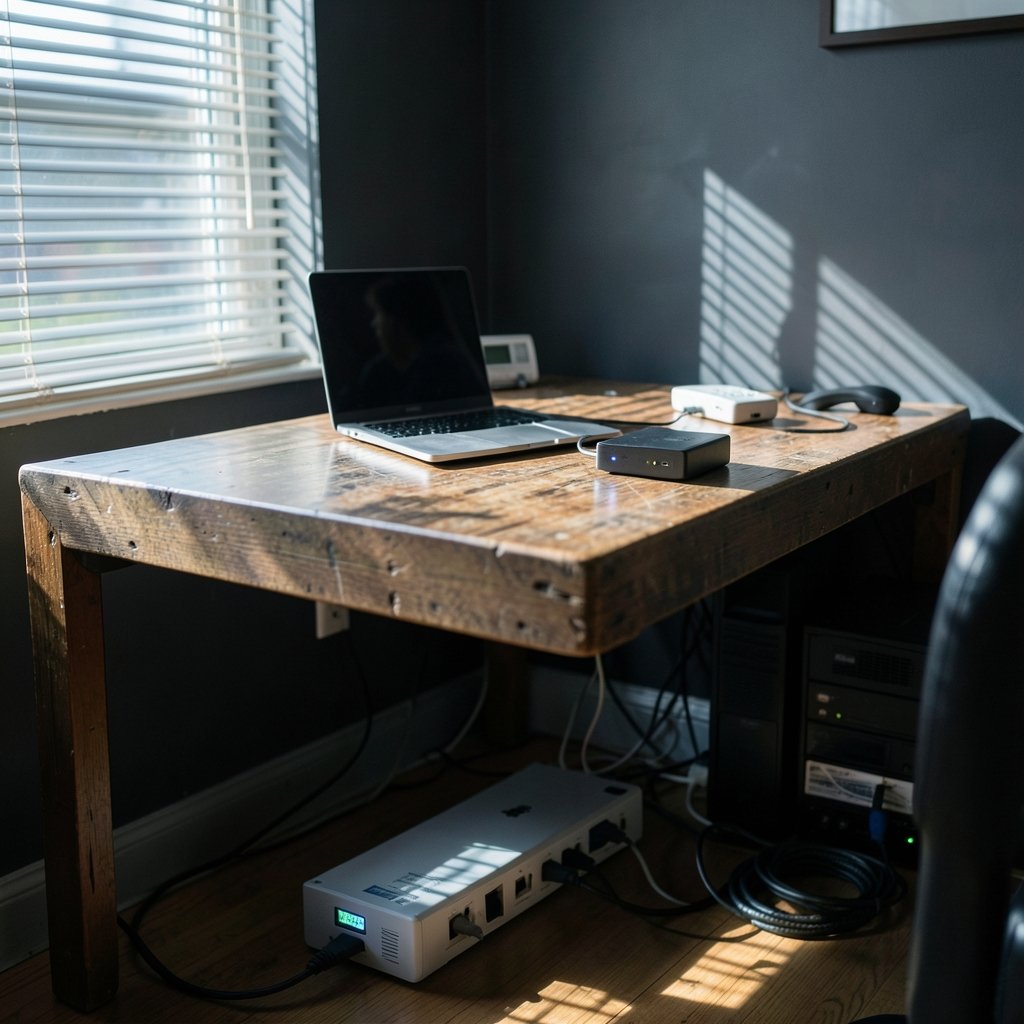
What if the most useful feature on your next power strip isn’t the joule rating at all, but the clock inside it? That’s the quiet shift happening in desk and home-office gear: programmable surge protectors that cut power on a schedule, shut off automatically when something goes wrong, or hand control of a device to a master switch. The trick is that “programmable” means wildly different things depending on the model, and a few popular picks only half deliver.
Below is a shortlist of specific options worth comparing for a 2027 setup, followed by a plain-language guide to picking the right one. (10 best ai chatbots gpt 5 claude under hood 2027)
Quick Comparison: Six Programmable Surge Protectors at a Glance
| Product | Best for | Programmable feature | Outlets | One real limitation |
|---|---|---|---|---|
| Belkin 12-Outlet with 4320 J | Home office and media setups | Automatic protection plus phone/coax line protection | 12 | No timed scheduling |
| BN-LINK 8 Outlet with Mechanical Timer | Rooms needing timed control | 4 timed outlets, 4 always-on | 8 | No smartphone control or remote access |
| APC Surge Protector (4.1 rating) | Small hydroponic or grow-light setups | Timer function on all outlets | 4 | Only one shared schedule for every outlet |
| CyberPower P705G | Energy-saving desk setups | Master switch kills standby draw | 7 | Fewer outlets than larger strips |
| TROND 4000J | Big multi-device desks | High joule ceiling across many outlets | 10 | Not a true scheduler |
| Bits Limited ECG-7MVR | Always-on appliances that need a timer | Timer-based control | 7 | Niche availability |
1. Belkin 12-Outlet with 4320 J: The Best All-Rounder for a Tech-Heavy Desk
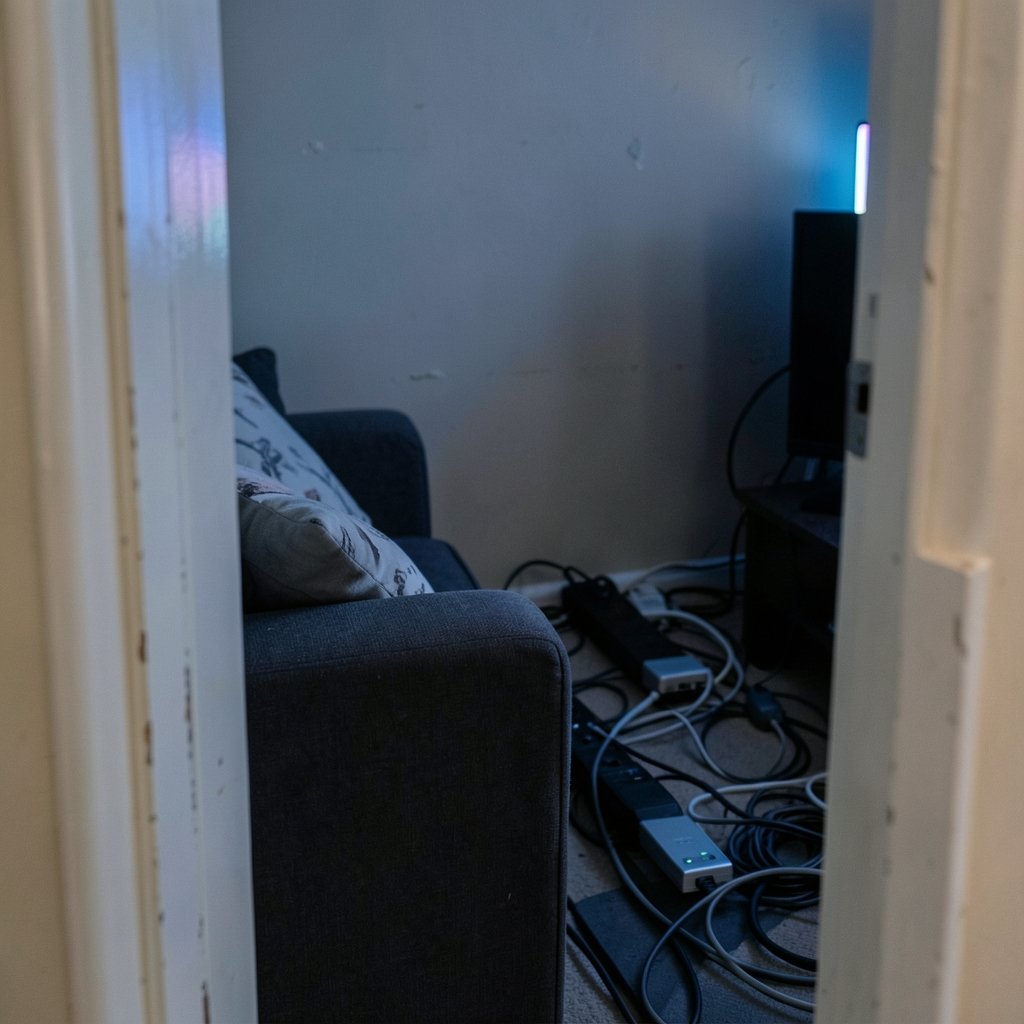
If the goal is protecting a lot of expensive gear at once, this is the model most buying guides keep circling back to. It carries a 4320-joule rating, which is the highest in this group, and it adds phone-line and coax protection on top of standard outlet surge suppression. That combination matters if a desk has a router, a monitor, a desktop tower and a cable box all sharing one strip.
Who it suits: anyone running a home office or media corner where the priority is raw protection rather than scheduling.
What it does well: it spreads protection across twelve outlets, so you’re not daisy-chaining strips, and the line protection covers the coax and phone connections that surge strips usually ignore.
The limitation: there’s no timer and no app. The “automatic” part refers to protection kicking in during unsafe conditions, not to a schedule you set. If you specifically want lights or a pump to switch on at 7 a.m., this isn’t that product.
2. BN-LINK 8 Outlet with Mechanical Timer: The Honest Scheduler
This is the clearest example of a genuinely programmable strip in the affordable tier. Four outlets run on the timer and four stay always-on, and all eight sit behind the surge protection and circuit breaker. The dial uses updated black pins that are easier to read than earlier versions, and each row has a colored LED showing when that row has power.
Who it suits: plant rooms, aquariums, holiday lighting, or anyone who wants a lamp and a charger to follow a daily rhythm without touching a phone.
What it does well: the split between timed and always-on outlets is the feature people actually use. You can schedule a grow light while keeping a router live around the clock.
The limitation: it’s mechanical. There’s no smartphone control and no remote access, so you set the pins by hand and change them by hand. That’s fine for a fixed routine and annoying for anything that shifts weekly.
One practical note from experience: label the timed outlets with tape before you plug anything in. The most common mistake with strips like this is plugging a router into a timed row and wondering why the Wi-Fi drops every evening at the same time.
3. APC Surge Protector: Best for Small Grow-Light Setups
The APC model is a hybrid: it works as a surge protector and as a timer, which makes it useful when you have several grow lights or a small hydroponic garden that needs a consistent light cycle. It has four outlets, and all of them can share the same schedule. It also carries a lifetime warranty and a protection policy worth up to $50,000 in connected-equipment coverage.
Who it suits: small indoor gardens and anyone with a handful of devices that should all switch together.
What it does well: reliability is the selling point here, along with the warranty backing that most budget strips don’t offer.
The limitation: every outlet follows one schedule. That’s perfect for four identical lights and frustrating the moment you want one outlet on a different cycle. For anything larger than a compact garden, the single-schedule design becomes the bottleneck.
If your setup is genuinely small, this is a tidy answer. If it’s growing, plan for a strip with independent rows instead.
4. CyberPower P705G: The Energy-Saving Master Switch
The P705G takes a different approach to “programmable.” Instead of a clock, it uses a master switch that cuts standby power to slave outlets when the main device powers down. It packs seven outlets and a 2100-joule rating into a compact body, with overload protection built in.
Who it suits: desks where a monitor, speakers and lamp should all die when the PC does.
What it does well: it eliminates phantom load without you thinking about it. Plug the PC into the master outlet and the accessories into the slave outlets, and the strip does the rest.
The limitation: it’s a follower, not a scheduler. There’s no time-based programming, so it can’t turn a pump on at noon while you’re away. It also offers fewer outlets than the twelve-outlet Belkin, which matters on a crowded desk.
5. TROND 4000J: The High-Capacity Option
With ten outlets and a 4000-joule rating, the TROND strip is aimed at people who own a lot of gear and want headroom. It’s a straightforward surge protector with a very high capacity ceiling, which makes it a sensible pick for a desk with a desktop, two monitors, speakers, a dock and a charging brick or two.
Who it suits: multi-device desks and small studios where outlet count and joule capacity are the deciding factors.
What it does well: the combination of ten outlets and 4000 joules is generous for the price tier these strips usually occupy.
The limitation: it isn’t truly programmable. If scheduling is your reason for shopping, look at the BN-LINK or the APC instead. This one is about capacity, not control.
6. Bits Limited ECG-7MVR: The Niche Timer Strip
The ECG-7MVR shows up in roundups of timer-equipped protectors, and it’s the kind of product you buy for one specific job rather than for a whole desk. It combines surge protection with timer control in a seven-outlet format.
Who it suits: appliances that need a repeating on/off cycle, like a pump, a fan or a charging station.
What it does well: it fills a gap between a plain timer and a full surge strip, which is exactly what some setups need.
The limitation: it’s a niche product with narrower availability than the big-brand picks, so stock and support can be hit or miss. Check the seller carefully before ordering.
A Word on the Wider Power Setup
A programmable strip only protects what’s downstream of it. If the outlet itself is the weak link, or if the strip sits on a circuit with a failing breaker, scheduling features won’t save your gear. It’s worth pairing a new strip with a look at the fundamentals, including the best surge protectors for a home office that actually protect your equipment, and checking that your desk’s power layout isn’t fighting itself. The same logic applies to software: just as a strip’s “privacy mode” claims deserve scrutiny, so do claims about what a surge protector can and can’t stop, which is why comparisons like this breakdown of Cursor vs VS Code telemetry privacy mode really protect 2027 are useful for spotting marketing language that overpromises.
How to Choose a Programmable Surge Protector
Once you’ve scanned the shortlist, narrow it down with these questions.
- Decide what “programmable” means to you. A timed schedule, a master-switch follower, and automatic shutoff are three different features. Write down which one you actually need before comparing specs.
- Count outlets by type, not total. A strip with eight outlets and only four timed rows gives you four usable scheduled slots. Match the split to your devices.
- Check the joule rating against your gear. Higher joules mean more absorption capacity before protection wears out. A 4000-joule strip and a 2100-joule strip are not interchangeable for a loaded desk.
- Look for connected-equipment warranties. Some brands back their strips with coverage for damaged devices. Read the terms, because claims are rarely simple.
- Confirm the plug type and cord length. A 3-foot cord and a 4-foot cord change where the strip can physically sit, and a strip that doesn’t reach is a strip you won’t use properly.
- Think about what happens after a power event. Many strips sacrifice themselves to protect your gear. A strip with an indicator light tells you when protection has expired; one without leaves you guessing.
The most common mistake buyers make is treating every strip on a roundup as interchangeable. They aren’t. A grow-light timer, a desk master switch and a twelve-outlet protector solve three unrelated problems, and buying the wrong one means living with a feature you don’t use while missing the one you needed.
Conclusion
The best programmable surge protector for 2027 depends entirely on which kind of control you’re after. For sheer protection across a crowded desk, the Belkin 12-outlet with 4320 joules is the safest default. For genuine scheduling on a budget, the BN-LINK’s four timed and four always-on outlets are hard to beat. Small grow setups should look at the APC, energy-conscious desks at the CyberPower P705G, capacity hogs at the TROND, and niche timer jobs at the Bits Limited. Pick the feature first, then the product, and the shortlist above will do the rest.
Frequently Asked Questions
What does “programmable” mean on a surge protector?
It can mean three different things: a built-in timer that switches outlets on and off on a schedule, a master switch that cuts power to accessory outlets when a main device shuts down, or automatic shutoff that triggers during unsafe conditions. Always check which one a product actually offers before buying.
Is a higher joule rating always better?
Generally, more joules mean more absorption capacity, but it isn’t the only factor. Outlet count, the split between timed and always-on rows, cord length and connected-equipment warranties all affect real-world usefulness. A 4000-joule strip with the wrong outlet layout can still be a poor fit.
Can I plug a router into a timed outlet?
You can, but you probably shouldn’t. Timed rows cut power on schedule, which will drop your connection at the same time every day. Use the always-on rows for routers, modems and anything that needs continuous power.
Do programmable surge protectors work with smart home devices?
It depends on the model. The BN-LINK mechanical timer has no smartphone control or remote access, so it can’t integrate with an app. Other strips offer master-switch behavior instead of scheduling. Check the product page for the specific control method before assuming app support.
How long does surge protection last?
Protection degrades over time as the strip absorbs surges, and many units sacrifice themselves to protect connected gear. Indicator lights on better strips show when protection is still active. If the light is out, replace the strip rather than trusting it with expensive electronics.
Should I replace an old surge protector with a programmable one?
Only if you need scheduling or master-switch control. If your current strip still shows active protection and has enough outlets, the upgrade buys convenience rather than safety. Replace it when the protection indicator fails or when your device count outgrows it.



