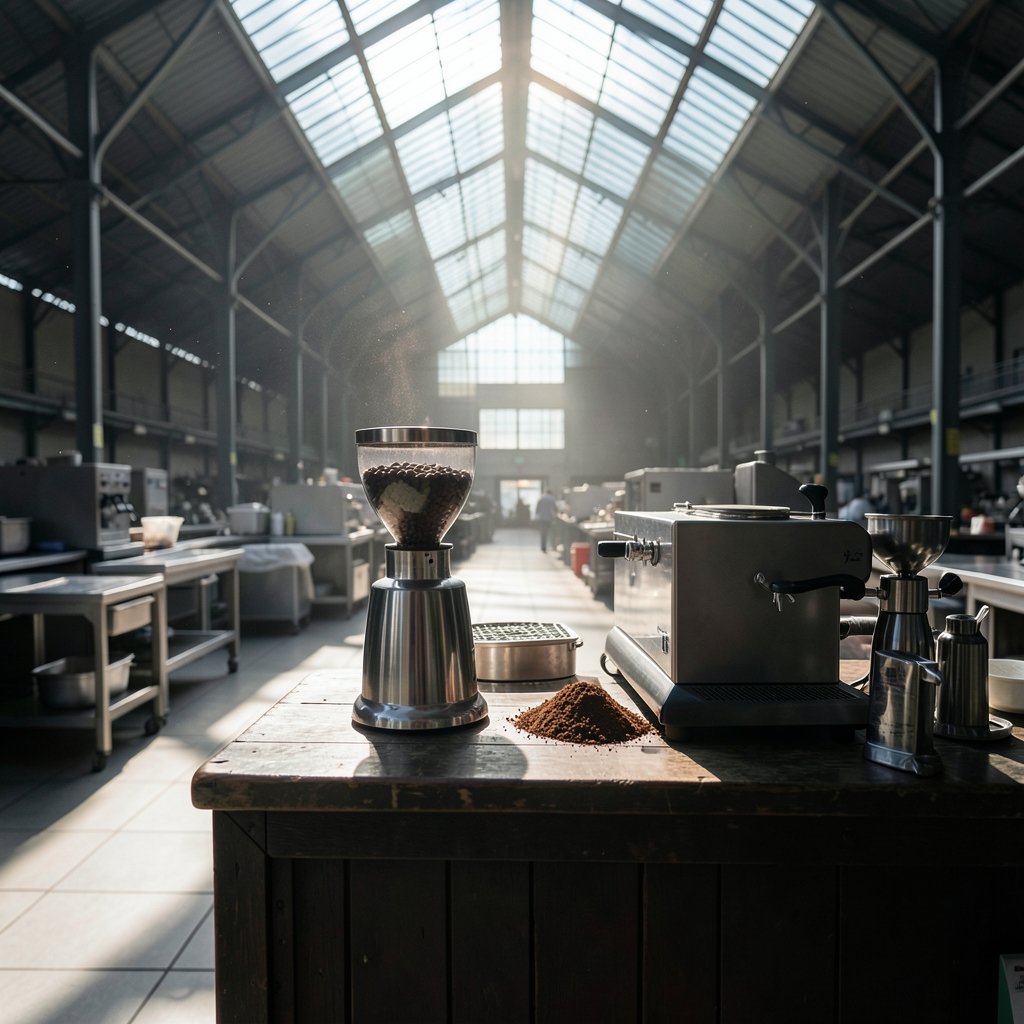
What if the weakest link in your espresso setup isn’t the machine you spent months researching, but the grinder sitting quietly next to it? Baristas repeat this until it sounds like a slogan: the grinder matters as much as the machine. An excellent espresso machine paired with a poor grinder produces inconsistent shots. A simple machine with a good grinder will surprise you. That single idea shapes everything below.
Espresso extracts in roughly 25 to 30 seconds at 9 bar, with water pushing through a very fine, compact puck. If the particles are irregular, water takes the path of least resistance. Part of the coffee over-extracts into bitterness and astringency; another part stays under-extracted, sharp and thin. Good grinding is about consistency and control at the fine end, not raw power.
This roundup skips the theory-first approach. It names specific grinders, says who each one suits, and flags the honest drawback of every pick. Prices appear only where published figures exist; where they don’t, check the seller’s current listing before buying.
Comparison Table: Seven Espresso Grinders at a Glance
| Grinder | Burrs | Adjustment | Best for | Published price |
|---|---|---|---|---|
| Eureka Mignon Specialita | 55mm flat steel | Stepless micrometric | Most home baristas | Not stated in sources |
| Eureka Mignon Libra | 55mm flat steel (Specialita base) | Stepless, grind-by-weight | Dosing by weight | Not stated |
| Eureka Atom 75 | 75mm flat | Stepless | Clarity per dollar | $999 |
| Eureka Atom W 75 | 75mm flat | Grind-by-weight | Light roasts, big upgrade | Not stated |
| Mazzer Philos | Swappable flat burrs | Dual stepped and stepless | Single-dosers rotating coffees | $1,495 |
| Weber Workshops The EG-1 | 80mm flat | Fine resolution | Maximum clarity | $4,075 to $4,483 |
| DF54 (V4) | 54mm flat | Stepless micrometric | Budget flat-burr entry | Not stated in sources |
One note before the picks: a group test of six espresso grinders priced between €279 and €3,099 concluded that the best home grinder doesn’t have to be the most expensive. It just needs to suit your taste, expectations, and coffee ritual. Keep that in mind as the numbers climb.
Eureka Mignon Specialita: The Safe Default for Most Kitchens
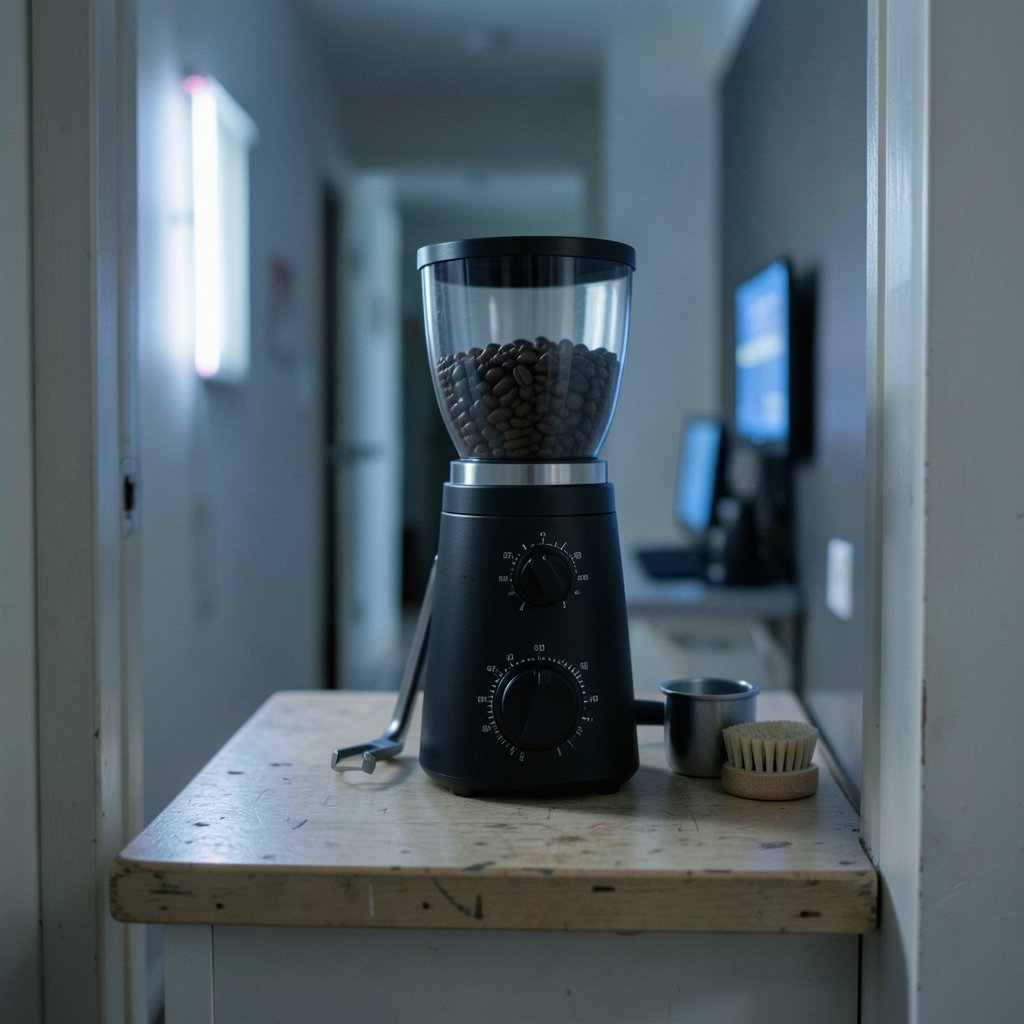
If someone wants one recommendation and no homework, this is it. The Specialita produces consistent, high-quality espresso grinds from 55mm flat steel burrs, runs quieter than almost anything in its class thanks to Eureka’s sound-insulating design, and uses stepless micrometric adjustment for the fine-grained control espresso demands. It sits at the point where grind quality, build quality, and usability converge without demanding $1,500.
Who it suits: the home barista pulling two to four shots a day from one or two beans, who wants to dial in and stop fiddling. The limitation is philosophical rather than mechanical. Stepless means no numbers, so returning to a previous setting after a deep clean takes counting or re-dialing. And it doses by time, not weight, unless you step up to the Libra.
Eureka Mignon Libra: Same Grind, Smarter Dosing
The Libra builds on the Specialita’s foundation and adds a built-in scale that weighs grounds as they fall. That matters more than it sounds. Weighing every dose to the tenth of a gram is the habit most consistent home baristas share, and doing it in the grinder removes a separate step, a separate scale, and a source of mess on the counter.
Who it suits: anyone already weighing output on a standalone scale, or anyone tired of time-based dosing drifting as the burrs wear and beans age. The limitation: you pay a premium for convenience layered onto the same 55mm burr set. If budget is tight, the Specialita plus a $20 scale gets you most of the way there.
Eureka Atom 75: The Biggest Clarity Jump per Dollar
Clive Coffee calls the Atom 75 the biggest clarity jump per dollar in its lineup, and the reasoning is mechanical rather than marketing. The real levers for clarity are burr diameter, low retention, and fine adjustment resolution, not brand or burr material. At 75mm, the flat burrs grind more evenly and consistently, and that particle consistency is what separates good espresso from exceptional.
Who it suits: the drinker who has outgrown a starter grinder and wants sweetness and separation in light roasts without jumping to four figures. At $999 it is a serious purchase, and it is the one limitation worth naming: this is a hopper grinder built for repeatable volume, not for swapping beans every morning. If you rotate three bags a week, single dosing serves you better.
Eureka Atom W 75: The Upgrade That Changes Light Roasts
The W 75 adds built-in grind-by-weight dosing to the 75mm flat burr platform. Grind-by-weight is described as the single biggest upgrade most home baristas ever make, especially with light roasts, because dose consistency removes one variable from every shot you pull.
Who it suits: the tinkerer chasing light-roast espresso who is done guessing at dose. The limitation is scope. Most people never need to go past this stage, and plenty never need to reach it. If your beans are medium-dark and your palate is happy, the money may be better spent on coffee itself.
Mazzer Philos: For Single-Dosers Who Rotate Beans
The Philos is a single-doser’s tool. It offers swappable burr sets and dual stepped and stepless adjustments, so you can tune specifically for acidity and fruit, and its very low retention means one bean doesn’t contaminate the next. At $1,495 it is a considered purchase, but it solves a specific problem: drinking espresso, pour-over, and filter from the same counter.
Who it suits: the hobbyist weighing every dose and switching coffees weekly. The limitation is that swappable burrs invite endless experimentation. That is a feature if you enjoy it and a time sink if you don’t. If you found this article while also comparing brew gear, the same logic in our guide to the best espresso grinder applies: match the tool to how you actually drink.
Weber Workshops The EG-1: The Lifetime Grinder
For the home barista obsessed with clarity and flavor separation, the EG-1 is the top pick, with 80mm flat burrs producing a unimodal particle distribution and sub-0.1g retention so nothing muddies the cup. It is a lifetime grinder for the truly obsessive, priced between $4,075 and $4,483.
Who it suits: someone who has already maxed out everything else and treats espresso as a long-term craft. The limitation is obvious and worth stating plainly: at this price, the grinder costs more than most complete setups. The grinder does not turn bad coffee into good coffee. It rewards good beans, good water, and good technique.
DF54 (V4): The Budget Flat-Burr Entry Point
The DF54 V4 publishes a full spec sheet: 54mm flat burrs, stepless micrometric adjustment, a 25 g hopper, a 150 W motor at 1,400 rpm, 4.7 kg, and a one-year warranty. Those are the manufacturer’s figures, not independent measurements. It is a multi-brand, China-built platform, and warranty and support depend on which seller’s box arrives.
Who it suits: the first-time buyer who wants flat-burr espresso grinding without a four-figure commitment. The limitation is support, not grind. The deciding factor between the DF54 and its larger sibling, per the same source, turns out to be whether you will ever swap the burrs. If the answer is no, the smaller footprint and lower cost make sense. If you plan to tinker, look at the DF64 platform instead.
Two more options deserve a mention for specific buyers. The Baratza Encore ESP Pro (ZCG595) is an electric conical-burr pick aimed at first setups. The 1Zpresso J-Ultra is a hand grinder with 8-micron clicks built for espresso, and it is genuinely capable, but grinding espresso by hand is real work: espresso is the finest grind you will ever ask for, and fine grind means high torque. Budget accordingly.
How to Choose Without Overthinking It
Start with the question that decides more than any spec sheet: how do you actually drink? A single-bean household that pulls two flat whites a day needs consistency and quiet operation, not swappable burrs. A household that rotates origins weekly needs low retention and easy re-dialing. Write down your honest answer before comparing prices.
Then apply these practical checks, drawn from what the tested grinders reveal:
- Fine adjustment resolution beats burr material. Dialing in individual beans requires fine adjustments at the fine end; reaching espresso fineness alone is not enough. A grinder that reaches espresso range but can’t make small moves within it will fight you on every new bag.
- Decide stepped versus stepless deliberately. Stepless gives infinite control but no reference numbers, which is a genuine drawback for dual-purpose use. You will be counting turns or re-dialing after cleaning.
- Weigh your dose. Grind-by-weight is the upgrade most home baristas notice first. If the grinder doesn’t do it, a scale must.
- Check retention if you switch beans. Low retention keeps yesterday’s dark roast out of today’s light roast.
- Protect the grinder budget over the machine budget. The grinder controls extraction. Spending more on the machine and less on the grinder is the most common mistake in home espresso.
- Verify seller and warranty on platform grinders. Support depends on the box that arrives, so buy from a seller with a clear return policy.
A common mistake worth naming: buying a dual-purpose grinder for espresso and pour-over, then discovering the espresso end needs finer steps than the brew end ever will. The Fellow Opus 2, for example, publishes a 200 to 1200 micron range, and that figure is what decides whether one dial can really serve both methods. For most people, it can, with patience. For espresso-first drinkers, a dedicated espresso grinder removes the compromise entirely.
If your broader setup research is still in progress, it helps to see how other product categories handle the same trade-offs between specs and real-world use. Our breakdown of what Toyota tacoma 2027 buyers can realistically expect follows a similar logic of matching published figures to daily reality, and the 2027 recruiting rankings board is a reminder that early lists always shift before the final whistle.
Conclusion
The best espresso grinder for 2027 isn’t the most expensive one in the group test, and it isn’t the one with the biggest burrs. It is the one that matches your ritual: the Specialita for most kitchens, the Libra if you weigh every dose, the Atom 75 for the biggest clarity jump per dollar at $999, the Philos for single-dosers at $1,495, the EG-1 for the truly obsessed, and the DF54 for a careful first step into flat burrs. Pick the grinder that fits how you drink, protect that part of the budget, and let the machine follow. The cup will tell you whether you chose well.
Frequently Asked Questions
Does the grinder really matter more than the espresso machine?
Yes, according to multiple specialist sources. An excellent machine with a poor grinder gives inconsistent espresso, while a simple machine with a good grinder will surprise you. The grinder controls particle consistency, and particle consistency controls extraction.
What is the difference between stepped and stepless adjustment?
Stepped grinders click into numbered positions. Stepless grinders adjust continuously with no fixed settings, offering finer control at the espresso end but no reference numbers, so you count turns or re-dial after cleaning. Some grinders, like the Mazzer Philos, offer both modes.
How much should I spend on a first espresso grinder?
There is no single answer, but a group test of six grinders priced from €279 to €3,099 found the best home option doesn’t have to be the most expensive. Set your ceiling by how often you drink espresso and whether you rotate beans, then buy the best fine adjustment you can afford within it.
Can one grinder handle both espresso and pour-over?
Sometimes, with compromise. Dual-purpose grinders publish wide micron ranges, but espresso needs very fine adjustment steps that brew methods don’t. If espresso is your priority, a dedicated espresso grinder removes the trade-off; if you split evenly, expect to re-dial when switching.
Are hand grinders good enough for espresso?
They can be. The 1Zpresso J-Ultra offers 8-micron clicks built for espresso. The catch is effort: espresso is the finest grind you will ask a grinder for, and fine grind means high torque. It suits low-volume drinkers willing to do the work.
Why does grind-by-weight matter so much?
Weighing every dose to the tenth of a gram is the habit consistent home baristas share, and grind-by-weight is described as the single biggest upgrade most home baristas ever make, especially with light roasts. It removes dose inconsistency from every shot.