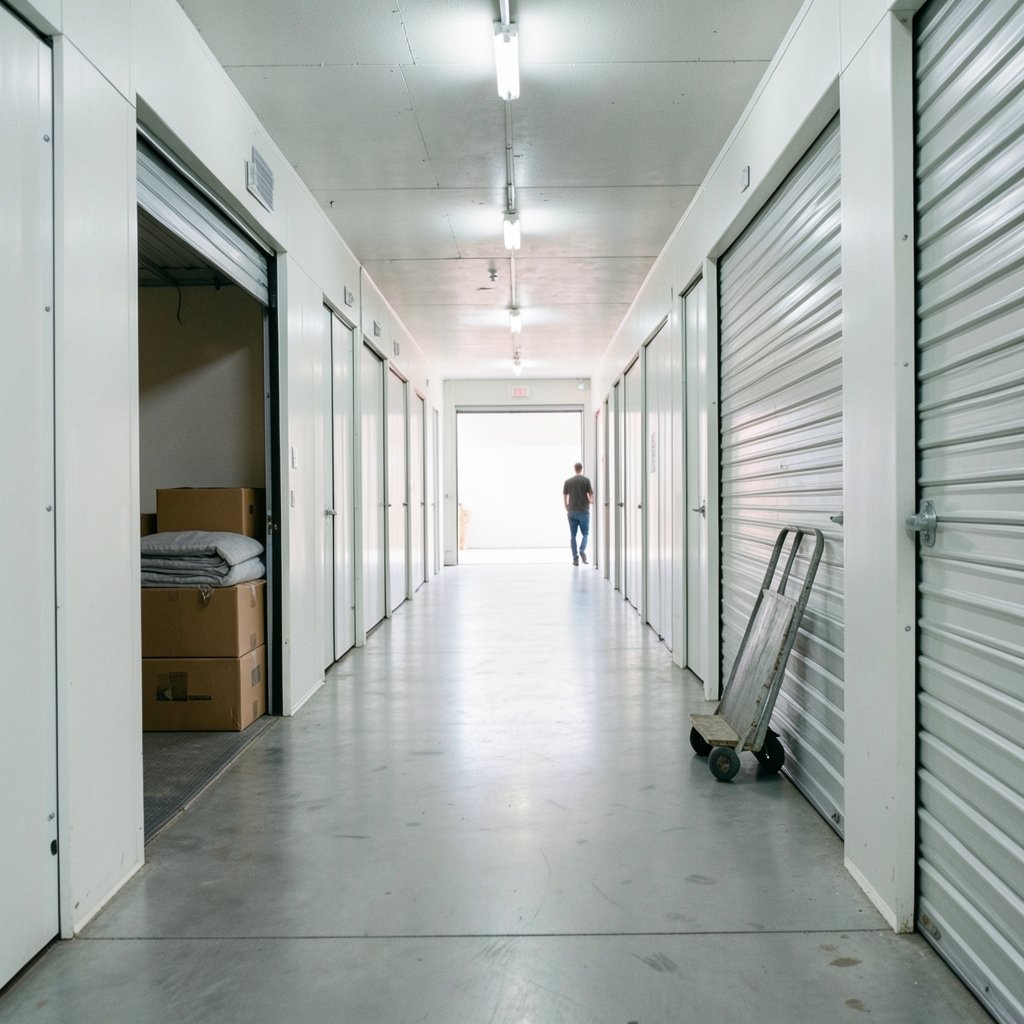
What do a gold mine in Victoria, a grid battery in Germany, and a spare bedroom’s worth of furniture have in common? All three end up in something people call a storage facility. That single phrase covers self-storage units rented by households, giant battery banks that hold electricity, sealed vaults for radioactive waste, and underground caverns that hold natural gas for winter. The label describes a function, not a building type. Understanding which kind of facility you are actually dealing with is the first step toward using one well, whether you are renting a locker or planning infrastructure. (Video doorbell local storage without subscription actually)
The core idea: holding something until it is needed
Every storage facility does the same basic job. It receives something, protects it for a period of time, and releases it later. What changes is the something.
For a household, that something is furniture, files, seasonal gear, or a business’s excess inventory. For an electricity grid, it is power generated at noon and needed at dinner. For a gas network, it is fuel bought in summer and burned in winter. For a government, it may be spent nuclear fuel waiting for a permanent disposal site that does not yet exist.
That last example is more common than people assume. Waste owners are responsible for funding, organizing, managing, and operating the facilities required for their radioactive material, and interim storage can last decades even though it is not considered a permanent solution. The same pattern repeats everywhere: storage is a bridge between “not needed now” and “needed later,” and the bridge is only as good as its security, access rules, and record-keeping.
The main types of storage facility
Self-storage for homes and businesses
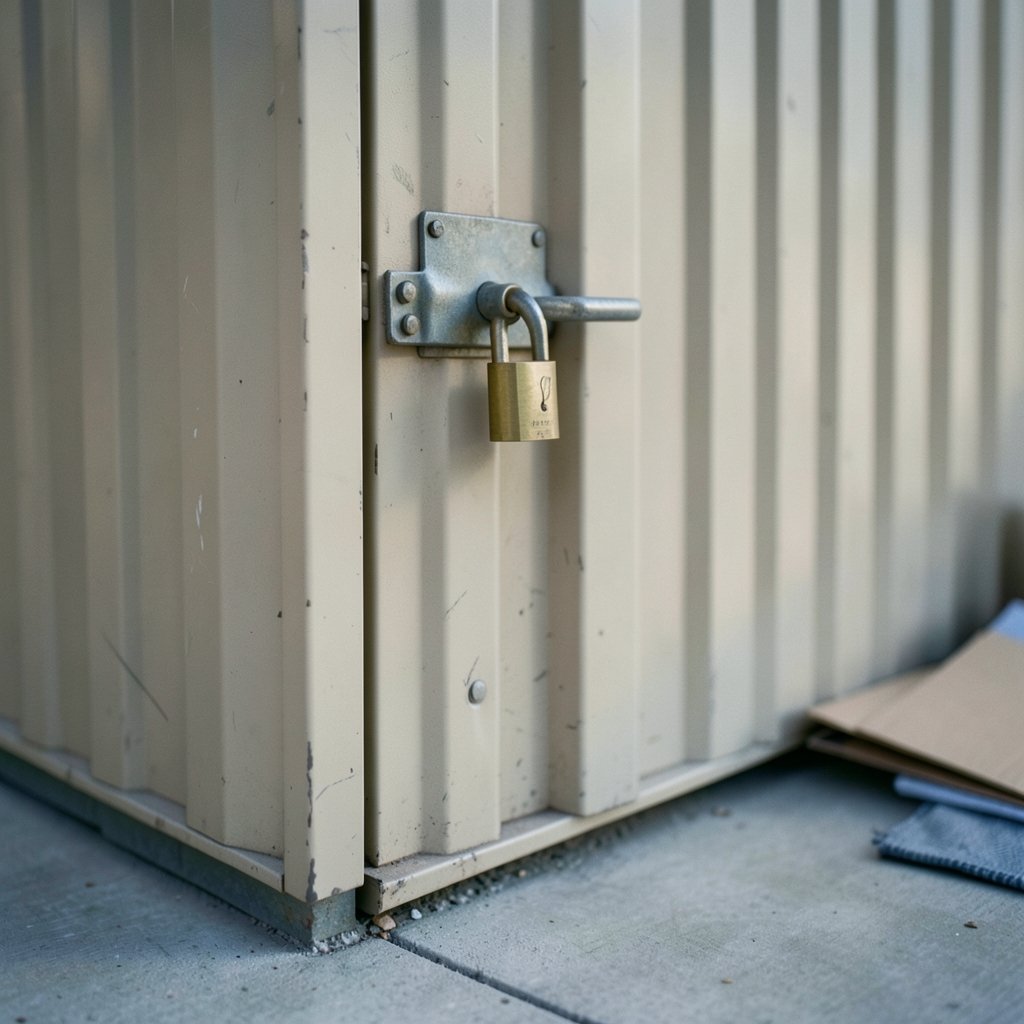
This is what most people mean when they search the term. Rows of lockers and rooms, rented by the month, accessed with a code or key. The sector is growing fast across Asia. Extra Space Asia, managed by CapitaLand Investment, announced it was investing nearly S$100 million in a build-to-suit flagship development in Singapore plus three freehold self-storage facilities in Tokyo, pushing its network past 100 facilities across Asia. The Singapore site is planned as the country’s first self-storage facility targeting Green Mark Super Low Energy Building certification, and it sits on the first industrial government land sale awarded for self-storage use.
Operators in Singapore alone run dozens of locations with 24/7 access and on-site amenities, and regional platforms now manage millions of square feet of gross floor area across Australia, Japan, Malaysia, Singapore, South Korea, and Greater China. If you are weighing a physical unit against keeping everything at home, it helps to compare it with digital storage costs too, since many households now pay for both. Anyone hunting for a bargain should look at current storage unit deals before signing a long lease.
Energy storage facilities
Battery storage facilities are the fastest-moving category in the news. A single project can be a 20 MW/40 MWh installation built beside an old gas-fired power station, or a 300 MW project under construction in Germany. Utilities use them to shift solar power into the evening peak and to keep a town running during an outage; one microgrid in North Carolina pairs a 2 MW solar array with a 4.4 MW lithium-based battery facility.
These facilities are engineering assets, not real estate. Their value depends on chemistry, fire safety, cycle life, and grid connection. A Tesla Megapack battery caught fire at a substation in California, a reminder that thermal risk is a real design constraint, not a footnote.
Gas storage facilities
Gas storage works on a seasonal rhythm that is easy to underestimate. In Australia, winter demand peaks are met largely from a handful of large fields and underground stores, and different states lean on different combinations of supply and storage. The lesson for any planner is that storage capacity is only useful if it is in the right place relative to demand.
Specialized and industrial storage
Beyond these, the term covers tailings storage at mines, carbon capture and storage tied to ethanol or hydrogen projects, and interim vaults for hazardous material. Each has its own regulator, its own inspection regime, and its own failure modes. A new tailings storage facility approved for Victoria’s largest gold mine is a storage project in the strict sense, but nobody would confuse it with a self-storage locker. (Backup immutability limitations worm storage cant protect)
| Type | What is stored | Typical user | Key risk |
|---|---|---|---|
| Self-storage | Household goods, business stock | Renters, small firms | Theft, damp, pests |
| Battery | Electricity | Utilities, grid operators | Fire, degradation |
| Gas | Fuel for heating and industry | Energy companies | Leakage, pressure |
| Waste | Radioactive or hazardous material | Governments, operators | Long-term containment |
| Cloud and digital | Files and backups | Everyone | Deletion, ransomware |
That last row matters because digital storage has the same trade-offs in a different form. Anyone comparing providers should read up on how Google Drive alternatives handle sync, storage, and sharing before committing years of files to one account, and beginners worried about privacy can start with a guide to free storage and privacy trade-offs. It is also worth knowing how to get more Google Drive storage free in ways that actually work, and why backup immutability has limits that WORM storage cannot protect against.
How to judge a self-storage facility before you sign
Practical experience from the rental side boils down to a short checklist. Most bad outcomes trace back to skipping one of these steps.
- Visit in person at the time of day you will actually use it. A facility that feels safe at noon can feel very different at 9 p.m. Check lighting, gate controls, and whether staff are on site.
- Read the access hours along with the price. 24/7 access is advertised widely but is not universal, and restricted hours can defeat the purpose of renting.
- Ask what insurance covers. The operator’s insurance usually protects the building, not your belongings. You may need your own policy.
- Check climate control. Paper, wood, electronics, and leather degrade in heat and humidity. If the unit is not climate controlled, do not store anything sensitive.
- Measure the door along with the floor area. A cheap unit is useless if your sofa will not fit through the opening.
- Confirm the notice period and fee schedule. Month-to-month sounds flexible until you read the 30-day notice clause and the admin fee.
- Look at pest and damp history. Ask directly. Smell the unit. Look at corners and the ceiling.
Common mistakes repeat across almost every renter: storing a mattress flat instead of on its side, packing heavy boxes on top, leaving food or candles in a unit, and assuming the facility will contact them before an auction if payment lapses. Put a reminder in your calendar for the payment date and keep the contract somewhere you will find it.
What to expect from commercial and industrial facilities
Businesses judge storage differently. For a small retailer, a self-storage unit doubles as an overflow warehouse, and the decision hinges on loading access, trolley availability, and whether deliveries can be received on site. For a team sharing files across offices, the equivalent decision is about permissions and version history, which is why a practical comparison of cloud storage software for team collaboration tends to focus on admin controls rather than raw capacity.
Larger operations face harder questions. A battery facility needs a grid connection, fire suppression, and a maintenance contract. A gas store needs geological surveys and pressure monitoring. A waste facility needs a safety case that satisfies national and international guidance. In every case, the facility is only one part of a system, and the system is what gets audited.
Matching the facility to the job
The single most useful habit is to describe what you are storing in plain terms before you shop. “Two bedrooms of furniture for six months” leads to a very different answer than “palletized stock that turns over weekly” or “20 MW of evening peak capacity.”
For households, the sequence is usually: declutter first, estimate volume honestly, then choose the smallest unit that fits with a little breathing room. For businesses, the sequence is: map the access pattern, then choose location and hours, then negotiate. For infrastructure, the sequence is: define the duty cycle, then size the asset, then plan for failure.
A few practical tips that hold across all of them:
- Photograph or inventory everything before it goes in, and keep the list somewhere other than the facility.
- Label boxes on two sides, not the top, so you can read them in a stack.
- Leave a walking aisle in any unit larger than a closet.
- Never store anything irreplaceable, illegal, flammable, or alive.
- Review the arrangement every few months. Storage has a way of becoming permanent by accident.
Conclusion
A storage facility is a promise: that something valuable will be kept safe, findable, and unchanged until you need it again. That promise looks different for a renter with twelve boxes and a utility with a 300 MW battery, but the questions are the same. What is being held? For how long? Who controls access? What happens if it fails? Get clear answers to those four questions and the label on the building stops mattering. Skip them, and even a cheap unit becomes an expensive mistake.
Frequently asked questions
What is a storage facility?
A storage facility is any site built to hold something safely until it is needed. That includes self-storage units for household goods and business stock, battery banks that store electricity, underground stores for natural gas, and sealed sites for hazardous or radioactive waste. The building type varies widely; the shared function is protected, time-limited holding with controlled access.
How much does self-storage cost?
Pricing depends on unit size, location, climate control, access hours, and demand in the local market. Rates change often and vary sharply between cities, so the only reliable approach is to request quotes from several facilities near you and compare the total cost, including admin fees, insurance, and any lock purchase. Do not rely on advertised headline prices alone.
Is a storage unit worth it?
It is worth it when the cost of the unit is lower than the cost of the alternative, such as a larger home, lost business sales, or replacing items you would otherwise discard. It is rarely worth it for items you have not used in a year and cannot name a future use for. Decluttering before renting usually saves more money than shopping for a discount.
What should you not store in a storage facility?
Avoid anything flammable, explosive, toxic, or perishable, plus living things and items that are irreplaceable with no backup copy. Food attracts pests. Damp clothing and mattresses grow mold. Documents and electronics need climate control. Most rental agreements list prohibited items explicitly, and violating them can void your insurance and your lease.
How do battery storage facilities differ from self-storage?
They share a name and almost nothing else. A battery storage facility is an industrial power asset, measured in megawatts and megawatt-hours, built to shift electricity in time and support the grid. Self-storage is rented real estate measured in square feet. Battery sites need fire suppression, grid connections, and engineering maintenance; self-storage needs gates, cameras, and a front desk.
Why do some storage facilities need government approval?
Because the material inside carries risks that extend beyond the property line. Radioactive waste storage, mine tailings, gas stores, and large battery installations all fall under safety and environmental rules, and operators must show they can protect human and environmental health over long periods. Approval processes exist to make that case public and reviewable before construction starts.