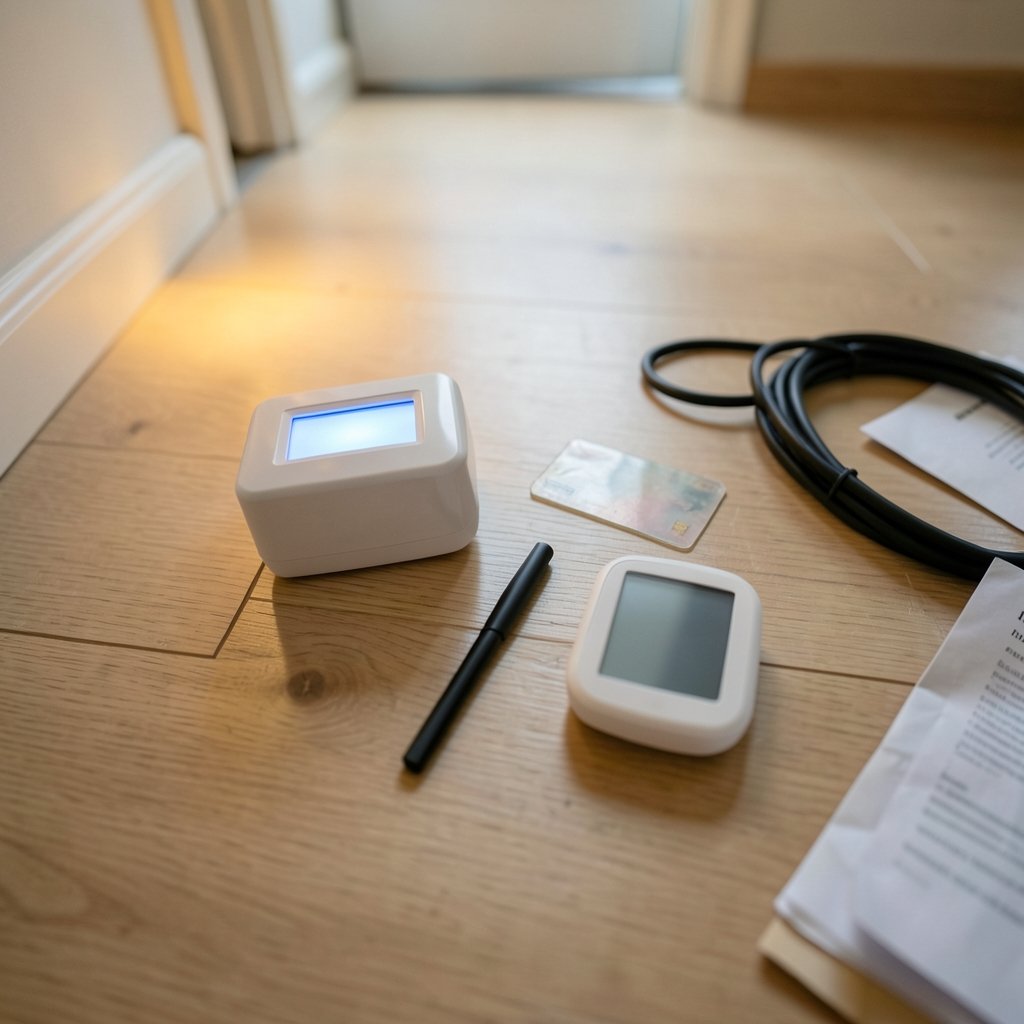
Quick Answer: What is a prepaid meter?
A prepaid meter is an energy meter that supplies electricity or gas only after the customer has paid for it in advance. Instead of receiving a bill after using power, the customer buys credit, loads it onto the meter, and the meter deducts the cost of each unit consumed until the balance runs out.
There are two main designs. Older token, key and card meters need the customer to physically carry credit to the device, while smart prepaid meters receive top-ups remotely and display the balance on a separate in-home unit. The core difference from a standard credit meter is timing: prepaid means pay first, use later, and disconnection happens automatically when credit hits zero.
Before switching, check the tariff, any transferred debt, the recharge options available in the area, how disconnection and emergency credit work, and whether the meter is a single or split unit.
A Simple Idea With a Lot of Machinery Behind It

Ever wondered why some homes never get a surprise bill for electricity? Often it is because the meter in the hallway refuses to give out power it has not been paid for yet.
That is the whole idea in one sentence. A prepaid meter, also called a prepayment meter, is an energy meter fitted with a mechanism that connects the supply when a valid payment is inserted and disconnects it once a set amount of energy has been used. The International Electrotechnical Commission’s vocabulary defines it almost exactly that way, listing coins, tokens and credit cards among the payment means.
Simple concept. But the details matter enormously, because the meter decides when the lights go out. This guide walks through how prepaid meters work, the types you will meet, what they cost in practice, and the mistakes people make when switching.
How a Prepaid Meter Works, Step by Step
The flow is short, and once you have seen it, the whole system makes sense.
- The customer buys credit from a vendor, an app, a bank, or a utility office.
- The credit reaches the meter, either as a code typed into a keypad, a physical token or card, or a remote signal.
- The meter stores the credit as a balance and subtracts the cost of each unit of energy as it is consumed.
- As the balance falls, the meter warns the customer through visual or audible alarms.
- When the credit reaches zero, the meter disconnects the supply.
- Loading more credit reconnects it, usually within seconds.
Modern smart prepaid systems split this into two pieces: the meter itself, which sits at the supply point, and a Customer Interface Unit (CIU) inside the home. The two communicate remotely, so the CIU shows exactly what the meter knows, including remaining credit and how quickly it is being used.
That split design solves a real annoyance. Nobody wants to climb to a meter box in the rain to check a balance. The interface unit puts the information where people actually live.
The Main Types of Prepaid Meter
Not all prepaid meters look or behave the same. The generation of the technology changes the experience a lot.
| Type | How credit is loaded | Typical weaknesses |
|---|---|---|
| Coin meter | Coins inserted directly | Almost extinct; insecure, no data for the supplier |
| Token or key meter | Coded token or reusable key | Tokens can be lost; static can damage keys |
| Card meter | Magnetic or smart card | Cards wear out; requires a trip to a vendor |
| Smart prepaid meter | Remote top-up, app, or code | Depends on network coverage and a working CIU |
Early card and ticket meters were not meter-specific and carried little encryption, which made them easy to tamper with and gave the utility almost no consumption data. Later designs added encryption and meter-specific tokens, and key meters introduced reusable memory devices. Smart meters pushed the whole category forward by reporting consumption and accepting remote credit.
If you are the kind of person who researches purchases carefully, the same instinct applies here. Comparing meter generations is a bit like reading a digital multimeters comparison that actually separates 40 meter models: the spec sheet looks similar across the range, but the details decide which one is genuinely usable day to day.
Prepaid Versus Credit Meters: The Real Trade-Off
The clearest way to understand prepaid metering is to put it next to the alternative.
| Feature | Prepaid meter | Standard credit meter |
|---|---|---|
| Payment timing | Pay before use | Pay after use, on a bill |
| Disconnection | Automatic at zero balance | Follows arrears process |
| Budget control | Strong; spending is visible | Weaker; bills arrive later |
| Risk of debt | Low, unless transferred debt exists | Can build up quietly |
| Convenience | Requires regular top-ups | No action needed between bills |
| Risk of running out | Real, especially in cold months | Not applicable |
Neither model is automatically better. Prepaid suits people who want hard limits and dislike invoices. Credit meters suit people who prefer one predictable payment and can absorb seasonal variation. The honest answer is that prepaid is a budgeting tool, not a discount.
What Happens When the Credit Runs Out
This is the question that decides whether prepaid metering is tolerable or miserable.
When credit is exhausted, the supply is cut. That is the design, not a fault. But well-run schemes soften the edge in two ways.
First, warnings. Meters typically give visual and audible alarms as the balance drops, so nobody should be caught completely unaware.
Second, emergency credit. Some utilities allow a small loan of energy to bridge a gap. One documented scheme lets customers borrow a fixed amount of units using a short code when they cannot recharge immediately, with the borrowed amount recovered from later top-ups.
The practical lesson is to learn the warning thresholds and the emergency procedure on day one. People who know their meter’s behaviour rarely sit in the dark. People who ignore the beeping usually do.
Switching to Prepaid: The Debt Question
Here is the detail that surprises almost everyone. Converting to a prepaid meter does not erase what you already owe.
In schemes that allow conversion with an outstanding balance, the debt is transferred to the new meter and recovered gradually from each top-up, often at a fixed percentage, until it is cleared. Other debts that cannot move to the prepaid system, such as connection or regularisation charges, stay separate and can still trigger interruption if unpaid.
So the sensible move before converting is to ask for a full statement of what will follow you. A meter that swallows a fifth of every recharge feels very different from one that does not, and the difference is invisible until the first top-up.
Practical Tips That Actually Help
A few habits separate comfortable prepaid users from frustrated ones.
Top up before the warning, not after. Waiting for the alarm trains you to buy in a panic, often at the worst prices or through the slowest channel.
Keep the receipt or code until the credit shows. Failed transactions happen, and proof speeds up resolution.
Watch the daily pattern, not only the balance. A balance that drops faster than usual usually means a change in usage, not a faulty meter. Heating, cooling and old appliances are common causes.
Learn one offline recharge option. Apps are convenient until the network is down or the phone is dead.
Check the CIU placement. A unit tucked behind a cupboard is a unit nobody reads.
Photograph the meter reading before any conversion or maintenance visit. It settles disputes in minutes.
There is also a quieter benefit worth naming. Prepaid metering makes energy visible. Users typically learn within a month what a shower, a heater or an old fridge actually costs, and that knowledge tends to stick.
Who Prepaid Metering Suits, and Who It Does Not
Prepaid meters fit renters and households on tight or irregular incomes, people who want a hard cap on spending, landlords who want to avoid chasing arrears, and anyone moving into a property where prepaid is already installed.
They fit less well where supply reliability matters most, such as homes with medical equipment, and where recharge infrastructure is thin. They also frustrate people who dislike administrative chores. If remembering to top up sounds like a burden, a credit meter with a standing payment plan may serve better.
The same logic of matching a tool to a use case shows up in plenty of buying decisions. A prepaid card can be genuinely useful for some people and a poor fit for others, which is why a breakdown of how the Walmart MoneyCard prepaid card works and who it suits is more helpful than a generic recommendation. Meters deserve the same scrutiny.
Common Myths, Corrected
Myth: prepaid energy is cheaper per unit. Not necessarily. The tariff is a separate question from the payment method.
Myth: the meter keeps your money if you move house. Credit handling on move-out varies by supplier, so ask rather than assume.
Myth: prepaid meters are always smart meters. Plenty of token and key meters are still in service and are not smart at all.
Myth: you cannot be disconnected for other reasons. Unpaid non-energy charges can still interrupt supply under some schemes.
Myth: the meter is the supplier’s problem, so nothing is yours to check. The CIU, the recharge channel and the account details are all worth verifying yourself.
What to Check Before You Commit
A short checklist saves a long argument later.
- The unit rate and any standing charge
- Whether existing debt transfers, and at what recovery rate
- Recharge channels, including at least one offline option
- Emergency credit rules and how to activate them
- Disconnection and reconnection fees
- Whether the meter is single or split, and where the CIU goes
- Who to call when a top-up does not register
Anyone who has ever compared subscription products knows that the headline price rarely tells the whole story. The same applies to software choices, where a careful look at whether paid game engines are worth it for a small gaming project turns on hidden costs and long-term fit rather than the sticker figure. A meter contract deserves the same patience.
Conclusion
A prepaid meter is not complicated. It is an energy meter that trades first and supplies second, deducting the cost of each unit from a balance the customer has already paid for. What makes it worth understanding is everything around that simple mechanism: the warnings before disconnection, the debt that can follow you into a new meter, the difference between a key meter and a smart split unit, and the recharge habits that decide whether the experience is smooth or stressful.
Get the facts before switching, learn the meter’s behaviour in the first week, and keep a backup way to top up. Do that, and prepaid metering becomes what it was designed to be: a visible, controllable way to pay for power.
Frequently Asked Questions
Does a prepaid meter cut off instantly when credit hits zero?
In most designs, yes. The meter disconnects once the paid-for energy is consumed. Good schemes give visual and audible warnings beforehand and may offer a small emergency loan, but the default behaviour is disconnection at zero.
Can I switch back from prepaid to a standard credit meter?
That depends entirely on the supplier and the local rules, and it often involves a credit check or a deposit. The meter itself is not the obstacle; the account terms are. Ask the supplier directly rather than relying on forum answers.
Is a smart prepaid meter the same as a token meter?
No. A token or key meter needs a physical code or device carried to the meter. A smart prepaid meter receives credit remotely and usually pairs with an in-home display unit that shows the balance in real time.
What happens to my unpaid balance when I convert to prepaid?
In schemes that permit conversion with arrears, the debt typically moves onto the new meter and is recovered as a percentage of each top-up until cleared. Other charges may stay separate and can still affect supply, so request a full statement first.
Can I run out of credit in the middle of the night?
Yes, and that is exactly why the warning alarms matter. Checking the balance before bed, and keeping a small buffer in the account, is the simplest way to avoid a midnight disconnection.
Do prepaid meters measure usage differently from normal meters?
The measurement is the same; the payment logic is what changes. Both record how much energy passes through, but the prepaid version subtracts the cost from a stored balance and disconnects at zero instead of sending the figure to a billing system.