

How much more are you actually paying for a graphics card today than the sticker price suggested it should cost? The honest answer, based on price tracking through late 2026, is somewhere between “a lot” and “please sit down.” Across 14 mainstream cards from NVIDIA, AMD, and Intel, not one could be found at its manufacturer’s suggested retail price, and the average markup sat at roughly 44% above launch MSRP, climbing to about 58% in the US and Canada.
That is the headline. The details are messier, more regional, and more useful if you are trying to decide whether to buy now or wait.
The Current Price Picture in Numbers
The clearest snapshot comes from a broad price survey covering NVIDIA, AMD, and Intel cards across ten countries. Every single model carried a premium over its launch price. Here is what the data shows for US buyers, with figures reflecting pricing through late 2026.
| Graphics Card | Markup Over Launch MSRP (US) | Global Average Markup |
|---|---|---|
| RTX 5090 | About 370% | About 262% |
| RTX 5080 | About 120% | About 77% |
| RTX 5060 Ti 16GB | About 84% | Not listed |
| RTX 5050 | About 68% | About 41% |
| RTX 5070 Ti | About 67% | Not listed |
| RTX 5070 | About 64% | Not listed |
| RTX 5060 | About 51% | About 40% |
| RTX 5060 Ti 8GB | About 40% | About 24% |
The flagship numbers are the ones that make people gasp. The RTX 5090 has never really been available at its suggested price, and US listings pushed past $9,000 in the reporting period. But the entry-level story matters more for most buyers. The RTX 5050 moved from around $260 to roughly $420 over the course of the year, which is a brutal jump for a card aimed at budget builds.
The month-to-month swings are just as striking. Between September and October, the average US price rose 36% in a single month, while Germany, Australia, the Philippines, and the Netherlands each saw increases above 40%. That is not normal market drift. That is a supply shock moving through retail.
Why Prices Climbed So Fast
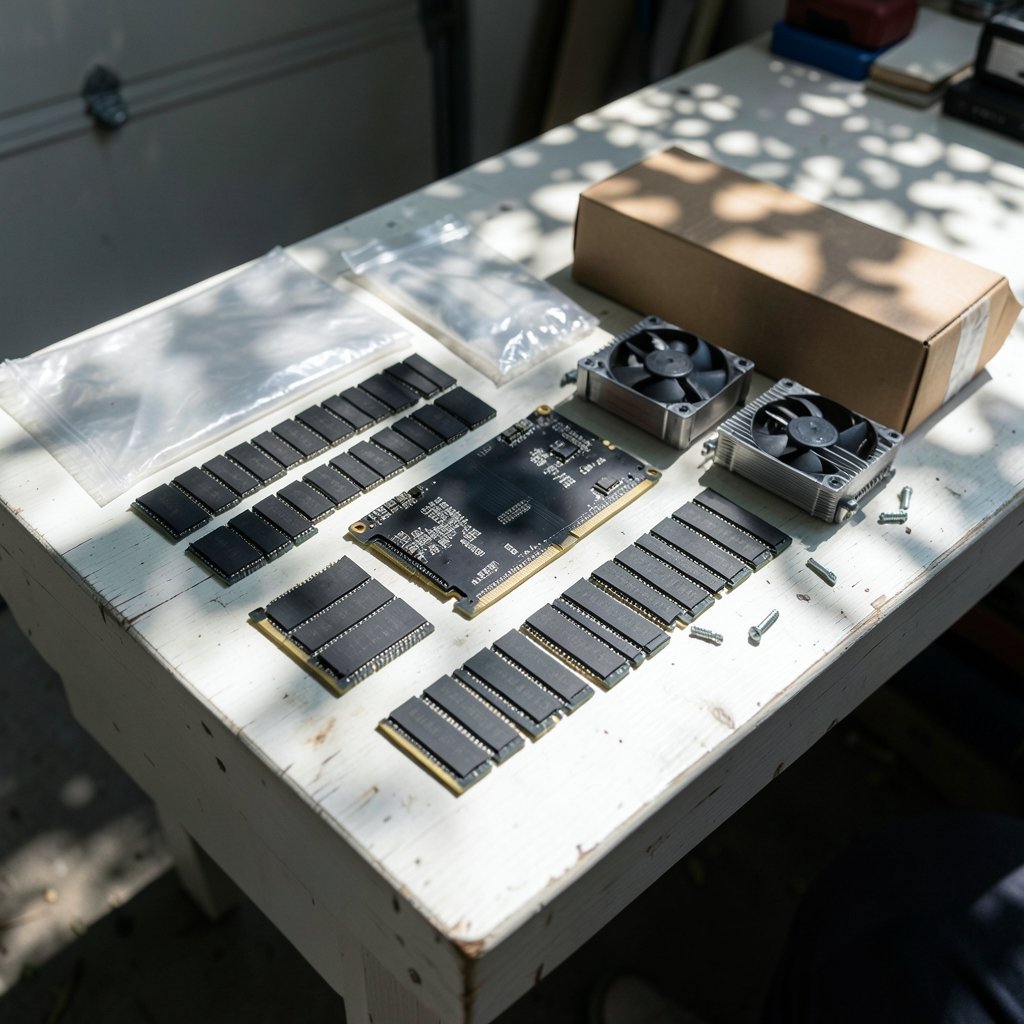
The root cause is memory. Graphics cards pair a GPU with video RAM, and manufacturers buy both together as a bundle. When memory costs rise, board partners have almost no choice but to pass the increase along.
NVIDIA reportedly notified its add-in card partners of repeated GPU kit price increases, covering both GDDR7 memory on newer Blackwell cards and GDDR6 memory on older GeForce products still in production. Partners also faced higher costs for coolers, circuit boards, and packaging, though those pressures were smaller than the memory hit. AMD followed a similar path, raising GPU and GDDR bundle prices by roughly 10% for partners including Sapphire, ASUS, XFX, and Vastarmor, effective July 2026.
Then the board partners added their own increases. MSI announced a rise of more than 20% across its entire lineup, explicitly citing a global DRAM supply shortage, and noted the change hit older generation hardware as well as new cards. ASUS and Gigabyte pushed through a second round of increases in the same year, with the RTX 5090D V2 jumping by $592 to $666 at the channel level and the RTX 5080 rising $207 to $222.
One detail from that reporting captures how fast things moved: a buyer’s $4,429 order was cancelled because ASUS could no longer supply at that price. The same card then listed at $4,982.
What Actually Moves Prices Up or Down
If you want to predict the next price change, watch these levers rather than waiting for a press release.
Memory supply. This is the dominant factor right now. DRAM and VRAM shortages ripple into every card tier, and they hit mid-range 16GB models hardest because those cards carry more memory relative to their price.
GPU kit pricing from NVIDIA and AMD. Board partners buy GPU plus memory as a package. When that package gets more expensive, retail prices follow within weeks.
Flagship scarcity. Rumors that the RTX 5090 would be phased out helped push its price even higher. Uncertainty about supply is itself a price driver.
Demand for older cards. When new cards get too expensive, buyers pivot to previous-generation models, which then rise too. MSI’s increase covering older hardware is a direct example.
Regional distribution costs. The gap between US markups and global averages shows how much local supply chains and currency movements matter. A card that is 40% over MSRP globally can be 68% over MSRP in the US.
The Practical Playbook for Buyers
Knowing the numbers is only half the battle. Here is what tends to work when prices are climbing.
- Set a hard budget before you browse. Price tracking shows cards drifting upward week by week. Decide your ceiling first so a moving target does not drag you up the ladder.
- Check the tier below before assuming you need more. A 16GB mid-range card at a 40% markup can cost more than a lower tier at a smaller markup. Compare the total, not the badge.
- Watch bundle pricing as well as card pricing. Retailers often pair cards with power supplies or motherboards. Sometimes the bundle is the better deal; sometimes it hides a markup.
- Buy when you need it, not when you predict a dip. Every forecast of a price cut in the past year has been wrong. If your current card works, waiting is free. If it does not, waiting has a cost.
- Verify the seller. With prices this volatile, cancelled orders and relisted stock are common. Confirm the listing price is real before you commit.
If you are still deciding what tier makes sense, a guide on how to choose a graphics card that fits your PC budget helps you map price to actual performance needs. And if you are moving from an old card, this walkthrough on the GPU upgrade and graphics card install process covers the physical steps so you do not pay for installation on top of an inflated price.
Where the Money Goes After You Buy
A strange side effect of high prices: people hold onto cards longer, which makes setup and maintenance more important. A card that costs 60% over MSRP deserves more than a plug-and-pray install. Taking time to set up your graphics card for best performance can recover frames you would otherwise leave on the table, and it costs nothing.
It also helps to know the failure modes. When a card runs hot or crashes under load, the cause is often something simple like power delivery or driver conflicts rather than a dead GPU. This rundown of common graphics card problems and how to fix them is worth bookmarking before you assume the worst.
For buyers who mainly use a desktop for everyday work, streaming, and light gaming, the calculus is different. Not every task needs a flagship. A breakdown of which graphics cards are worth buying for beginners and everyday use can keep you out of the premium tier entirely.
Is Any Card Still a Reasonable Deal?
Yes, with caveats. The 8GB RX 9060 XT was the only card in one tracking set whose average in-stock price actually fell, dropping $15 compared with six months earlier. Low demand can still win a small victory in a supply-driven market. Meanwhile, the B570, B580, RX 9070 XT, RX 9070, RTX 5050, and 16GB RX 9060 XT each rose modestly, between $10 and $46.
Then the ladder gets steep. Every NVIDIA card except the 5050 and 5090 rose by between $96 and $306 in the same comparison. That is the pattern to internalize: entry and mid-range cards move in tens of dollars, while upper-tier cards move in hundreds.
One more angle worth considering is your display. If you are paying a premium for a card, pairing it with the wrong screen wastes the money. The choice between a gaming monitor and a TV changes with room lighting and viewing distance, and it affects how much card you actually need.
What This Means for Builders and Upgraders
The old advice was to buy the previous generation once new cards launched, because prices would fall. That advice has not held up. With memory costs elevated and partners raising prices across both new and older hardware, the discount window has been narrow or nonexistent.
A more realistic approach is to treat a graphics card purchase like any other large expense with volatile pricing. Know the launch MSRP, know the current street price, and calculate the gap yourself. If a card is 60% over MSRP and you need it, that is a decision you make with open eyes. If it is 60% over and you can wait, you are taking a real risk that it goes higher.
The market has also made one thing clear: nothing in the current pricing environment suggests relief is automatic. Every prediction of a return to MSRP has been met with another round of increases. Buyers who plan around that reality, rather than hoping against it, end up less frustrated.
Conclusion
Graphics card price changes in the current market are not subtle. Average markups sit near 44% globally and 58% in the US and Canada, with flagship cards far beyond that and entry-level cards climbing fast enough to hurt budget builders most. The cause is a memory supply crunch that pushed NVIDIA and AMD to raise kit prices, which pushed MSI, ASUS, and Gigabyte to raise retail prices, often more than once.
The useful response is not outrage or endless waiting. It is arithmetic. Check the markup against launch MSRP, compare tiers by total cost rather than badge, and buy when your needs justify the price you are actually being asked to pay. The numbers are ugly, but they are knowable, and knowing them is the only real advantage a buyer has right now.
FAQ
Why are graphics cards so much more expensive than their launch price?
The main driver is memory cost. Graphics cards use video RAM, and a global DRAM shortage pushed up the price of GPU and memory bundles sold to board partners. Those partners passed the increase to retailers, and multiple rounds of increases stacked up through the year.
Which graphics card has the biggest markup over MSRP?
Among mainstream models, the RTX 5090 shows the largest gap, at roughly 370% over launch MSRP in the US and about 262% on average globally. It has effectively never been available at its suggested price, and reports of a possible phase-out pushed prices higher.
Did AMD cards go up in price too, or only NVIDIA?
AMD raised prices as well. It notified partners including Sapphire, ASUS, XFX, and Vastarmor of roughly 10% increases on GPU and GDDR bundle kits, effective July 2026. That followed a period when AMD had kept prices relatively stable under earlier memory contracts.
Are older graphics cards cheaper now?
Generally no. Price increases from board partners such as MSI explicitly covered older generation hardware alongside new models, because memory costs affect both. Waiting for a previous-generation discount has not worked well in the current market.
Is there any graphics card whose price actually dropped?
At least one did. The 8GB RX 9060 XT saw its average in-stock price fall by about $15 over a six-month comparison, likely because of weaker demand. Most other cards in the same tracking set rose, with upper-tier NVIDIA models climbing by $96 to $306.
Should I buy now or wait for prices to fall?
That depends on whether your current card still does what you need. If it does, waiting costs nothing and carries no risk. If it does not, waiting has a real cost in lost use, and recent history shows price cuts are not guaranteed. Set a budget, compare total prices across tiers, and decide based on need rather than forecast.



