What if the most useful gadget you own all year weighs less than your keys and never needs a charging cable you can’t find? That’s the promise of everyday carry tech in 2027, and for once the promise mostly holds up. The category has matured past novelty keychain junk into tools that solve one specific problem well, in a footprint small enough to forget about until you need it.
This roundup skips the theory and names the picks. Each entry covers who it suits, what it does well, one honest limitation, and the price only where a published source states it. Prices move, so treat any figure here as a starting point and confirm on the official product page before buying.
The Shortlist at a Glance
| Gadget | Best For | Standout Strength | Watch Out For | Stated Price |
|---|---|---|---|---|
| MeTool SceptriX titanium pen | Multi-tool minimalists | Five tools in one pen body | Not a full-size tool kit | Not stated |
| Alite folding fingertip knife | Discreet urban carry | Keyring-sized, titanium handle | Tiny blade limits heavy tasks | Not stated |
| CRKD ATOM+ pocket gamepad | Mobile and retro gamers | Solves stick drift | Niche use case | $30 |
| Titanium caliper (37.6g) | Makers and tinkerers | Precision in a 37.6g body | Single-purpose tool | Not stated |
| Pocket thermal printer | Journalers and travelers | Instant stickers and photos | Needs supplies | Not stated |
| Enough Phone | Small-phone holdouts | User-replaceable battery | Ships May 2027 | $399 and up (early bird) |
| Wearable action camera | Daily memory-keepers | Set-and-forget capture | Still needs charging habits | Not stated |
MeTool SceptriX Titanium Tactical Pen
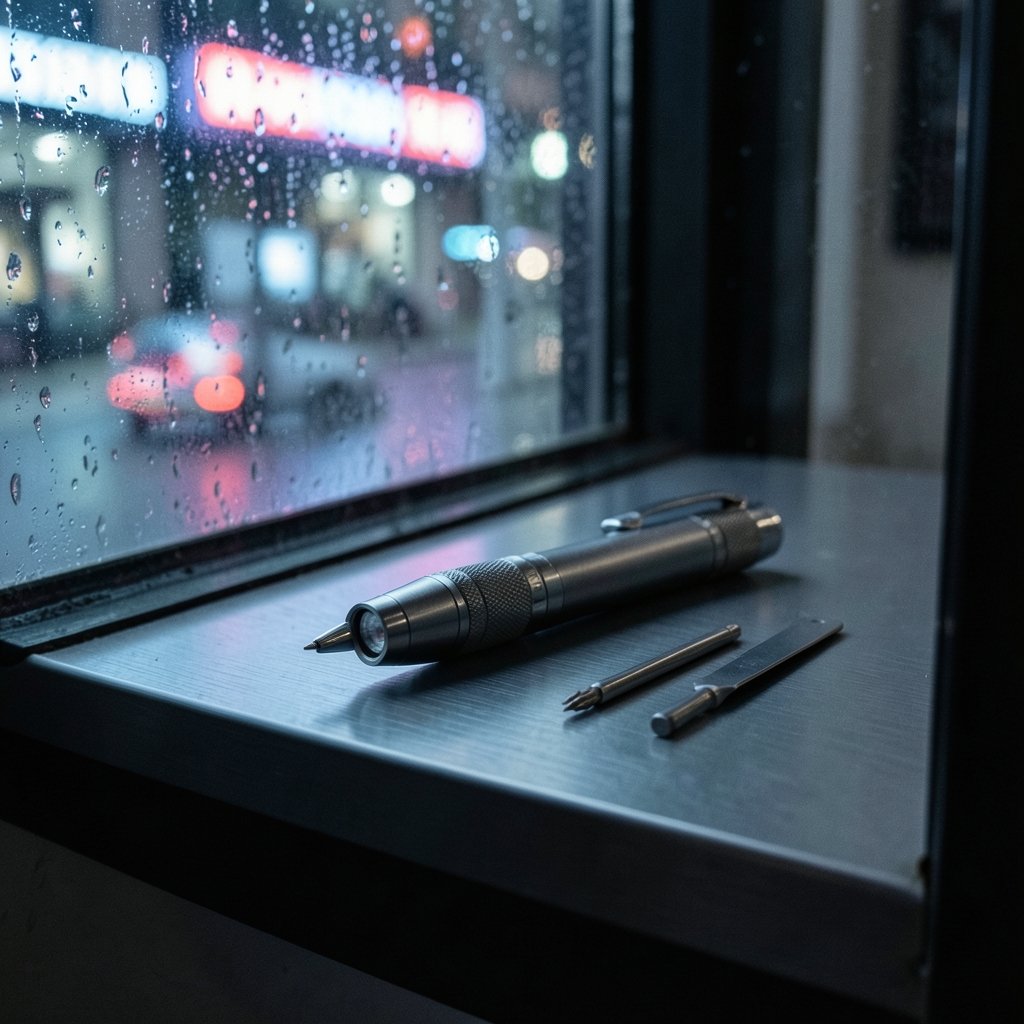
For the person who wants one object in a pocket, not five, this is the pick to beat. The SceptriX packs five tools into a single Grade 5 titanium body: a five-mode flashlight, a replaceable blade, a glass breaker, 3×4mm driver bits, and a graphite writing tip, plus a spinner for good measure. Grade 5 titanium keeps it corrosion-resistant and light without giving up durability.
It suits commuters, office workers, and anyone who has ever needed a screwdriver at the worst possible moment. The limitation is obvious: a pen-sized tool does small jobs, not big ones. If you actually need to turn stubborn bolts, carry a real driver. The pen is set to ship in February 2027 after its crowdfunding campaign wrapped, so availability is worth checking before you plan around it.
Alite Folding Fingertip Knife
Some carry kits fail because the knife is too bulky to bring along. This one takes the opposite approach. The Alite has a titanium alloy handle and a Damascus steel blade, and it is small enough to ride on a keyring. For city days where the essentials are a wallet, keys, and phone, it disappears into the mix.
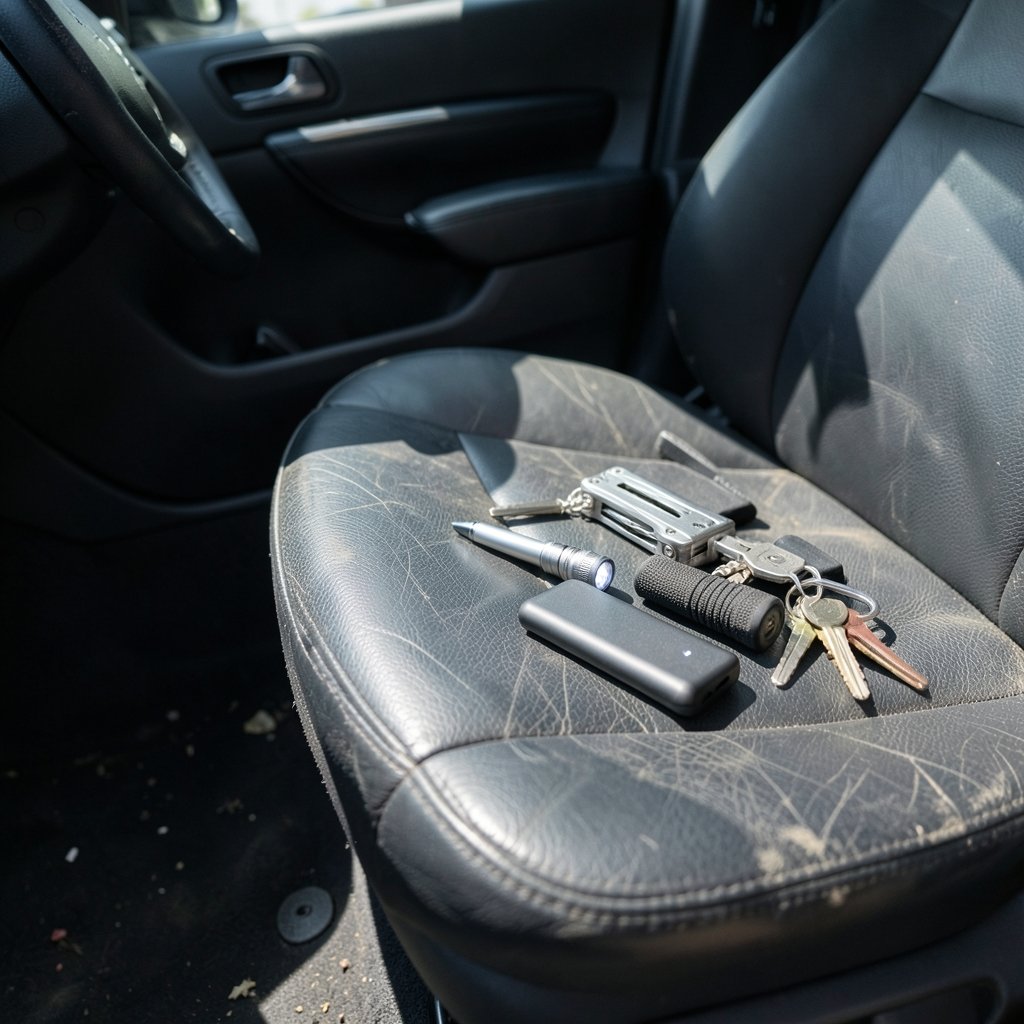
Who it suits: urban EDC fans who want a cutting tool that never gets left at home. What it does well: discreet carry with materials that punch above the size. The limitation is physics. A fingertip blade handles tape, packages, and loose threads, not camp chores. Pair it with the pen above and you cover writing, light driving, and cutting without a pouch.
CRKD ATOM+ Pocket Gamepad
Compact controllers have always sat in an awkward spot, and most work fine for retro titles but stumble elsewhere. CRKD’s $30 ATOM+ earns its place by finally solving stick drift, the slow death that turns most small gamepads into drawer clutter. At $30, it is the cheapest entry on this list and the easiest to justify.
It suits commuters who game on a phone or tablet and retro fans who want real buttons instead of glass. The limitation: it is a controller, so it only helps if you already carry a screen worth pairing it with. Anyone deep in the handheld console world may want to weigh it against bigger devices; the Legion Go S vs Steam Deck comparison for everyday gaming is a useful reality check on whether a dedicated handheld beats a phone plus pad.
37.6g Titanium Caliper
This is the sleeper pick. A 37.6-gram titanium caliper is the kind of tool you do not know you need until a furniture build, a 3D print, or a hardware store run goes sideways. It suits makers, tinkerers, and anyone who measures things more than twice a month.
What it does well: real precision in a body light enough to live in a bag pocket. The limitation is honesty itself. It does exactly one job, and if you never measure anything, it will sit unused. Buy it because you already reach for a ruler, not because it looks good in photos. Titanium hardware and machined accessories like this go through plenty of scrutiny in EDC circles, and the weight is the whole argument here.
Pocket Printer for Stickers and Photos
Personalization has quietly moved from craft rooms into everyday life, and a pocket printer is the clearest example. It turns out temporary tattoos, stickers, and photos on the spot. It suits travelers who journal, parents, and anyone who likes a physical artifact from a digital day.
What it does well: instant, tactile output that a phone screenshot can never match. The limitation is the supply chain. These devices need paper or film refills, so the real cost is ongoing, and a printer without supplies is a paperweight. Check refill availability and price before committing.
Enough Phone: The Small Phone That Fights Back
Small-phone fans have been shouting for years, and 2027 may finally answer. The Enough Phone holds its screen at 5.3 inches, with shipping planned for May 2027. The dimensions are 132.8mm by 63.8mm by 12mm, roughly in iPhone 13 mini territory, and the front is a 5.3-inch LCD at 1520×720.
The internals are deliberately modest: a MediaTek Dimensity 7500, 8GB of RAM, and 128GB of storage. The camera setup is restrained too, with a single 50MP rear camera using a Sony IMX766 sensor, a 32MP front camera, and a fingerprint reader in the power button. The two design choices that matter most are a battery between 3500 and 4000mAh that users can replace themselves, and a software choice between stock Android and the minimalist OdysseyOS, which aims to turn the phone into a modern feature phone.
Early-bird crowdfunding tiers start at $399, with $449 and $499 tiers above it. Who it suits: people who want a phone that fits a pocket and lasts years instead of a spec sheet. The limitation: it is a crowdfunded product with a 2027 ship date, so backers accept schedule risk. If you are weighing ecosystems more broadly, the Steam vs Epic vs GOG everyday gaming experience breakdown shows how much platform choice shapes daily use, and the same logic applies to phones.
Wearable Action Cameras
The biggest shift in carry tech is that cameras stopped being event gear. Image stabilization and miniaturization crossed the everyday-use threshold, and thumb-sized units around 40 grams now clip to a chest or hat and stay there. The right way to use a GoPro or DJI Osmo has changed from framing a shot at an event to wearing it and forgetting it.
Who it suits: people who want footage of ordinary days without the ritual of unpacking, mounting, and configuring. What it does well: one-touch capture and smooth walking footage without a gimbal. The limitation is the habit itself. A camera you forget to charge is still a camera you never use, so build a charging routine before you buy. If you are deciding between a wearable and a dedicated handheld, the PC gaming vs console everyday experience comparison is a good model for thinking about setup friction versus payoff.
Trackers, Light Bars, and the Supporting Cast
Not every carry item needs to be exotic. A four-pack of Apple AirTags at $99 covers bags, keys, and gear, and precise finding is the whole value. A Govee smart light bar pair at $54.99 is not pocket tech, but as bias lighting behind a monitor it reduces eye strain at night, which matters if your carry kit includes a laptop. The catch: the good scenes need the Govee app, and music sync listens through a mic rather than your audio feed.
Other options worth knowing: the JBL Flip 6 at around $79 remains the default portable speaker, the XGIMI MoGo 2 Pro at $359 puts a real 1080p Google TV in a backpack, the Ray-Ban Meta Wayfarer Gen 2 at around $409 adds camera and open-ear audio, the RingConn Gen 2 Air at $189 offers 10-day battery with no subscription, the Kindle Scribe at $499.99 handles reading and writing, the Rocketbook Core at $24.30 provides reusable paper that scans to the cloud, and the DJI Neo at $169 launches from your palm. The Peak Design Everyday Slim Wallet holds eight cards without bulk. None of these are pocket-sized in the strictest sense, but each earns bag space.
How to Choose Without Wasting Money
Start with the pocket you actually have, not the one you wish you had. The most common mistake is buying a multi-tool that duplicates what a phone already does, then never carrying it. A second mistake is ignoring consumables: printers need refills, cameras need charging, and both fail quietly.
A practical sequence that works:
- List the three problems you hit weekly, such as losing keys, measuring things, or wanting a real button.
- Buy one item per problem, and nothing else.
- Carry the new item for two weeks before adding another.
- Drop anything you did not touch in those two weeks.
Also check shipping dates on crowdfunded gear. A February or May 2027 delivery means you are pre-ordering, not buying. And when a device depends on an app, read the app requirements first; a great gadget with a bad companion app becomes clutter. For context on how platform and service decisions affect daily use, the PS5 Pro vs PS5 specs breakdown shows the same principle: the spec sheet matters less than the friction you live with.
Conclusion
The best everyday carry tech of 2027 is not the flashiest object in the drawer. It is the pen that hides a screwdriver, the knife that rides a keyring, the $30 gamepad that fixed stick drift, and the phone small enough to disappear into a pocket. Pick two or three items that match problems you actually have, verify the price and ship date on the official page, and give each one a two-week trial. The kit that survives that test is the one worth carrying.
Frequently Asked Questions
What counts as everyday carry tech?
Everyday carry tech is the small set of devices a person keeps on their body or in a bag daily, chosen for repeated practical use rather than occasional projects. In 2027 the category leans toward multi-function tools, compact controllers, trackers, and wearable cameras that need no learning curve.
Is a titanium multi-tool pen worth it?
It is worth it if you regularly need a light, a driver bit, or a writing tip away from a desk. The MeTool SceptriX combines five tools in one Grade 5 titanium body, but it handles small jobs only. Anyone needing real torque should carry a dedicated driver.
When does the Enough Phone ship?
Shipping is planned for May 2027, according to the manufacturer’s crowdfunding details. The phone has a 5.3-inch LCD, a Dimensity 7500 chip, 8GB of RAM, and a user-replaceable battery, with early-bird tiers starting at $399. Backers should treat the date as a plan, not a guarantee.
Are pocket printers expensive to run?
The device price is only part of the cost. Pocket printers need paper or film refills, so the ongoing expense matters more than the sticker price. Check refill availability and per-print cost before buying, and skip it if you rarely print.
Do wearable action cameras replace a phone camera?
They complement it rather than replace it. Thumb-sized cameras around 40 grams are built to clip on and stay on, capturing ordinary moments a phone never gets out in time for. They still need charging, and their footage quality trails a dedicated setup in low light.
What is the biggest mistake when building an EDC kit?
Buying for the kit you imagine instead of the days you live. Duplicating phone functions, ignoring refill and charging needs, and adding items faster than you can test them all lead to a pouch full of unused gear. Add one item, carry it for two weeks, and keep only what you reach for.