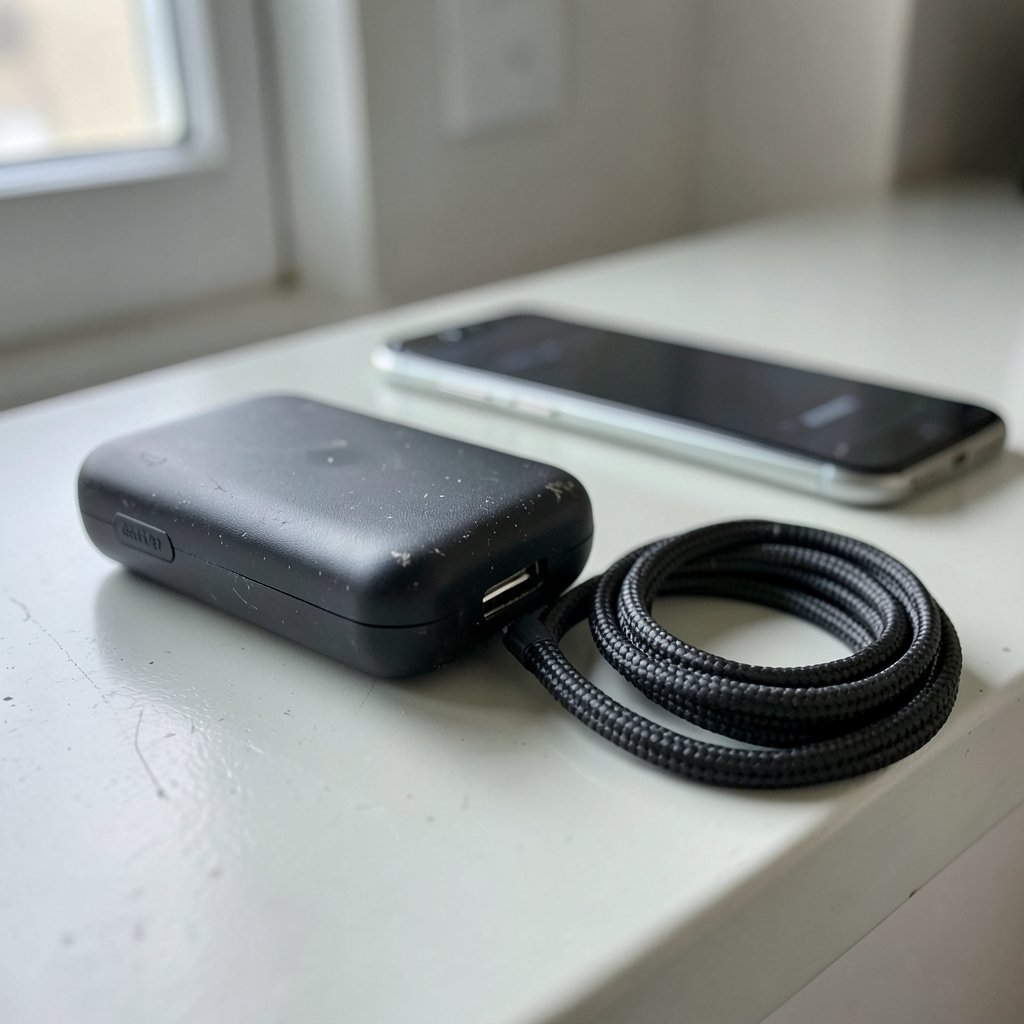
A power bank that ran two full phone charges on day one barely finishes one by month twelve. Why? That slow fade is the question almost everyone asks after a year of carrying the same brick in a bag, and the answer is more predictable than most people expect. Daily use does not kill a power bank overnight. It trims capacity in small, measurable steps, and understanding those steps tells you whether your unit is normal, tired, or ready for replacement.
The Short Answer: Expect Roughly 10 to 20 Percent Gone
After a year of near-daily charging, most decent power banks keep somewhere between 80 and 90 percent of their original usable capacity. Heavier users who drain the bank completely several times a week land closer to the bottom of that range, while light top-up users sit near the top.
The bigger surprise is that a brand-new 10,000mAh bank never delivered 10,000mAh to your phone in the first place. Energy is lost as heat during every transfer, and real-world efficiency usually lands around 70 to 80 percent. A 10,000mAh unit typically pushes out closer to 7,000 to 8,000mAh in practice. So by month twelve, a daily-use bank might realistically deliver 6,000 to 7,000mAh to your phone. That is the number worth tracking, not the label on the shell.
Why Capacity Drops: Four Mechanisms Doing the Damage
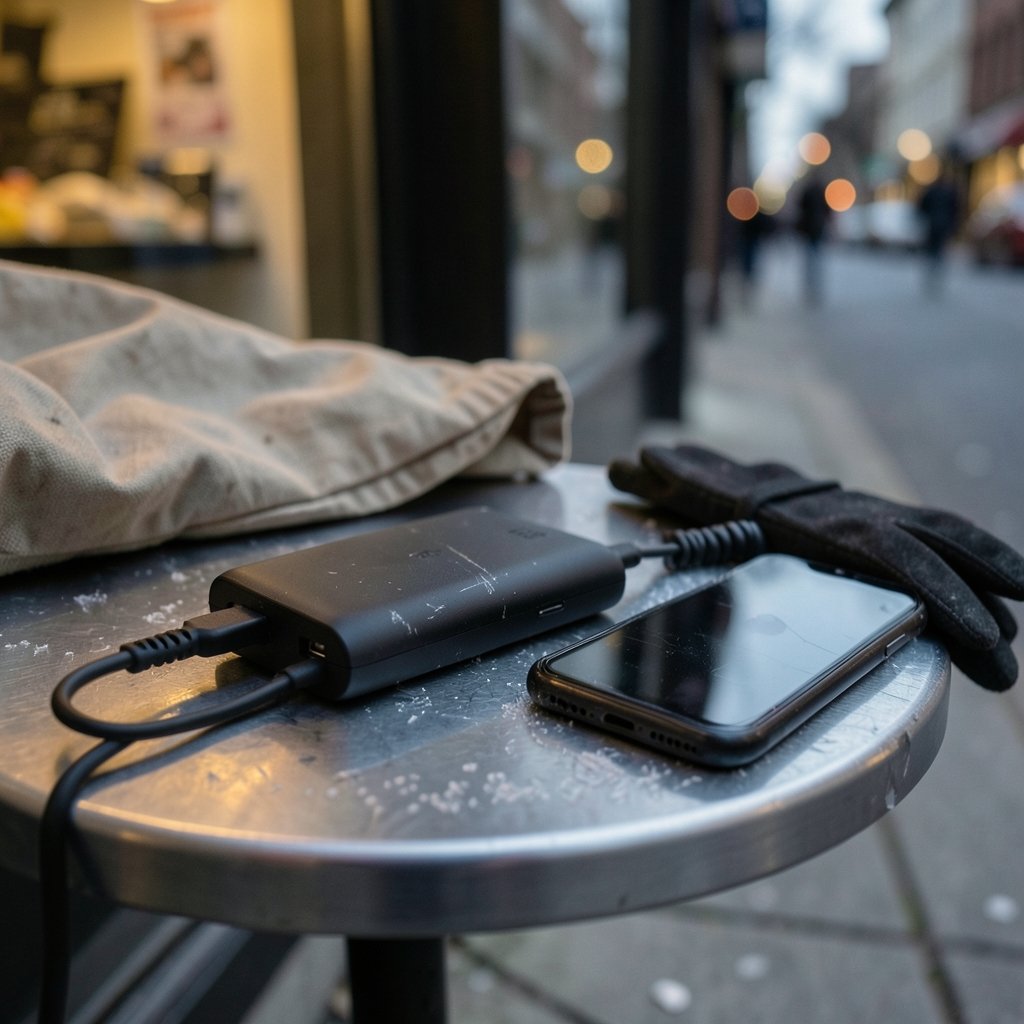
A power bank does not wear out like a hinge or a zipper. It loses capacity through a handful of electrochemical processes, and almost all of them speed up with the same two triggers: heat and time spent sitting at a high state of charge.
Solid electrolyte interphase growth
On the anode, a passivating layer slowly thickens with every cycle and with plain age. It consumes lithium that can no longer be cycled. This is the main reason a cell loses roughly 20 percent of capacity over 500 to 1,000 full cycles, and it happens even when the bank is sitting in a drawer.
Lithium plating
Under charge at low temperature or high current, lithium can deposit as metal instead of sliding into the anode structure. Plated lithium is largely lost, and it can create safety risks. Charging a cold power bank in a chilly car or on a winter hike is a quiet way to accelerate this.
Calendar aging
Time alone degrades the cell. A bank stored at 100 percent charge for weeks on end ages faster than one kept in the middle of its range. This is why a power bank that lives permanently plugged in on a desk often fades faster than one that gets used and recharged in cycles.
Heat
Heat is the biggest single factor in long-term health. A bank left on a sunny dashboard, charged under a pillow, or stacked under a laptop gets cooked from the inside. Every one of the mechanisms above runs faster when the cell is warm.
What a Year of Daily Use Looks Like in Numbers
The cycle math is simple and unforgiving. A full charge cycle means pushing 100 percent of the bank’s capacity through it, whether in one session or several partial top-ups. Charging from 50 to 100 percent twice equals one full cycle, exactly the same as one run from 0 to 100 percent. (Ai website builders 2027 actually launches one afternoon)
| Usage pattern | Full cycles per year | Typical capacity left at 12 months |
|---|---|---|
| Occasional top-ups, 1 to 2 cycles per week | 50 to 100 | 92 to 97 percent |
| Moderate daily use, 3 to 4 cycles per week | 150 to 200 | 88 to 93 percent |
| Heavy daily use, 5 to 7 cycles per week | 250 to 350 | 80 to 88 percent |
| Near-constant use plus heat exposure | 350 or more | 70 to 80 percent |
Most power banks are designed for roughly 300 to 500 full cycles before capacity settles at around 60 to 80 percent of the original. A daily heavy user can therefore burn through a meaningful chunk of the design life in a single year, while a casual user is barely breaking the cell in. For a deeper look at how capacity ratings themselves can mislead you, the breakdown of power bank capacity in mAh vs Wh is worth reading before you compare models.
The Signs Your Bank Is Fading, Not Broken
Capacity loss is gradual, so people often notice the symptoms before they notice the number. Common early warning signs include:
- A charging session that used to take your phone from 20 to 80 percent now barely reaches 50 percent.
- The bank itself loses charge while sitting unused, dropping noticeably overnight.
- The case feels warm even under a light load, a sign that internal resistance has risen.
- The percentage display jumps or shuts off early, the classic “phantom charge” behavior of an aged cell.
One practical test cuts through all the guesswork. Charge the bank fully, then discharge it into a device of known battery size and record how much actually transfers. If real output falls below 60 percent of the rated capacity and the unit runs hot, it is time to retire it. A swollen case is a hard stop: that is gas building up inside from chemical breakdown, and the unit should be recycled, not used.
What Survives and What Fails First
Most banks that fail at twelve months fail on cells, not electronics. The DC-DC conversion circuitry is solid-state and does not wear the way a cell does. If a bank negotiated power delivery correctly on day one, it generally still does at month twelve. The USB-C port is the mechanical weak point, since repeated insertion cycles wear the connector long before the battery gives out. The case and the ports on better-built units tend to hold up well.
That split matters when you are deciding what to replace. A bank with a loose, intermittent port but healthy cells may still be perfectly good. A bank with a solid port that delivers half its rated output is done, no matter how nice the shell looks.
Habits That Actually Slow the Decline
Practical experience points to a handful of habits that make a measurable difference over a year:
- Keep it in the middle. Store the bank around 40 to 60 percent for long idle stretches rather than fully charged or fully empty.
- Avoid the extremes. Routine drains to 0 percent and long holds at 100 percent both add stress compared with the middle range.
- Watch the temperature. Do not leave it in a hot car, on a windowsill, or charging under bedding. Heat does more damage than any charging habit.
- Skip fast charging when you can. Higher charge rates accelerate per-cycle wear, so slow overnight charging is gentler than a high-wattage blast.
- Use it or store it properly. A bank left at 100 percent for months ages faster than one cycled regularly and stored at moderate charge.
The most common mistake is treating a power bank like a wall socket: leaving it plugged in permanently so it is always “ready.” That habit keeps the cell at maximum voltage and warmth for months, which is precisely the combination that accelerates calendar aging. The second most common mistake is judging health by how fast the bank recharges itself. Speed of recharge says little about usable output capacity.
When to Replace, and What to Buy Next
A reasonable replacement trigger is when real output drops below about 70 percent of what you originally got, or when the unit runs hot, swells, or fails to hold charge between uses. For a heavy daily user, that often lands somewhere between 12 and 24 months. For a light user, three to four years is normal.
When you do replace, buy on measured behavior rather than label size. Look for a bank that states its rated energy in watt-hours alongside milliamp-hours, since watt-hours account for voltage and give a truer picture of stored energy. A unit with a metal or well-ventilated case handles heat better than a sealed slim shell. And if you are weighing a phone upgrade at the same time, the roundup of the 15 most anticipated games of late 2027 is a useful reminder that battery-hungry apps and games are exactly what push a power bank through its cycles fastest.
It also helps to think about the wider context. Charging hardware is getting smarter, and the same trend toward intelligent power management is showing up across consumer electronics. If you are curious how far that goes, the piece on quantum computing meeting AI in banking after 2027 sketches where efficiency-focused engineering is heading, and the best of 2027 awards roundup shows which product categories earned recognition for doing the basics well.
Conclusion
A power bank after a year of daily use is not a mystery. It is a cell that has done real work. Expect 80 to 90 percent of original usable capacity in most cases, less if you ran it hard and hot, and remember that the starting number was already discounted by conversion losses. Track real output instead of the printed label, keep the bank cool and in the middle of its charge range when idle, and replace it when the numbers or the heat tell you to. A well-treated bank rewards you with years of steady service; a mistreated one fades quietly until the day it lets you down at the worst possible moment.
FAQ
How much capacity does a power bank lose in one year of daily use?
Most daily-use power banks retain roughly 80 to 90 percent of their original usable capacity after twelve months. Heavy users who run five or more full cycles per week land closer to 80 percent, while moderate users stay above 88 percent.
Does a 10,000mAh power bank really deliver 10,000mAh?
No. Conversion losses mean a 10,000mAh bank typically delivers about 7,000 to 8,000mAh to your phone when new, and somewhat less after a year of use. The rated figure describes the cell, not what comes out of the port.
What counts as one charge cycle?
One full cycle means pushing 100 percent of the bank’s capacity through it. That can happen in a single session or across several partial top-ups. Charging from 50 to 100 percent twice uses exactly one full cycle.
Is it bad to leave a power bank plugged in all the time?
Yes, it accelerates wear. Keeping the cell at 100 percent charge and slightly warm for months speeds up calendar aging. Storing it around 40 to 60 percent when idle is gentler on the battery.
How do I test whether my power bank has lost capacity?
Charge it fully, then discharge it into a device with a known battery size and note how much energy actually transfers. If real output falls below 60 percent of the rated capacity and the unit runs hot, replace it.
When should I replace a power bank?
Replace it when real output drops below about 70 percent of what you originally got, when it runs hot under light load, when it will not hold charge between uses, or immediately if the case swells.
The same logic applies to smaller accessories. A pocket-sized bank rated at 5,000mAh will show the same percentage decline as a 20,000mAh unit, because aging is chemical, not a function of size. What changes is how quickly you notice it: a small bank that once gave your phone two full charges may give only one and a half after a year, which feels like a failure even though the cell is behaving normally. Judge it by percentage retained, not by how many charges it used to provide.