The best fitness trackers for seniors in 2027 are the ones you barely have to think about. They count steps, watch your heart rate and show the time in large, clear type — and the right one for you is the one you will actually wear every day. There is no single best tracker for every older adult, but there is a clear best choice for each priority, whether that is fall detection, a simple screen, long battery life or no monthly subscription.
My mother-in-law put it better than any review could. She wore a tracker for a week, charged it twice, lost the charger, and went back to her old watch. The device was not bad; it was built for someone who enjoys fiddling with settings. Most seniors do not want a gadget hobby. They want a reliable companion that reports how much they moved and how well they slept — then gets out of the way. This guide judges every pick on readability, comfort, battery life and the health features that matter after sixty. Prices change often, so check the current price before buying, and treat any subscription as part of the real price.
Key takeaways
- Choose readability first: a large, bright display with big numbers beats extra features you will never open.
- Fall detection and irregular heart rhythm alerts are the two safety features worth paying for.
- A tracker that lasts a week or more between charges is far easier to live with than one that needs nightly charging.
- Check whether health features need a monthly subscription before you buy, not after.
What matters most in a fitness tracker for seniors
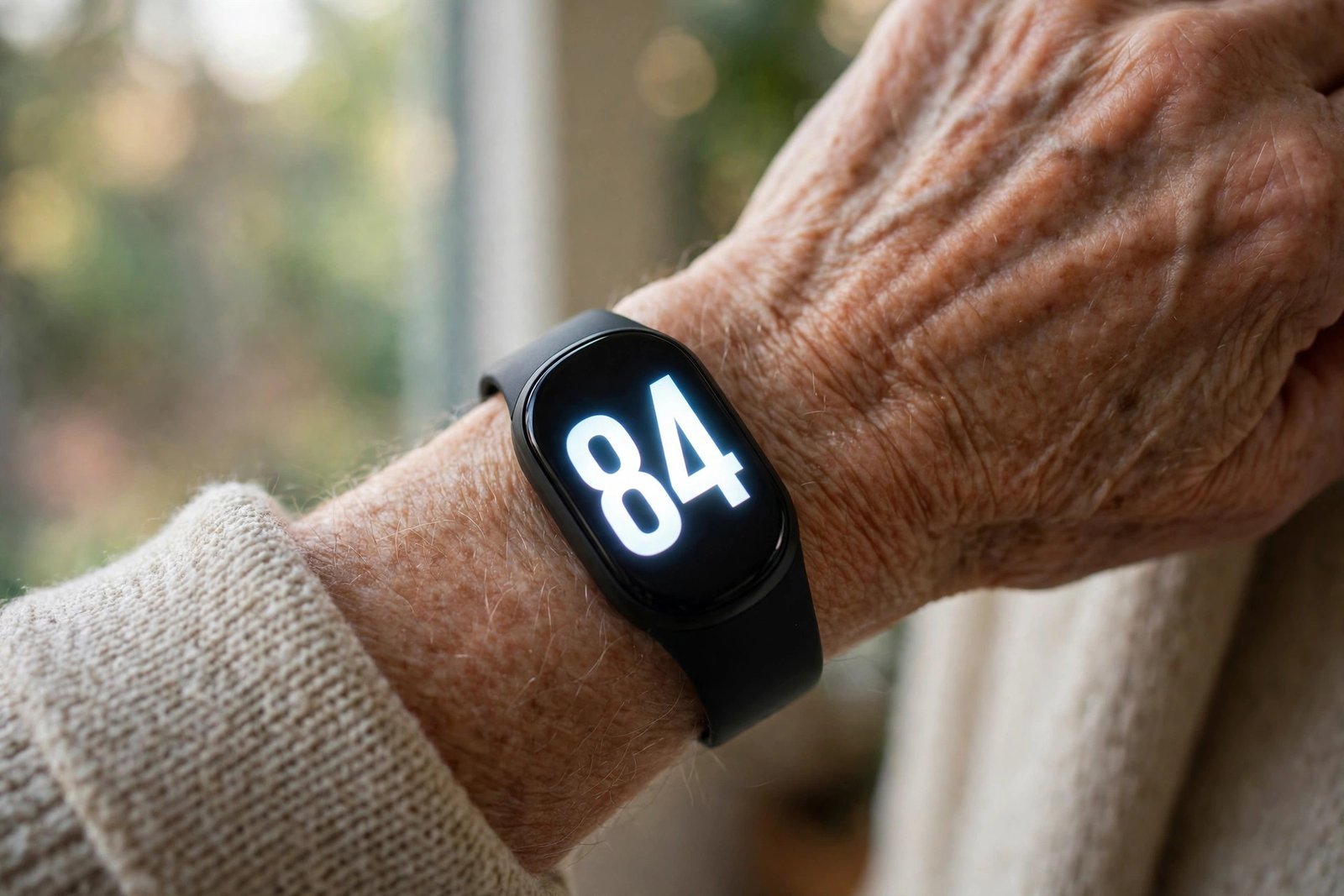
Start with the screen. Small, dim displays with grey text on black are hard to read in bright sunlight and nearly impossible without reading glasses. Look for a bright display, large numerals and a watch face that shows the time, date and step count at a glance, without swiping through menus.
Next, consider the health features. Step counting and heart rate monitoring are standard on almost every modern tracker and are genuinely useful for watching daily movement and resting heart rate trends. Fall detection, which can alert a chosen contact or emergency services after a hard fall, is available on several mainstream smartwatches and is worth serious consideration if you live alone. Irregular rhythm notifications, which flag possible signs of atrial fibrillation, can prompt a useful conversation with your doctor. They are not a diagnosis, and they do not replace medical advice.
Battery life is the third pillar. A tracker that runs for five to ten days turns charging into a weekly habit rather than a nightly chore. Devices that need daily charging tend to end up in a drawer, especially if the charger is a fiddly magnetic puck that is easy to lose.
Finally, think about the phone in your pocket. Apple Watch works with iPhone only. Fitbit and Garmin devices pair with both iPhone and Android, with some features varying by phone. If you do not use a smartphone at all, look for a tracker with a simple standalone display and a companion app that a family member can set up for you.
The best fitness trackers for seniors in 2027
Apple Watch SE (2nd generation)
Best for: iPhone owners who want fall detection and a familiar, easy-to-read screen at a sensible price.
The Apple Watch SE is the most capable senior-friendly smartwatch for iPhone users who do not need the premium model’s brightest display or longest battery life. It offers fall detection, irregular rhythm notifications, emergency SOS and a bright, clear screen with large text options. Family members can help with setup, and health data can be shared with a trusted person. Battery life is the weak point: expect to charge it most days, so it suits someone comfortable with a nightly charging routine. Check the current price, as it varies between retailers.
Fitbit Charge 6
Best for: seniors who want a slim, light tracker with several days of battery and simple health tracking.
The Charge 6 is a slim band rather than a full smartwatch, which makes it comfortable to wear day and night, including in bed for sleep tracking. It covers steps, heart rate, sleep stages and stress, and its screen is bright enough to read outdoors. The Fitbit app presents daily totals in plain language. Some advanced health insights sit behind a Fitbit Premium subscription, so factor that into the cost if you want the full picture. Its battery lasts several days, and the charger is a simple clip-on cable.
Garmin Venu 3S
Best for: active seniors who walk, swim or cycle and want long battery life with no subscription.
The Venu 3S pairs a bright AMOLED display with battery life measured in days rather than hours, and there is no monthly subscription for its core health features. It tracks steps, heart rate, sleep, stress and a wide range of activities, and its larger text options make the screen easy to read. It is slightly more complex to set up than a Fitbit, but once configured it is a set-and-forget device. It also offers incident detection during outdoor activities, which can share your location with an emergency contact.
Fitbit Inspire 3
Best for: seniors who want the simplest, lightest and cheapest tracker that still does the job.
The Inspire 3 is the pick for anyone who finds smartwatches overwhelming. It is a slim, feather-light band with a small colour display, step and heart rate tracking, sleep monitoring and a battery that lasts well over a week. There are no apps to manage, no watch faces to customise and very little to go wrong. The trade-off is a smaller screen and fewer advanced features: no fall detection and no irregular rhythm alerts. For a senior who simply wants to move more and see progress at a glance, that trade is often the right one.
Best fitness trackers for seniors compared
| Tracker | Best for | Battery life | Fall detection | Subscription needed |
|---|---|---|---|---|
| Apple Watch SE (2nd generation) | iPhone owners wanting safety features | About a day | Yes | No, for core features |
| Fitbit Charge 6 | Slim, comfortable everyday tracking | Several days | No | Optional, for advanced insights |
| Garmin Venu 3S | Active seniors, no subscription | Several days | Incident detection | No |
| Samsung Galaxy Watch 7 | Android owners wanting a full smartwatch | A day or two | Yes | No, for core features |
| Fitbit Inspire 3 | Simplicity and long battery | Over a week | No | Optional, for advanced insights |
Table: how the four picks compare on the features that matter most. Battery life varies with settings and screen use.
Before you buy: a five-point checklist
- Can you read it? Check the display size, brightness and largest text setting. If the numbers look small in photos, they will look small on your wrist.
- Will you wear it at night? Sleep tracking only works if the band is comfortable in bed. Slim bands win here; bulky watches often get taken off.
- Does it need a subscription? Add any monthly fee to the purchase price and decide whether the extra insights are worth it.
- Who helps if it goes wrong? Choose a brand a family member already uses, so setup help is a phone call away.
- Does it suit your phone? Apple Watch needs an iPhone. Most other trackers work with both iPhone and Android, but check before you order.
If you also want to understand your nights as well as your days, our guide to the best sleep trackers compares watches, rings and bedside mats. Weight is another useful signal alongside steps and heart rate, and the best smart scales round-up explains body composition readings in plain language. Because subscriptions add up, work out the true yearly cost before you commit — our guide on how to use AI to plan a monthly budget shows a simple way to do that.

Frequently asked questions
Do seniors really need a fitness tracker?
Not everyone does, but many benefit. A tracker turns vague advice like “move more” into a visible daily number, and that feedback loop helps people walk a little further each day. If you already walk regularly and feel well, a simple band may be enough.
Is fall detection reliable?
Fall detection on mainstream smartwatches is designed to catch hard falls and can alert emergency contacts automatically if you do not respond. It is a valuable safety net, but it is not a medical device and cannot replace a personal alarm or regular check-ins if you live alone.
Do fitness trackers need a smartphone?
Most need a phone for setup and for viewing detailed history, though the watch itself shows steps, time and heart rate without one. A family member can often complete setup on their phone, depending on the brand.
Which fitness tracker has the longest battery life?
Simple bands such as the Fitbit Inspire 3 typically last longest, often well over a week. Full smartwatches with bright displays usually need charging every day or two. Garmin’s mid-range watches sit in between, lasting several days.
Are fitness trackers accurate for step counting?
Step counts are estimates, not laboratory measurements, and accuracy varies with walking speed and where the device is worn. What matters most is the trend over weeks: if your average is rising, you are moving more, and that is the point.
The bottom line
The best fitness tracker for seniors in 2027 is not the one with the longest spec sheet. It is the one with a screen you can read, a strap you forget you are wearing, a battery you rarely think about, and safety features that give you and your family peace of mind. For most iPhone owners, that is the Apple Watch SE. For most everyone else, the Fitbit Charge 6 or Garmin Venu 3S will do the job beautifully, and the Inspire 3 is there for anyone who wants the simplest start. Pick the one that matches your phone, wear it for two weeks, and look at the trend rather than any single day.