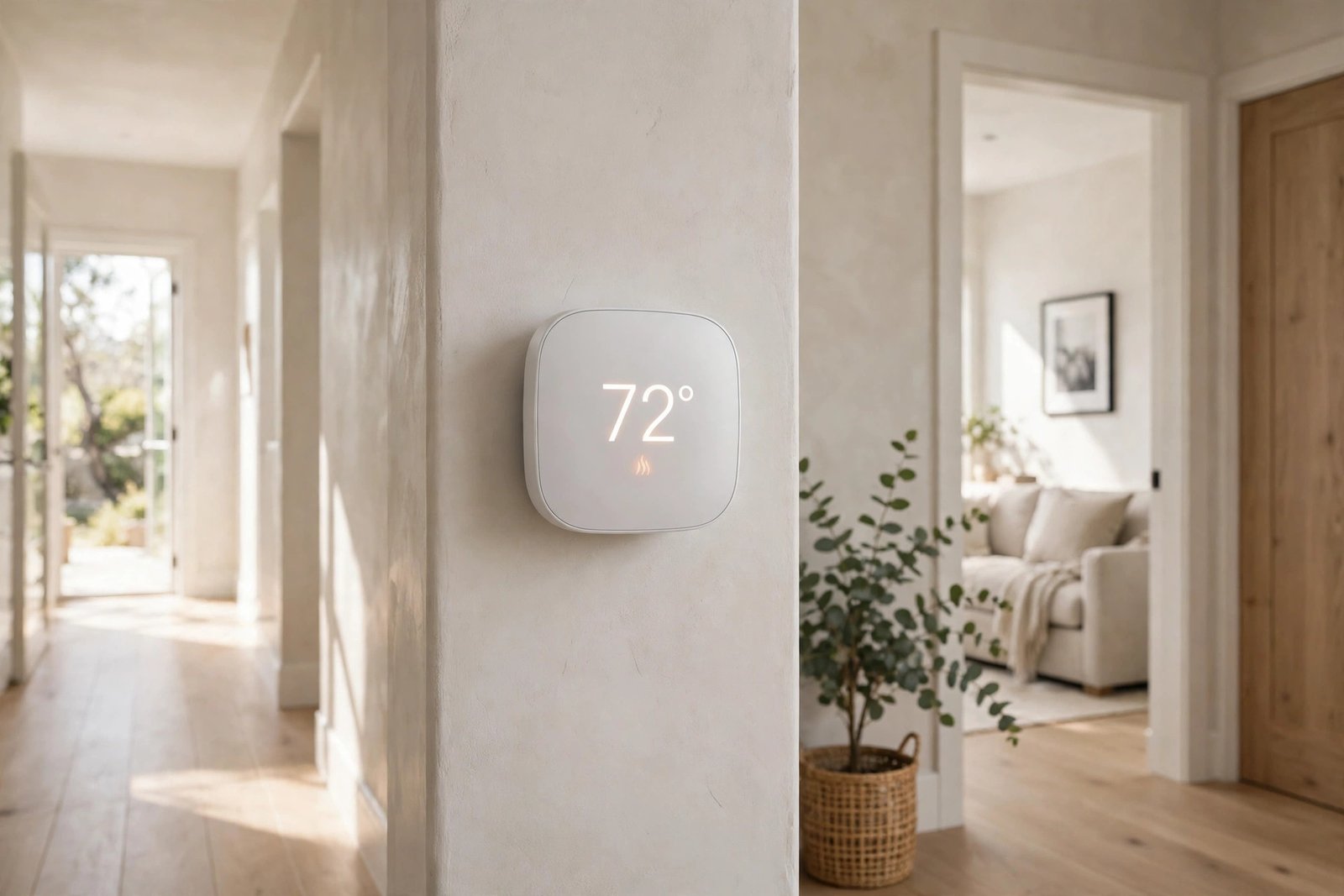
The best smart thermostats 2027 has to offer can cut heating waste by learning your routine, turning the heating down when nobody is home and letting you control radiators room by room. Our pick for most homes is the Google Nest Learning Thermostat, with Hive and Tado close behind for different households. The right choice depends on your boiler, your smart home system and whether you want room-by-room control.
This guide compares the leading 2027 thermostats on heating control, compatibility, app quality and running costs, so you can choose the one that fits your home rather than the one with the longest feature list.
Key takeaways
- A smart thermostat saves money by heating only when needed, not by making your boiler more efficient.
- Check boiler compatibility before buying: most models suit combi boilers, but older systems and heat pumps need checking.
- Room-by-room control through smart radiator valves is the biggest single saving for larger homes.
- None of the leading thermostats needs a subscription for core heating control.
- A good schedule you actually follow beats clever learning features you never set up.
How a smart thermostat saves on heating
A smart thermostat does not change how your boiler works. It changes when the boiler runs. A traditional thermostat holds one temperature all day unless you remember to turn it down. A smart thermostat learns when you are home, when you sleep and when you leave, then adjusts the heating to match. It also lets you change the temperature from your phone, so you can turn the heating off when plans change instead of warming an empty house.
The savings come from the hours the heating is off. Geofencing switches the heating down when your phone leaves the area and brings it back up as you return. Learning schedules adapt to your routine over a week or two. Open-window detection pauses the heating when a window is opened. None of these features is dramatic on its own, but together they remove the wasted heating hours that add up across a winter.
Manufacturers publish their own estimated savings figures, and these vary by home, climate and previous habits. Treat them as rough guides rather than promises. The households that save most are the ones with irregular routines and heating that used to run on a fixed schedule all day. If you already turn your heating down carefully, the saving will be smaller.
The best smart thermostats of 2027 at a glance
Google Nest Learning Thermostat — the best smart thermostat for most homes
Best for: most households who want a thermostat that learns their routine with minimal setup.
The Nest Learning Thermostat remains the benchmark for hands-off heating control. It builds a schedule from your adjustments over the first week or two, then keeps adapting as your routine changes. It turns the heating down when it senses nobody is home, and you can control it from the Google Home app or by voice through Google Assistant and Alexa. The display is clear, the design suits most hallways, and installation is straightforward on most combi boilers.
Its main limitation is that room-by-room control needs separate Nest temperature sensors, which add cost and are not available in every region. It also works best inside Google’s ecosystem.
Hive Thermostat — the best smart thermostat for UK homes
Best for: UK households with a combi boiler who want simple controls and a familiar British brand.
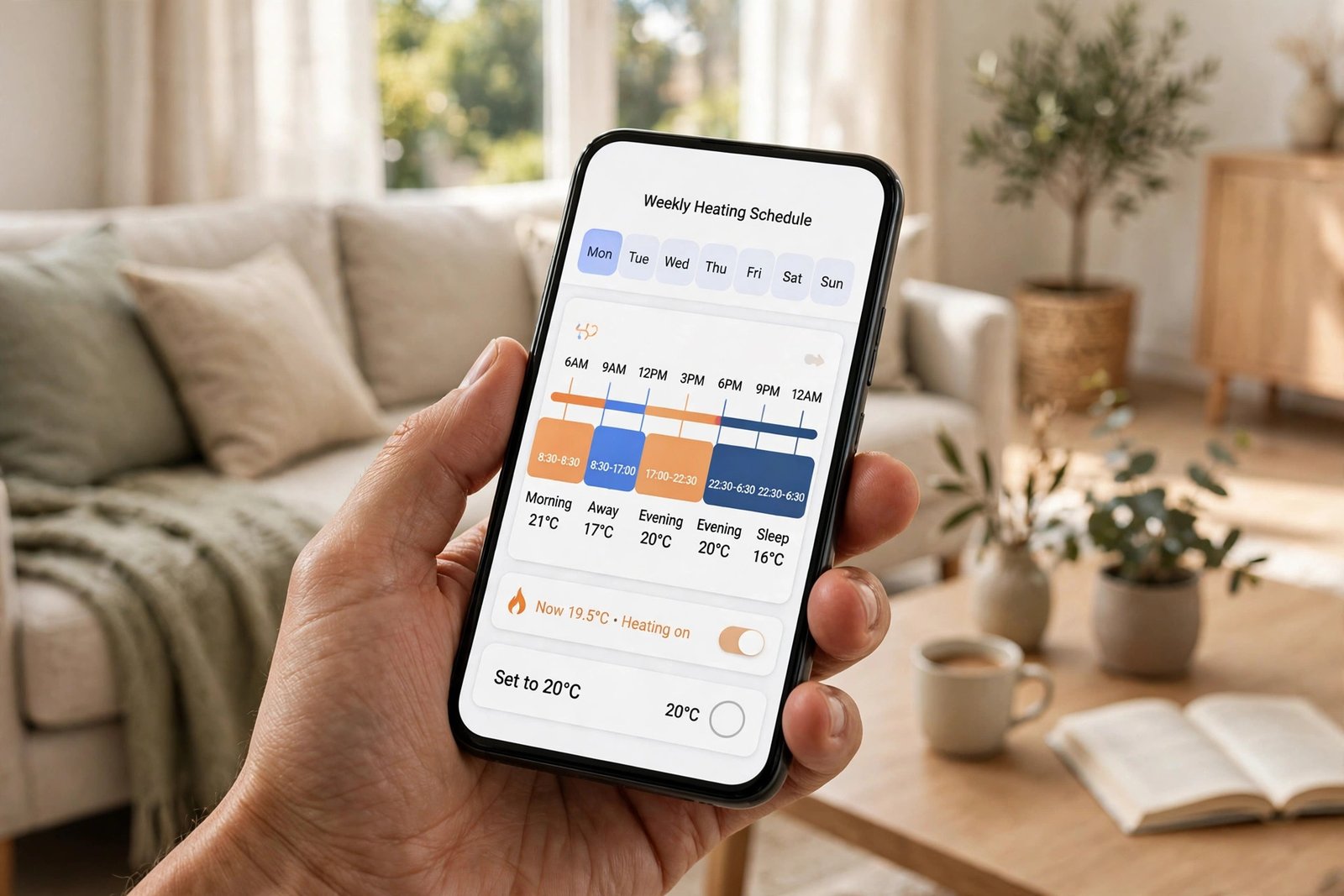
Hive is built for the UK market, and it shows. The thermostat is designed around British heating systems, the installation service is widely available, and the app is simple enough for anyone in the household to use. You get scheduling, geofencing, holiday mode and frost protection, plus control of Hive smart lights and plugs from the same app if you use them.
Hive’s learning features are less advanced than Nest’s, and it does not offer true room-by-room heating without additional smart radiator valves. For a straightforward, reliable thermostat that a heating engineer will recognise and a whole household can use, Hive is hard to beat. For readers planning wider smart home upgrades, our guide to the best smart light bulbs covers another simple first step.
Tado Smart Thermostat — the best for room-by-room heating control
Best for: larger homes and households who want a different temperature in each room.
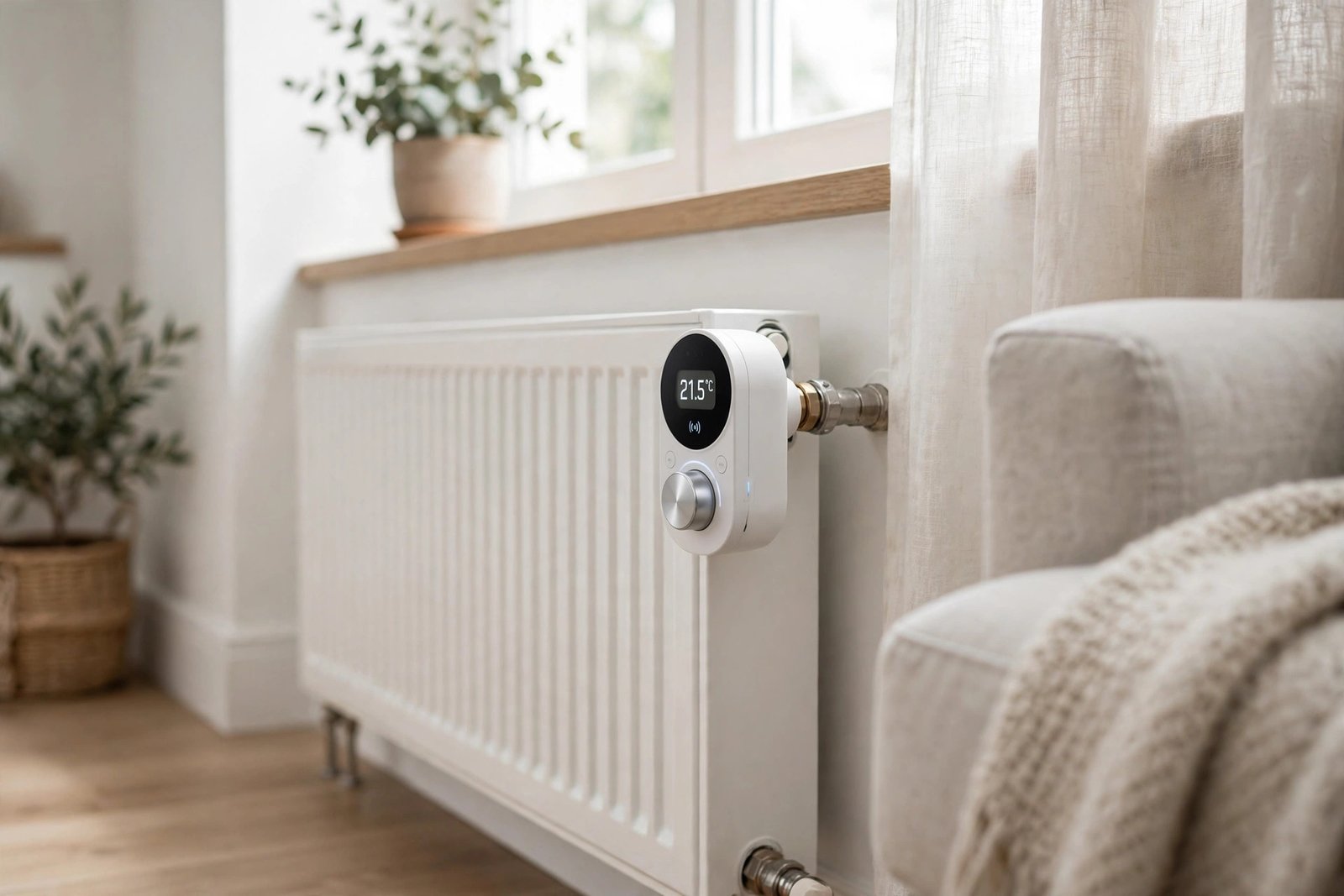
Tado’s strength is zoning. Add wireless radiator thermostats to individual radiators and each room gets its own schedule and temperature, so a spare bedroom stays cool while the living room stays warm. The app shows the temperature in every room, and geofencing, open-window detection and weather adaptation are all built in.
The trade-off is cost and complexity. Each radiator valve adds to the price, and setting up a multi-room system takes more time than fitting a single thermostat. If your home has rooms that are rarely used or always too hot or too cold, Tado’s zoning is worth the extra effort and expense.
Ecobee Smart Thermostat Premium — the best for detailed control and air quality
Best for: households who want room sensors, air quality monitoring and deep customisation.
Ecobee’s flagship thermostat includes a room sensor in the box and an air quality monitor, which sets it apart from the competition. The sensor measures temperature and occupancy in another room, so the thermostat can heat based on where people actually are rather than where the thermostat hangs. The app offers detailed schedules, reports and alerts, and it works with Alexa, Google Assistant and Apple HomeKit.
Availability is the main drawback: Ecobee is primarily a North American brand, so check availability and compatibility with your heating system before buying.
Honeywell Home T9 Smart Thermostat — the best for flexible room sensors
Best for: homes with hot and cold spots that need heating based on more than one room.
The Honeywell Home T9 takes a similar approach to Ecobee, using wireless room sensors to balance temperatures across the house. You can place sensors in the rooms you use most and tell the thermostat to prioritise them at different times of day, which helps with homes where one room is always colder than the rest. It supports geofencing, scheduling and voice control through Alexa and Google Assistant, and it works with a wide range of heating systems.
The T9’s app and setup are less polished than Nest or Hive, and additional sensors add to the cost.
Best smart thermostats 2027: comparison table
| Thermostat | Best for | Room-by-room control | Subscription needed | Smart home support |
|---|---|---|---|---|
| Google Nest Learning Thermostat | Most homes, hands-off control | With optional sensors | No | Google Home, Alexa |
| Hive Thermostat | UK homes, simple controls | With optional radiator valves | No | Alexa, Google Assistant |
| Tado Smart Thermostat | Larger homes, zoning | Yes, radiator thermostats | No for core features | Alexa, Google, HomeKit |
| Ecobee Smart Thermostat Premium | Detailed control, air quality | With included room sensor | No | Alexa, Google, HomeKit |
| Honeywell Home T9 | Hot and cold spots | With wireless room sensors | No | Alexa, Google Assistant |
Table: the best smart thermostats of 2027 compared on zoning, subscriptions and smart home support.
Use this table to narrow the field, then check compatibility with your boiler and heating system. That single check matters more than any feature comparison.
A checklist before you buy a smart thermostat
- Check your boiler type: confirm whether you have a combi, system or regular boiler, and whether the thermostat supports it. Heat pump owners should check compatibility carefully.
- Check your wiring: some thermostats need a common wire, while others work with two-wire systems or a power adapter. Check the manufacturer’s compatibility guide before ordering.
- Count the rooms you want to control: if you want different temperatures in different rooms, budget for radiator valves or room sensors as well as the thermostat itself.
- Decide who controls the heating: choose an app the whole household can use, and agree on schedules before the first cold week.
- Plan the installation: many models suit confident DIY fitting, but a heating engineer is the safer choice for unfamiliar wiring or older systems.
- Set a schedule you will keep: a simple schedule that matches your real routine saves more than clever features you never configure.
If you are torn between two models, score them on compatibility, ease of use and zoning. The thermostat that fits your boiler, that everyone in the house can operate and that covers the rooms you actually use is usually the right one. For a broader look at home security and comfort upgrades, see our guide to the best smart home security cameras. For a wider view of household spending, our guide to how to use AI to plan a monthly budget shows how heating fits into the bigger picture.
Frequently asked questions
Do smart thermostats really save money on heating?
They can, by reducing the hours your heating runs when nobody needs it. Geofencing, learning schedules and room-by-room control all cut wasted heating. The saving depends on your home, your routine and how carefully you managed the heating before, so treat manufacturers’ estimates as rough guides.
Do I need a subscription for a smart thermostat?
No. None of the leading thermostats in this guide needs a subscription for core heating control, scheduling or app access. Some brands offer optional paid features, such as extended energy reports, but heating control itself is free.
Will a smart thermostat work with a combi boiler?
Most smart thermostats work with combi boilers, which are the most common type in UK homes. Check the manufacturer’s compatibility guide for your exact boiler model, and confirm the wiring requirements before you buy.
Can I install a smart thermostat myself?
Many models are designed for DIY installation and include clear instructions, but you should only attempt it if you are confident working with low-voltage wiring and can isolate the heating system safely. If you are unsure, hire a heating engineer. Incorrect wiring can damage the boiler or the thermostat.
What is the difference between a smart thermostat and smart radiator valves?
A smart thermostat controls the whole heating system from one point, while smart radiator valves control individual radiators. Used together, they give room-by-room control: the thermostat manages the boiler, and the valves decide which rooms get heat.
Do smart thermostats work with heat pumps?
Some do, but compatibility is more limited than with gas boilers. Heat pumps run at lower temperatures and work best with steady, gradual heating rather than frequent on-off cycles. Check the manufacturer’s heat pump guidance and consider professional advice before buying.
The bottom line
The best smart thermostat in 2027 is the one that fits your boiler, your routine and your home. For most households, the Nest Learning Thermostat is the strongest all-round choice. Hive suits UK homes that want simple, reliable control. Tado is the pick for larger homes that need room-by-room heating. Check your boiler compatibility first, budget for radiator valves or sensors if you want zoning, and set a schedule that matches your real life. Then let the thermostat do the work of turning the heating down when nobody needs it.