Tesla has started rolling out Full Self-Driving (Supervised) v15, its largest driver-assistance update in more than a year, with a new visualisation called Reality View and a headline claim that the system handles safety-critical cases 25 times better than before. The first wave reached customers and Early Access Program members on Saturday 21 November 2026, after Tesla announced the rollout on X that day.
For now, v15 looks like a substantial rebuild of how the car sees, plans and explains itself, wrapped around one very large number that Tesla has not yet backed with published data. The new visualisation is visible from the first drive, the list of smaller improvements is long, and the supervision rule has not changed.
Key takeaways
- Tesla began rolling out Full Self-Driving (Supervised) v15 on Saturday 21 November 2026 to a first wave of customers and Early Access Program members, with a wide release expected in December.
- Tesla claims 25 times better handling of safety-critical cases, but it has not published the baseline, so the claim cannot yet be checked independently.
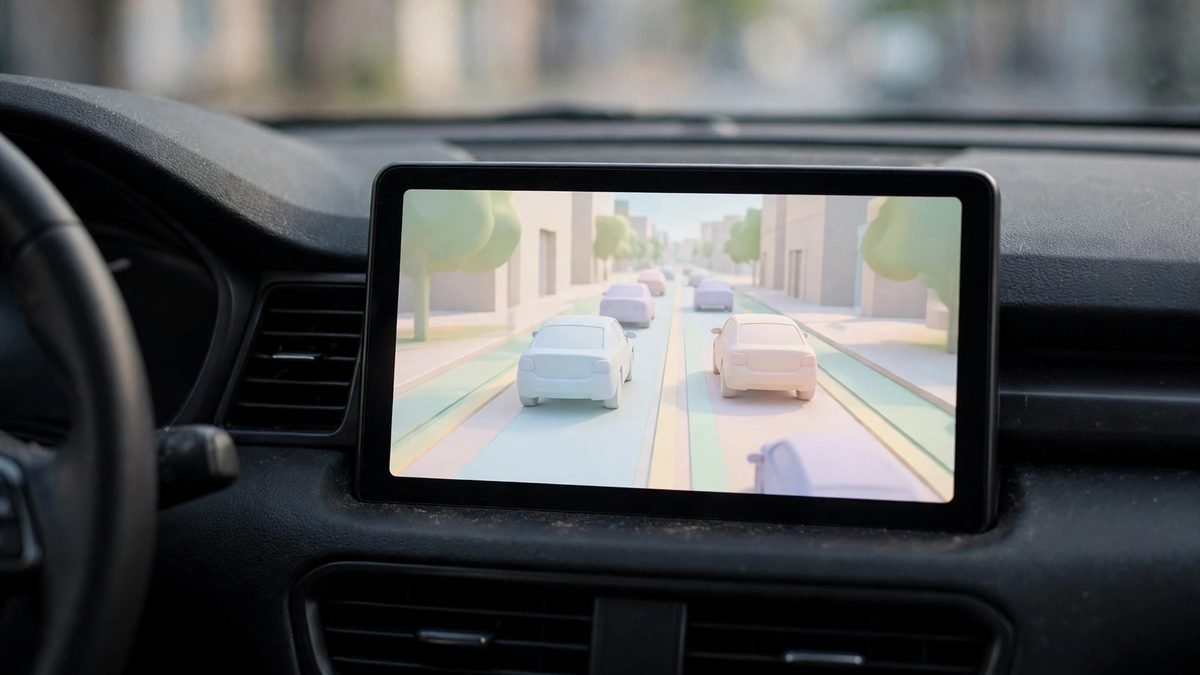
- Reality View, called Tesla Augmented Reality in the release notes, replaces the old separate model signals with a single live, end-to-end generative visualisation from a virtual camera above the car.
- The update also brings navigation that learns from fleet route preferences, smarter parking choices, improved driver monitoring and hazard detection, and a Speed Camera Slowdown feature.
- Full Self-Driving remains Supervised: the driver must stay attentive and ready to take over at all times.
What Tesla announced on 21 November
Tesla announced the start of the v15 rollout on X on Saturday 21 November 2026, with the first cars in the initial wave receiving the software that day. The release notes run through a long list of changes rather than a single new feature.
There is no suggestion in the release notes that the supervision requirement has changed. Full Self-Driving (Supervised) still needs a driver who is paying attention, watching the road and ready to take control. That point is easy to lose in the excitement over a new visualisation, but it is the single most important fact about the update for anyone who will use it.
The 25-fold claim, and why it needs care
The headline in Tesla’s release notes is a claim of 25 times better handling of safety-critical cases. It is a striking figure, and it is also, at present, an unverifiable one. Tesla has not published the baseline against which the improvement was measured, nor the test conditions, the number of miles involved or the definition of a safety-critical case used to produce the multiplier.
That matters because a multiplier without a baseline tells a reader very little. Twenty-five times better than a strong starting point would be a remarkable achievement. Twenty-five times better than a weak one would be a smaller step dressed in a large number. Until Tesla publishes the underlying figures, the claim should be treated as Tesla’s own account of its internal testing, not as an independently confirmed safety result.
The context from the previous version makes the caution more important, not less. Version 14 launched in October 2025 and attracted complaints from drivers who reported hallucinations, sudden braking incidents described as brake stabbings, and speeding. Early crowdsourced figures put v14 at roughly 732 miles between critical disengagements, according to reporting by Electrek. If that figure is taken as a rough starting point, a true 25-fold improvement would be an enormous jump, and it would need to show up clearly in independent driving data before it can be taken at face value.
Reality View: a new way to see what the car is planning
The most visible change in v15 is Reality View, which the release notes call Tesla Augmented Reality. It is a live, end-to-end generative visualisation that streams a view from a virtual camera above the vehicle, showing the road ahead and the traffic around it as a rendered scene rather than as a set of separate symbols and signals.
The old display was built from the outputs of several separate models, each contributing its own piece of the picture. Reality View replaces that with a single end-to-end visualisation, and Tesla says it uses less total compute than the system it replaces. The practical aim is clearer for the driver: instead of interpreting a collection of icons and lane markings, the driver sees a rendered view of the street that is closer to what the car itself is working with.
Tesla says the new view lets the driver see and control what Full Self-Driving is planning to do. That is a meaningful promise if it holds up in daily driving, because one of the long-standing frustrations with driver-assistance systems is the gap between what the car is about to do and what the driver expects. A visualisation that shows the plan, rather than only the present position, could close some of that gap and give the driver earlier warning when the plan looks wrong.
An upgraded vision encoder, trained on millions of videos
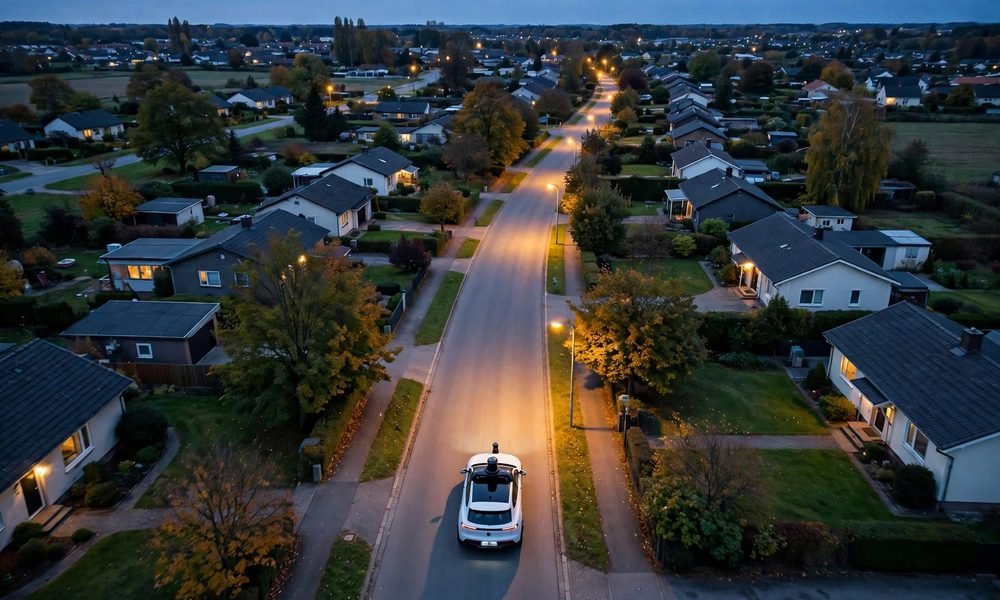
Behind the new visualisation sits an upgraded vision encoder, which Tesla credits with the improvement in safety-critical handling. The encoder is shared between Full Self-Driving, Robotaxi and Optimus, Tesla’s humanoid robot, and it was trained on millions of internet videos as well as driving data.
The same update brings improved detection of the small, awkward hazards that driver-assistance systems have historically struggled with. Tesla lists better detection of road signs, small animals, road debris, chains, potholes, road details and deep standing water. Those are the kinds of objects that are easy for a human driver to spot and hard for a machine to classify with confidence. Tesla also says v15 improves speed handling for each driver profile, in school zones and in bad weather, and that vision-based driver monitoring works better with hats and sunglasses.
Navigation, parking and the smaller changes
Navigation in v15 learns end to end from fleet route preferences. At the start and end of a trip, the system now draws on what the fleet has learned about preferred routes; in later v15 releases, Tesla says the whole route will be covered. The aim is navigation that reflects how drivers actually travel, rather than only the shortest or fastest path on a map.
Parking gets a similar treatment. The system now selects parking locations using personalised parking history, and it shows multiple parking options at the destination so the driver can choose. That is a small change on paper, but parking is one of the places where driver-assistance systems most often feel clumsy, and a choice of options is more useful than a single confident guess.
Several other items in the release notes fill out the picture. Autoshift has been improved by unifying it with Full Self-Driving-based gear predictions, so the car should choose gears more sensibly. A new Speed Camera Slowdown feature means the system slows for speed cameras. Bike Rack Mode lets Full Self-Driving work with a bike rack or similar hitch accessory, with Autopark, Summon and backup chimes switched off while it is active. For readers weighing a new phone to pair with a connected car, our guide to the best Android phones covers the current handsets, and our round-up of the best smart rings looks at wearables that can track health on long drives.
| Item | What Tesla says | Status |
|---|---|---|
| Rollout start | First wave on Saturday 21 November 2026, announced on X | Under way for Early Access members and a first wave of customers |
| Wide release | Expected in December 2026 as part of the Holiday Update | Expected, not yet confirmed as delivered |
| Safety claim | 25 times better handling of safety-critical cases | Tesla’s own claim; baseline not published |
| Reality View | Live end-to-end generative visualisation from a virtual camera above the car | Included in v15 |
| Vision encoder | Upgraded encoder shared with Robotaxi and Optimus, trained on millions of internet videos | Included in v15 |
| Supervision | Full Self-Driving remains Supervised | Driver must stay attentive |
What v15 does not change
The most important thing v15 does not change is the driver’s job: Full Self-Driving is still supervised, and the driver remains responsible at all times. Reality View may make the system’s plans easier to follow, but it does not transfer responsibility to the software.
Checklist: if you get Full Self-Driving v15
Work through these checks before and during your first drives on the new software.
- Confirm you have received v15 and note the version number before your first drive.
- Read the release notes in the car, including the Reality View description and the supervision reminder, before setting off.
- Try Reality View on a familiar route first, and watch whether the rendered plan matches what you would do at junctions.
- Test the new speed handling in a school zone and in wet weather, staying ready to take over.
- Check driver monitoring with hats or sunglasses if you normally wear them, and note whether it tracks you reliably.
- Try the new parking options at a familiar destination, and see whether the choices match your usual spots.
- Do not treat the 25-fold claim as a reason to pay less attention; the system is still Supervised.
Frequently asked questions
When did Tesla start rolling out Full Self-Driving v15?
Tesla began the rollout on Saturday 21 November 2026, announcing it on X that day. The first wave reached customers and Early Access Program members, and a wide release is expected in December 2026 as part of the Holiday Update.
What is Reality View?
Reality View, called Tesla Augmented Reality in the release notes, is a live, end-to-end generative visualisation streamed from a virtual camera above the vehicle. It replaces the old display, built from separate model signals, with a single rendered scene that Tesla says uses less total compute, and lets the driver see and control what Full Self-Driving is planning to do.
Is the 25-fold safety claim proven?
Not yet. Tesla has not published the baseline, test conditions or definition behind the claim, so it cannot be checked independently. Early crowdsourced figures put the previous version, v14, at roughly 732 miles between critical disengagements, according to Electrek’s reporting, which would make a true 25-fold jump very large.
Is Full Self-Driving v15 fully self-driving?
No. Full Self-Driving remains Supervised, which means the driver must stay attentive, watch the road and be ready to take over at any time. The new visualisation and the improved detection do not change that requirement.
What else is new in v15?
Navigation learns from fleet route preferences, parking uses personalised history with multiple options, driver monitoring works better with hats and sunglasses and is less strict in higher-speed driver profiles, detection of small hazards is improved, Autoshift is unified with Full Self-Driving gear predictions, and there are new Speed Camera Slowdown and Bike Rack Mode features.
The bottom line
Full Self-Driving v15 is a substantial update centred on Reality View, a shared vision encoder trained on millions of videos, and practical improvements to navigation, parking, monitoring and hazard detection. The December wide release will be the real test, when many owners can compare it with v14 on everyday roads. As with any new tool, the launch claim matters less than the workflow around it, a point our guide to how freelancers can use AI to write client proposals faster makes in a different field.
Note: Full Self-Driving is a supervised driver-assistance system, not a fully self-driving system. The driver must stay attentive and remains responsible for the car at all times, even when Reality View is showing the system’s plan.