Revisiting a beloved game means making choices under the watchful eyes of players who know every turn. Naoki Hamaguchi’s 2026 comments matter because fans have followed the Final Fantasy VII Remake trilogy closely, and every change can draw attention.
The original is a classic, but a modern retelling must also work as a new game. Emotional pacing means the timing and progression of scenes intended to align players’ feelings with the passage of time. That distinction matters when discussion shifts from story choices to the way scenes unfold.
This update separates what Hamaguchi said from what readers might infer. It also keeps story decisions apart from scene-level pacing, so the comments are not stretched beyond their meaning.
Key Takeaways
- Hamaguchi said reactions did not alter the story’s core.
- He described scene adjustments as a pacing choice.
- The trilogy’s central theme was set early.
- The original game’s devoted audience shaped the team’s careful approach.
- Revelation is scheduled to close the trilogy in 2027.
What Does FF7 Remake Hamaguchi Story Not Changed by Player Reactions 2026 Mean?
No, Naoki Hamaguchi said player reactions did not change the trilogy’s core story. His comments appeared in Edge Magazine issue 429, and the word “core” sets an important limit.
He was speaking about the central story, not every choice made during development. The statement does not show that the team ignored all audience feedback. It says reactions at different points did not redirect the main story.
A claim about the story’s core does not cover every creative or production decision.
That distinction matters because players can respond to many parts of a game. They may comment on scenes, systems, presentation, or how a moment feels.
Hamaguchi’s wording does not say that each part stayed fixed. It also does not prove that feedback had no effect anywhere in the process.
The central theme and core story describe the narrative’s broad direction. Scene timing and other game elements are separate questions, and the comment does not settle them all.
For fans, the careful reading is also the most useful one. Hamaguchi’s claim concerns the story’s core, not every part of the games.
How Did Hamaguchi Set the Trilogy’s Central Theme?
The central theme was set when the Remake series began, before the individual games were developed. Hamaguchi said the team built each entry without wavering from that through-line.
That helps explain how his 2022 trilogy plans fit his 2026 comments on player reactions. The structure was being planned before the later discussion about whether feedback changed the story.
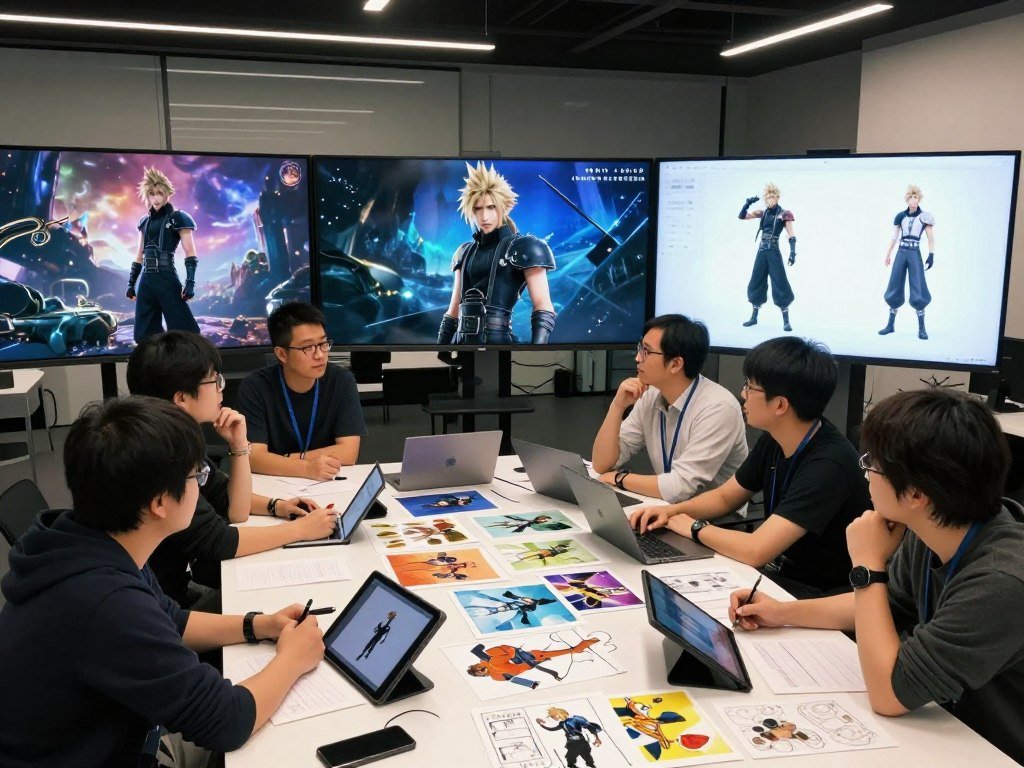
A theme established at the start
Hamaguchi said the team settled the trilogy’s central theme at the start of the Remake series. The team then developed each game around that shared direction.
That does not mean every entry had the same focus or mood. It means the broader idea was meant to hold the three games together.
Why three games were the realistic choice
Square Enix confirmed the trilogy in June 2022, when early work on its third game had already begun. The decision to make three games came before Hamaguchi joined the project.
He said the scale made three entries the realistic choice. The team weighed three linked planning points:
- The story’s volume.
- The story’s content.
- The realistic scope of a trilogy.
Hamaguchi described the story’s volume and content as key parts of that choice. The announcement and early third-game work showed that the structure was taking shape before his 2026 comments.
A fixed theme is the through-line Hamaguchi says the team carried across all three entries. It gave the remake series a shared direction without requiring every game to feel identical.
When Did the Remake Trilogy’s Three Games Take Shape?
Final Fantasy VII Remake arrived in 2020, opening the path from the first chapter to a trilogy. The public milestones show when the series’ shape became clear.
The trilogy was confirmed between the first game’s release and the second game’s release. Its third game was already in early development at the time of that announcement.
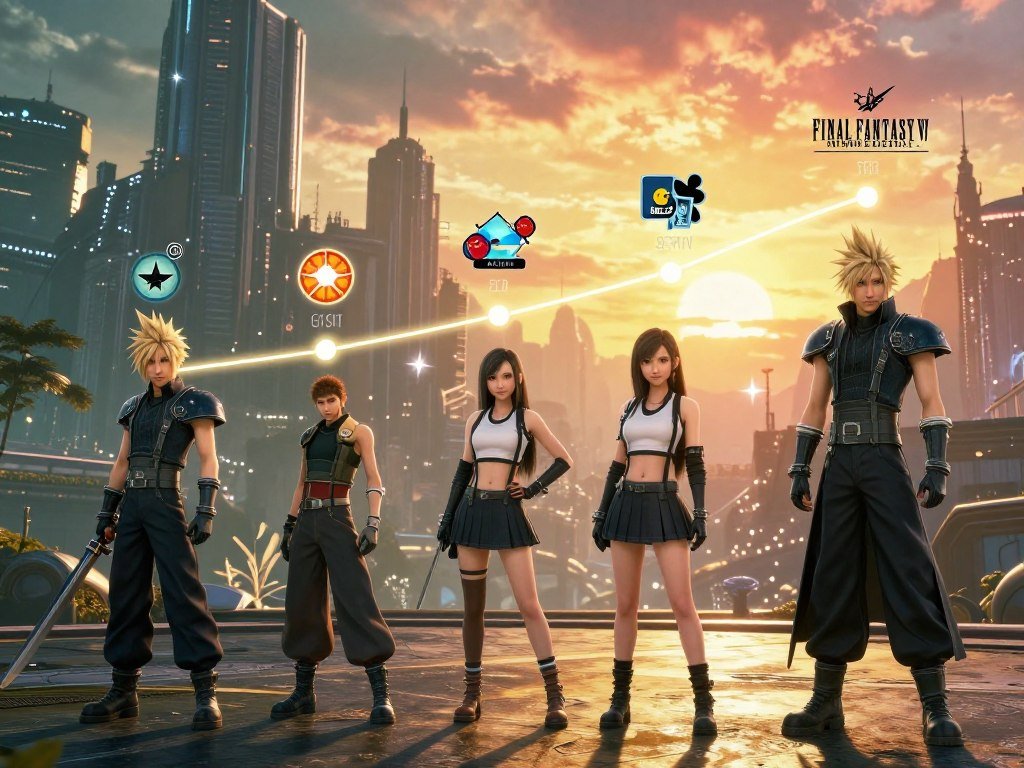
| Year or date | Milestone | What it establishes |
|---|---|---|
| 2020 | Final Fantasy VII Remake released | First entry |
| June 2022 | Trilogy confirmed; third-game development underway | Project structure |
| 2024 | Final Fantasy VII Rebirth released | Second entry |
The 2020 release introduced the project as a new version of a familiar game. The June 2022 announcement made its three-part plan public.
By then, early development on the third game had begun. That milestone placed the finale within the project’s active development, rather than leaving it as a distant idea.
Rebirth followed in 2024 as the trilogy’s second entry. Its release marked the next public step in the series after the trilogy’s structure had been confirmed.
The public confirmation came between the releases of the first two entries. The dates give returning players a clear record of how the project moved from its opening game to a three-part series.
What Could Change Without Changing the Story?
Hamaguchi described repeated scene adjustments as a way to align emotional pacing with the flow of time. Emotional pacing is the timing and progression of scenes intended to align players’ feelings with the passage of time.
He described scene timing as adjustable without adding or changing story material. That is a specific point about pacing, not a claim that every scene or game element stayed untouched.
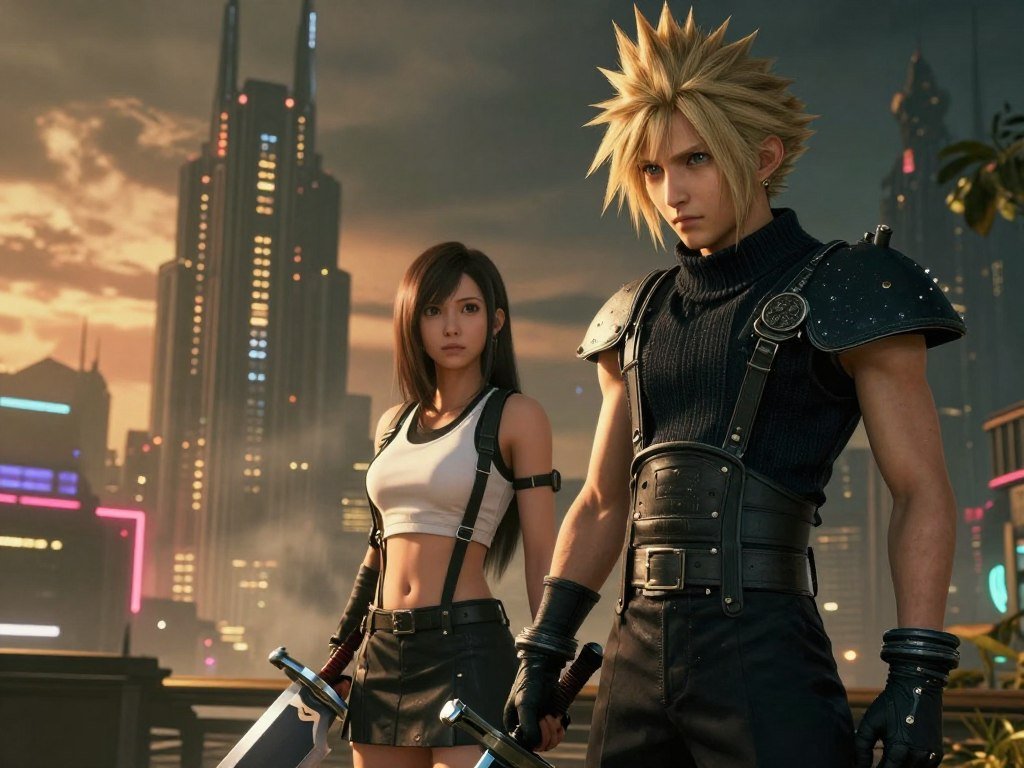
Scene timing and emotional pacing
A scene can be refined so its timing better fits what is happening around it. Those changes can affect how long a moment lasts or how one scene leads into another.
Hamaguchi said the team adjusted scenes repeatedly to match players’ emotional experience with the flow of time. He described this work as distinct from adding story content or changing the story.
Earlier creator comments also describe using cutscenes and gameplay to convey characters’ feelings. In a Guardian interview about emotion, Hamaguchi discussed how atmosphere and dialogue can help present those feelings.
The boundary between presentation and narrative
A pacing adjustment can change how a moment lands without changing what the story says. It is a choice about presentation and timing, rather than proof of a new plot point.
That boundary also keeps the claim narrow. Hamaguchi did not say that every scene received the same treatment, or that all other game choices were fixed.
Pacing refinement and a changed story are not the same claim. Players can notice a scene’s rhythm without treating that alone as evidence of a different narrative.
Why Did the Team Approach the Original With Care?
The original Final Fantasy VII has remained beloved since its 1997 release. Hamaguchi said its deeply invested fan base made a careful, respectful approach important.
He pointed to three pressures that made adaptation a serious responsibility. Returning players already knew the game well, so creative choices could stand out sharply.
- A fan base deeply invested in the series.
- Wide affection for the original game.
- A need to approach its story carefully and respectfully.
Those conditions can make small choices feel large to longtime players. A change in how a moment is presented may be noticed because fans bring years of memory to it.
That attention does not mean the team had to freeze the game in place. A retelling can make new creative choices while still recognizing what made the original matter.
Respect also asks the team to consider the series beyond its own preferences. The audience’s connection is part of the creative setting, even when a remake needs room to feel new.
Hamaguchi’s comments frame care as an approach, not a promise of identical scenes. Respect for the original is a creative responsibility, not a guarantee that every scene will match.
How Do Rebirth and the Final Game Differ in Theme?
Hamaguchi described Rebirth’s main theme as the bonds between characters. He gave the final game a separate core theme: resolution and determination.
These are entry-specific themes within a trilogy whose central theme was set at the outset. The descriptions do not name the trilogy-wide theme or reveal what happens in either game.
Rebirth centers on character bonds
In Hamaguchi’s description, Rebirth focuses on the bonds connecting its characters. That theme gives the second game its own emphasis inside the wider remake series.
It is a thematic description, not a summary of particular scenes or plot turns. Players can consider how character relationships shape their experience without treating that as a spoiler.
The finale centers on resolution and determination
Hamaguchi assigned resolution and determination as the third game’s core theme. The terms point to the kind of emotional focus he intended for the final installment.
A Kotaku interview with Hamaguchi covers these theme descriptions and his approach to the final game.
The contrast is clear without needing plot details. Rebirth’s stated focus is character bonds, while the finale’s stated focus is resolution and determination.
Resolution and determination are the core theme Hamaguchi assigned to the third game. That label gives players a theme to watch without promising how the story will end.
When and Where Can Players Play Final Fantasy VII Revelation?
Final Fantasy VII Revelation is scheduled to launch on April 8, 2027, for PlayStation 5, Xbox Series X|S, Windows, and Nintendo Switch 2. The date is scheduled, and the four platforms are the confirmed list.
In 2026, the final game is still set for an April 8, 2027 launch. The platform list covers PlayStation, Xbox, PC, and Nintendo systems.
| Platform family | Confirmed platform |
|---|---|
| PlayStation | PlayStation 5 |
| Xbox | Xbox Series X|S |
| PC | Windows |
| Nintendo | Nintendo Switch 2 |
Players comparing Sony systems can browse a PS5 games guide for other titles and play styles. A separate family console comparison can help readers weigh Switch 2 and PlayStation options.
Both pages cover broader console choices, not changes to Revelation’s release plan. The platforms in the table are the announced systems for the final game.
All four listed platforms share the same scheduled launch date: April 8, 2027. The date applies to the PlayStation, Xbox, Windows, and Nintendo versions.
What Did Hamaguchi Mean by “Personal Fan Project”?
“Personal fan project” describes the risk of letting one creator’s preferences outweigh the identity of the original. Hamaguchi said it was essential to avoid making the masterpiece feel like his private project.
His concern was how personal affection might shape the adaptation. He also described asking whether the work could truly be called Final Fantasy VII.
Restraint as a form of stewardship
Hamaguchi’s remark does not reject every reinterpretation or show that every proposed change was refused. It frames creative restraint as a way to serve the wider identity of the series.
A director can bring strong feelings to a familiar game. The challenge is making choices that support the work, rather than turning it into a display of one person’s tastes.
The test of whether it still feels like Final Fantasy VII
His comments suggest three questions for assessing that balance:
- Does the work honor the source’s identity?
- Does it avoid becoming only the director’s private preference?
- Can players still recognize it as Final Fantasy VII?
These questions do not require a remake to copy every moment. They focus on whether its choices still serve the work that inspired them.
Stewardship can allow reinterpretation while asking the result to feel recognizably like Final Fantasy VII. That is a narrower idea than opposing change altogether.
How Did the Original Creators Shape the Remake’s Direction?
The original creators could discuss and confirm story details, while a new generation received trust over the overall direction. Hamaguchi described both roles as part of the remake’s creative approach.
Consultation on details sat alongside trust in the team leading the project. That balance gives the returning creators a place without handing them every decision.
| Audience or group | Likely concern | What the approach signals |
|---|---|---|
| Returning original creators | Story details and continuity | Discussion and confirmation |
| New generation | Overall direction | Trusted to lead |
| Returning players | Recognizable identity | Stewardship with a fresh experience |
The original creators were available to discuss story details and confirm them. Their role helped the team check continuity while it shaped a new version.
Hamaguchi said the original creators trusted a new generation with the overall direction. That trust left room for the current team to guide the remake rather than only repeat past choices.
The final row describes a reader-facing interpretation, not a direct statement from Hamaguchi. Returning players may see this balance as a sign that the project aims to protect a recognizable identity.
The approach pairs discussion and confirmation on story details with trust in the team leading the remake. Those roles can support the same project without being identical.
What Should Players Watch for in Revelation’s Story?
Revelation is the final installment of the Final Fantasy VII Remake trilogy, so players can assess it as the close of a three-game narrative. That makes the ending part of a larger story, not a stand-alone finish.
Players can judge how the final game handles its themes and story threads. The following questions are ways to frame a response, not confirmed plot details.
- Do character decisions serve resolution and determination?
- Does the ending bring the trilogy’s story threads to a satisfying close?
- Does the experience feel connected to the Final Fantasy VII identity?
Those questions keep attention on the experience players have, rather than on guesses about events. A player may find one theme clear and still have a different view of the ending.
The trilogy’s final game has a particular task: close its own story while completing a three-part narrative. That gives returning players a reason to judge the ending in relation to earlier entries.
A satisfying conclusion can mean different things to different fans. A player’s response belongs to that player, even when other people read the same ending another way.
Players should separate their own response from any claim that every fan must feel the same way. The ending can be discussed without treating one reaction as universal.
What Does the Third Game’s Story Status Tell Fans?
The third game had a first script draft in September 2023, followed by story finalization by January 2025. Those dates mark different stages of development.
The earlier draft left room for possible changes based on Rebirth’s public response. The later milestone says the story was finalized, but it does not explain what changed along the way.
In September 2023, Hamaguchi said the script had a first draft. He also said the team might modify it based on how the public responded to Rebirth.
By January 2025, the third game’s story had been finalized. Those statements show a draft stage and a later status, but they do not establish that audience reactions caused a specific change.
A finalized story is a development milestone, not a disclosure of the ending.
Fans can read the timeline as a record of the project’s progress. They cannot use it to infer plot details or identify changes between the draft and final version.
Finalization is a development-status fact, not a spoiler about the ending. The milestones describe when the story reached a new stage, not what happens in it.
Conclusion
Hamaguchi says the core story stayed on course, while the team could refine how scenes landed emotionally. Those are separate choices: one concerns the story’s direction, and the other concerns scene timing.
Players can judge the finale by how its ending serves the trilogy’s established themes, especially resolution and determination. That gives each player a clear way to weigh the result without assuming every fan will share the same view.
After playing, compare your own response to the ending with the themes Hamaguchi named. Notice which story choices made those ideas feel strongest to you.
FAQ
Could scenes change even if the core story stayed the same?
Yes, scenes could be adjusted while the core story stayed the same. Hamaguchi said the team refined scenes to align emotional pacing with the flow of time, rather than adding or changing story material. That describes a way to shape how a moment unfolds. It does not show that every scene changed or that every game element remained fixed.
Did Hamaguchi say player feedback never mattered to any part of the games?
No, Hamaguchi’s statement was specifically about the core story. He did not say that player feedback never mattered to gameplay, presentation, or production choices. His wording sets a limit on what he claimed: reactions did not alter the central story. Extending that into a claim about every part of the games would go beyond his statement.
Why did the team choose a trilogy instead of one game?
Hamaguchi said the story’s volume and content made a trilogy the realistic option. The decision came before he joined the project, so it was not a response to his later view of player reactions. Dividing the story across three games gave the team a structure for the material. It also allowed the entries to share a central theme.
What did Hamaguchi mean by avoiding a personal fan project?
He wanted to avoid making the masterpiece feel like his private creative project. Hamaguchi also described asking whether the work could truly be called Final Fantasy VII. The remark points to a balance between personal affection and the series’ wider identity. It does not mean that all reinterpretation was unwelcome or that every change was rejected.
When was the third game’s script first drafted, and when was its story finalized?
Hamaguchi discussed a first script draft in September 2023, and the story was finalized by January 2025. At the time of the earlier comment, he said the script might change based on the public’s response to Rebirth. The later milestone does not explain what changed between those stages. It also does not reveal plot details or the ending.
Why did Hamaguchi say the team had to be careful with the original?
Hamaguchi cited a deeply invested fan base and the original game’s broad popularity. Those factors made a respectful approach important because returning players already had strong ties to the story. Care, in this sense, is a creative responsibility. It does not promise that a remake will use identical scenes or avoid all new choices.