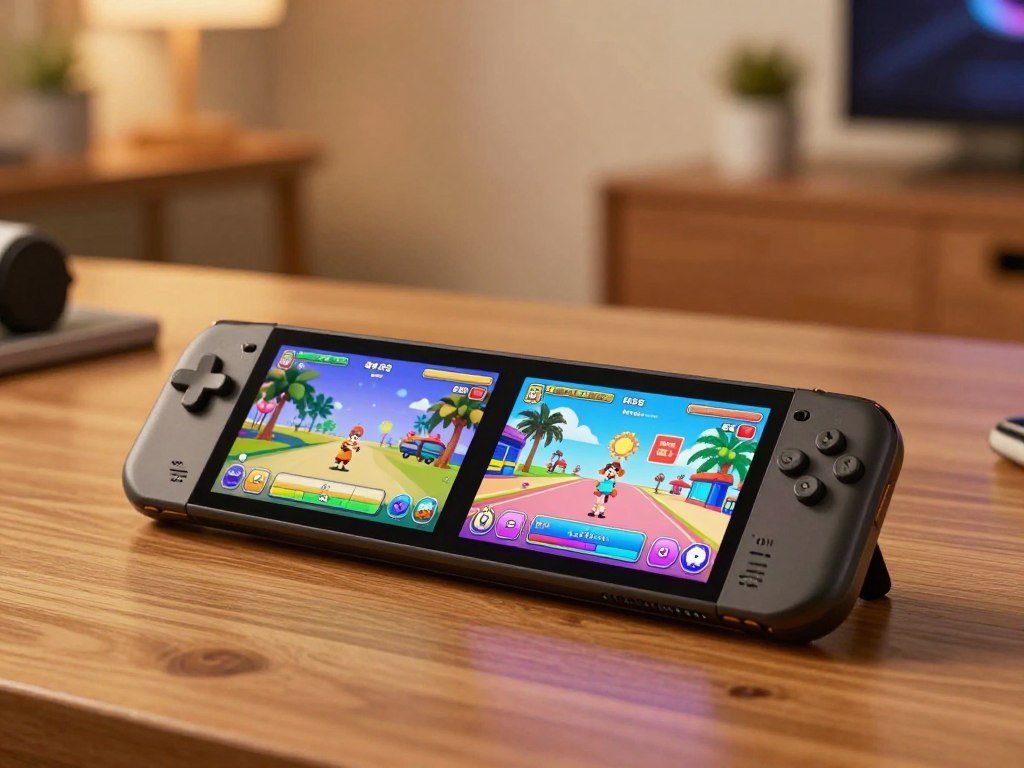
The RG DDS is ANBERNIC’s new clamshell handheld for buyers drawn to a modern take on the Nintendo 3DS layout. If you are weighing a dual-screen design against price and tested performance, the key question is whether the layout fits your games. This guide focuses on the RG DDS and what its design and listed features can tell you before you order.
The older RG DS offers a lower-cost way to play on two screens, but it uses different hardware and has its own limits. The RG DDS asks you to pay more for a newer design, not just a second display. We separate confirmed specifications from performance expectations, so you can judge the features without treating a video demonstration as a full review.
Key Takeaways
- The RG DDS is ANBERNIC’s new dual-screen flagship, built around a 3DS-style clamshell layout.
- Its two touch displays differ in size and ratio, with a retractable stylus for input.
- Preorder pricing has two memory tiers, and each listed tier costs $15 less than its regular price.
- ANBERNIC showed emulated games, but those demonstrations do not prove full-speed play across systems.
- The older RG DS costs less, though its hardware and reported game results are more modest.
- Check the configuration and shipping terms before placing an order.
Treat its 3DS-inspired design as a buying feature, not proof that every 3DS game will run smoothly.
Is the Anbernic RG DDS Dual Screen 3DS Handheld 2026 Worth Considering?
The RG DDS is already listed for preorder, but its first shipments are scheduled to begin later in the year. ANBERNIC announced the dual-screen clamshell on October 9, 2026, and the preorder listing appeared in October. That makes it a near-term option, not an October delivery.
The Anbernic RG DDS dual-screen 3DS handheld 2026 release has a gradual shipping start on December 10, 2026. That date marks when shipments are scheduled to begin, not a promise that every order will arrive then. Order timing affects when your unit leaves the shipping queue.
Check the order’s shipping window before treating a preorder as a device you can use immediately.
What preorder status tells you
A preorder lets you reserve the product before its planned shipping start. It does not mean the handheld is already in stock for immediate delivery. The company is the seller of the new product, while the date on the listing sets the expected start of fulfillment.
The phrase anbernic dds refers to this new model, not the earlier RG DS or the related RG DS Plus listing. All three share a dual-screen idea, but the RG DDS is the new flagship. Keep the model name in mind when reviewing an order page or comparing product details.
The shipping schedule says shipments begin gradually on December 10. It does not state that every region or order number ships on that exact day. Your place in the order timeline can affect the wait, so read the shipping terms attached to your specific purchase.
The clamshell design may suit buyers who want two screens in one handheld. The release date alone cannot tell you how well games run, though. For that, you need title-specific results rather than the fact that a device is available to preorder.
Check the order’s shipping window before treating a preorder as a device you can use immediately.
What Do the RG DDS Displays and Stylus Offer?
The RG DDS pairs a larger 4.7-inch upper panel with a 4-inch lower touchscreen, using different ratios for the two views. Both are IPS displays, but the unequal layout better matches games that place play on one screen and maps or menus on another.
The upper screen has a 1200 x 720 resolution and a 5:3 ratio. The bottom screen has a 960 x 720 resolution and a 4:3 ratio. Both panels are listed at 300 PPI and 500 nits, and each supports touch input.
How the two IPS screens are sized
Integer scaling is a way to enlarge a game image using whole-number multiples of its original pixels. It renders each source pixel as an equal-sized block of display pixels. That can keep pixels crisp, but the screen ratio and game image still shape how much space the picture uses.
The two ratios suit separate views rather than a single wide image. A game can place its main action on the upper display and maps, menus, or status details on the lower display. The screen size difference also gives the upper view more room without making the bottom panel too small for touch tasks.
What touch input adds to the clamshell
The stylus is retractable and capacitive, so you can use it on the touch displays. Both screens have independent brightness adjustment, which lets you set them separately. The design echoes the layout of the Nintendo 3DS, but it does not reproduce every feature of the original console.
Four details matter when you compare the layout with your games:
- Both displays support touch input.
- The built-in stylus retracts into the handheld.
- You can adjust brightness separately for each display.
- Each panel is listed at 300 PPI.
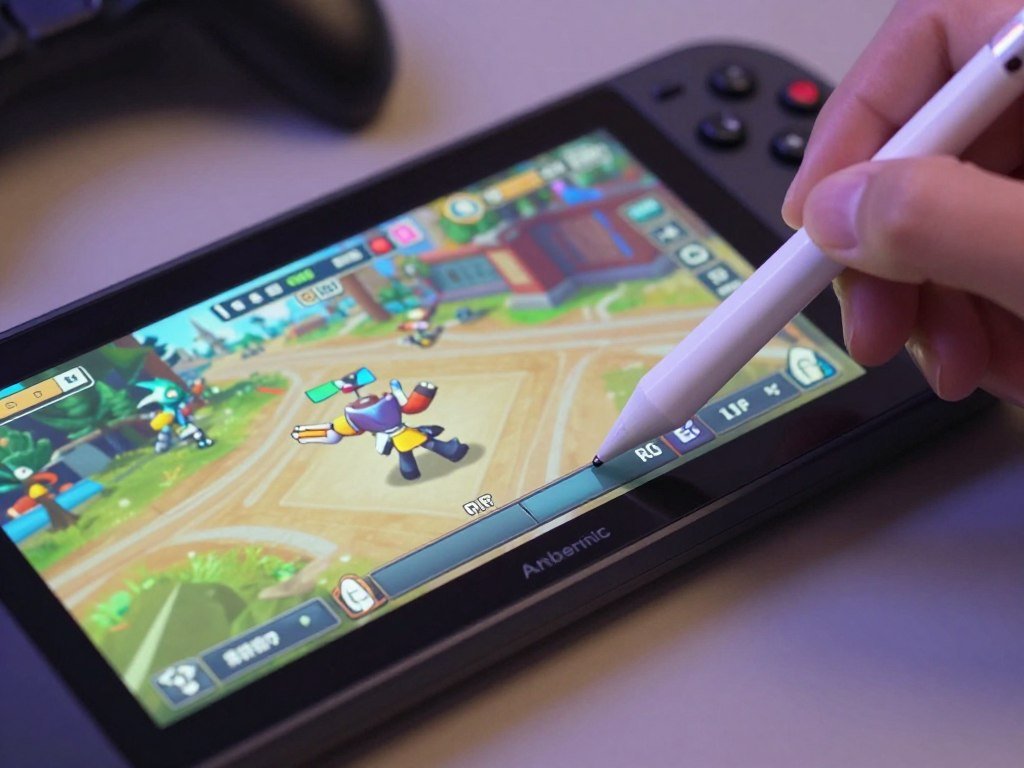
The RG DDS has no glasses-free 3D effect. Its two panels recreate a dual-screen layout, not the original 3DS’s depth effect. A game may also use the bottom screen as a control surface, rather than only showing extra information.
Check whether a game’s touch controls matter to you, since the lower screen is a genuine input surface rather than a passive panel.
What Hardware Powers the RG DDS?
The RG DDS is built around Qualcomm’s Snapdragon G2 Gen 2, with an Adreno A22 GPU. The listed platform uses a 4nm process, but those components do not prove how a specific game or emulator will perform.
Its configurations pair 8GB RAM with 128GB storage, or 12GB RAM with 256GB storage. Those are the two stated memory and storage tiers, not a guarantee of full-speed emulation. Qualcomm’s chip details describe the processor, while game performance still depends on software and individual titles.
Snapdragon platform and memory configurations
The Snapdragon G2 Gen 2 is a Qualcomm Snapdragon platform made for handheld gaming devices. It works with the Adreno A22 GPU for graphics tasks. The chip name helps identify the hardware, but it should not stand in for a retail test of the RG DDS.
Tom’s Hardware’s G2 Gen 2 overview covers the chip’s platform-level features and Qualcomm’s performance claims. Those details apply to the processor family, not to a tested RG DDS game result.
Three hardware details shape the main buying choice:
- Memory and storage: 8GB RAM with 128GB storage, or 12GB RAM with 256GB storage.
- Battery: 6,000mAh, with charging support up to 27W.
- Cooling: an internal fan and heat pipe provide active cooling.
Battery, charging, and active cooling
The 6,000mAh battery supports charging up to 27W. That is the listed charging limit, not a stated battery life or a promise about charging time. Your use of the screens, games, and cooling system can affect how long the device lasts between charges.
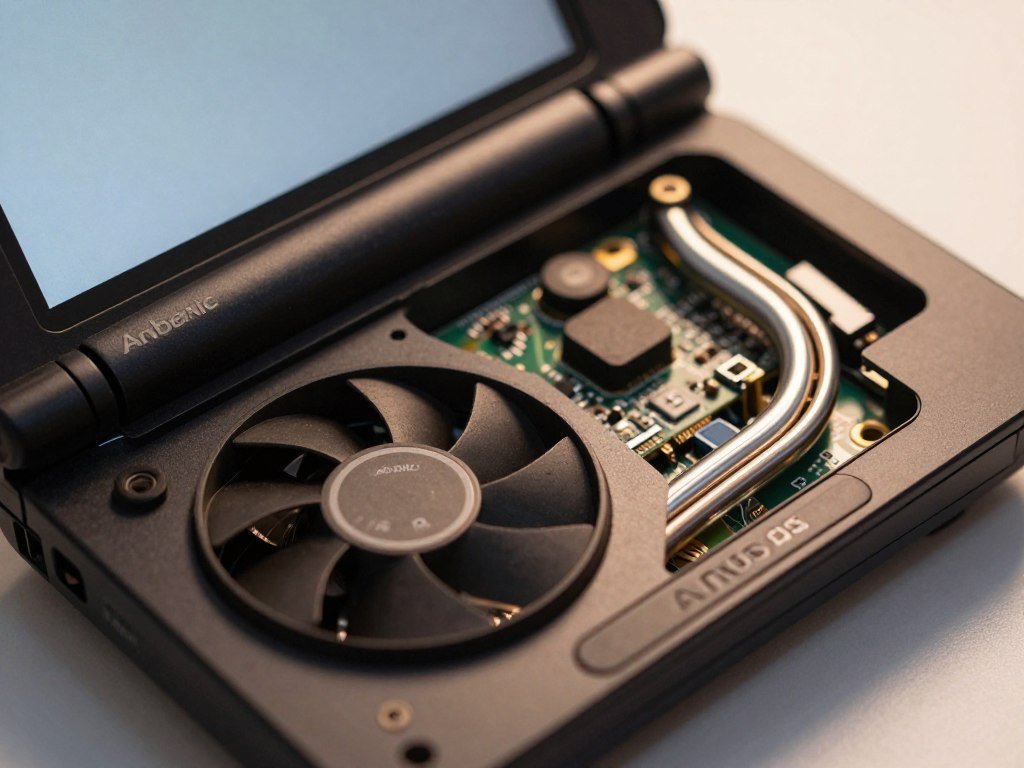
Active cooling uses a fan and a heat pipe to move heat away from internal parts. The fan is a physical part of the cooling setup, while the heat pipe helps carry heat. These are hardware features, not a measure of noise or a guaranteed frame rate.
Consider the cooling system a heat-management feature, not a guarantee of quiet operation or sustained performance.
How Much Does the RG DDS Cost?
The RG DDS starts at $284.99 for the base preorder configuration, while its listed regular price is $299.99. The base tier pairs 8GB RAM with 128GB storage, and the higher tier pairs 12GB RAM with 256GB storage.
Either listed preorder price is $15 below its matching regular price. That difference applies to both configurations under the listed preorder terms. It does not mean the same discount will remain available after those terms end.
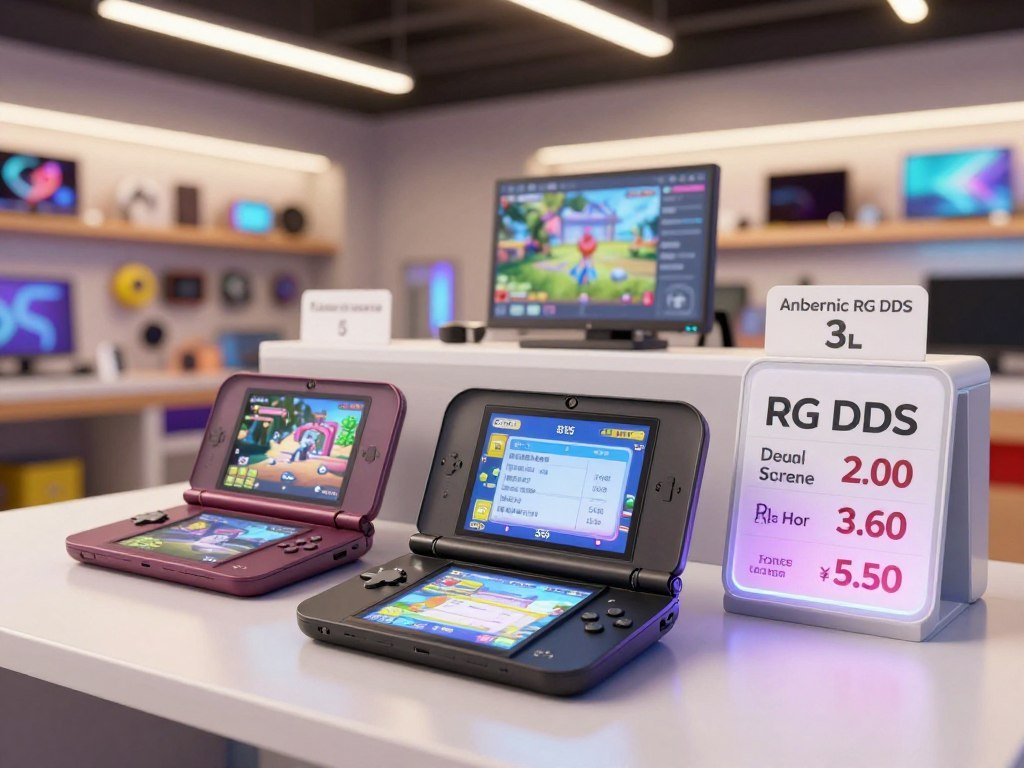
| Configuration and timing | RAM | Storage | Price |
|---|---|---|---|
| Preorder | 8GB | 128GB | $284.99 |
| Regular | 8GB | 128GB | $299.99 |
| Preorder | 12GB | 256GB | $349.99 |
| Regular | 12GB | 256GB | $364.99 |
What the price gap means
The regular price for the base model is $299.99, while the higher configuration lists at $364.99. In both cases, the preorder price is $15 lower than the regular price for that same tier. Compare each configuration on its own instead of comparing the base preorder price with the higher model’s regular price.
The 128GB storage tier may suit you if you plan to add a TF card for games and files. The 256GB storage tier provides more built-in space. Both come with different RAM amounts, so the upgrade changes memory and storage together.
Price alone cannot tell you which tier is the better fit. Consider how much built-in storage you want and whether you value the extra RAM. The listed prices also make clear that the higher tier costs more at both preorder and regular pricing.
The price 299.99 applies to the 8GB RAM and 128GB storage model at regular price. The 12GB RAM and 256GB storage model has a regular price of $364.99. These figures make it easier to compare the price gap across the two configurations.
Compare the final price for the configuration you want rather than assuming the base-model preorder figure applies to both tiers.
What Can You Expect From RG DDS Game Performance?
A video showing emulated games is evidence that the RG DDS can run demonstrations, not a system-by-system compatibility guarantee. ANBERNIC showed the handheld running emulated 3DS, Xbox, and PS3 games, which is useful but limited evidence.
Independent, system-by-system retail testing had not been confirmed by late October 2026. That means a demonstration cannot establish full-speed play for every game, emulator, or system. Hardware specifications also cannot replace a test of the retail device with the game you plan to play.
What demonstrations can and cannot establish
A video can show that a particular setup reached a point where a game launched and ran. It may not show a full play session, every area, or how performance changes over time. The Anbernic RG DDS dual-screen 3DS handheld 2026 review evidence does not establish retail performance across every system.
Different emulators can handle the same game in different ways. An emulator is software that lets a device run games made for another system. Settings, game versions, and software updates can also affect the result, so a short clip has a narrow scope.
For a fair performance comparison, reviewers need to test the same games under similar conditions. A matched handheld performance comparison can help explain why processor claims alone do not settle game-by-game results.
Why DS and 3DS compatibility needs testing
Nintendo DS and Nintendo 3DS titles do not all behave alike. Some rely on touch input, screen switching, or software features that an emulator may handle differently. A game can open but still have slow play, glitches, or control issues.
The RG DDS’s dual-screen layout is a clear design choice, but the layout does not confirm compatibility by itself. A clip showing a 3DS game is not the same as testing several games from start to finish. It also does not prove that an Xbox or PS3 title will run at full speed.
For a buyer, the distinction matters most when a specific game is the reason to order. Search for a test of that title on the retail model, and look for notes about speed, sound, controls, and glitches. A broad claim about a system can hide large differences between individual games.
Wait for tested results for the specific games you care about before paying extra for an assumed performance ceiling.
How Does the RG DS Compare With the RG DDS?
The RG DS is a sub-$100 alternative in the October 2026 listing, but its 4-inch 640 x 480 screen and RK3568 platform sit below the RG DDS’s design target. The older handheld is a lower-cost, lower-resolution option for dual-screen gaming, not a dependable substitute for newer hardware.
Its Rockchip RK3568 quad-core 64-bit Cortex-A55 processor runs up to 2.0 GHz, with an ARM G52 2EE GPU. It has 3GB RAM and 32GB storage. Its 4,000mAh battery has a stated six-hour life, while the device measures 16 cm x 9.1 cm x 2.15 cm and weighs 0.321 kg.
What the older RG DS offers as hardware
The RG DS screen is a 4-inch OCA full-laminated capacitive-touch IPS panel. Its 640 x 480 resolution is much lower than the RG DDS panels. In October 2026, the listed price was $94.99, making the RG DS a much less costly way to try a dual-screen handheld.
A hands-on RG DS review describes the older model’s hardware and DS play. Those impressions are about the RG DS, not the RG DDS, so they should not be used as evidence for the newer model.
What RG DS gameplay reports show
Reported results on the RG DS varied by game. One customer said DS games played seamlessly. Another described several games with different results:
| Game | Reported result | Limitation |
|---|---|---|
| 80’s Overdrive and Rune Factory | Essentially perfect | Customer report |
| Ocarina of Time 3D | Otherwise ran fine | Shader pauses in new areas |
| Mario Kart 7 | About half speed | Customer report |
The latter report used ROCKNIX and Advanced-Drastic. A first-impressions review also noted occasional upper-screen freezes during DraStic play, which could require relaunching the emulator. The reviewer reported one screen could drop to 40 Hz during gameplayin that review.
So, is the Anbernic RG DS for 3DS games? Some titles were reported to run, but results varied by title and are not a guarantee. Those reports describe one older handheld, its software, and particular games.
Treat the reported 3DS results as title-specific examples, not a compatibility promise.
Which ANBERNIC Dual-Screen Model Fits Your Budget?
The RG DS and RG DS Plus are both listed at $94.99, while the RG DDS occupies a higher-priced tier. The price gap is clear, but connectivity also differs between the older models and the new flagship.
All three models support TF card expansion up to 2TB. The RG DS and RG DS Plus list 2.4/5G Wi-Fi and Bluetooth 4.2, while the RG DDS lists Wi-Fi 6 and Bluetooth 5.4.
What the RG DS costs
The Anbernic RG DS price is $94.99 in the October 2026 listing. The RG DS Plus is also listed at $94.99, so the name alone does not tell you which features differ. Check the specific product details before choosing between the two older models.
The RG DDS sits above both in price, with faster listed wireless standards. All three share the same stated TF card expansion limit, so removable memory does not separate these models. The difference comes from connectivity and the broader product tier.
How the RG DS Plus differs
The listed connectivity for the RG DS Plus matches the RG DS: up to 2TB TF card expansion, 2.4/5G Wi-Fi, and Bluetooth 4.2. The RG DDS lists Wi-Fi 6 and Bluetooth 5.4. These figures describe the listed wireless support, not how fast a network will feel in every home.
| Model | TF card expansion | Wi-Fi | Bluetooth |
|---|---|---|---|
| RG DS | Up to 2TB | 2.4/5G | 4.2 |
| RG DS Plus | Up to 2TB | 2.4/5G | 4.2 |
| RG DDS | Up to 2TB | Wi-Fi 6 | 5.4 |
For a buyer on a tight budget, the shared price of the RG DS and RG DS Plus may matter more than the flagship’s newer wireless features. If you care about newer connectivity, the RG DDS has the stronger listed standards. Shared clamshell styling does not make the products equal.
Choose by the screen and performance level you need, not by the shared ANBERNIC name or clamshell shape.
What Do RG DS Firmware Updates Change?
The Linux V1.1 update adds PSP Vulkan support and an option to switch off the idle screen, while Android V1.18 adds app-related features. The two software paths differ, so an update for Linux is not the same as an Android update.
Android V1.18 erases user data during installation, so back up personal files first. Linux V1.1 is dated October 8, 2026, while Linux V1.0 is dated May 13, 2026.
Linux V1.1 improvements and availability
Linux V1.1 includes nnddss 1.0.2, Vulkan support for PSP emulation, and an option to turn off the unused screen. Its listed download applies to the 16GB version. Owners of the 64GB version can contact customer service for that firmware.
| Firmware | Version/date | Key change |
|---|---|---|
| Linux V1.0 | 2026-05-13 | Listed release |
| Linux V1.1 | 2026-10-08 | nnddss 1.0.2, PSP Vulkan, screen-off option |
| Android V1.18 | October 2026 | Google Play Store and two-screen app support |
A report on an RG DS firmware update covers earlier display fixes, including screen frame-rate drops and synchronization. That update context is separate from the Linux V1.1 and Android V1.18 features listed above.
Android V1.18 features and backup warning
Android V1.18 adds Google Play Store access and support for displaying apps on both screens. Its firmware was listed for download in October 2026. The Android firmware list includes V1.15 and V1.18, which are separate versions from the Linux releases.
Image recognition checks locations in a set order. It first looks at gamelist images, then same-name images in the game-path Imgs or images folder, and then same-name images in the game path. Supported image extensions are PNG, JPG, png, and jpg.
These image rules can help when a game entry needs a matching cover or other picture. The file name and folder location both matter, so keep them aligned with the game path. The Linux and Android firmware paths serve different software choices.
Back up personal data before installing Android V1.18 because the update erases user data.
Who Should Choose Each ANBERNIC Dual-Screen Handheld?
The RG DDS suits buyers who value the newer 3DS-style design, while the RG DS better suits shoppers focused on a lower entry price. The choice is about your use case, not a claim that one model fits every player.
The RG DDS runs Android 16. The RG DS supports Android 14 and 64-bit Linux. Choose the model whose layout and operating system you will use, rather than paying for the flagship name alone.
When the RG DDS is the better fit
The RG DDS makes more sense if you want the newer clamshell design, two touch displays, and Android 16. Its listed colors are Basalt Black, Glacier White, and Phantom Blue. Those are the listed color options, not a promise that every color is in stock.
The flagship may appeal if your games make good use of two screens or touch controls. The hardware is more ambitious, but game compatibility still needs title-specific testing. A newer platform does not guarantee that every game runs well.
When the RG DS makes more sense
The RG DS is the more budget-friendly route for buyers who want two screens without the RG DDS price tier. It also gives you a choice between Android 14 and 64-bit Linux. That operating-system choice can matter if you prefer one software setup over another.
Use this short decision list:
- Choose RG DDS for its flagship design and newer platform.
- Choose RG DS for the lower listed price.
- Choose by operating-system preference when comparing RG DS software options.
If you are weighing handheld play against a TV-based family console, this family console guide compares game choice, play style, and display needs. A handheld remains a distinct choice when you want portable play and two screens in one device.
Pick the operating system and game layout you will actually use before paying for the flagship tier.
What Should You Check Before Ordering?
Before placing an order, check both the handheld’s physical size and the larger retail-box dimensions. The RG DDS console measures 16.6 cm x 9.3 cm x 2.6 cm and weighs 0.434 kg. The boxed unit is larger and heavier.
The retail box measures 19.9 cm x 13 cm x 5.1 cm and weighs 0.615 kg. The listed box includes a USB charging cable, user manual, and two screen protectors. The box contents do not list every accessory you might want for travel or setup.
Before checkout, use this three-item checklist:
- Confirm the selected model and configuration.
- Check the shipping origin and current delivery terms at checkout.
- Verify that the box contents meet your setup needs.
The RG DDS ships from China. Shipping origin can affect how you plan for delivery, while the box dimensions matter if you carry the package yourself. A USB charging cable is included, but the listed contents do not name a wall adapter.
If you plan to use an external screen, check the device’s video support and the monitor’s inputs, cable, and power needs. A guide to portable monitor connections explains why USB-C video support and monitor power both matter.
Keep the packaging measurements in mind if you plan to travel with the boxed console or carry it home.
Conclusion
Choose the RG DDS if its dual-screen 3DS-style design is the main reason you want a new handheld. It is the more ambitious option, while the RG DS offers a lower-cost route with more modest hardware.
Your best fit depends on whether the newer layout and platform justify the higher price for your games. Reports from the older model cannot predict the RG DDS’s results, so use tested results for titles you care about.
Before ordering, confirm the exact configuration and delivery terms for your chosen model.
FAQ
Does the RG DDS have glasses-free 3D like the original Nintendo 3DS?
No, the RG DDS has no glasses-free 3D effect. It has two touch-capable IPS displays, which recreate the dual-screen layout but not the depth effect of the original 3DS. The lower display can accept touch input, and the built-in stylus works with it. Think of the device as a two-screen handheld, not a 3D screen replacement.
Can the RG DDS connect to a TV or monitor?
Yes, the RG DDS supports USB-C video output to an external display up to 1080p. You will need a screen with a matching input and a cable that carries video. USB-C does not carry video on every device, so the display connection must support the right mode. Check the monitor’s power needs as well.
Is the RG DDS preorder discount the same on both configurations?
Yes, each listed preorder price is $15 below its matching regular price. The 8GB RAM and 128GB storage model lists at $284.99 on preorder and $299.99 at regular price. The 12GB RAM and 256GB storage model lists at $349.99 and $364.99, respectively. The listed discount applies to each tier.
Can RG DS and RG DS Plus use TF cards larger than 1TB?
Yes, both models are listed with TF card expansion up to 2TB. That stated limit means cards larger than 1TB fall within the listed capacity range. Check that the card you choose uses a supported format and works with your device setup. The same listed expansion limit applies to the RG DDS.
Does the RG DDS box include a stylus?
The RG DDS has a built-in retractable capacitive stylus, but the listed box contents do not name it as a separate accessory. The listed items are a USB charging cable, user manual, and two screen protectors. The stylus is part of the handheld design, so it is different from an extra item packed beside the console.
Does a video showing the RG DDS running emulated games prove those games run at full speed?
No, a demonstration does not establish full-speed performance across systems or individual titles. A video can show a particular game running in one setup, but it may not show a full play session or other games. Emulator settings and game behavior can vary. Look for tests of the specific titles you plan to play.