
If you are craving ensalada de garbanzos, a bowl made at home can be ready in about 10 minutes. This recipe brings together tender chickpeas, crisp vegetables, fresh herbs, and a tangy lime dressing. The result tastes bright and filling, with a little crunch in every bite.
You might be looking for a nearby restaurant, or you may want a fast homemade lunch. Local menus can help you choose a prepared salad, while this recipe gives you an easy option for your own kitchen. You do not need special tools or a long stretch of free time.
The hands-on work takes about 10 minutes, and there is no stovetop cooking. You can serve the salad right away or give it time to rest. That makes it handy when lunch needs to come together quickly, and practical when you want to prep ahead.
Keep the recipe in mind for a quick lunch, an easy side or a make-ahead meal.
Key Takeaways
- Use canned chickpeas for a fast, no-cook salad.
- Fresh lime and cilantro bring a lively taste.
- Salt-washing makes raw red onion milder.
- Keep the dressing separate for better make-ahead texture.
- Search local menus if you want someone else to make it.
What Is Ensalada de Garbanzos?
Ensalada de garbanzos is a chickpea-based salad mixed with vegetables, herbs and a tangy dressing. It works as a side dish or a meatless main, with tender beans balanced by crisp produce. Garbanzos and chickpeas are two names for the same legume.
Most versions pair chickpeas with fresh vegetables, chopped herbs, and a dressing with citrus or vinegar. The chickpeas make the salad hearty, while tomato and onion add juicy, sharp notes. Cilantro brings a fresh, green finish.
Chickpeas give the salad enough substance to serve on its own or beside another dish. That flexibility makes it easy to adapt for lunch, a picnic, or a shared meal. The base can stay simple, or you can add more vegetables and toppings.
Keep the chickpeas and vegetables in balance, so the dressing brightens each bite without drowning the salad.
Salt-washing means rubbing sliced onion with salt and rinsing it under cold water to soften its sharp raw flavor. It keeps the onion crisp while taking away some of its bite. You will see this step in the method below.
There is no single required set of vegetables or herbs. Some cooks use more tomato, while others add extra cilantro or a different crisp vegetable. The key is a mix of soft and crunchy textures.
The name can look unfamiliar on a menu, but the main ingredient is a familiar pantry staple. Canned chickpeas make the dish quick, while cooked dried chickpeas work too. Both bring the same bean-like texture.
USDA MyPlate treats beans, peas and lentils as both vegetables and protein foods, which helps explain why this salad can feel substantial.
The USDA’s beans and peas food-group guidance explains that they can count in either group. That classification reflects how these foods fit into different meal patterns. Chickpeas can pair with other vegetables or stand in for a meat-based main.
Keep the dressing bright rather than heavy, and the tender beans will still taste fresh. A little acidity also helps tie the vegetables and herbs together. The finished salad can be served chilled or at a cool room temperature.

What Ingredients Go Into This Chickpea Salad?
The base recipe uses pantry-friendly chickpeas and a short list of fresh produce. You will need two cans, one fresh tomato, a red onion, cilantro, and a simple citrus dressing. Fresh produce gives the salad its crisp texture and bright taste.
Use two 14-ounce cans of chickpeas, drained and rinsed, as the base. Choose a tomato that feels soft with slight resistance, rather than one that is hard. Wash fresh produce under running water without soap, as the FDA advises.
The FDA’s produce safety advice recommends running water for washing produce. Soap and detergent are not needed. Wash the tomato, onion, cilantro, and lime before cutting or squeezing them.

Chickpeas, tomatoes, onion and cilantro
Use two 14-ounce cans of chickpeas, one chopped tomato, one small red onion, and one-half cup chopped fresh cilantro. Slice the onion thinly so it mixes easily with the beans. The herbs and vegetables should be easy to scoop onto a fork.
A ripe vine tomato works well, and a Campari tomato is another good pick. If seasonal tomatoes are unavailable, use one of those types when it feels ripe. A hard tomato often tastes bland and adds little juice.
Fresh cilantro gives the salad its grassy, citrus-like note. Chop the leaves and tender stems finely, so the flavor spreads through the bowl. If the stems are thick, leave them out.
Lime, vinegar, oil and seasonings
For the dressing, measure six tablespoons neutral oil or extra-virgin olive oil, two tablespoons fresh lime juice, and two tablespoons red wine vinegar. Use freshly squeezed lime for its clean, sharp taste. Bottled juice can taste flatter.
Add two or three medium garlic cloves, one-half teaspoon pepper, and kosher salt to taste. The garlic adds a savory edge without needing a cooked sauce. Use a neutral oil for a mild finish, or olive oil for a more distinct taste.
These ingredients make a loose dressing that can coat the chickpeas and vegetables. The vinegar adds tartness, while lime gives the salad its fresh citrus note. Pepper and salt help round out the mix.
You can measure the oil before squeezing the lime, which keeps the dressing ingredients easy to track. A small cup or jar holds the liquid neatly until it is time to mix. The recipe uses everyday pantry seasonings.
Choose a tomato that gives slightly when pressed, since a hard one is likely to taste bland.
How Do You Make Ensalada de Garbanzos?
Set out a bowl and a small cup for the dressing, since the recipe needs no stovetop cooking. The hands-on preparation takes about 10 minutes. Keep the steps simple, and you can have the salad ready without heating the kitchen.
This recipe is presented as a 10-minute preparation, not as a separately timed cook-and-prep breakdown. Drain and rinse the chickpeas before you start mixing. A few minutes of resting can deepen the flavor, but the salad is ready to serve immediately.
The onion needs a quick salt-wash before it joins the bowl. Rubbing the slices with kosher salt draws out some of their sharp raw taste. Rinsing removes the extra salt and leaves the onion crisp.

Soften the red onion
Salt-washing is useful when you want the onion’s flavor without a strong lingering bite. Keep the slices thin, so they soften quickly. A small sieve makes it easier to rinse and drain them well.
Do not skip the draining step after rinsing. Extra water can thin the dressing and make the salad taste less focused. Shake the sieve gently, then let the onion sit while you prepare the dressing.
Whisk the lime dressing
Whisk the oil, lime juice, red wine vinegar, garlic, pepper, and kosher salt in a small cup. Stir until the ingredients look blended. The dressing may separate as it stands, so give it another quick stir before pouring.
Use a fork or a small whisk, whichever fits your cup. Taste a tiny drop if you want to check the salt level before dressing the salad. Keep in mind that the chickpeas and vegetables will soften the dressing’s sharpness.
Toss and taste
Follow these four steps to finish the chickpea salad:
- Drain and rinse the chickpeas, then let excess water run off.
- Rub the sliced onion with kosher salt, rinse it under cold water, and drain it.
- Whisk the oil, lime juice, vinegar, garlic, pepper, and salt in a small cup.
- Combine chickpeas, tomato, onion, and cilantro, then add dressing and toss.
Give the salad an even toss so the dressing reaches the beans and vegetables. A wide bowl makes it easier to turn the ingredients without crushing the tomato. Add more salt only after tasting the dressed mixture.
The salad can go straight to the table, or you can let it rest for a while. Resting gives the garlic and citrus time to settle into the chickpeas. If you serve it later, toss it again before setting it out.
Think about texture as you taste. The chickpeas should remain distinct, and the tomato should add moisture without making the bowl watery. A gentle toss keeps the ingredients intact.
Taste once after tossing, then add salt in small pinches until the dressing brings the ingredients into balance.
How Can You Adjust the Flavor and Texture?
For the brightest classic flavor, keep the lime, cilantro and red wine vinegar in the foreground. A few small changes can shift the texture without losing the salad’s fresh character. Keep the balance between tender chickpeas, juicy produce, and a crisp finish.
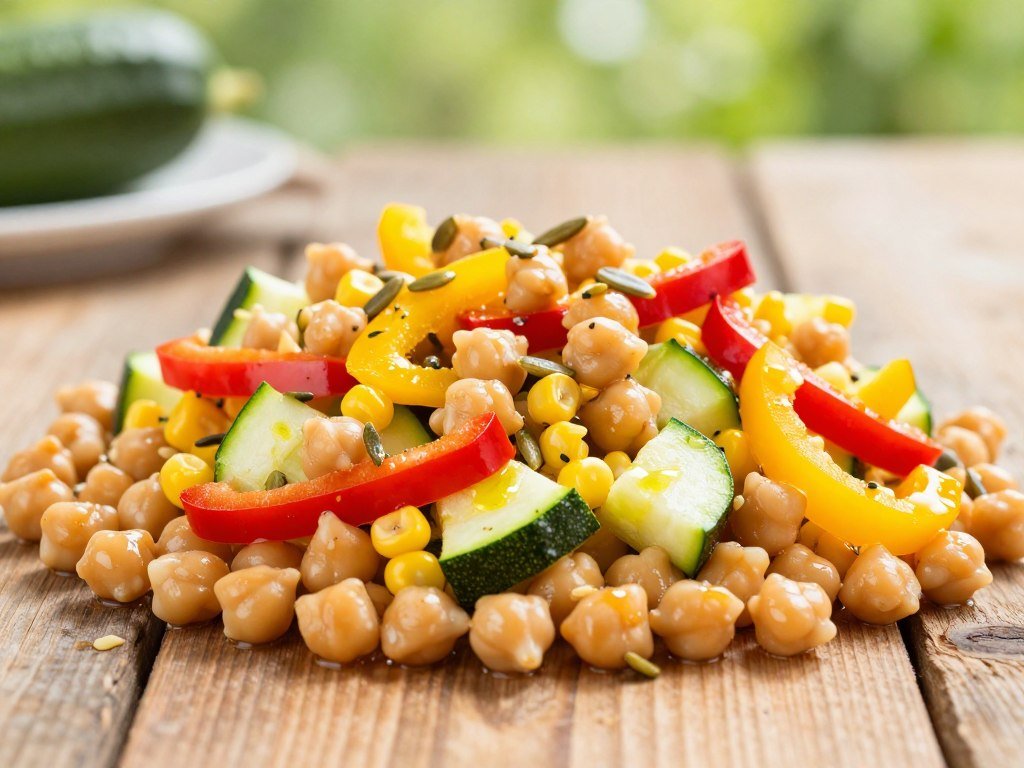
The classic version can stay focused on lime, red wine vinegar, and fresh cilantro. The Mexican-style version is an optional variation, not the defining form of the dish. It adds charred corn, zucchini, bell pepper, pickled jalapeños, cotija, and pepitas.
The table shows how each addition changes the bowl. Pick one group of additions or combine a few to suit your taste. Cooling charred corn before mixing helps keep the other vegetables crisp.
| Version | Additions or changes | Texture and flavor | Useful adjustment |
|---|---|---|---|
| Classic | Keep the listed base ingredients | Bright and herb-forward | Retain fresh lime |
| Corn and zucchini | Add charred corn and diced zucchini | Sweet and crisp | Cool the corn before mixing |
| Jalapeño and bell pepper | Add pickled jalapeños and diced bell pepper | Tangy with optional heat | Reduce jalapeños for less heat |
| Cotija and pepitas | Add crumbled cotija and toasted pepitas | Salty and crunchy | Add pepitas at serving |
The Mexican-style variation uses two cups chickpeas, two medium zucchini, one bell pepper, five ounces tiny tomatoes, and one-quarter cup pickled jalapeños. It also uses two ears of corn, one-quarter cup pepitas, and two ounces cotija. This version serves six.
That variation takes 30 minutes total, with 15 minutes for prep and 15 minutes to char the corn and make the dressing. Those times apply to the variation only, not the base recipe. Let the corn cool before adding it to the bowl.
Keep the classic version bright and simple
Fresh lime, red wine vinegar, and cilantro give the classic salad its clear, tart flavor. A ripe tomato adds juice, while red onion brings a sharper note. Keep extra additions limited if you want those ingredients to stand out.
USDA MyPlate includes beans and peas among plant-protein foods. Its vegetable food group guidance also describes their place in the Vegetable Group. Chickpeas fit naturally into salads with other vegetables.
Build a heartier Mexican-style variation
Charred corn adds a sweet, smoky note, while zucchini and bell pepper add crunch. Pickled jalapeños bring tang and heat, so use less if you prefer a mild salad. Cotija gives the bowl a salty finish.
Pepitas add a toasted crunch that stands apart from the tender beans. Cotija can soften as it sits in dressing, so add it near serving time if you want a firmer texture. This version makes a more substantial bowl without changing the base recipe’s role.
Add crunchy pepitas just before serving so they do not soften in the dressed salad.
What Should You Serve With Chickpea Salad?
A slice of crusty bread turns the dressed chickpeas into an easy meatless lunch. You can also serve the salad as a side dish with chicken, soup, or another salad. Choose the pairing based on whether you want a light plate or a fuller meal.
The base recipe works as a side or as a meatless meal with crusty bread. Chicken is an optional pairing, not an ingredient in the salad. A few simple foods can round out the meal without taking over its fresh flavor.
The USDA MyPlate visual guide recommends filling half the plate with fruits and vegetables. Use that picture as a practical prompt to add other produce to your meal. It does not require every plate to look the same.
Here are four easy ways to serve the salad:
- Crusty bread catches the lime dressing and makes a simple lunch.
- Grilled chicken adds an optional protein alongside the chickpeas.
- A simple soup keeps lunch light and gives you a warm contrast.
- A green salad adds fresh leaves to a larger spread.
Crusty bread works especially well when the dressing gathers at the bottom of the bowl. Tear off a piece to scoop up the last chickpeas. It is a practical match when you do not want to cook another dish.
Grilled chicken suits a meal where you want a separate main, while a light soup can keep the meal easy. A green salad is useful for a table with several dishes. None of these pairings needs extra seasoning to work.
Use the MyPlate visual guide as a flexible reminder, not a strict serving rule. You could add fruit after lunch or include another vegetable on the plate. The salad can remain the main feature.
For a larger meal, add a separate vegetable side instead of making the chickpea salad heavier.
How to Find the Best Ensalada de Garbanzos Near Me
Search “chickpea salad near me” or “Mediterranean restaurants near me,” then check menus before choosing a place. Google Maps can show nearby restaurants, available menu details, and customer photos. Check the menu rather than guessing from a restaurant’s name.
A listing or customer photo cannot guarantee that a salad is fresh. A menu description can help you see whether it includes chickpeas or garbanzos and whether its flavor fits your taste. Local inspection records offer a separate kind of information.
| Search method | What it can show | What to verify |
|---|---|---|
| Google Maps | Nearby restaurants and available customer photos | Whether the menu lists chickpeas or garbanzos |
| Restaurant menu | Ingredients and stated preparation details | Whether it matches the fresh, herb-and-citrus style you want |
| Local health department | Inspection records where the jurisdiction publishes them | The date and scope of the available record |
Search menus and local listings
The best ensalada de garbanzos near me may appear under a different menu name, such as chickpea salad. Search with both terms, then read the ingredient details. Menus sometimes list garbanzos instead of chickpeas.
Google Maps can help you locate nearby restaurants and view menu details or customer photos when available. You can also use a nearby restaurant search guide to compare local options and confirm menu availability. Call the restaurant if its current menu is unclear.
Photos can show the salad’s visible ingredients, but they cannot tell you when it was made. A menu may describe the dressing or herbs, which gives you a better sense of its style. Look for details that match the fresh, citrus-forward salad you want.
Check freshness before you order
Local health departments publish restaurant inspection information through local systems. Those systems differ by locality, and each record has a date and scope. Read what the record covers instead of treating every listing as the same kind of check.
Inspection information does not tell you how fresh a particular bowl is that day. Customer photos and menu descriptions also have limits. They can help you choose where to look, but not promise the salad’s condition.
If the menu leaves freshness unclear, ask whether the salad is prepared that day and whether the dressing is served separately.
How Should You Store and Meal Prep Chickpea Salad?
For the best make-ahead texture, store the chickpeas and vegetables apart from the dressing until serving. Keep a refrigerator at 40°F or below, and use refrigerated leftovers within 3-4 days. Separate storage helps the vegetables stay crisp.
Use the general 3-4 day rule for refrigerated leftovers. The undressed Mexican-style salad has a specific limit of up to three days in the refrigerator. Keep its dressing, cotija, and pepitas separate.
FoodSafety.gov advises keeping the refrigerator at 40°F or below and using refrigerated leftovers within 3-4 days. The undressed variation’s three-day guidance is shorter. Follow that limit for the variation, even when the other salad components remain separate.
Store the dressed salad safely
Refrigerate leftovers promptly in a covered container. Do not leave the bowl sitting out while you finish a long meal. A shallow container can help the salad chill evenly.
Keep track of the day you made the salad, especially when several containers share a refrigerator shelf. If it has been dressed, the vegetables may soften before the leftovers reach their time limit. Use your own judgment about quality, too.
FoodSafety.gov’s temperature guidance is a clear mark for safe cold storage. A refrigerator thermometer can help you check the actual temperature. Keep the container covered to protect the salad from spills and other odors.
Prep components separately for better texture
For meal prep, portion the chickpeas and vegetables into containers, then hold the dressing and crunchy toppings apart. Add only the amount you plan to eat. This keeps a large batch from getting soft before the last serving.
The undressed Mexican-style salad can stay refrigerated for up to three days. Store its dressing, cotija, and pepitas separately, then add them when serving. This approach protects the crisp toppings and keeps the cheese from soaking up the dressing.
Use these three meal-prep actions:
- Refrigerate the salad components promptly in a covered container.
- Keep dressing and crunchy garnishes apart from the chickpeas and vegetables.
- Combine only the portion you are serving.
Small containers make it easy to pack single portions for lunch. A separate cup for dressing helps you avoid coating the whole batch at once. Store the containers together so you can find every part quickly.
Keep the refrigerator at 40°F or below, and use refrigerated leftovers within 3-4 days.
Label the container with the day it was prepared so you can track the 3-4 day leftover window.
Conclusion
A simple bowl of chickpeas, fresh produce and lime dressing can make an easy meal or side. Fresh lime and a well-seasoned dressing give the salad its bright taste, while the base recipe stays simple to prepare. You can keep it classic or add one variation that suits your table.
Make the salad when you need a quick lunch, or set it out beside a meal. Drain the chickpeas, slice the onion and make a batch today.
FAQ
Can I use dried chickpeas instead of canned?
Yes, cooked dried chickpeas work in place of canned chickpeas. Cook them until tender, then drain and cool them before adding them to the salad. Use enough cooked chickpeas to replace the drained contents of the two cans. Let them cool fully so they do not wilt the fresh vegetables or warm the dressing.
Should I rinse canned chickpeas before adding them to salad?
Yes, drain and rinse canned chickpeas before adding them to the salad. Rinsing removes the canning liquid, which can taste starchy or salty. Let excess water run off before tossing the beans with the dressing. Water left on the chickpeas can dilute the citrus and vinegar, making the salad taste less bright.
Can I use lemon juice instead of lime juice?
Yes, lemon juice works as a practical substitute for lime juice. Lime is the intended flavor and gives the dressing a familiar, sharp citrus note. Lemon tastes a little different, but it still adds the acidity the salad needs. Squeeze it fresh, then taste the dressing before adding more salt.
What can I use instead of cilantro?
Chopped parsley is a good substitute for cilantro. It gives the salad a fresh herb taste, but it has less of cilantro’s citrus-like character. Chop the leaves finely so they spread through the beans and vegetables. Start with a similar amount, then adjust to your taste before serving.
Can I add corn to ensalada de garbanzos?
Yes, cooked and cooled corn fits well in the salad. Char the corn first if you want a deeper, slightly smoky flavor. Let it cool before tossing it with the chickpeas and other vegetables, so it does not warm or soften them. Add kernels from fresh, frozen, or canned corn once they are cooked and drained.
How far ahead can I make chickpea salad?
You can prepare the components ahead, but keep the dressing and crunchy toppings separate for the best texture. Refrigerate the chickpeas and vegetables in a covered container, then combine only the portion you plan to serve. This keeps the vegetables from sitting in dressing too long. Follow the safe leftover window for the version you made.



