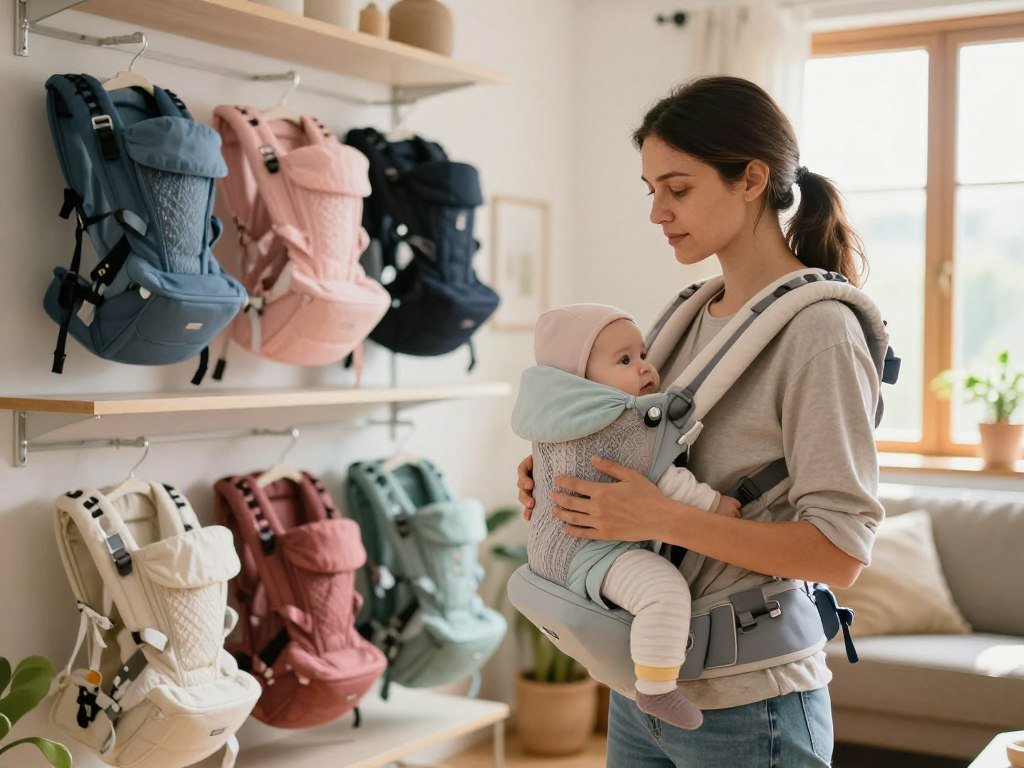
A good carrier keeps your baby supported while making everyday tasks easier for you. Choosing among the best baby carriers can feel tricky when you need comfort, a good caregiver fit, and room for a growing baby. A carrier that works for one family may not suit another.
This roundup compares options for newborns, everyday use, toddler carries, wraps, slings, and different budgets. The right choice depends on your baby’s stage and the kind of carry you expect to use most. A product recommendation only helps when your baby fits its seat and you can use it comfortably.
Key Takeaways
- Match the carrier to your baby’s current size and stage.
- Choose a style you can put on and adjust with confidence.
- Consider caregiver comfort as well as the baby’s support.
- Use weight limits as limits, not as a promise of fit.
- Check the carrier’s instructions for each carry position.
The right shortlist starts with your baby’s current size and the carry you expect to use most.
What makes a carrier fit well?
A well-fitting carrier keeps the baby close and supported without making the caregiver compensate with a strained posture. A hip-healthy position is a seated posture with the thighs supported apart and the hips and knees bent.
Good fit means the baby sits securely while the caregiver can fasten, adjust, and move without strain. During the first six months, prolonged daily carrying can influence hip development, while occasional short-term use is unlikely to affect it. The International Hip Dysplasia Institute describes the hip-healthy position as supporting the thighs apart with bent hips and knees.
The International Hip Dysplasia Institute’s babywearing guidance explains how this seated posture supports the hips. You can also use a few simple checks before deciding whether a carrier works for your family.
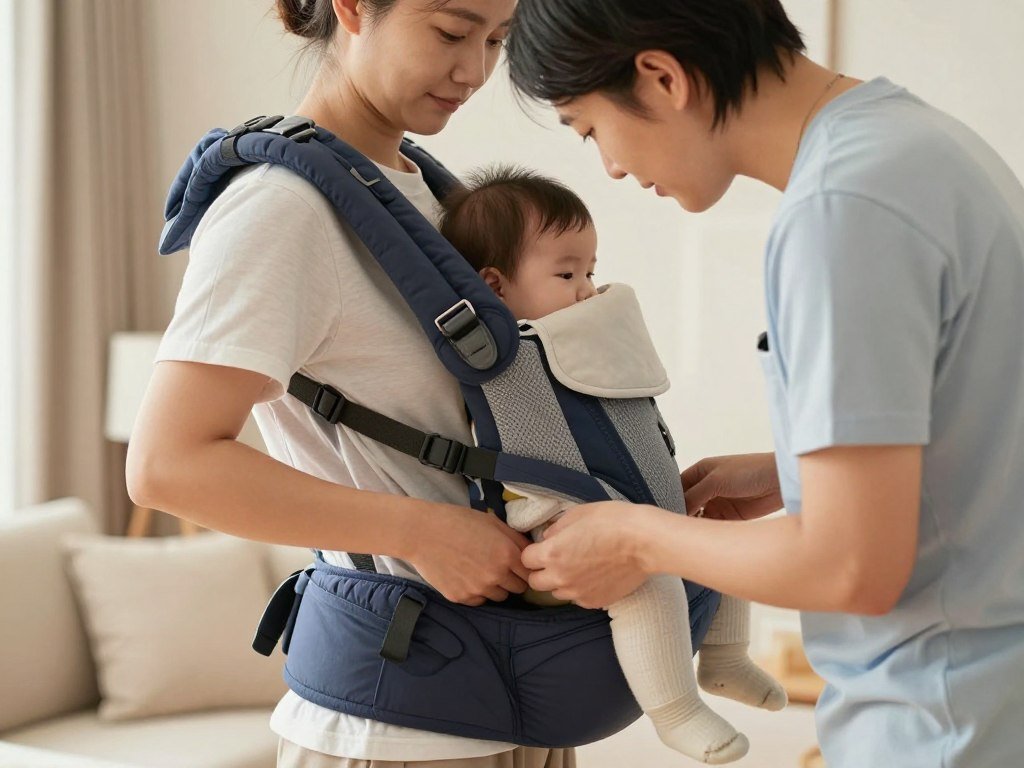
- Fasten and adjust the carrier without another person’s help.
- Check that the straps rest comfortably on your shoulders.
- Place the waistband where the carrier instructions intend it to sit.
- Check comfort while standing, then again while sitting.
A carrier that needs repeated readjustment after a short walk deserves another fit check before longer use.
If caregivers share one baby carrier, each person usually needs to readjust the straps and waistband. Body shape, torso length, and preferred carrying height can change how the same carrier feels.
Try the fit at home before wearing it for a longer outing. A few minutes of walking, sitting, and standing can reveal pressure that was not clear during the first try-on.
Which carrier style suits your routine?
A buckle carrier is usually the easiest place to start if you want a repeatable setup with fewer tying steps. The main carrier types differ in structure, adjustment, and how much practice they take.
Choose based on the setup you can repeat comfortably, not on the number of positions listed. Some caregivers like the quick closure of a soft-structured carrier, while others prefer fabric they can wrap closely around the baby.
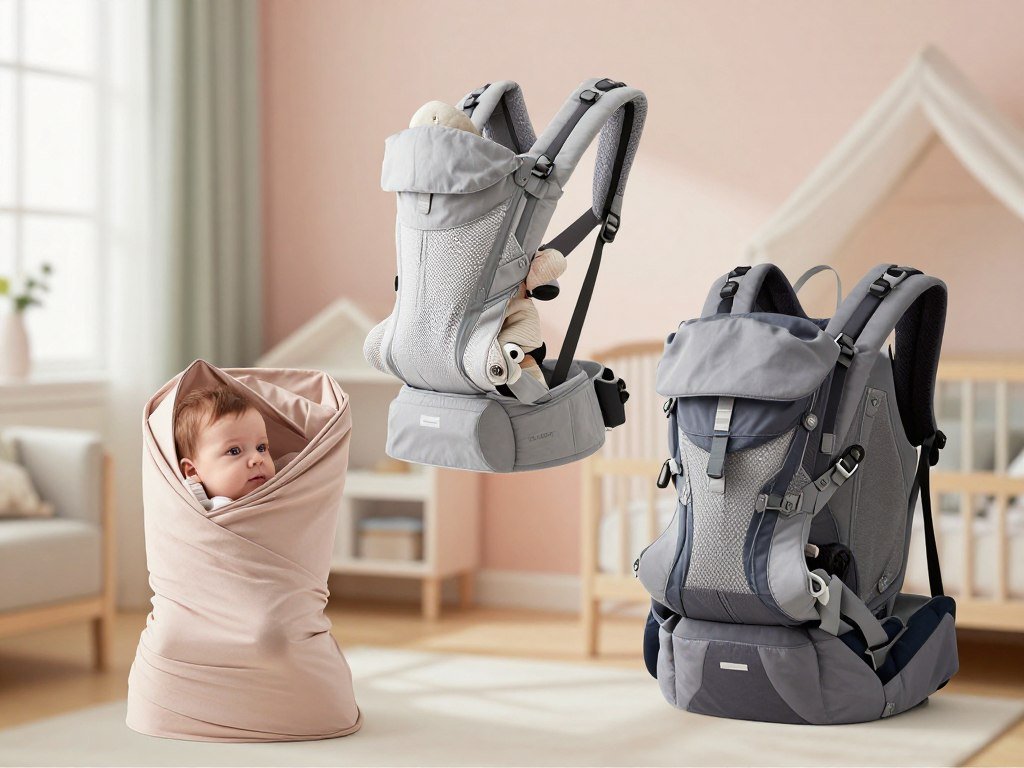
Soft-structured carriers for quick adjustments
A soft-structured carrier uses a fabric seat panel, padded straps, and buckles. You fasten the waistband and shoulder straps, then adjust them to secure the baby.
This format suits daily errands, walks, and caregivers who want a setup they can repeat. Buckles make changes quick, but bulky straps and buckles may feel less comfortable under coats or in warm weather.
Wraps for a close, fabric-based fit
A wrap is a long piece of fabric that you tie around yourself and the baby. Stretchy wraps give a snug feel, while woven wraps hold their shape for a wider range of carries.
Wraps can adjust closely to a small baby and pack into a bag. The trade-off is learning how to tie the fabric, then checking each pass before carrying. The Solly Baby Wrap and Oscha woven wraps represent different fabric approaches.
Slings and onbuhimos for specific carry situations
A ring sling holds fabric with two rings, letting you tighten the material over one shoulder. It can suit brief carries, though the one-shoulder design places weight unevenly.
A waistless high-back carrier is an onbuhimo. It uses shoulder straps instead of a waistband and can suit caregivers who want a high back carry. A Mei Tai is a hybrid, with a fabric panel and tie-on straps.
WildBird Ring Sling and Sakura Bloom Onbuhimo illustrate these distinct formats. Each has a narrower use than a general buckle carrier, so consider the carry you want before choosing.
Choose the style you can put on correctly on a tired day, not simply the one with the most positions.
Best Baby Carriers for Different Needs in 2026
The LennyLamb Upgrade Pro is the 2026 overall pick, while the Hope & Plum Sprout is the newborn-focused choice. The table offers five picks for common stages and fabric preferences.
The overall pick is a starting point, not a fit guarantee. A stage-specific carrier or wrap may suit your family better if it matches your baby’s current size and your preferred carry.
| Need | Pick | Carrier style | Stage or use |
|---|---|---|---|
| Overall | LennyLamb Upgrade Pro | Adjustable carrier | Everyday use |
| Newborn | Hope & Plum Sprout | Buckle carrier | Newborn stage |
| Toddler | Tula Toddler | Toddler-sized carrier | Toddler stage |
| Stretchy wrap | Solly Baby Wrap | Stretchy wrap | Early months |
| Woven wrap | Oscha woven wraps | Woven wrap | Newborn through toddler use |
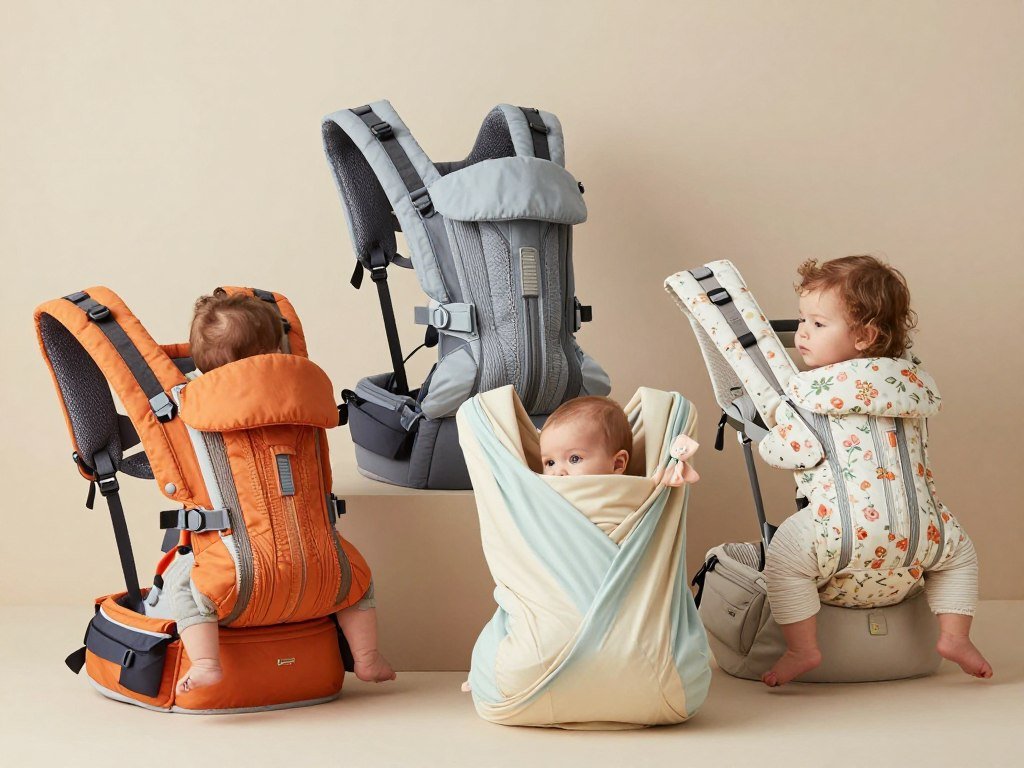
The LennyLamb is the broad everyday choice in this group. That does not mean it fits every caregiver or every baby equally well.
The Hope & Plum Sprout targets the newborn stage, while the Tula Toddler is sized for larger children. The two wraps suit caregivers who prefer fabric over buckles.
Use the table as a shortlist, then prioritize the fit and carry position you will use most.
Which carriers work for newborns?
For a newborn, choose a carrier that fits the baby now rather than one that only promises a long weight range. The best baby carriers for newborns meet the baby’s actual minimum weight and provide the support the infant needs.
Infants under four months old or without independent head control need head support from the carrier or wrap. A newborn-specific buckle carrier can offer a simple setup, while a wrap may adjust more closely around a small body.
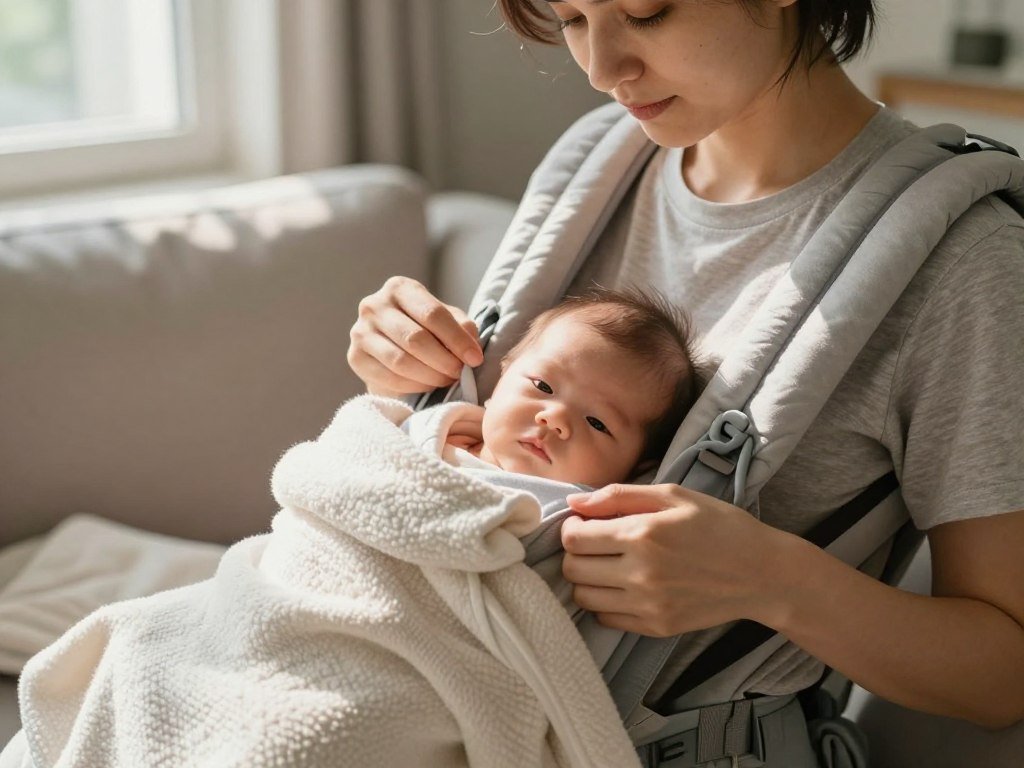
A newborn-specific buckle carrier
A buckle carrier can be easier to put on once its seat and straps are adjusted for a small baby. Check that the panel supports the baby without forcing the legs straight or pressing against them.
Happy Baby says a baby weighing at least 7 pounds can use a legs-out carry from the start, if the seat supports the baby from knee pit to knee pit without pushing the legs into hyperextension. The brand’s guidance is specific to a seat that fits the baby’s body.
A wrap for a snug, adjustable carry
A wrap lets you spread fabric around a newborn, which can help create a close fit. It takes practice to tie, and each caregiver may need to learn the setup before carrying.
A wrap may appeal if you want fabric rather than buckles and do not mind practicing. A buckle model may be easier when you want the same steps each time.
- Model minimum weight
- Baby’s current size
- Seat width
- Built-in head support
Happy Baby’s newborn carry guidance includes its 7-pound threshold and legs-out fit condition. Confirm the newborn’s actual weight against the exact model minimum before first use.
How do carrier weight limits compare?
Happy Baby’s listed options span from a 7-25-lb wrap to structured models rated up to 45 lbs. The Happy Baby carrier range includes several models with different upper limits.
A listed weight range does not guarantee that a carrier fits every baby within that range. The baby’s proportions and readiness for the model’s seat matter along with the number on the scale.
| Model | Minimum listed weight | Maximum listed weight |
|---|---|---|
| Happy Baby Original | 7 lbs | 45 lbs |
| Happy Baby Revolution | 7 lbs | 45 lbs |
| Happy Baby Versa | 7 lbs | 45 lbs |
| Happy Baby Wrap | 7 lbs | 25 lbs |
| Happy Baby Haven Baby Carrier | 7 lbs | 35 lbs |
Happy Baby also lists the Onbuhimo for 7-45 lbs. The Original, Revolution, Versa, and Onbuhimo share that stated range.
WildBird’s Aerial Buckle Carrier has a 7-45-lb capacity and is recommended for ages 2 to 24 months, depending on the baby’s size and readiness for a safe fit. Age guidance does not replace checking the carrier on the child.
Treat the maximum weight as a limit, not proof that the seat still fits a child’s proportions.
What works best for toddler carries and walks?
For long walks with a toddler, a full-support carrier is a better starting point than an assisted sling that requires a hand on the child. The Tula Toddler is the 2026 toddler pick, while a sling may suit short carries with frequent breaks.
Choose the carrier by the child’s body proportions, not age alone. A toddler-sized panel should support the child’s body comfortably, and the child should still fit the carrier’s seat and back panel.
A full-support carrier distributes the child’s weight across the caregiver’s waist and shoulders. That support can help during longer walks when a toddler may tire or fall asleep.
An assisted toddler sling can be quicker for short trips from car to store, or for children who often ask to get down. It offers less support for a long stretch, and the caregiver may need to keep a hand on the child.
The Tula Toddler and Tula Free-to-Grow are separate models. The Free-to-Grow has a 7-45-lb range and earned an overall test score of 70, but it is not the same as the toddler-sized model.
Pick the format that matches how long you expect to carry and how often your child wants to walk. Check panel height and thigh support with the child seated in it.
Choose a toddler-sized panel only when it supports the child’s body comfortably rather than simply because the child has reached a particular birthday.
Which wraps and slings suit different stages?
A stretchy wrap suits caregivers who want a soft, close carry and are willing to practice the tying pattern. Woven wraps and ring slings offer other fabric choices, each with a different balance of learning and support.
Stretchy wraps have a limited weight range, while woven wraps allow more carry variations. A ring sling can speed up a short carry, though its single-shoulder design places weight unevenly.
Stretchy wraps for the early months
Stretchy wraps use soft knit fabric that wraps around the caregiver and baby. The Solly Baby Wrap is listed at $69-$84 and for babies weighing 8-25 lbs.
Stretch gives a close feel, but it limits the wrap’s useful weight range. WildBird’s Aerial Buckle Wrap is designed for full-term babies up to 25 lbs and is described as most comfortable and secure for babies under 15 lbs.
Woven wraps for flexible carries
Woven wraps use firmer fabric that holds a tied carry without the stretch of a knit wrap. Oscha woven wraps are the 2026 woven-wrap pick, and woven fabric can support more carrying variations.
That flexibility comes with a learning curve. You need to practice the passes and knots, then adjust the tension so the fabric supports the baby evenly.
Ring slings for short, quick carries
A ring sling threads fabric through two rings, which lets you tighten and loosen the seat. WildBird Ring Sling and Hope & Plum Ring Sling are named picks for caregivers who want a quick fabric carry.
Ring slings can work well for brief errands or soothing a baby at home. The fabric rests over one shoulder, so a longer carry may feel uneven compared with a carrier that spreads weight across both shoulders.
Practice tying or threading the fabric before putting the baby in, so you can focus on a secure fit.
How much do popular baby carriers cost?
The examples range from a $70 Momcozy carrier to Artipoppe Zeitgeist designs listed as high as $3,750. Price reflects the carrier’s materials and design, but it does not tell you whether the carrier will fit.
Artipoppe’s fabric and design choices account for its wide price range. A higher price does not guarantee a better fit or a safer carry for your family.
| Product | Listed price | What the price applies to |
|---|---|---|
| Artipoppe Zeitgeist | $370-$3,750 | Linen and cotton from $370; specialty prints $390-$790; some vicuña-cashmere styles $3,750 |
| Ergobaby Omni Deluxe | $219 | Listed carrier price |
| Momcozy Baby Carrier | $70 | Listed carrier price |
Artipoppe Zeitgeist fabric prices begin at $370 for certain linen and cotton styles. Specialty fabrics and prints are listed at $390-$790, while some vicuña-cashmere designs reach $3,750.
The Zeitgeist has a 7-45-lb capacity and front inward-facing, front outward-facing, and back-carry positions. Those features do not make every fabric version equally suited to every caregiver.
The Ergobaby Omni Deluxe lists at $219, while the Momcozy Baby Carrier lists at $70. Compare the exact fabric variant before treating two listed prices as like-for-like.
How can plus-size caregivers find a comfortable fit?
Caregiver fit depends on more than a waistband measurement, so compare the adjustment range with where you want the carrier to sit. A comfortable carrier should let you set the waistband and straps without pulling them to their limits.
Check fit at your preferred waistband position, then assess shoulder comfort and strap reach. A longer extender or another carrier size may help when the standard adjustment range does not work for your body.
Happy Baby says its waistbands adjust down to 20 inches and measure about 52 inches. The brand offers 18-inch extenders, while the Ergobaby Omni 360 waistband fits 25.5-55.25 inches.
Those figures help narrow choices, but a tape measurement cannot show how a waistband feels when you sit or walk. Check whether the shoulder straps lie flat and stay comfortable without pressing into your neck.
Hope & Plum Lark and WildBird Aerial are options identified for inclusive sizing. Neither one can promise a fit for every body, so try the strap and waistband setup if possible.
Try the fit while seated and standing because waistband position can feel different with movement.
When is back carrying a good option?
Back carrying becomes an option once the child meets the carrier’s readiness guidance and the caregiver can manage the setup. Happy Baby recommends back carrying only when a child is at least 6 months old and sits unassisted.
Use the carrier’s own readiness guidance, then check these three points:
- The child can sit unassisted.
- The carrier fits the child’s body.
- The caregiver can complete the carry setup reliably.
An onbuhimo is a Japanese-style carrier without a waistband. It sits high on the back and can also be used for a front carry, which may suit caregivers who do not want a band around the waist.
Sakura Bloom’s Onbuhimo is listed for 15-45 lbs. Happy Baby Onbuhimo and Love Radius HoodieCarrier are other back-carry options, though no model fits every caregiver or child.
High placement can feel different from a waistband carrier, especially while learning the straps. Practice the setup at home before relying on it for an outing.
Practice a back transfer over a bed or with a spotter before carrying outdoors.
When can a baby face outward?
Happy Baby allows outward-facing carry only in the Revolution and only after the baby is at least 6 months old and sits unassisted. The carrier’s instructions must permit the position.
A younger infant should face the caregiver, and a baby who cannot hold the required posture should remain inward-facing. The model’s permission and the baby’s readiness both matter.
Outward-facing carry lets an alert baby look around, but it changes how the baby sits against the carrier. Use it only when the specific model allows it and the baby meets its conditions.
Watch how the baby holds the head and body while seated. If the baby slumps or cannot stay in the required position, switch back to inward-facing carry.
Keep outward-facing carries for awake, alert babies who can maintain the required position.
How do you position a baby safely?
A secure carry keeps the baby visible, upright, close enough to kiss and able to breathe freely. Check the airway and body position each time you place the baby in the carrier.
TICKS is a quick airway and support check: Tight, In view at all times, Close enough to kiss, Keep chin off chest, and Supported head and back.
Keep the airway and face clear
Carry young infants upright and facing the caregiver. Keep the face visible and the airway clear, with the baby high enough to kiss the top of the head.
Infants under four months old or without independent head control need support for the head. Make sure the chin stays off the chest and the back remains supported.
- Tight
- In view at all times
- Close enough to kiss
- Keep chin off chest
- Supported head and back
WildBird says a baby in its Ring Sling should have the head and airway above the sling’s top panel. A deep seat should keep the knees higher than the bottom.
Support the thighs and hips
A hip-healthy position supports the thighs apart, with the hips and knees bent. The knees should sit higher than the baby’s bottom, rather than the legs hanging straight down.
Legs held straight and together are the unhealthiest position for infants. Avoid prolonged use of a narrow-based carrier that does not support the thigh to the knee.
Prolonged daily carrying during the first six months can influence hip development, while occasional short-term use is unlikely to affect it. The duration and support of the seat matter.
Recheck the baby’s airway and posture whenever you take the carrier off or reposition the baby.
Which safety standards and materials matter?
A safety label is useful only when it applies to the exact carrier model and material you are considering. Product standards, safety certifications, and material labels describe different things.
A certification or material label does not prove that a carrier fits your baby or your body. It can tell you about a product’s testing or fabric, while fit still depends on how you use the carrier.
Happy Baby says its carriers are made in the United States with U.S. components, while the fabric is imported. Some colorways were made in Turkey to meet demand at the end of 2023.
The brand says its textiles use OEKO-TEX-certified dyes and its padded foam is CertiPUR-US certified. These labels apply to the named materials, not every part of the carrier.
Artipoppe Zeitgeist is described as meeting American ASTM F2236 and European CEN/TR 16512-2015 baby-carrier safety standards. Ergobaby Omni Deluxe is listed as certified by the International Hip Dysplasia Institute and AGR.
BabyBjörn Harmony is listed as hip-healthy certified by the International Hip Dysplasia Institute and JPMA certified. Check the certification and model name together rather than assuming every product from a brand carries the same label.
How do leading carrier test results compare?
Test results make the BabyBjörn One a stronger parent-comfort pick than a cleaning-ease pick. It scored 9.0 for parent comfort and 3.0 for ease of cleaning.
The BabyBjörn One earned an overall score of 71, while the Momcozy Baby Carrier scored 61. A score helps compare tested features, but it cannot tell you how a carrier will fit your body or baby.
| Product | Overall score | Listed weight range |
|---|---|---|
| BabyBjörn One | 71 | 8-33 lbs |
| Tula Free-to-Grow | 70 | 7-45 lbs |
| Baby K’tan Original | 69 | 8-35 lbs |
| Momcozy Baby Carrier | 61 | 7-44 lbs |
The BabyBjörn One also scored 7.0 for ease of use and 6.0 for child comfort. Its listed positions include front inward-facing, front outward-facing, and back carry.
BabyGearLab’s Tula Free-to-Grow review covers comfort, use, cleaning, and value. The Tula Free-to-Grow scored 70, while the Baby K’tan Original scored 69.
Momcozy’s score of 61 is a comparison point, not proof that it suits every baby. Its listed range is 7-44 lbs, and it offers front inward-facing carry.
For Ergobaby Omni Deluxe versus BabyBjörn Harmony, choose the Omni Deluxe when hip carry and a 45-lb listed maximum matter. Harmony is an option for its listed newborn, front, and back positions up to 40 lbs.
Treat a test score as a comparison aid, then try the fit on your own body.
What are the best budget-friendly options?
A functional baby carrier does not have to cost hundreds of dollars, but it still has to fit and fasten securely. Beco Baby is the 2026 budget-friendly pick.
The Infantino Flip Advanced costs around $30, is listed for 8-32 lbs, and scored 78 in comparative testing. Compare its features with Beco Baby based on your intended carry, rather than price alone.
A basic carrier should support the baby in the position you plan to use and adjust for the caregiver. It should fasten securely, fit the baby’s current size, and have clear instructions for its carry modes.
Lower prices can make a carrier easier to try, but inspect the parts that hold the baby. Straps should adjust without slipping, and buckles should close firmly without cracks or missing pieces.
- Verify the exact model and its weight range.
- Try the adjustment system and fasten every buckle.
- Inspect seams and hardware when buying secondhand.
Check the manual for the exact model, especially when buying a used carrier. A similar-looking version may use different parts or have different instructions.
Buy secondhand only after checking the seams, buckles and instructions for the exact model.
Keep the carrier’s manual with it, so each caregiver can follow the same setup steps.
Conclusion
The best choice is the carrier that fits your baby, works for your body and suits the way you plan to carry. An everyday pick should match your baby’s stage and your comfort as the caregiver.
Every model still needs to meet your baby’s current size and positioning needs. A carrier that feels easy to adjust at home is more likely to work during a busy day.
Before buying, compare the exact model’s minimum weight and carry positions with your baby’s current abilities.
FAQ
Why is Artipoppe so popular?
Artipoppe is popular with caregivers drawn to its luxury style, fabric choices, and recognizable designs. Certain linen and cotton Zeitgeist styles start at $370, while specialty materials and prints cost more. The carrier offers front inward-facing, front outward-facing, and back-carry positions. Its high price and design appeal do not prove it will fit better than another carrier.
How do Japanese carry their babies?
An onbuhimo is a Japanese-style waistless carrier worn high on the back, and some models can also be used for front carry. Sakura Bloom lists its Onbuhimo for 15-45 lbs. The design uses shoulder straps instead of a waistband, which may suit a caregiver who prefers not to wear a band around the waist. The fit still depends on the child and wearer.
What baby carrier should I buy?
Choose a baby carrier that fits your child now and matches the carry you plan to use. A soft-structured carrier suits caregivers who want adjustable everyday use and a buckle-based setup. A wrap may suit you better if you want a fabric-based fit and are comfortable learning its tying pattern. Check the exact model’s limits and carry instructions before choosing.
What are the top 5 baby carriers?
The five 2026 picks are LennyLamb Upgrade Pro, Hope & Plum Sprout, Tula Toddler, Solly Baby Wrap, and Oscha woven wraps. They cover everyday use, newborns, toddlers, and two wrap styles. These picks serve different stages and preferences, so they are not interchangeable. Start with your baby’s current size, then compare the style with your usual routine.
What baby carrier does a pediatrician recommend?
No single carrier is a universal pediatrician-endorsed choice. A well-fitted model should support an upright baby, a clear airway, the head and back, and a hip-healthy position. Check the carrier’s weight limits and instructions for each carry. If your child has a medical concern, ask the child’s clinician which positions or carrier features may suit that child.
Which brand is best for baby carriers?
LennyLamb Upgrade Pro is the overall pick, while Hope & Plum Sprout is the newborn choice and Tula Toddler suits toddler carries. Solly Baby Wrap and Oscha woven wraps are options for caregivers who prefer fabric. The best brand for your family depends on your baby’s size, your body, and the carry you expect to use. A brand name alone cannot promise a comfortable fit.
Is baby Bjorn or Ergobaby better?
Ergobaby Omni Deluxe is the better fit when hip carry and a listed 45-lb maximum matter. BabyBjörn Harmony is an option with a listed maximum of 40 lbs and a newborn position. The right choice depends on the carry positions you plan to use and how each model fits you. Try the straps and waistband before deciding between them.
What is the safest baby carrier?
The safest choice is a carrier that fits correctly and holds your baby upright with a clear airway, supported head and back, and hip-healthy positioning. No single model is safest for every baby and caregiver. Follow the maker’s instructions for weight limits and carry positions. Recheck the baby’s posture during use, especially after moving or adjusting the carrier.



