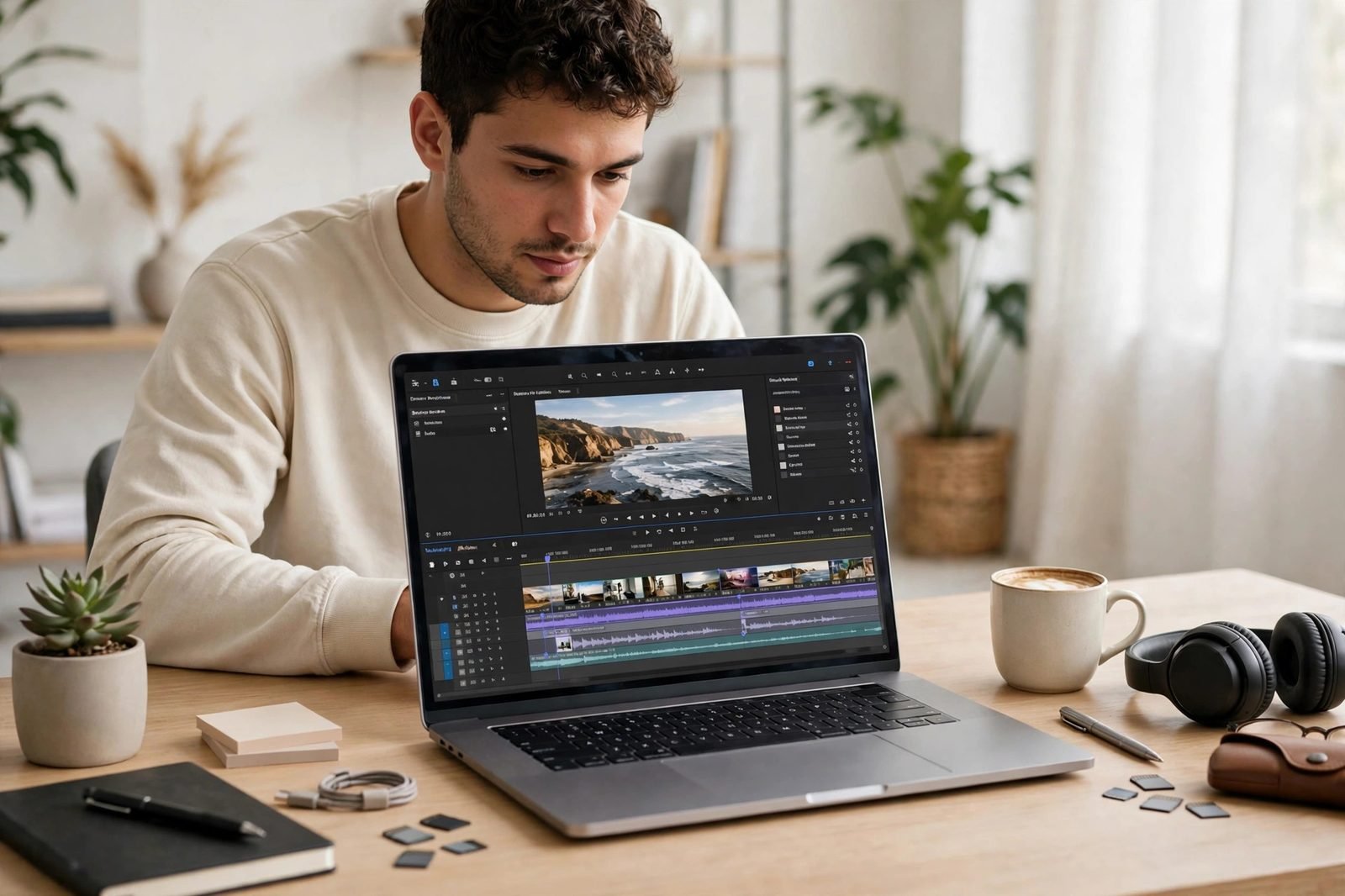
The best video editing software for Mac 2027 has to offer depends on how seriously you edit — but for most Mac users, Final Cut Pro is the strongest choice, with DaVinci Resolve as the best free alternative and iMovie as the ideal starting point for beginners. Macs are popular with video creators for good reason: the hardware and software are designed together, so editing feels smooth even on a laptop. The question is which editor makes the most of that advantage without costing more than your projects justify. This guide compares the leading Mac editors on speed, features, price and ease of use.
Key takeaways
- Final Cut Pro is the fastest, most polished editor for Mac, with a one-off purchase price.
- DaVinci Resolve offers professional editing, colour and audio for free on Mac.
- Premiere Pro suits Mac users who work in teams or across the Adobe ecosystem.
- iMovie is free, simple and genuinely good for beginners and quick projects.
- Check current pricing — one-off and subscription costs change, and free tiers vary.
What Mac editors need to do well
Performance on Apple hardware is the first test. The best Mac editors are optimised for Apple silicon, using the machine’s media engines to play back and export footage smoothly. An editor that ignores that optimisation will feel sluggish on the same hardware, so look for native Apple silicon support and good GPU acceleration.
The magnetic timeline, pioneered by Final Cut Pro, has become a hallmark of Mac editing: clips snap together without gaps, and rearranging a sequence is quick and intuitive. Not every Mac editor uses it, but the ones that do tend to feel faster for assembly work.
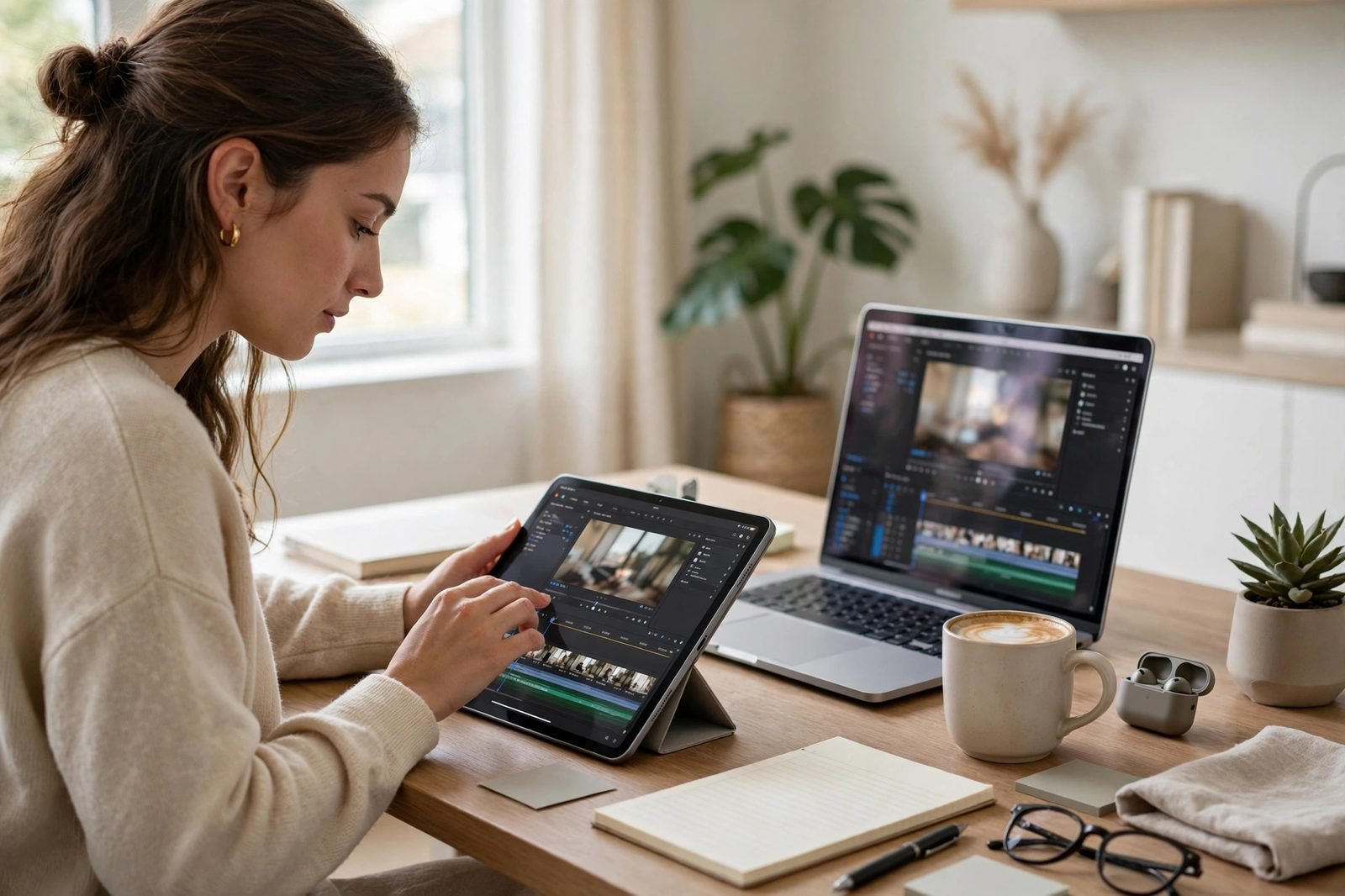
Integration with the Mac ecosystem matters too. Editors that work well with Photos, share cleanly to social platforms, and offer a companion iPad app let you start an edit on one device and finish it on another. Finally, price structure is a real consideration on Mac: Final Cut Pro and DaVinci Resolve Studio are one-off purchases, while Premiere Pro is a subscription — and that difference adds up over years.
1. Final Cut Pro
Best for: Mac users who want the fastest, most polished editing experience.
Final Cut Pro is Apple’s professional editor, and it shows in every detail. The magnetic timeline makes assembly fast and intuitive, the application is deeply optimised for Apple silicon, and the interface is clean without sacrificing power. On a modern Mac, Final Cut Pro plays back and exports footage smoothly where other editors may stutter, and that performance is a genuine, daily advantage.
Organisation tools are a quiet strength: libraries, keywords, ratings and smart collections make it easy to manage footage across many projects, which matters once you have a large archive. Colour and audio tools are solid, the companion iPad app lets you start edits on the go, and the one-off purchase price makes it cheaper over time than a subscription editor.
The limitations are platform and ecosystem. Final Cut Pro runs only on Mac and iPad, so cross-platform teams cannot share projects easily, and its plugin and template library is smaller than Premiere Pro’s. For solo Mac editors and small Mac-based teams, though, it is the editor to beat. Check current pricing on Apple’s site.
2. DaVinci Resolve
Best for: Free professional editing, colour grading and audio on Mac.
DaVinci Resolve runs beautifully on Mac and its free version includes tools that other companies charge for: a full editor, world-class colour grading, Fairlight audio and Fusion effects, all in one application. For Mac users who want professional power without a subscription, it is the best value available — and the paid Studio version adds advanced features for a one-off price.
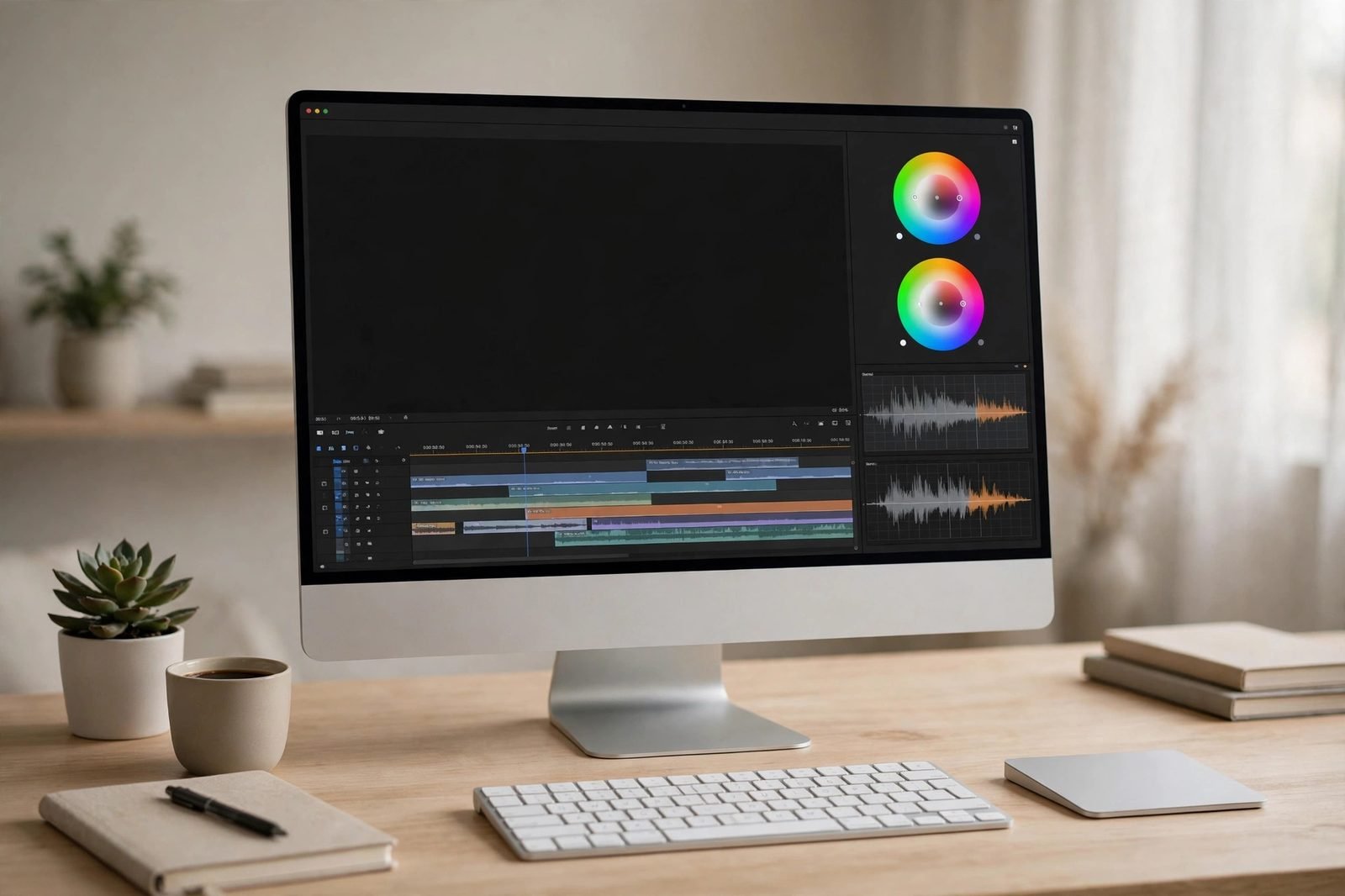
The colour page is the standout. Resolve began as a grading system, and its colour tools remain the deepest available, with scopes, curves and controls that professionals rely on. The editing page is fast and capable, the cut page suits quick assembly, and performance on Apple silicon is strong with good GPU acceleration.
The learning curve is real: Resolve has separate pages for media, editing, colour, effects and audio, and the interface is dense. It also demands a capable machine for smooth 4K work. But for Mac users willing to learn, no other free editor comes close. Check current pricing for the Studio version.
3. Adobe Premiere Pro
Best for: Mac users in professional teams or the Adobe ecosystem.
Premiere Pro is the editor most professional teams use, and its strengths translate well to Mac: mature timeline editing, Lumetri colour tools, Essential Graphics templates and deep integration with After Effects, Audition and Photoshop. If your work involves motion graphics, shared team projects or collaboration with Windows-based colleagues, Premiere Pro’s cross-platform nature is a real advantage.
Format support is excellent — Premiere Pro opens almost anything — and its proxy workflow handles heavy 4K footage well on Mac hardware. The plugin ecosystem is the largest in the category, adding captioning, effects and automation tools that save time on real projects.
The subscription is the main drawback: you pay monthly or annually for as long as you edit. Premiere Pro is also less optimised for Apple silicon than Final Cut Pro, so it can feel slower on the same machine. For professionals and teams, though, it remains the standard. Check current pricing on Adobe’s site.
4. iMovie
Best for: Beginners and quick projects on Mac and iPhone.
iMovie is free on every Mac and iPhone, and it is far better than its reputation suggests. Its interface is simple and approachable, its templates and themes produce polished results quickly, and its integration with Photos means your footage is already there. For family videos, school projects, quick social clips and first edits, iMovie is genuinely good.
The editor covers the essentials — trimming, titles, transitions, music and basic colour — and the trailer templates are fun for beginners. Projects started on iPhone can be continued on Mac, which suits creators who film on their phone. There is no learning curve to speak of: most people can make a finished video in their first session.
iMovie’s limits are clear: no multi-track complexity, limited colour and audio control, and no professional export options. When you outgrow it, Final Cut Pro is the natural next step — Apple designed the upgrade path that way. For getting started, though, iMovie is the right tool. Check Apple’s site for the latest version and features.
5. CapCut
Best for: Quick social videos and short-form content on Mac.
CapCut’s desktop app brings its mobile-first speed to the Mac, with templates, auto-captions, trending effects and one-tap tools that turn raw footage into a finished short-form video in minutes. The free tier is generous, and the app syncs with the mobile version, so you can start an edit on your phone and finish it on your Mac.
Auto-captioning is the standout feature for social creators, generating styled captions quickly in the bold formats that perform well on TikTok, Reels and Shorts. The template library means you rarely start from a blank timeline, and the music and effects library is convenient.
CapCut is not built for long-form or professional projects: its colour, audio and effects depth are limited, and some features need a paid plan. For quick social content, though, it is an excellent second editor alongside a fuller tool. Check current pricing for the Pro plan.
6. Filmora
Best for: Mac users who want a friendly editor with strong templates.
Filmora is designed for people who want good results without a steep learning curve. Its interface is clean, its template and effect libraries are extensive, and its AI tools — auto-reframe, silence detection, background removal — handle common jobs quickly. It runs well on Mac, and the mobile app covers on-the-go editing.
Filmora suits YouTubers, small businesses and hobbyists who need polished videos without professional complexity. The pricing is subscription-based, with a perpetual licence option in some regions, so check current pricing. The free version adds a watermark, which is the main limitation for casual users.
Filmora’s ceiling is lower than Resolve, Premiere Pro or Final Cut Pro, and very large projects can strain it. For its target audience, though, that is a fair trade for an editor you can learn in an afternoon.
Comparison table
| Editor | Best for | Pricing model | Mac strength |
|---|---|---|---|
| Final Cut Pro | Fast, polished pro editing | One-off purchase | Apple silicon optimisation, magnetic timeline |
| DaVinci Resolve | Free professional editing | Free, paid Studio one-off | Colour grading, GPU performance |
| Premiere Pro | Professional teams | Subscription | Cross-platform, Adobe ecosystem |
| iMovie | Beginners, quick projects | Free with Mac | Simplicity, Photos integration |
| CapCut | Quick social videos | Free, paid Pro plan | Templates, auto-captions |
| Filmora | Friendly beginner editing | Subscription or perpetual | Templates, AI tools |
How to choose: a practical checklist
- Decide how seriously you edit: quick clips, regular YouTube videos, client work or films.
- Check your Mac meets the editor’s requirements, especially for 4K footage.
- Try the free version or trial on a real project, not a demo file.
- Test the features you will use daily: trimming, captions, colour and export.
- Compare total cost over three years — one-off purchases beat subscriptions over time.
- Confirm the editor handles your camera’s footage without transcoding delays.
- Look at the iPad or iPhone companion app if you edit on the go.
- Check whether you need to share projects with Windows users — if so, choose a cross-platform editor.
FAQs
What is the best free video editor for Mac?
iMovie is the best free editor for beginners and quick projects. DaVinci Resolve is the best free editor for serious work, with professional editing, colour and audio tools. Both are genuinely free.
Is Final Cut Pro better than Premiere Pro on Mac?
For speed and smoothness on Apple hardware, usually yes — Final Cut Pro is optimised for Apple silicon and its magnetic timeline is fast. For team collaboration, cross-platform work and the Adobe ecosystem, Premiere Pro is stronger. For a direct comparison, see our Premiere Pro vs Final Cut Pro guide.
Can I edit 4K video on a MacBook Air?
Yes, with the right editor. Final Cut Pro and DaVinci Resolve both use Apple silicon efficiently, and proxy editing makes 4K workable on modest machines. Very heavy effects work still benefits from a more powerful Mac.
Does DaVinci Resolve work well on Mac?
Yes. Resolve is optimised for Apple silicon and runs well on modern Macs, with good GPU acceleration. The free version is fully usable for most projects, and the Studio version adds advanced features.
Should I start with iMovie or go straight to Final Cut Pro?
Start with iMovie if you are new to editing — it teaches the basics without overwhelming you. Move to Final Cut Pro when you need multi-track editing, better colour tools or faster workflows. Apple designed the upgrade path to be natural.
Which Mac editor is best for YouTube?
Final Cut Pro suits frequent Mac-based uploaders, DaVinci Resolve suits creators who want professional quality for free, and CapCut suits Shorts. See our best video editing software for YouTube guide for a focused comparison.
The bottom line
The best video editing software for Mac in 2027 is the one that makes the most of your machine and your time. Final Cut Pro is the fastest and most polished choice for Mac-only editors, DaVinci Resolve is the best free professional option, and iMovie is the ideal place to start. Pick the editor that matches how seriously you edit, learn its shortcuts, and let the hardware do what Apple designed it to do. Your next step is simple: edit your next video in your chosen editor, and pay attention to how it feels — the right tool is the one that gets out of your way.