
Mega Altaria ex/Espeon is the strongest all-around starting point here, while faster or more specialized builds may suit your preferred way to play. The Energy Zone is the in-game area that supplies Energy automatically during a match, so you do not add traditional Energy cards to your deck. This ranking is an editorial recommendation based on competitive representation and distinct game plans, not a pure win-rate ranking. Some picks offer broad match options; others shine when you want a certain kind of pressure. Use the list to find a deck that fits your cards and the way you like to play matches. Then test it before spending time or resources on a major rebuild.
Key Takeaways
- Mega Altaria ex/Espeon is the broadest first pick in this list.
- Mega Lucario ex and Mega Sceptile ex suit pressure-focused players.
- Other decks offer matchup-specific plans and play styles.
- Compare tournament use with win rate, not one figure alone.
- Choose a setup and attack plan you can repeat with confidence.
Choose a deck whose setup and attack plan you can repeat confidently, rather than chasing a ranking alone.
How should you read the current Pokémon Pocket tier list?
A tier list is most useful when you read popularity and win rate together, not as interchangeable measures. The current meta includes decks that appear often and decks with strong results from fewer events. Both details help you judge whether a build deserves a test.
The tier score weighs win rate at 60% and play frequency at 40%. Tournament results count deck lists and match results from events with at least eight players. The current set began with Deluxe Pack: Mega on September 30, and the meta updates daily.
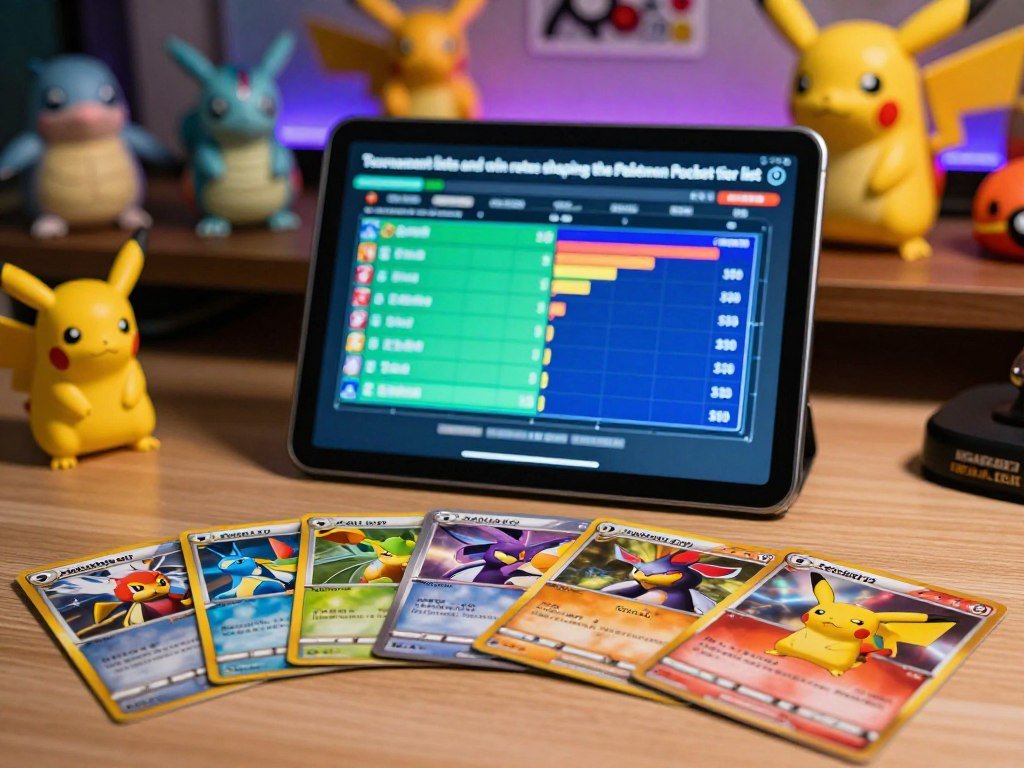
| Deck | Tournament lists | Share | Win rate |
|---|---|---|---|
| Mega Altaria ex/Espeon | 1,168 | 7.78% | 51.71% |
| Mega Lucario ex/Lucario | 1,132 | 7.54% | 49.20% |
| Butterfree/Mega Sceptile ex | 745 | 4.96% | 50.60% |
| Suicune ex/Baxcalibur | 703 | 4.68% | 51.05% |
| Vespiquen ex/Shuckle ex | 644 | 4.29% | 51.08% |
A frequently played deck can still sit below 50% in win rate. Mega Lucario ex/Lucario appears in 7.54% of lists, yet its rate is 49.20%. Popularity shows what players bring, while the win rate reflects match results.
A thin sample can make a high win rate less trustworthy than a slightly lower rate backed by many lists.
Low-volume results need care because a few strong runs can shift a rate sharply. Ties count as half a win, and mirror matches do not count in these results. Low-volume scores also move toward 50%, which limits the effect of small samples.
This method gives popular decks a place in the tier result, even when their win rates are not the highest. A less-played deck can still be worth trying if its plan suits your collection. Treat a small-sample spike as a reason to test a deck, not proof that it is the format’s safest choice.
Which Pokemon TCG Pocket Best Decks make the top 10?
If you want one first deck to test, start with Mega Altaria ex/Espeon, then choose the other entries by the kind of pressure you want to apply. These ten decks range from broad, flexible picks to plans that depend on a certain setup. Your cards and preferred pace can change which one feels best.
Mega Altaria ex/Espeon leads this list because it combines wide tournament use with a positive win rate. The remaining ranks are recommendations, not promises about your next match. Attack lines, setup needs, and support cards matter too.
The five most established all-around choices
- Mega Altaria ex/Espeon. This is the broadest starting pick among these decks, with 1,168 tournament lists and a 51.71% win rate. Mega Altaria ex can use Mega Harmony for up to 130 damage with a full Bench, for 2 Energy. Espeon gives the pairing another Pokémon to build around. It suits players who want a strong main attacker without relying on a narrow matchup.
- Mega Lucario ex/Lucario. Try this list if you like direct Fighting pressure. Mega Lucario ex’s Fighting Pulse can reach 140 damage for 2 Energy when Korrina and Arena of Antiquity boost it. The build has many lists, though its recorded win rate sits below 50%. Check that the attack plan and supporting cards fit your collection.
- Mega Sceptile ex/Butterfree. This pairing can deal 140 total damage per turn with 2 Energy. Its pressure makes it an option for players who favor a clear attack plan. The Butterfree line adds setup needs, so consider how quickly you can get the Pokémon you need into play. Its results are close to even, rather than a clear signal of dominance.
- Suicune ex/Baxcalibur. This build offers an Energy setup plan around Baxcalibur and Suicune ex. It recorded a 51.05% win rate across 703 lists, giving it a solid competitive signal. It suits players who are comfortable building toward a supporting evolution rather than attacking with every card immediately.
- Vespiquen ex/Shuckle ex. The pairing gives you a distinct, discard-based damage plan. Its 51.08% win rate across 644 lists is encouraging, but you need to be comfortable using cards as part of the damage plan. The approach can feel less steady if you want to keep every card in hand.
Five alternatives for distinct match plans
- Mega Rayquaza ex/Dragonair. This pairing gives Mega Rayquaza ex a place in the shortlist for players drawn to a setup-focused attacker. It has less tournament representation than the leading options shown above. Before choosing it, check whether you own the full supporting line and can reach its preferred attack plan.
- Miraidon ex/Magnezone. This is the electric option for players who want Magneton to accelerate and transfer Energy to Miraidon ex. Its tournament results give it a useful signal, while its setup can leave Benched Pokémon waiting for Energy. Section 9 looks more closely at that risk.
- Hoopa ex/Mega Absol ex. Hoopa ex’s Shadow Bullet applies pressure for 1 Energy, letting you start doing damage early. Pairing it with Mega Absol ex gives the deck a second attacker to consider. Players who enjoy early pressure may prefer it over a slower evolution plan.
- Hydreigon/Mega Absol ex. This build pairs Hydreigon with Mega Absol ex for players who want a more involved Pokémon line. It is less established than the leading choices in the tournament figures above. Check whether your cards support its setup before you commit to the plan.
- Mega Altaria ex/Greninja. Mega Harmony can reach 130 damage, while Greninja’s Water Shuriken can damage any opposing Pokémon. That lets you pressure a target on the Bench instead of relying only on the Active Spot. Greninja needs a Stage 2 setup, so plan for the time and cards that line requires.
Chien-Pao ex/Baxcalibur is another useful tactical pairing, though it is not an extra ranked pick here. Diving Icicles can target any opposing Pokémon, while Baxcalibur’s Ice Maker sets up Chien-Pao ex with Energy. Hoopa ex/Darkrai ex is another low-cost pressure option: Shadow Bullet applies pressure for 1 Energy, and Darkrai ex’s Nightmare Aura adds damage over time.
Mega Lucario ex/Hitmonlee gives aggressive players a related option. Hitmonlee can knock out a Benched Baby Pokémon, while Mega Lucario ex can push damage with its boosted attack. Chien-Pao ex/Baxcalibur suits players who value target choice and Energy support. Before committing to a specialist build, check that its setup pieces and preferred attack line match the cards you actually own.
How do you choose a deck for your collection and play style?
Start with the Pokémon lines already in your collection, then decide whether you enjoy fast pressure, Energy setup, or targeted Bench damage. Pokémon TCG Pocket decks contain 20 cards and use the Energy Zone instead of traditional Energy cards. Collection fit can matter more than a small gap in tournament results.
Knocking out a non-ex Pokémon awards 1 point, while knocking out an ex Pokémon awards 2 points. That difference affects how you weigh a risky trade against keeping an attacker in play. A deck’s best plan should work with the Pokémon and Trainers you can actually assemble.

Match your preferred game plan to a deck
| Archetype | Strongest fit | Tradeoff to consider |
|---|---|---|
| Mega Lucario ex/Hitmonlee | Direct aggression | Can struggle to find Mega Lucario ex |
| Mega Altaria ex/Greninja | Bench damage | Needs time to evolve Greninja |
| Chien-Pao ex/Baxcalibur | Flexible targeting | Shared Metal weakness |
| Vespiquen ex/Shuckle ex | Discard-based damage | Much output depends on discarding cards |
| Hoopa ex/Darkrai ex | Early, incremental pressure | Can struggle against late-game decks |
The table helps you match a plan to the way you want to spend each turn. A Meowth deck in TCG Pocket can be a fun off-meta experiment, but it is not a leading tournament core. Garchomp/Meowth appears in 24 lists with a 0.16% share.
The official Pokémon deck-building guide explains the 20-card format and the Energy Zone. It also describes building around a main attacker, supporting Pokémon, and Trainer cards. Keep that structure in mind when you compare a finished list with your own collection.
Check the card pool before committing
Use this short checklist before settling on a build. It keeps the choice tied to what you own and how you want a match to feel.
- Owned Pokémon lines, including every needed evolution.
- Preferred setup speed, from quick pressure to a slower build.
- Comfort with targeting Pokémon on the Bench.
- Tolerance for a narrow or discard-dependent plan.
If a deck needs a rare evolution line you do not own, choose a similar game plan you can assemble now instead.
How can you pilot your deck more consistently?
A consistent turn starts with deciding which Pokémon needs to attack next, before you attach Energy or spend a Trainer. That choice keeps your main plan in view when the board changes. Order matters most when several Pokémon could use the same Energy.
Stage 2 plans need more setup protection than fast attackers. A disrupted opening can cost a deck like Baxcalibur or Magnezone more time than it costs a quick attacker. Build your turns around the pieces your deck needs, not only the attack you want to use.

Professor’s Research and Poké Ball help you find cards and key pieces. X Speed can change retreat tempo, but it is a tool for a useful moment, not a card to spend automatically. A retreat that gains no board advantage may leave you short of options later.
- Plan which Pokémon should receive the next Energy before attaching it. Consider which attacker can be ready on your next turn, not just who can attack now.
- Save Sabrina for a board state where bringing up a damaged target changes the turn. Forcing a new Active Pokémon without a clear gain can waste its effect.
- Avoid loading your list with evolution lines unless you have enough cards to find them. Professor’s Research and Poké Ball can help, but they do not remove the need for a workable opening.
Stage 2 decks often need time to find several linked cards, so one slow opening can disrupt the whole attack schedule. Fast attackers can usually begin applying pressure with fewer pieces, while evolution-focused lists need room for setup and support. Match your Trainer choices to the line you are trying to complete.
After a match, note which card you needed earlier and what you held back. A few short notes can reveal whether the problem came from Energy timing, a missing evolution, or a Trainer spent too soon. Keep a short note of which opening hand or attachment choice most often leaves your main attacker behind.
What are the B4b SP Ranked Match rules and rewards?
B4b SP is a low-risk way to climb because losses do not take points or rank away during the season. The event runs from October 14 to October 28, 2026, and Ranked Matches are open to players at Level 3 and above. Wins still count toward your progress.
Each battle lasts up to 30 turns, with a 90-second limit per turn, and you need three points to win. Auto is disabled, so you must make your own choices within each timer. The ladder has five ranks, with four tiers in each rank.
The official Pokémon TCG Pocket Gameplay FAQ confirms that ranked play requires Level 3. The season’s other details shape how quickly your wins move you through the ladder. Losses do not remove points or rank during B4b SP.
Wins give 10 base points from Beginner through Ultra Ball. In Master Ball, a win gives 1 base point. Consecutive wins add bonus points, with the bonus ranging from 4 to 36 points.
The three-point goal makes each knockout and point award matter. Since Auto is off, you must pick attacks, Energy attachments, and Trainer use yourself. Keep an eye on the timer when a turn includes several choices.
At season end, rewards are Special Tier Emblems and Pack Hourglasses based on your final rank. The exact reward depends on where you finish, so a late climb can change what you earn. Check your final rank before the season ends, since it determines which emblem and Pack Hourglasses you receive.
What can a tournament result tell you about a deck?
A 216-player event gives a useful snapshot of competitive play, but its winner alone cannot establish the safest deck for every ladder match. The PMPT Throwback Series finale took place on October 24, 2026, and Taroo won the Pokémon TCG Pocket tournament. One result can point you toward a deck or play style worth studying.
An event winner shows who won that event, not how an archetype performs across many lists and matches. A deck’s broader record can show whether its success repeats across more players. Use both kinds of evidence for different questions.
A tournament can show what skilled players chose under real match pressure. It can also reveal a strategy that does not appear often in broad results. Still, one successful run is not the same as a stable win rate over many matches.
A single-elimination or one-event result can reflect one player’s run and the opponents they faced. A strong finish may come from good decisions, favorable pairings, or a deck that fits that player’s skill. Compare the result with wider play before changing your own list.
Broader data can help you tell whether an archetype’s success holds beyond one bracket. Tournament coverage also changes as players test new cards and opponents adjust. Treat one tournament title as a signal to investigate, then compare the deck with broader results before crafting around it.
How should you respond when the meta changes?
A new set can change which cards players test, but it does not automatically answer whether a format rotation has taken place. Dual Fusion was announced on October 20, 2026, and its set release was October 28, 2026. Set news and format rules are separate things.
A set announcement or release does not by itself confirm a rotation or card-legality change. Check the active in-game format and each card’s legality before spending resources on a post-rotation list. That rule answers which Pokémon decks to build after rotation in 2026: first confirm what the game allows.
Separate an expansion announcement from format rules
The official Dual Fusion announcement gives the release date and set news. It does not mean every existing card becomes illegal when new cards arrive. A new card may change what players test without changing the rules for older cards.
For example, a Team Rocket card in one list, a Deluxe Pack card in another, and a Mega Rayquaza deck can each remain relevant only if the active format allows their cards. The name of a set does not tell you whether a card is legal. Check the format itself before treating a tier shift as a rotation signal.
Check legality before building for a post-rotation format
A post-rotation build should start with the game’s current rules, not a rumor or an assumption tied to a release date. Once you know which cards are allowed, see whether your planned Pokémon lines still work together. Then spend resources on a list that fits those rules.
New cards can move a tier list as players test fresh strategies, even when the legal card pool stays the same. Watch which decks appear in actual matches, but separate those results from changes to format rules. Before rebuilding around rotation rumors, confirm the actual format and card legality in the game.
Which electric deck is best for Energy acceleration?
Miraidon ex/Magnezone is the clearest electric pick here if you want Magneton to accelerate and transfer Energy to your main attacker. The archetype has 129 tournament lists and a 51.64% win rate. That result is a useful signal, not a promise about your own matches.
Magneton lets this deck build Energy and move it to Miraidon ex. The setup gives Miraidon ex a clear role as the main attacker, while Magnezone supports its Energy plan. It suits players who enjoy preparing a central Pokémon before leaning on its attacks.
If Miraidon ex is knocked out early, your Benched Pokémon may still lack Energy.
That risk matters when you commit most of the setup to one attacker. Watch the board before moving Energy, and consider which Pokémon could carry the next turn if Miraidon ex leaves play. The deck’s sample and win rate say it can compete, but they do not remove that setup risk.
Protect the setup long enough to move Energy onto Miraidon ex before relying on it as your only attacker.
Conclusion
The best deck to start with is the one whose plan you can execute consistently with the cards you have. Mega Altaria ex/Espeon is a strong all-around first test, but your collection and preferred game plan still matter. Comfort with the setup can make a close match easier to manage.
Build or borrow one list, then play several matches with it. Notice whether your opening sequence reliably finds the Pokémon and Energy your main attacker needs. That will tell you more about its fit than a single win or loss.
Pick one list, test its opening turns, and adjust only after you know where its plan breaks down.
FAQ
How do I choose between a high win rate and a popular deck?
Use both measures, and give more trust to a result backed by many lists. A high win rate from a small sample can shift quickly after a few matches. Popularity shows that players bring the deck often, while win rate shows how those lists perform. Compare both with your own card collection and preferred game plan before choosing.
Is Mega Altaria ex/Espeon a good first competitive deck?
Yes, Mega Altaria ex/Espeon is the broad first recommendation here, with 1,168 tournament lists and a 51.71% win rate. Those numbers show both wide use and positive results. Its Mega Harmony attack can reach 130 damage with a full Bench for 2 Energy. Your comfort with its setup still matters when you test it.
What should I look for in a deck that targets the Bench?
Compare how each deck reaches Bench targets and how much setup it needs. Mega Altaria ex/Greninja combines Mega Harmony with Greninja’s Water Shuriken, which can damage any opposing Pokémon. Chien-Pao ex can also target any opposing Pokémon with Diving Icicles. Greninja needs a Stage 2 line, so consider whether you can set it up reliably.
Is a high tournament win rate enough reason to craft a deck?
No, a high win rate alone is not enough reason to craft a deck. Check how many lists support the result, since small samples can make a rate less steady. Then check whether you own its core Pokémon and evolution lines. A strong deck that you cannot assemble or pilot well may be a poor use of your resources.
Does a new Pokémon TCG Pocket set automatically mean rotation?
No, a new set release does not by itself mean the format has rotated. Set news can introduce cards for players to test without changing which older cards are legal. Check the active in-game format and the legality of each card before building around rotation. A release date alone does not establish a rule change.
How can I tell whether an electric deck fits my play style?
Miraidon ex/Magnezone fits players who are comfortable building Energy through Magneton and protecting Miraidon ex during setup. Magneton accelerates Energy and transfers it to Miraidon ex, giving the deck a clear central attacker. The plan can leave Benched Pokémon short on Energy if Miraidon ex is knocked out early. Try it if you enjoy setting up before pressing your attack.