
A run of tech outages across the United States in November 2026 has put a hard question in front of government agencies and large businesses: how well can they keep essential systems running when routine maintenance goes wrong? The disruptions of the past two weeks slowed intelligence work, grounded flights, interrupted banking and email services, and took farm payment systems offline. Officials told Congress there was no evidence of a coordinated cyberattack.
The pattern is what worries former officials and engineers. The outages were not caused by a single bug or a single vendor, and they were not the result of an attack. They happened while teams were doing exactly what they are supposed to do: patching known software flaws and replacing ageing equipment. In several cases, the fix itself became the failure, and a small change brought down services that millions of people depend on.
That tension sits at the centre of the debate now. Artificial intelligence tools help researchers find software flaws faster than ever, which puts pressure on organisations to install fixes before hackers can exploit them. At the same time, the systems being patched are more interconnected than ever, so a rushed update can ripple further than anyone planned.
Key takeaways
- Tech outages in November 2026 disrupted intelligence work, flights, banking, email and farm payment systems in the United States.
- Officials told Congress there was no evidence of a coordinated cyberattack; the failures were attributed to maintenance and technical problems.
- The NSA’s classified NSANet network was disrupted for three days and returned to normal operations on Friday, 20 November 2026.
- An FAA nationwide ground stop on 13 November 2026 followed telecom replacement work, and more than 18,000 flights were cancelled.
- Experts warn that AI-assisted flaw discovery is speeding up patching, and rushed fixes can themselves cause downtime.
What happened over the past two weeks
The outages arrived in a cluster, which is part of why they drew so much attention. Over roughly two weeks in November 2026, separate failures hit the National Security Agency, the Federal Aviation Administration, Microsoft services, banking systems and the US Department of Agriculture. Each incident had its own cause, but the timing made them look connected. Officials told Congress they had found no evidence of a coordinated cyberattack, a finding that matched what industry sources told Nextgov/FCW.
The NSA disruption was the most sensitive of the set. Its classified communications network, known as NSANet, was disrupted for three days, slowing analysts’ work and forcing employees to stagger their arrivals. The network resumed normal operations on Friday, 20 November 2026. Director of National Intelligence Jay Clayton linked the failure to efforts to patch PHP, widely used software that helps run websites and applications, after the NSA joined other agencies in urging organisations to repair serious PHP flaws promptly.
The aviation failure was the most visible. On 13 November 2026, the FAA ordered a nationwide ground stop after work to replace older telecommunications connections went wrong. Officials said network equipment became overloaded with data, disrupting communications and radar feeds and halting departures for hours. More than 18,000 flights were subsequently cancelled, affecting more than one million passengers, according to Reuters. Our report on the Microsoft outage and the software flaw behind it covers a separate failure from the same period, in which Microsoft said a flaw introduced months earlier caused its outage when heavier traffic overwhelmed affected servers.
The agriculture disruption was quieter but hit people directly. The US Department of Agriculture dealt with a cybersecurity incident that took multiple applications offline from Monday, 16 November 2026. An internal email viewed by Nextgov/FCW said the department’s security centre had uncovered an incident that required resetting all database passwords, which caused the outages. Financial tools used to move payments between the USDA and farmers, covering crop insurance and loss payments, were affected. It is not clear who was responsible or whether any data was stolen, and the USDA has not publicly confirmed a breach.
Why maintenance keeps breaking the systems it is meant to protect
The common thread in these failures is not negligence. Patching, upgrading and replacing hardware are the basic hygiene of running large systems, and every organisation involved was doing that work for good reasons. The problem is that the rate of that work is rising, and the systems are more tightly coupled than the teams changing them can always see. A patch can change behaviour in a component nobody on the patching team owns, and the failure only shows up under real traffic.
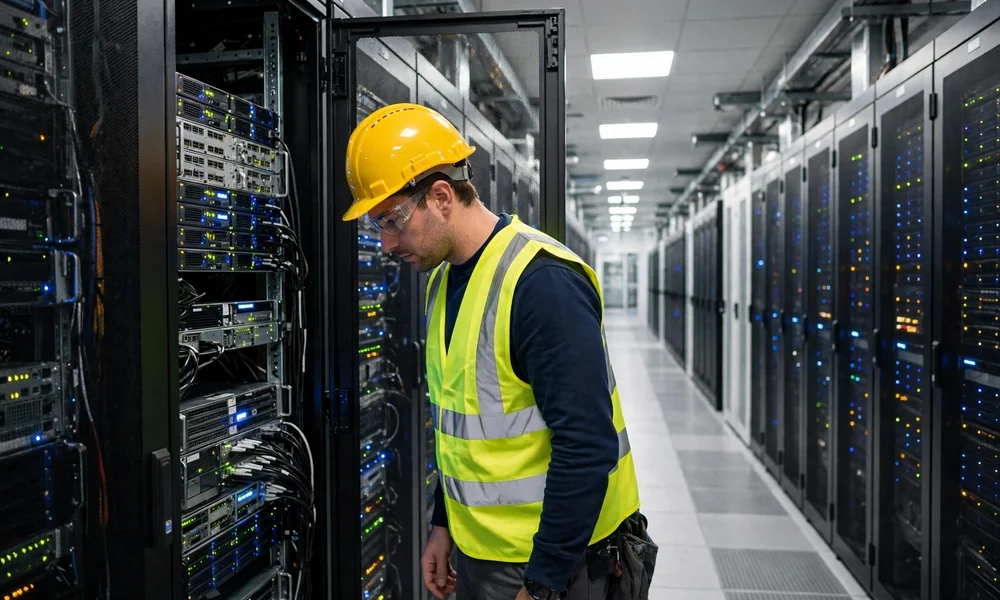
AI has sharpened this tension. AI-assisted tools now help researchers identify software flaws much faster, but that compresses the time between a flaw becoming known and the moment it must be fixed. Matt Hartman, a former deputy cyber chief at the Cybersecurity and Infrastructure Security Agency who now serves as chief strategy officer at Merlin Group, told Nextgov/FCW that the race to make systems more secure can inadvertently make them less reliable.
The same logic applies to hardware replacement. The FAA ground stop followed work to replace older telecommunications connections, the kind of modernisation everyone agrees the air traffic system needs. A Government Accountability Office review in September 2024 found that more than three-quarters of America’s 138 air traffic control systems were considered unsustainable or potentially unsustainable. Replacing that equipment is necessary, and yet the replacement work itself grounded the country’s flights for hours.
The official response and what experts say is still missing
The official response came quickly once lawmakers started asking questions. On Wednesday, 18 November 2026, Homeland Security Secretary Markwayne Mullin, Director of National Intelligence Jay Clayton and FBI Deputy Director Christopher Raia testified before the House Homeland Security Committee that the disruptions were tied to routine maintenance and patching rather than cyberattacks. Clayton told lawmakers that patching, upgrading and replacing hardware always involves taking systems down and bringing them back up, and that the rate of patching and upgrading is increasing.
Cybersecurity experts who reviewed the incidents broadly agreed that no attack was involved, but several said the incidents exposed a deeper vulnerability in how critical systems are maintained. Brett Goldstein, a former Pentagon technology official now with Vanderbilt University, wrote in the Washington Post that none of the failures appeared to have resulted from an attack, but each one showed how a small piece can bring down a large system. His warning was direct: what a contractor did by accident, an adversary will certainly try to do on purpose.
The USDA incident added a second concern. A Government Accountability Office report released the same week found that the USDA and the Food and Drug Administration only partially met or did not meet five of 16 food-sector cybersecurity requirements. Seemant Sehgal, founder and chief executive of BreachLock, argued that when one password reset can take down farm loan and crop insurance payments, the dependencies between those systems were never mapped well enough to be changed safely. For smaller organisations facing the same trade-offs, our guide to cloud backup for small business covers one of the cheapest forms of insurance against a bad update: a tested copy of the data and systems that matter most.
The caveats that matter
Several important details remain unconfirmed. The USDA has not publicly confirmed a breach, and it is not clear who was responsible for the incident or whether any data was stolen. The internal email described a security incident and a password reset, but the full scope of what happened has not been disclosed. Any claim that the USDA incident was a hack or a foreign intrusion is unconfirmed and should be treated as speculation until the department says more.
| Detail | What is known |
|---|---|
| Reporting | Nextgov/FCW, 24 November 2026, corroborated by SC World |
| NSA NSANet outage | Classified network disrupted for three days; normal operations resumed Friday, 20 November 2026 |
| FAA ground stop | Nationwide halt on 13 November 2026 after telecom replacement work overloaded network equipment |
| Flights affected | More than 18,000 flights cancelled, over one million passengers affected, per Reuters |
| Microsoft outage | Flaw introduced months earlier; heavier traffic overwhelmed affected servers |
| USDA incident | Applications offline from 16 November 2026 after an incident forced a full database password reset |
| Official finding | No evidence of a coordinated cyberattack, per testimony on 18 November 2026 |
| Unconfirmed | Who was behind the USDA incident, whether data was stolen, and whether the USDA suffered a breach |
The FAA figures also deserve care. The cancellation and passenger numbers come from Reuters reporting, not from a single official FAA statement, and the precise root cause is still the subject of questions from senators. The claim that AI-assisted flaw discovery is accelerating patching pressure is supported by expert comment and by the officials’ own testimony about rising patch rates, but there is no published measurement of how much faster patching has become. The link between AI and these specific outages is an informed inference, not a documented causal chain.
Checklist: reading outage news honestly
Use these checks before sharing a claim about a tech outage.
- Check whether officials have confirmed a cause, or whether it is still described as under investigation.
- Separate the trigger from the underlying weakness: a patch can trigger a failure that a fragile system made possible.
- Ask whether a link between separate outages has been shown, or whether they only happened in the same week.
- Look for what stayed running, not only what failed, because that shows how much resilience the system has.
- Treat claims about who was responsible as unconfirmed until investigators name a cause.
- Watch for follow-up reporting on fixes and reviews, since the first account of an outage is rarely complete.
Frequently asked questions
Were the November 2026 tech outages caused by a cyberattack?
No evidence of a coordinated cyberattack was found, according to officials who testified to Congress on 18 November 2026. They described the disruptions as the result of routine maintenance and technical problems.
What caused the FAA ground stop on 13 November 2026?
Officials said work to replace older telecom connections overloaded network equipment with data, disrupting communications and radar feeds. The FAA halted departures for hours, and more than 18,000 flights were cancelled.
How long was the NSA network down?
The NSA’s classified NSANet network was disrupted for three days, slowing analysts’ work and forcing employees to stagger their arrivals. Normal operations resumed on Friday, 20 November 2026.
What happened at the USDA?
From Monday, 16 November 2026, a cybersecurity incident took multiple USDA applications offline after an internal email said all database passwords had to be reset. Farm payment and loan tools were affected. Who was responsible and whether any data was stolen remain unconfirmed.
How is AI involved in these outages?
AI tools help researchers find software flaws faster, increasing the pressure to patch quickly before hackers exploit them. Former officials warn that rushed patches can disrupt other parts of a system. The connection is a pattern described by experts, not a proven cause for each outage.
What should organisations do differently?
Experts point to better mapping of system dependencies, more realistic testing under live conditions, staged rollouts and tested backups. For teams choosing tooling, our roundup of IT management software for small business covers products that help track changes and manage updates in one place.
The bottom line
The November 2026 outages were not an attack, and that is precisely why they matter. They showed that the ordinary work of keeping critical systems safe can itself bring those systems down, and that the pressure to patch faster is growing as the systems become more interconnected. The fixes are well known: map dependencies before changing them, test under realistic conditions, roll out in stages, and keep tested backups.
What to watch next is whether agencies and businesses act on those lessons while the outages are still fresh, or whether the next cluster of failures arrives first. The congressional attention, the GAO findings and the FAA modernisation questions all point in the same direction, but none guarantees change. The test will be the next major patch cycle, and whether it passes quietly.