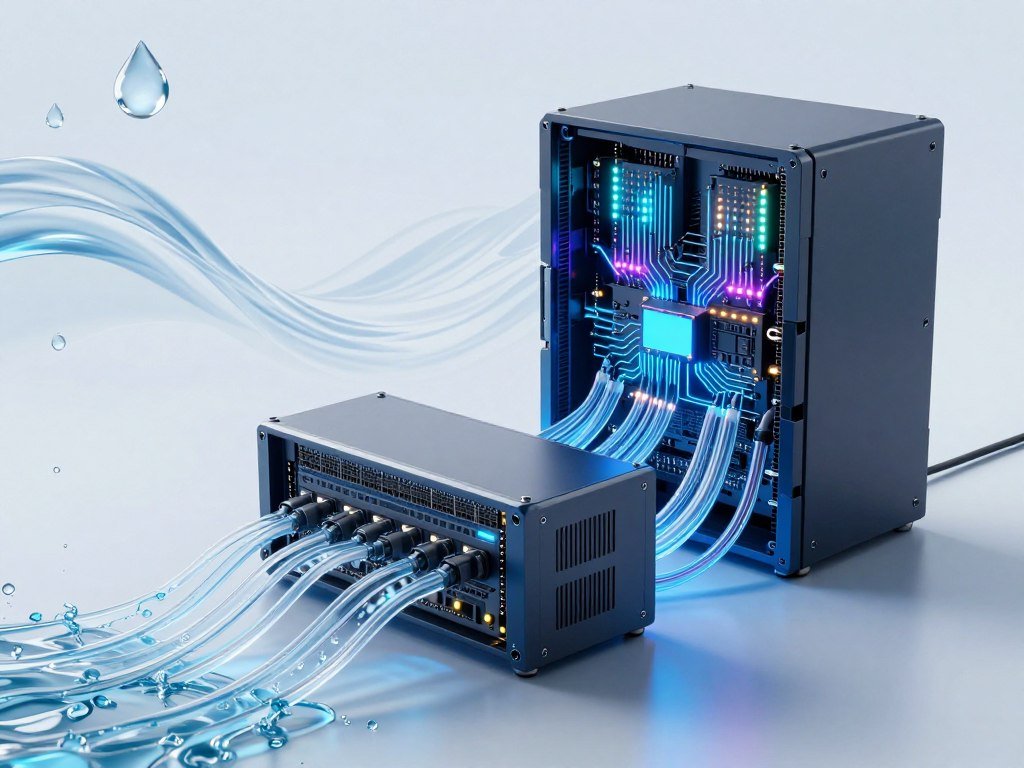
An AI prompt may feel weightless, but the computing behind it runs on physical equipment that uses electricity and produces heat. Water consumption means water that evaporates or leaves immediate human use, unlike water withdrawn and later discharged. The distinction matters because a water estimate can count the equipment, its power supply, or both.
AI runs on real infrastructure, and its water footprint depends on what that estimate counts. Hosted services run on remote servers, while local models use a person’s own hardware. Both setups need electricity, and both produce heat that systems must manage. Their water effects can also reach beyond the equipment itself.
That makes the question relevant to everyday queries, business tools, and creative work. The electricity mix and the local climate also shape the wider effect. You can see how hosted and local tools differ in this guide to free AI video generators.
The useful question is not only how much water a service uses, but which parts of its infrastructure the estimate counts.
Key Takeaways
- A daily water figure depends on the system and water pathways included.
- A per-query estimate is not a fixed rate for every response.
- Direct cooling water and indirect electricity-related water are different measures.
- Local water conditions can matter as much as a national total.
- Check whether a figure describes withdrawal or consumption before comparing it.
How Much Water Does AI Use Per Day?
One estimate puts ChatGPT’s daily water use at 39.16 million gallons, but that figure is a calculation built on stated assumptions rather than a meter reading. It is an illustration for one service, not a measured total for all AI. Those limits matter when you compare daily demand across tools.
That calculation assumes 519 milliliters of water per 100-word response and five prompts per daily user. It starts with 400 million weekly users, converted to 57.14 million daily users. Those assumptions produce the daily figure, but they do not measure each data center’s actual water consumption.

A separate count estimates that ChatGPT processes around 2.5 billion prompts per day. That prompt count is not the same as the daily-user figure used in the water calculation. Prompts can vary in length and computing needs, so a count alone cannot establish a water total.
There is no equivalent single daily measurement for all AI worldwide, so treat the ChatGPT calculation as a model-specific example.
The service also runs on shared computing infrastructure, which can handle work beyond ChatGPT. A national or global total would need to define which services and facilities count, along with direct and indirect water use. Different boundaries can produce different totals without either calculation being a meter reading.
Treat any daily total as a boundary-specific estimate, not a fixed water cost for every prompt.
How Much Water Does One AI Query or 100 Words Use?
A 100-word AI prompt has been estimated at roughly 519 milliliters of water, but that figure is not a fixed charge attached to every response. It is an estimate, not a universal rate. One query can take more or less computing work than another.
The result can shift with the model, output length, hardware, location, electricity mix, cooling, and accounting boundary. A short answer and a long answer do not require the same amount of computing. The number of words is useful, but it cannot describe every part of the service’s water footprint.

For a hosted API, the request and reply may involve more than the visible prompt. Conversation history, instructions, and tool results can add to the data processed. An overview of Mistral Large 4 API requests explains how these inputs can vary by route.
Training a model is another activity, separate from answering a prompt. One estimate for training GPT-3 in a specific U.S. data center setup found direct consumption of about 700,000 liters, or 185,000 gallons, of freshwater through evaporation. That training figure is not a per-query estimate.
It also does not describe every model or every training run. Inference means using a trained model to answer requests, while training builds or updates the model. The two activities have different workloads and should not be folded into one unexplained number.
Compare per-query estimates only when both use the same output length and include the same direct or indirect water pathways.
What Counts as an AI Data Center, and How Much Water Does One Use?
A data center is a building or campus that houses servers and the power, network, and cooling equipment they need to operate. Large facilities can use up to 5 million gallons of water per day. That upper-end amount is far above a typical home’s daily use.
Facility size, workload, and cooling needs help explain why water usage differs. A medium-sized data center can use up to roughly 110 million gallons in a year for cooling, about the annual water use of 1,000 households. The figure describes a facility, not a national total.
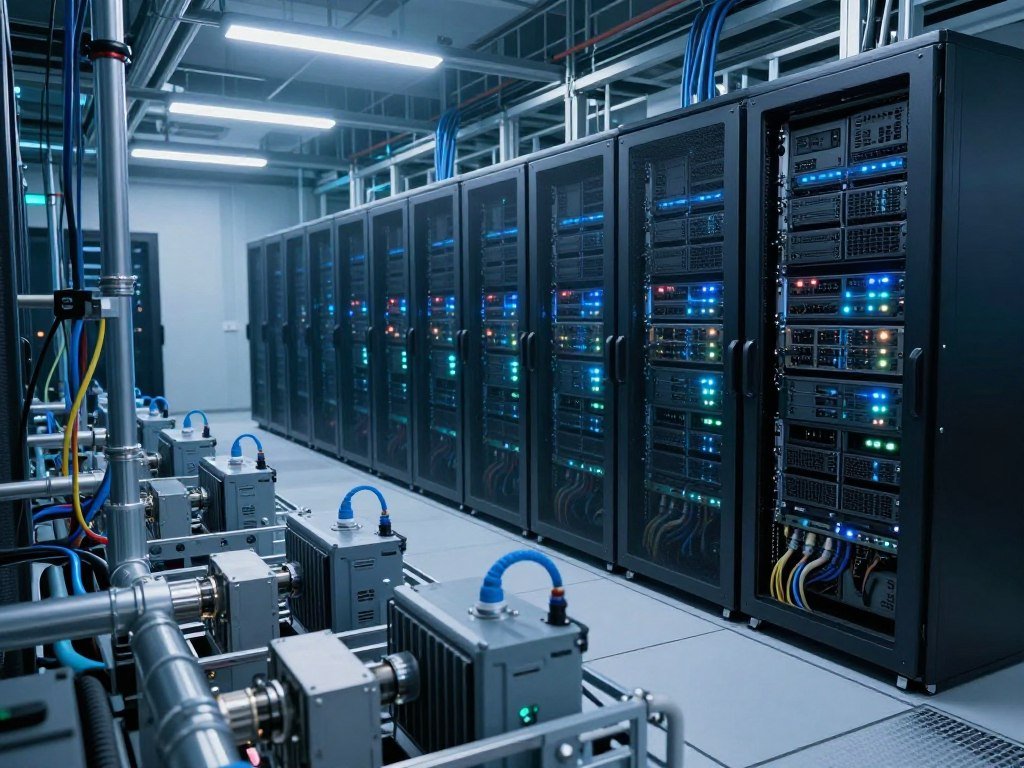
The table separates a single-facility estimate from a U.S. total. A large facility’s water demand can match that of a town with 10,000-50,000 people, though the comparison depends on the town’s use and the facility’s conditions. The national amount combines many sites.
| Facility scale | Water amount | Period | Condition |
|---|---|---|---|
| Medium-sized facility | Up to roughly 110 million gallons | Year | Cooling |
| Large facility | Up to 5 million gallons | Day | Upper-end estimate |
| U.S. data centers | 449 million gallons | Day | 2021 estimate |
In 2021, U.S. data centers were estimated to consume 449 million gallons per day, or 163.7 billion gallons for the year. The United States housed about 45% of global data centers, with roughly 4,000 in the country in 2026. A count of facilities does not show how much water each one uses.
A facility’s size is only a starting point, since its location and cooling design can shift its water demand substantially.
Where Does AI’s Water Footprint Come From?
AI’s water footprint has three parts: water used at the data center, water associated with its electricity, and water used to manufacture processor chips. A cooling-only estimate leaves out two parts of that footprint. The wider boundary includes water used beyond the facility fence.
Those paths can be counted together or reported separately. A number for direct water use at a data center does not include all the water tied to its power supply or hardware. Clear labels help you tell a narrow estimate from a broader one.
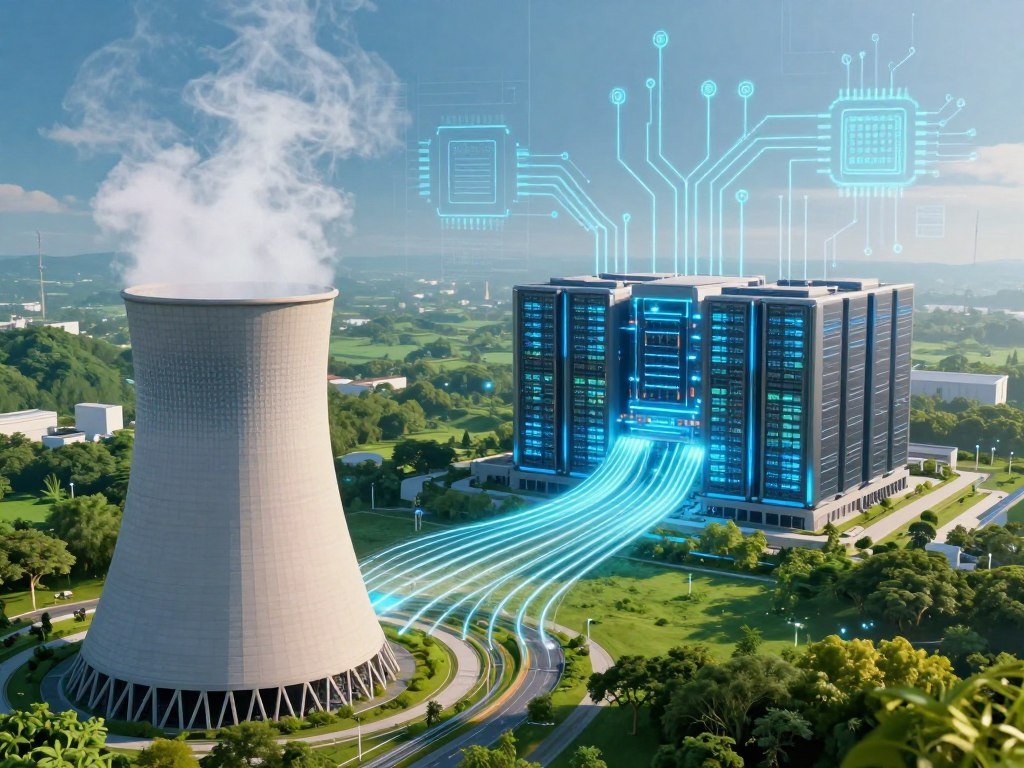
On-site cooling water
On-site water supports cooling systems that carry heat away from servers. The facility may withdraw water from a local source, consume some through evaporation, and discharge the rest. The direct total describes activity at the data center itself.
Electricity and chip supply chains
Power plants can use water to generate electricity for data centers. Chip manufacturing also uses water before processors reach a server. An estimate that includes these activities has a wider boundary than one limited to on-site water.
U.S. data centers used an estimated 176 terawatt-hours of electricity in 2023. Their electricity-related indirect water consumption was estimated at roughly 211 billion gallons, or about 1.2 gallons per kilowatt-hour. That is water tied to electricity use, not water consumed by data center cooling.
Hardware supply chains also include networking gear and other equipment. A guide to AI infrastructure and chip suppliers describes some of the systems behind data centers. The water tied to manufacturing belongs to a lifecycle estimate, not a facility’s cooling total.
A clear estimate should say which of these three parts it counts.
Why Do Data Centers Need Water for Cooling?
AI servers use electricity and generate heat, so a data center must move that heat away to keep equipment operating. Cooling protects servers from heat buildup. Water is one tool for carrying heat away, though not every system uses it in the same way.
Fans, chillers, pipes, and cooling towers can all play a role. The system’s design affects how much water a facility withdraws, consumes, and sends out as wastewater. A single water number can hide those different flows.
Evaporation, withdrawal, and discharge
Water withdrawal is water taken from a source. Water consumption is the portion that evaporates or otherwise leaves immediate human use. Water that returns to a river or wastewater system after use is not counted as consumed.
Cooling towers release heat as some water evaporates. They may also discharge blowdown, which is water removed to limit the buildup of minerals and other substances. About 80% of water withdrawn by data centers evaporates, while the rest goes to municipal wastewater facilities.
WUE and recirculating systems
Water Usage Effectiveness, or WUE, measures water consumed per unit of data center energy. The average WUE across data centers is 1.9 liters per kilowatt-hour. It helps describe facility water efficiency, but it does not state the full water footprint of a specific AI prompt.
Recirculating or closed-loop systems reuse coolant rather than sending it through a one-way path. They still need equipment to move heat away, and some designs may need water for other tasks. A low on-site water figure does not by itself reveal the water associated with the electricity supply.
How Much Water Does AI’s Electricity Use?
The electricity powering an AI service can carry a substantial water footprint even when the data center itself uses little water. Power plants can use water for steam generation and cooling. The grid mix changes how much water is tied to each unit of power.
Coal and natural gas plants use water for cooling and other parts of electricity generation. Wind turbines and rooftop solar panels do not need cooling water. A data center with a low-water cooling system can still have indirect water use through its electricity supply.
| Electricity source | Water use per MWh | Cooling-water context |
|---|---|---|
| Coal | Approximately 19,185 gallons | Water-intensive |
| Natural gas | Approximately 2,800 gallons | Water-intensive |
| Wind or rooftop solar | No cooling water needed | No steam-based cooling |
About 56% of electricity used to power data centers nationwide comes from fossil fuels. The water rates shown are estimates for power generation, not direct cooling use at a data center. Different plants and grid conditions can shift the amount.
Inference, the process of answering requests with a trained model, is estimated to account for 80-90% of total AI energy use. That share describes AI energy use, not its water use. Electricity demand and water demand do not match one-to-one.
The lower-water choice depends on both the local grid and the facility’s cooling needs.
Does AI Hardware Manufacturing Use Water?
AI hardware can carry a water footprint before it reaches the server rack, because semiconductor production needs highly purified water. Chip manufacturing is part of the lifecycle footprint, not a data center’s daily cooling meter. Ultrapure water helps clean and shape tiny electronic parts.
Chip plants use it to remove residue during production. Producing 1,000 gallons of ultrapure water takes about 1,500 gallons of piped water. An average chip manufacturing facility consumes about 10 million gallons of ultrapure water each day.
Several steps depend on clean water:
- Wafer cleaning between manufacturing steps
- Etching patterns into silicon and rinsing away residue
- Producing ultrapure water from piped water
By the time a chip reaches a data center, it may have consumed thousands of gallons of water during production. The exact amount depends on the chip and manufacturing process, so a single chip figure cannot describe every server or AI system.
This supply-chain use also matters for people who run models on local hardware. A locally run system avoids sending every request to a hosted service, but the computer still has a manufacturing history. The production water belongs to the hardware lifecycle rather than its daily electricity meter.
Treat manufacturing water as a lifecycle contribution, separate from the facility’s daily operating total.
What Does Data Center Water Use Mean for Communities?
The average American uses 82 gallons of water at home each day, while a large data center can draw millions of gallons in a day. Local concentration can matter more than a national share. Hot or dry periods can add pressure when water demand rises across a community.
In 2023, direct water consumption by all U.S. data centers was estimated at 17.5 billion gallons. An assumed 50% consumption ratio suggests about 35 billion gallons of water withdrawal, or roughly 0.3% of the contiguous U.S. public water supply. That share is not AI alone or drinking water specifically.
About 40% of the world’s data centers were in the United States in 2023. Roughly two-thirds of U.S. data centers built since 2022 were in high-water-stress areas. Those figures do not mean every facility faces the same local risk.
Only 3% of Earth’s water is freshwater, and about 0.5% is accessible and safe for people to use. A national total can look modest beside the full public supply while a particular town faces a harder choice. A North Carolina State University report on local water pressure discusses why withdrawals and drought can affect communities differently.
Four local checks can clarify the pressure a facility may add:
- Source water, including whether a site uses drinking water or reclaimed supplies
- Watershed stress and other users drawing from the same basin
- Seasonal demand during hot weather or drought
- Wastewater capacity and the location of discharge
Community impact depends on where and when water is withdrawn, not only on the national total.
Which Cooling Systems Use Less Water?
Closed-loop cooling can reduce freshwater use by up to 70%, while air-based cooling can reduce on-site water demand further in suitable conditions. Water savings can come with a power trade-off. The right design depends on local water and electricity limits.
Evaporative cooling uses water to carry heat away, often with lower energy use than air cooling. Air-based cooling uses little water on site, but may need more energy. Water-cooled data centers use about 10% less energy than air-cooled data centers.
| Cooling approach | Water-use profile | Energy trade-off | Best-fit condition |
|---|---|---|---|
| Evaporative cooling | Higher on-site evaporation | Lower energy use than air cooling | Power constrained, water available |
| Air-based cooling | Low on-site water use | Can require more energy | Water scarce, power available |
| Direct-to-chip or closed-loop liquid cooling | Recirculates coolant; can reduce freshwater use | System-specific energy demand | Dense computing or constrained water supply |
| Immersion cooling | Uses non-conductive fluid; significantly less water | Higher upfront cost and energy benefits | Specialized infrastructure is workable |
Direct-to-chip liquid systems carry coolant near hot components, while immersion systems place hardware in non-conductive fluid. Their energy and water effects depend on the full design, including heat exchange and support equipment. A label alone does not show the system’s total demand.
Reclaimed wastewater can replace potable water when its quality suits the cooling system. That choice can reduce pressure on drinking water supplies, but the facility still needs a reliable supply and treatment plan. Water and energy goals should be weighed together.
Compare water savings with local power demand before choosing a cooling design.
How Could AI Water Demand Change by 2030?
Global data centers used an estimated 448 terawatt-hours of electricity in 2025, but that figure does not say how much water AI alone used. It is an electricity estimate for data centers worldwide, not an AI water measurement. Projections use different boundaries and should not be treated as one total.
Global AI-related water demand is projected at 4.2-6.6 billion cubic meters by 2027. A separate projection puts global data center electricity use near 945 terawatt-hours by 2030, with accelerated-server electricity use expected to grow about 30% each year.
The wider data center sector consumes more than 560 billion liters of water each year, with a projection as high as 1,200 billion liters by 2030. That broader figure is not limited to AI, and it uses a different measure from the 2027 AI-related projection.
A review in Patterns estimates AI’s 2025 water footprint at 312.5-764.6 billion liters. The Patterns review of data center water footprints stresses that these totals are estimates, since operators generally do not separate AI workloads in environmental reports.
Four factors can change future demand:
- AI workload growth, including more requests and larger tasks
- Server efficiency, which can lower energy needed for each task
- Cooling design, which can change direct water use
- Electricity mix, which can shift indirect water use
Growth in computing does not force water use to rise at the same rate if facilities improve efficiency and reuse.
How Can You Compare Water-Use Estimates?
Two water estimates are comparable only when they count the same water pathways over the same period and for a similar workload. Label the boundary before comparing the numbers. A monthly total can be found by adding daily use, but only with a stable basis.
Water Usage Effectiveness, or WUE, is measured in liters per kilowatt-hour. The Green Grid developed it by dividing data center water consumption by energy use over the same period. WUE measures facility efficiency, not the water total for an AI prompt.
Power Usage Effectiveness, or PUE, measures data center energy efficiency, not water use. A low PUE cannot show whether a facility consumes a lot of water. Each measure answers a different question.
Check four details in any estimate:
- Direct water or indirect water from electricity
- Water withdrawal or water consumption
- Time period and location
- Workload size or output length
To estimate monthly use, add metered daily amounts across the month. You can multiply a representative daily estimate by the number of days only when demand stays stable and the accounting boundary stays the same.
Before sharing a figure, label it as direct or total and as withdrawal or consumption.
A label should also name the place and time period. A summer facility total may not match an annual average, even when both count the same kind of water. That context helps others judge whether the comparison is fair.
Conclusion
AI’s water footprint is shaped by the infrastructure behind each service, not just by the text of a prompt. A per-query estimate is not a fixed universal rate, and local water conditions matter alongside efficiency. The boundary tells you what the number includes.
When you compare two figures, look for the workload, time period, location, and water pathway. These details help explain why estimates can differ without either one describing every AI service. They also show whether a number concerns one facility or a wider supply chain.
Your next step is simple: check the label before using a figure in a decision or discussion. When you see a water-use figure, check its boundary and whether it describes withdrawal or consumption before comparing it with another estimate.
FAQ
What percentage of drinking water does AI use?
There is no AI-only drinking-water percentage in the 2023 estimate. Direct water consumption by all U.S. data centers was estimated at roughly 0.3% of the contiguous U.S. public water supply. That figure is not a share of drinking water specifically, and it includes data centers beyond AI services. Local effects can still be stronger where facilities draw from stressed watersheds.
What are data centres?
Data centers are facilities that house servers, networking equipment, storage, and supporting power and cooling systems. They can be a single building or a larger campus. These facilities run cloud services, websites, business software, and AI models. Their size and equipment vary, so the term does not point to one standard amount of electricity or water use.
How much water does a person use a day?
The average American uses about 82 gallons of water at home each day. That is a household-use average per person, not a measure of all water used to make food, clothing, or electricity. Daily use can include showers, toilets, laundry, cooking, and outdoor watering. A person’s actual amount changes with habits, housing, weather, and local rules.
Are data centers harming the environment?
Data centers can affect the environment through water stress, electricity-related water use, and emissions from power generation. The size of the effect depends on a facility’s location, power supply, water source, and design. A site using reclaimed water and low-carbon electricity may have different effects from one relying on stressed freshwater and fossil power. The local watershed matters.
How far away should you live from a data center?
There is no supported safe-distance rule for living near a data center. Distance alone does not determine water impact, which depends on the facility’s water source, demand, and local watershed. A site farther away can still affect a shared water system, while a nearby facility may use a different supply. Air, noise, and traffic concerns also depend on the site.
Why is AI bad for the environment in 2026?
AI can add environmental pressure through electricity demand, cooling water, and chip manufacturing. Those effects depend on the workload and the systems that serve it. More efficient servers, reclaimed water, and lower-water power sources can reduce some impacts. AI is not harmful in exactly the same way everywhere, so the local power grid and water supply help shape the result.
How bad is ChatGPT really for the environment?
One prompt’s estimated water use is small compared with the wider data center footprint, but it is not a fixed rate. The estimate changes with response length, model, hardware, location, power mix, and accounting boundary. ChatGPT also runs on shared infrastructure that supports other work. A prompt-level figure is useful for scale, while a full assessment needs the larger system and its electricity.