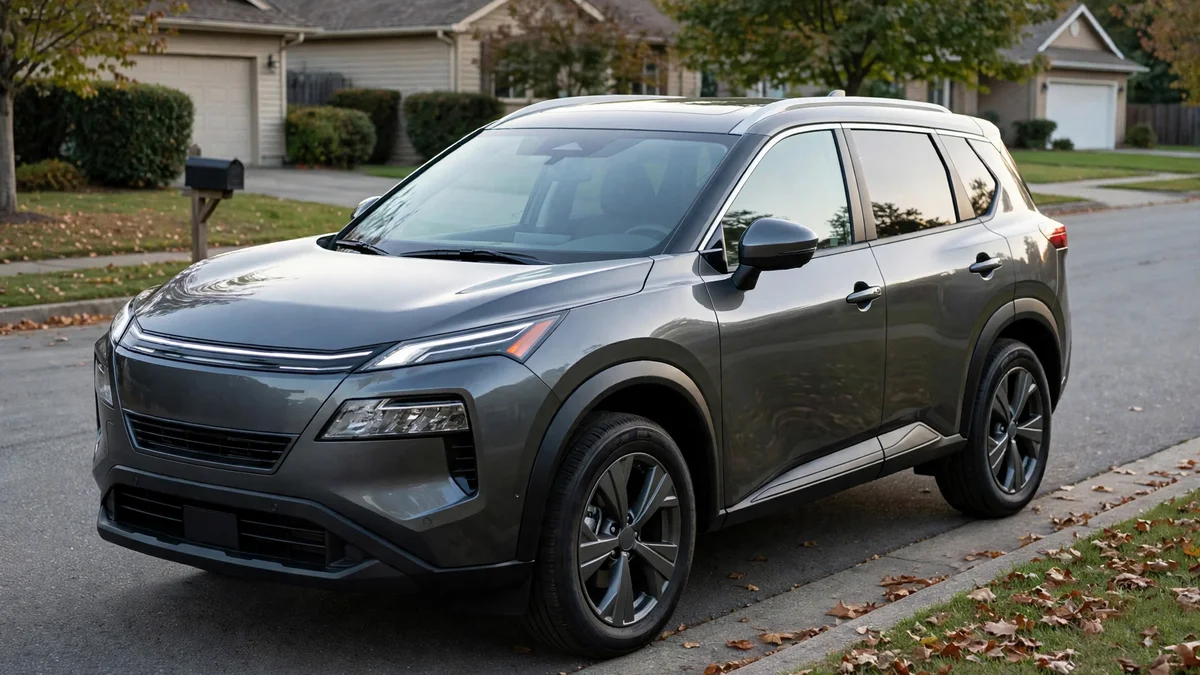
The 2027 Nissan Rogue Hybrid does something no mainstream hybrid sold in the United States has done before: it takes the petrol engine off driving duty entirely. In the Rogue Hybrid, the engine never turns the wheels, never shifts through a gearbox and never has a mechanical connection to the road. It has one job, generating electricity, and two electric motors do all of the driving.
Nissan calls the system e-Power, and it is the third generation of a setup the company has already sold in nearly two million vehicles across 68 countries since 2016, according to Kelley Blue Book. American buyers are only now getting it, in a version tuned for North American speeds.
That combination removes the two objections that keep many buyers away from electric cars, charging and range anxiety, without the familiar compromises of a conventional hybrid. The Rogue Hybrid is not a plug-in and cannot be charged from the wall, but it offers the feel of an electric car with the habits of a petrol car.
Key takeaways
- The 2027 Rogue Hybrid uses a series hybrid system: a 1.5-litre three-cylinder turbocharged engine works only as a generator, while electric motors on both axles drive the wheels.
- Combined output is 225 horsepower, with standard all-wheel drive and no transmission of any kind, according to MotorTrend and InsideEVs.
- Fuel economy is rated at 41 mpg in the city and 35 to 36 mpg on the highway, with a combined figure of about 38 mpg, based on reporting from MotorTrend and InsideEVs.
- MotorTrend’s first test recorded 0 to 60 mph in 6.2 seconds, quicker than the hybrid-only Toyota RAV4 it tested at 7.0 seconds.
- Pricing starts at $37,065 for the SV, $39,065 for the SR and $45,065 for the Platinum, according to MotorTrend, so check current pricing before visiting a dealer.
| Detail | What is known |
|---|---|
| System | Third-generation Nissan e-Power series hybrid |
| Engine | 1.5-litre three-cylinder turbocharged, generator only, 148 hp |
| Battery | 1.67 kWh lithium-ion |
| Motors and drive | Two permanent-magnet motors, one per axle, standard all-wheel drive |
| Combined output | 225 horsepower |
| Fuel economy | 41 mpg city, 35 to 36 mpg highway, about 38 mpg combined |
| 0 to 60 mph | 6.2 seconds in MotorTrend testing, 6.4 seconds claimed |
| Starting price | $37,065 SV, $39,065 SR, $45,065 Platinum (check current pricing) |
What e-Power actually is
Most hybrids on sale today are parallel or series-parallel systems. In those, the petrol engine and the electric motor are both mechanically connected to the wheels, working together or taking turns depending on how much power the driver asks for. Toyota and Honda have refined that formula for decades, but the driver still feels an engine that revs, a gearbox that shuffles and a handover between two power sources.
The Rogue Hybrid removes that entire arrangement. Its 1.5-litre three-cylinder turbocharged engine shares no components with the engine in the regular petrol Rogue, according to InsideEVs, and it is not connected to the wheels at all. It spins a generator, the generator makes electricity, and that electricity either charges the small 1.67 kWh lithium-ion battery or goes straight to the motors. An inverter handles the conversion between alternating and direct current for the battery and back again for the motors.
Nissan packages the electric side into what it calls a 5-in-1 electric drive unit, combining the reducer, inverter, increaser, motor and generator in one assembly. The front motor makes 202 hp and 243 lb-ft of torque, the rear motor makes 134 hp and 144 lb-ft, and Nissan rates the system at 225 hp combined.
Some engineers would call this an extended-range electric vehicle, or EREV, and the label is technically defensible. Nissan has chosen not to use it, and Kelley Blue Book reports that the company simply calls the model the Rogue Hybrid, since the Rogue has a small 1.67 kWh battery and no plug.
What it feels like to drive
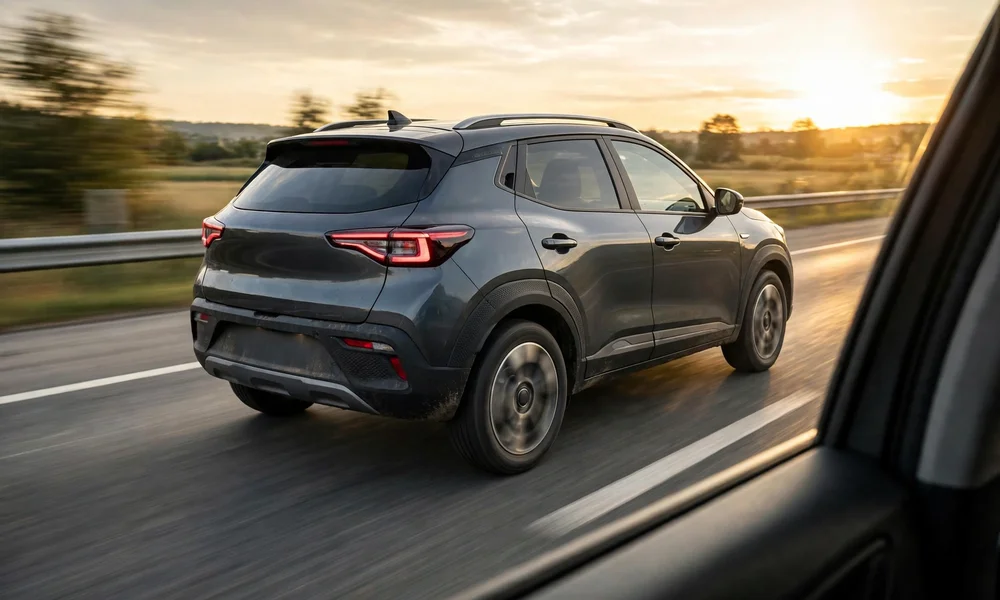
The first thing reviewers noticed is the launch. Press the accelerator and the motors answer instantly, with the smooth, linear pull of an electric car and no pause while an engine wakes up or a gearbox picks a ratio. MotorTrend’s test car, an SR with all-wheel drive, reached 60 mph in 6.2 seconds, and the publication notes that the Rogue Hybrid is the quickest Rogue it has ever tested. The hybrid-only Toyota RAV4 it compared took 7.0 seconds over the same run, and Nissan claims 6.4 seconds for the Rogue.
That quickness continues past city speeds. InsideEVs, which drove the Rogue back to back with a RAV4 in California, reports that overtaking at highway speed felt just as confident as pulling away from a stop, and that the engine stayed barely audible even during sustained fast driving. Nissan has put serious work into sound deadening and isolating the three-cylinder engine, and the series layout helps: the engine is not bolted to the drivetrain, so its vibrations have no direct path into the cabin.
Then there is the braking. The Rogue Hybrid offers e-Pedal mode, which gives full one-pedal driving: lift off the accelerator and regenerative braking slows the car to a stop on its own. MotorTrend found the brake pedal natural, and recorded 119 feet from 60 to zero, better than the RAV4 at 124 feet and the Honda CR-V Hybrid at 123 feet.
The numbers buyers will compare
On paper, the Rogue Hybrid is fast and refined but not the efficiency leader. MotorTrend lists fuel economy at 41 mpg in the city and 35 to 36 mpg on the highway, and InsideEVs reports 38 mpg combined on the EPA cycle. That is a large improvement over the petrol Rogue, but it trails the new Toyota RAV4 Hybrid.
Price is where the comparison gets interesting. MotorTrend reports that the entry-level SV starts at $37,065, the mid-tier SR at $39,065 and the top Platinum at $45,065, with the first cars reaching dealers as the SR with a Technology Package. Check current pricing before visiting a dealer, because launch pricing and incentives move quickly. The standard equipment list is generous: a 12.3-inch digital instrument cluster and infotainment touchscreen are standard, dual 14.3-inch units are available, and the head-up display is exclusive to the Platinum.
For context, Nissan is not the only brand betting on electrified family cars. The Tesla Cybertruck became the fastest-selling used truck of 2026, a reminder that electric driving has already gone mainstream in the used market, while Nissan’s own future line-up is taking shape in reports on the 2027 Nissan Xterra and the 2027 Nissan Skyline. The Rogue Hybrid sits between those worlds: a familiar nameplate with a genuinely different powertrain underneath.
Where it beats the RAV4, and where it does not
Driven back to back, the Rogue’s advantage is refinement. InsideEVs came away impressed, writing that the Rogue felt superior to the RAV4 in its EV-like traits: smoother power delivery, a quieter cabin and a more settled ride. The RAV4 wins in other areas, and the same review is clear that the Toyota remains the stronger all-rounder, but on driving feel alone the Nissan is the more pleasant car to live with day to day.
Fuel economy is the RAV4’s clearest win. The Toyota’s hybrid system is more efficient on the highway cycle, and for buyers who cover long motorway distances the difference will show up at the pump over a year. The Rogue’s city figure of 41 mpg is strong, which suits urban and suburban drivers, but its highway figure of 35 to 36 mpg is ordinary for the class. Buyers who do most of their miles at motorway speed should weigh that carefully.
Who should buy it, and who should wait
The Rogue Hybrid makes the most sense for a buyer who wants an electric car but cannot charge one. Apartment dwellers, street parkers and anyone without a home charger get the smooth, quiet driving of an EV with none of the infrastructure, and they fill up at any petrol station.
It makes less sense for the buyer who chases maximum fuel economy above all else, or who does long highway runs every week. The RAV4 Hybrid will save more fuel on those journeys, and it also makes less sense for anyone who wants a plug-in, since the Rogue cannot be charged.
Before you buy, ask the dealer for the official EPA figures for the exact trim, and confirm which driver-assistance features are standard rather than optional. The hands-free version of ProPilot Assist, the dual 14.3-inch screens and the head-up display vary by trim, so the car you test-drive may not match the car you order.
Checklist: deciding on the Rogue Hybrid
- Test-drive it back to back with the RAV4 Hybrid and CR-V Hybrid on the same roads, and judge the driving feel before the spec sheet.
- Check your real driving mix: mostly town and suburban miles favour the Rogue, while long highway runs favour its rivals.
- Confirm the price of the trim you want, including the Technology Package, and check current pricing and incentives before you sign.
- Try e-Pedal mode in traffic and on a hill, since one-pedal driving is the feature you will use every day.
- Ask about charging at home anyway: if you can charge, a plug-in or a full EV may suit you better than any hybrid.
- Wait for the first year of owner reports if you plan to keep the car for a decade, since this is a new American application of e-Power.
Frequently asked questions
Is the Nissan Rogue Hybrid a plug-in hybrid?
No. The Rogue Hybrid cannot be plugged in and has no electric-only range to speak of. Its 1.67 kWh battery is charged only by the petrol engine and by regenerative braking.
Does the petrol engine ever drive the wheels?
Never. The engine has no mechanical connection to the wheels and there is no transmission. It works only as a generator, producing electricity for the battery and the two electric motors.
How fast is the 2027 Rogue Hybrid?
MotorTrend recorded 0 to 60 mph in 6.2 seconds in its first test of an SR model, making it the quickest Rogue the publication has ever tested. Nissan claims 6.4 seconds, and the hybrid-only Toyota RAV4 took 7.0 seconds.
What fuel economy does it get?
MotorTrend lists 41 mpg in the city and 35 to 36 mpg on the highway, and InsideEVs reports about 38 mpg combined on the EPA cycle. That is strong in town but trails the Toyota RAV4 Hybrid overall.
Does it have one-pedal driving?
Yes. The e-Pedal mode lets the driver slow the Rogue Hybrid to a stop using regenerative braking alone, by lifting off the accelerator. It is unusual for a petrol hybrid.
How much does the 2027 Rogue Hybrid cost?
MotorTrend reports starting prices of $37,065 for the SV, $39,065 for the SR and $45,065 for the Platinum. Check current pricing and incentives with a dealer before buying.
Bottom line
The Rogue Hybrid changes hybrid driving by changing what a hybrid is. Instead of asking a petrol engine and an electric motor to share the work of turning the wheels, Nissan lets the engine do the one thing it is good at, making electricity efficiently, and lets electric motors do the driving.
It is not the most efficient hybrid in its class, and it is not the roomiest, so buyers who rank fuel economy or space first should still test the RAV4 and CR-V. But for the driver who wants the feel of an EV without the lifestyle change, the Rogue Hybrid genuinely delivers it.