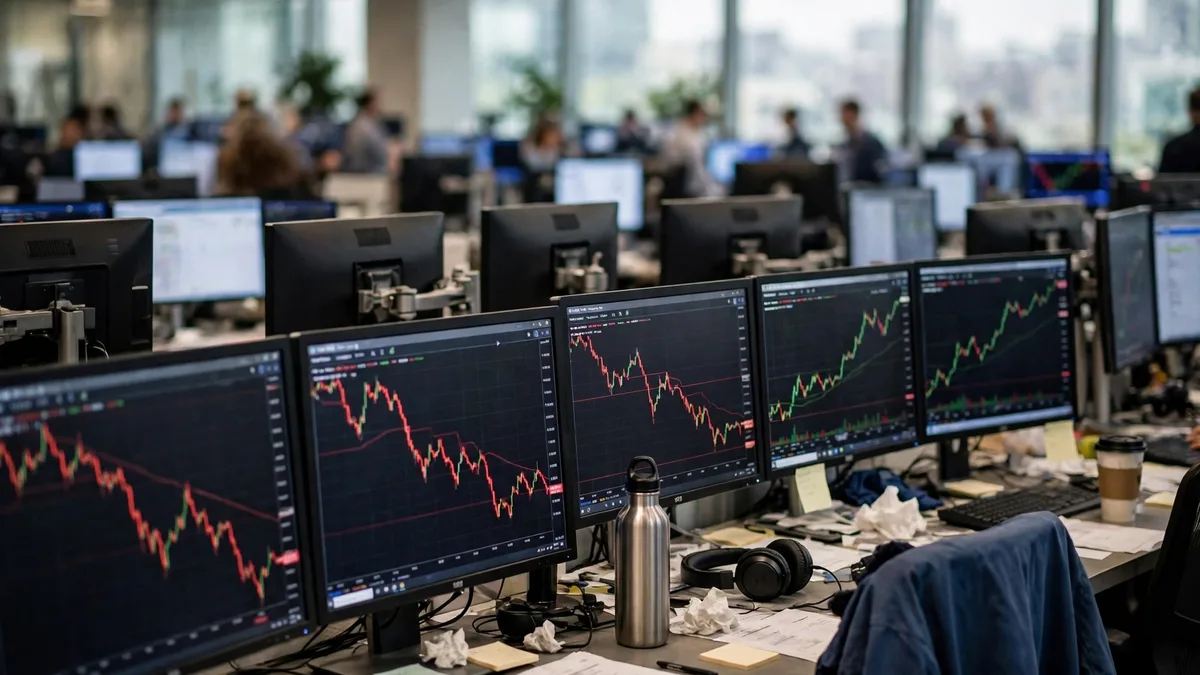
The AI trade is faltering. After carrying the stock market for most of 2026, the shares most closely tied to artificial intelligence have spent November sliding, and the selling has dragged the big indexes with it. The Nasdaq Composite is down about 15 percent from its early-October high, the S&P 500 has fallen 12 percent from its record close on October 6 and into correction territory, and the Philadelphia semiconductor index sits more than 43 percent below its June record.
What makes this sell-off different from the routine pullbacks of the past two years is what is rising while technology falls. The Dow Jones Industrial Average, which carries far less AI exposure than the S&P 500 or the Nasdaq, has held up far better, and value stocks are on track to beat growth stocks for the first time since 2022.
CNBC reported on November 29 that analysts are warming to stocks that do not depend on the technology, a shift that captures the mood of a market rethinking its biggest bet. When the AI trade wobbles, emerging-market bonds are holding their ground, and the same search for shelter is now showing up inside the US stock market itself.
Key takeaways
- The Nasdaq is down about 15 percent from its early-October high, and the S&P 500 is down 12 percent from its October 6 record, putting the benchmark in correction territory.
- Chip stocks have borne the worst of it: the Philadelphia semiconductor index is more than 43 percent below its June record, and the SOXX semiconductor ETF has tumbled more than 23 percent in a month.
- While tech falls, the Dow and value stocks are holding up.
- Strategists blame funding and valuation worries, not a collapse in AI demand: heavy borrowing to build AI infrastructure, high interest rates, and doubts about returns on spending.
- Analysts are looking toward healthcare, financials, industrials, and other businesses whose earnings do not depend on the AI buildout,
| Measure | What the data shows |
|---|---|
| Nasdaq Composite | Down about 15 percent from its early-October high; down 7.3 percent in November, per Reuters. |
| S&P 500 | Down 12 percent from its October 6 record high close, confirming a correction; down 5.2 percent in November. |
| Semiconductor index | The Philadelphia index is more than 43 percent below its June record after a 7 percent intraday slide on November 25. |
| Dow Jones Industrial Average | Up 4.1 percent over the past month. |
| Value vs growth | The S&P 500 value index is up 7 percent in 2026, against a 4 percent drop in the growth index, per Reuters. |
| Median S&P 500 stock | Up 5 percent in 2026, beating the 1 percent year-to-date gain of the index itself. |
Why the AI trade is wobbling now
The latest leg down came on November 25, the day before Thanksgiving. The Nasdaq shed 4.6 percent at its intraday low before closing down just 0.62 percent at 23,585.80, while the Dow erased a loss of more than 1,100 points to finish 164.25 points higher at 50,182.95. The S&P 500 ended 0.25 percent lower at 7,182.78. The pattern was the same as all month: AI-linked names fell hard, and everything else held up or rose.
Nvidia, the stock most associated with the AI boom, closed 3.9 percent lower after trading down more than 9 percent during the session. Alphabet hit a 52-week low on a 4.7 percent intraday decline before ending down 2.1 percent, and Broadcom fell 5.8 percent before closing flat. The VIX, Wall Street’s fear gauge, rose as high as 35, according to CNN.
Underneath the daily drama sit three worries that have been building for weeks. The first is money: companies are borrowing heavily to fund the largest capital investment cycle in modern economic history, and higher interest rates make that borrowing more expensive. S&P Global Ratings placed Nvidia’s credit rating on CreditWatch Negative in November, signalling a high likelihood of a downgrade.
The second worry is valuation. Bernstein analyst Stacy Rasgon described semiconductor stocks as suffering a “crisis of confidence,” noting that the PHLX Semiconductor Index had fallen 30 percent from its June highs and was trading at about 16 times forward earnings, against 28 times at its peak close in June.
The rotation: where the money is going
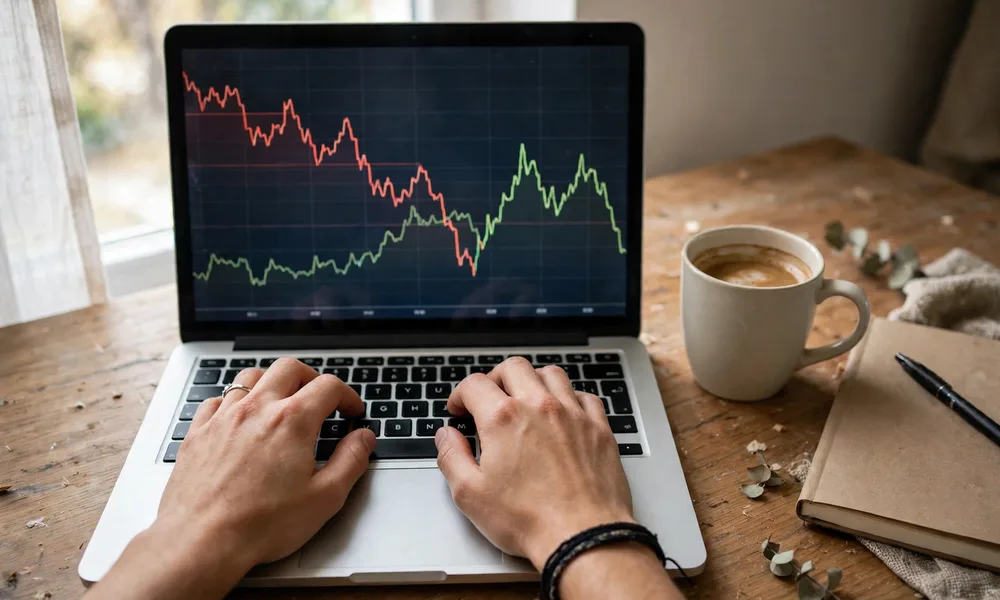
The clearest evidence of rotation is the gap between the indexes. The Dow, with far less exposure to the technology than the S&P 500 or the Nasdaq-100, is up 4.1 percent over the past month, according to CNBC, while the iShares Semiconductor ETF has tumbled more than 23 percent in the same period. Outside of AI, as CNBC put it, the market appears to be doing fine.
Value stocks are the biggest winners of the shift so far. The S&P 500 value index is up 7 percent in 2026, compared with a 4 percent drop in the growth index, according to Reuters, putting value investing on track to beat growth for the first time since 2022. The median S&P 500 stock is up 5 percent in 2026, against a 1 percent gain for the index itself. Niche ETFs are everywhere, and here is how to tell if one belongs in your portfolio when a rotation tempts investors toward narrow themes they have not researched.
What analysts are actually saying
The analyst debate has split into two camps, and both agree on the facts while disagreeing on what they mean. The first camp says something fundamental has changed. On CNBC’s Halftime Report on November 2, Steve Weiss argued that the AI trade is “definitely on pause,” saying the era when AI companies could raise money at any valuation is ending. Melius analyst Ben Reitzes agrees, saying AI trades face their toughest moment because funding and capital spending are now the main issue.
The second camp says the sell-off is a correction, not a collapse. Ed Yardeni, president of Yardeni Research, told CNBC that the sell-off in AI stocks is serious but does not signal the end of the AI trade, calling it a healthy way to cool investor enthusiasm after a sharp run-up. David Wagner, head of equities at Aptus Capital Advisors, told CNBC the market is “very bifurcated” between AI and non-AI names, and said he sees a sentiment-based scare rather than a growth scare. The biggest hyperscalers, Alphabet, Amazon, Microsoft, and Oracle, are all keeping their spending plans intact.
Why non-AI stocks look different this time
The case for stocks that do not depend on the technology rests on three features that look attractive precisely when the AI trade is under pressure. The first is earnings that come from demand that already exists: patients needing care, businesses needing loans and insurance, factories needing equipment, and households needing goods and services. Those earnings do not depend on a data-centre buildout continuing at its current pace, and they do not require heavy borrowing to fund the next year of growth.
The third is breadth. When nine of 11 sectors rise in a week when tech falls, as Yardeni noted in late October, the rotation is not a single trade but a broad reassessment. The Dow’s rally on November 25 was led by IBM, Salesforce, and Sherwin-Williams, names with little to do with the AI infrastructure boom. Microsoft, Broadcom and TSMC are Forbes’ three best tech stocks for 2027, a reminder that even inside technology, analysts are drawing lines between companies with durable earnings and those priced for a buildout that may slow.
What could change the story again
Several events could flip the rotation back toward technology. The first is earnings. Dell reported results that easily topped estimates in November, showing that spending on artificial intelligence was not letting up, yet the stock fell 4.5 percent in premarket trading, and Nvidia, CoreWeave, and Oracle fell 5.5, 6.6, and 5.2 percent. If strong results stop being punished, the market’s mood could turn quickly, and the same investors who fled tech would have a reason to return.
The third is the Anthropic listing, which the Halftime Report panel called an important tell for whether investor demand still supports the AI buildout. Anthropic shares traded as low as 73.85 dollars against an 83 dollar offering price, according to CNN, before closing 1 percent higher at 82.19 dollars, according to Reuters.
Checklist: reading a rotation without chasing it
- Compare the indexes: the gap between the Dow, the S&P 500, and the Nasdaq shows whether the move is about tech or the whole market.
- Check the median stock, not just the headline index, because a few heavyweights can hide what most companies are actually doing.
- Ask where earnings come from: existing demand looks different from a buildout that has yet to pay off.
- Watch borrowing costs and credit signals, since the AI trade depends heavily on debt-funded capital spending.
- Note which sectors lead on down days for tech, because the rotation’s leaders change from week to week.
- Separate a sentiment scare from a growth scare: falling prices alone do not prove that demand for AI has collapsed.
Frequently asked questions
Is the AI trade over?
Analysts disagree. Steve Weiss says the trade is definitely on pause because the funding backdrop has tightened, while Ed Yardeni calls the sell-off a healthy correction that does not signal the end of the AI trade.
Why are non-AI stocks rising while tech falls?
Money leaving AI-linked shares has to go somewhere, and investors are choosing businesses whose earnings do not depend on the AI buildout. Healthcare, financials, industrials, and energy have all led on bad days for tech, and value is beating growth for the first time since 2022.
What is driving the rotation?
Strategists point to three drivers: worries about how much debt companies are taking on to build AI infrastructure, doubts about whether the spending will earn its expected returns, and high valuations after a long run-up. Barclays strategist Venu Krishna described it as a rotation into areas with limited AI exposure.
How bad has the chip sell-off been?
The Philadelphia semiconductor index is more than 43 percent below its June record, the SOXX semiconductor ETF has tumbled more than 23 percent in a month, and the index was trading at about 16 times forward earnings against 28 times at its June peak, according to Bernstein analyst Stacy Rasgon.
Could the AI trade come back quickly?
Yes. The Nasdaq fell 4.6 percent intraday on November 25 and closed down just 0.62 percent, and the Dow erased a loss of more than 1,100 points the same day. Strong earnings, lower borrowing costs, or a stabilisation in the Anthropic listing could all bring buyers back to tech.
What should readers watch next?
Watch the gap between the Dow and the Nasdaq, the next round of earnings from the big AI spenders, any change in the interest-rate outlook, and whether the sectors leading the rotation keep leading.
Bottom line
The AI trade is faltering, and the market’s response has been orderly rather than panicked: money is rotating toward businesses that do not depend on the technology while the median S&P 500 stock keeps rising even as the index itself struggles. Analysts are split on whether this is a pause or a turn, but they agree on the reason it is happening, which is that funding, valuation, and fatigue have caught up with the market’s biggest bet.
What happens next depends on earnings, interest rates, and whether investors decide the AI buildout is merely expensive or genuinely unsustainable. Until those questions are answered, the gap between the AI names and everything else is where the market is making up its mind. This article reports what analysts and markets did; it is not a recommendation to buy or sell anything.