A quantum processor is not a faster replacement for every computer, but it could become a useful partner for specific AI and scientific workloads. For people who use AI today, that distinction matters: a new kind of processor does not mean familiar tools will soon run better or cost less. The future depends on research that can show clear gains on real tasks.
Some work may suit a quantum processor, while classical computers handle data, training, and everyday tasks. This article explains what the technology can do, what current tests show, and how to judge claims without assuming every promise will come true. The practical test is whether a complete quantum-classical workflow solves a real task better than the strongest classical option.
Key Takeaways
- Quantum processors are specialist tools, not replacements for classical computers.
- Hybrid workflows can assign different parts of a task to different processors.
- Current quantum machine-learning tests do not show an overall win.
- Noise and error correction limit useful circuit size on today’s hardware.
- A fair test compares the full workflow with a strong classical method.
- Simulators and cloud access let you learn without buying a processor.
What Quantum Computers Actually Do
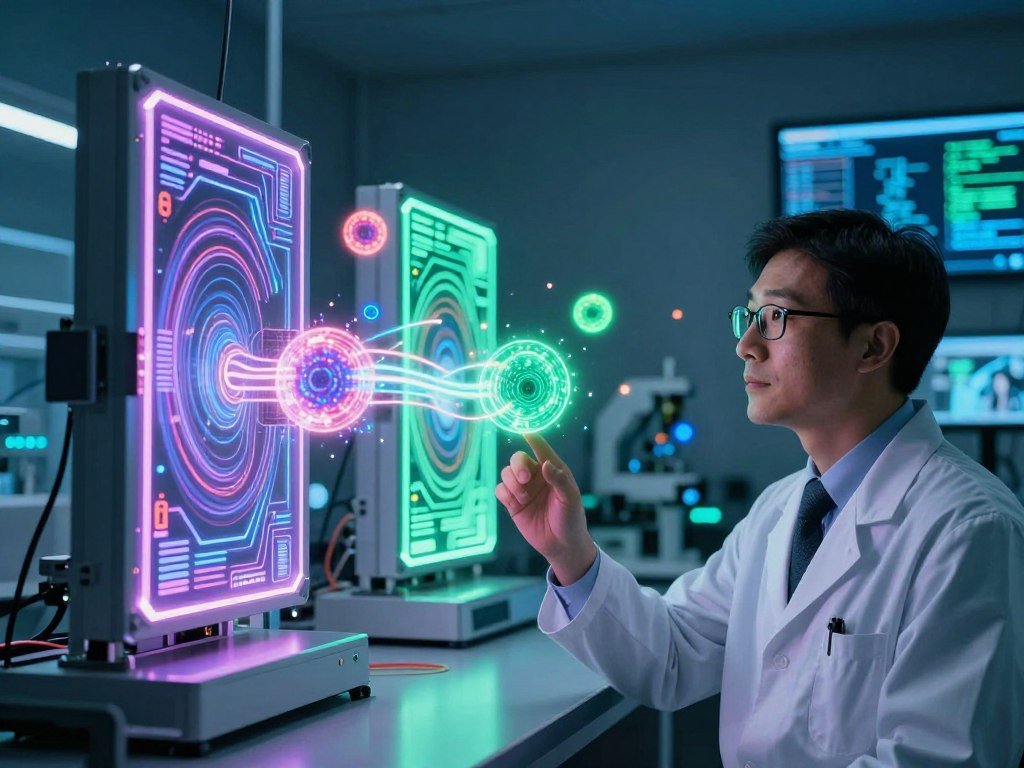
A laptop stores information in bits, while a quantum processor manipulates qubits whose possible states follow quantum mechanics. The difference is how each kind of system represents and changes information, not a promise that one will solve every problem faster.
A quantum circuit must guide measured outcomes toward a useful answer. Its gates change qubit states, and measurement turns those states into ordinary data a computer can read.
Bits, qubits, and quantum states
A classical bit holds one value at a time: 0 or 1. A qubit can be prepared in a superposition of possible states, with each state tied to a probability of appearing when measured.
Superposition is often explained as a qubit holding both 0 and 1. That phrase can help at first, but it does not mean the processor stores two ordinary answers in a simple way. A quantum circuit acts on the state as a whole, then measurement returns a classical result.
Entanglement links the states of qubits, so measuring one can be related to the state of another. It does not send usable information faster than light. The link matters because quantum circuits can use it to create patterns that classical bits cannot represent in the same way.
How interference shapes a calculation
Quantum gates can make parts of a quantum state reinforce or cancel each other. This effect, called interference, changes the probabilities of possible measurement results.
A circuit does not simply try every answer at once and reveal the best one. Instead, its gates must arrange interference so that useful answers become more likely and less useful answers become less likely. The design of the circuit shapes that pattern.
NIST’s quantum computing explanation also stresses that measurement gives limited classical information from a quantum state. Repeated runs can help estimate the result, but each run produces a classical sample.
Measurement turns a result into classical data
Measurement changes the quantum state and produces a value that a classical computer can store, display, or use in another step. A single result may not reveal enough, so some tasks require many runs.
That process makes circuit design central to computing with qubits. A useful circuit must produce a pattern that can answer the task with a reasonable number of measurements.
A quantum calculation is useful only when its circuit makes the desired outcome more likely to appear in measured results.
Once measured, the result is ordinary classical data. A quantum calculation is useful only when its circuit makes the desired outcome more likely to appear in measured results.
How Quantum Computing Could Change Artificial Intelligence in Practice
The most realistic near-term change is a hybrid workflow in which quantum and classical systems each handle the tasks they suit. Quantum-classical hybrid computing is a workflow that assigns suitable subtasks to quantum processors while classical computers handle the rest.
A quantum processor would handle only a suitable part of an AI task, not automatically speed up all training. CPUs, GPUs, cloud systems, quantum processors, and AI software could work together, with each doing a different job.

A classical system could prepare data and set up a problem. A quantum processor might run a circuit for one subtask, then classical software would interpret the output and decide what to do next. For example, AI can sort and summarize datasets before other tools study them; people still need to check the methods and results. A [guide to AI data analysis](https://occcy.com/how-to-use-ai-for-data-analysis/) covers that classical work.
The term quantum AI describes this overlap between artificial intelligence and quantum resources. It does not promise a new form of general intelligence. An essay explaining how quantum computing could change artificial intelligence should separate plausible specialist use from proven general-purpose gains. A clear explanation of how quantum computing could change artificial intelligence starts with this division of work.
- Quantum simulation could generate scientific data about physical systems.
- Sampling from quantum systems could help study their possible outcomes.
- Specialized optimization could test selected choices under defined limits.
- Experimental quantum machine learning could use quantum circuits in model steps.
These are possible contributions, not guaranteed improvements. A quantum processor might produce data or samples for a classical model, while the model handles other parts of the task.
Current AI assistants also rely on classical processors for tasks such as writing, coding, and research. A comparison of AI assistants and their uses gives a sense of the software quantum tools might someday complement, not replace.
Quantum AI is best treated as a label for collaboration between fields, not a performance claim. Treat any claimed benefit as task-specific until it holds up against a strong classical baseline.
How Artificial Intelligence Can Help Quantum Computers
AI can help quantum hardware by turning large streams of calibration and measurement data into useful control decisions. That support can matter even before quantum processors improve AI workloads.
AI can assist the hardware workflow, but it cannot make a quantum processor fault-tolerant on its own. A model can suggest settings or sort noisy measurements, while researchers still need to test the results.

Quantum processors need careful tuning. Control settings affect how gates act on qubits, and those settings can shift as the device changes. Machine-learning models can sift through calibration measurements and look for settings that produce a desired response.
Reinforcement learning can test actions and use feedback to improve later choices. Bayesian optimization can search for strong settings with fewer tests than a broad trial-and-error search. These methods do not remove the need for a sound goal: a model can find a setting that scores well on a flawed measure.
AI may also help identify patterns in noisy measurements. Error-correction decoders use measurement results to infer which errors may have occurred. A model can help map those patterns to likely corrections without directly observing the protected quantum information.
- Calibration: models can help tune control settings from device measurements.
- Circuit or control optimization: search methods can compare candidate settings.
- Decoding: models can help infer errors from measurement patterns.
These roles can reduce some of the work needed to run experiments. They do not change the processor’s physical error rates by themselves, and they cannot make every circuit reliable.
For AI support to be useful, its output must match a real hardware goal. Any automated control should be checked against reliable measurements, since a model can optimize the wrong signal.
Can Quantum Machine Learning Beat Classical Models?
Current comparative tests do not show quantum machine-learning models winning overall against classical baselines. The clearest reading is that some models may do better on a narrow metric, while broad gains remain unproven.
A 2026 comparison found no overall quantum win in prediction performance, policy stability, or training time. That result does not rule out future improvements, but it sets a useful standard for claims about quantum models.
What the broader model comparison found
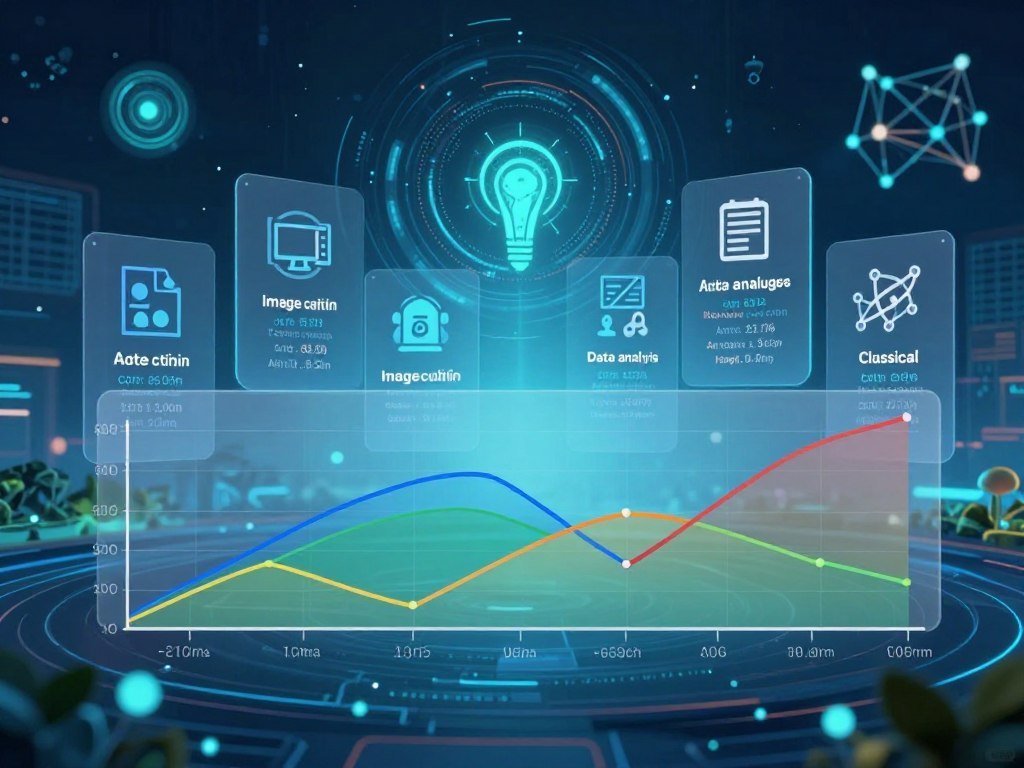
A 2026 empirical comparison tested seven quantum-classical model pairs across supervised and reinforcement-learning tasks. The tested quantum models did not outperform classical systems overall in prediction performance, policy stability, or training time.
The result matters because a model can look promising on one task and still lose across the broader test. The study gives a direct check on claims that quantum machine learning already offers a general advantage over classical machine learning.
The comparison does not settle every possible model or data type. It does show that researchers need careful, matched tests instead of assuming a quantum circuit is better because it uses quantum mechanics.
Why precision and recall can tell different stories
Some quantum architectures controlled false positives better. A Quantum Convolutional Neural Network achieved notably higher precision, but its overall recall was lower.
Precision measures how many positive predictions are correct. It can be useful when false positives are costly, such as when a wrong alert triggers extra work. Recall measures how many true cases the model finds. Lower recall means the model may miss more real cases.
Neither measure alone decides which model is better. The right balance depends on the cost of missed cases and incorrect alerts in the task being tested.
| Task or result | Quantum-model outcome | Classical comparison |
|---|---|---|
| Overall prediction performance | No overall win | Classical baselines matched or did better overall |
| Policy stability | No overall win | Classical baselines were not beaten overall |
| Training time | No overall win | Classical baselines were not beaten overall |
The 2026 empirical comparison reports these limits alongside narrow strengths in areas such as false-positive control. Its findings support more testing, not a claim that quantum models are generally superior.
MatchCake and simpler circuit models
A 2026 benchmarking project introduced MatchCake, an open-source simulator integrated with PennyLane. It runs matchgate circuits efficiently on classical computers, giving researchers a way to test certain quantum models without quantum hardware.
Matchgate-based free-fermionic models matched or exceeded unrestricted parameterized quantum circuits on two toy datasets. The result is useful for comparing model designs, but the datasets were small examples. It does not show broad real-world superiority.
A narrow metric advantage can point to a worthwhile research question. It is not enough to show that a model is cheaper, faster, or more accurate across real tasks. Treat a narrow metric advantage as a lead for further testing, not proof of a generally better model.
What Limits Quantum AI Today?
Today’s noisy processors can run only relatively short, shallow computations reliably. That limit makes many promising algorithms hard to test at useful scale.
Current quantum-computer gate error rates are roughly 1 in 100 to 1 in 1,000 operations. The exact effect depends on the circuit, because errors can build up as more operations run.
Limited qubit counts also restrict how much data a model can represent at once. A researcher may reduce the input dimensions to fit a task onto available hardware, but that step can discard useful information.
Four challenges shape current quantum machine-learning work:
- Limited qubit counts: data may need dimensionality reduction, which can remove useful features.
- Hardware noise: errors restrict reliable circuits to shorter, shallower runs.
- Training-efficiency gaps: model training can take more work than a classical approach.
- Optimization instability: barren plateaus can leave weak signals for improving parameters.
A barren plateau is a region where small changes to circuit settings give little useful feedback. Training can then stall because the optimizer cannot tell which direction might improve the model.
These limits affect both how much data a circuit can take and how long its calculation can run. A quantum algorithm that works in theory may need more reliable qubits or more efficient training before it can help with a real AI problem.
Reducing input dimensions can make a problem fit current hardware, but it changes the problem the model sees. A smaller circuit is not automatically a better model if simplifying it removes information the task needs.
Why Quantum Error Correction Matters
Error correction matters because a useful algorithm needs protected logical information, not just a large count of fragile physical qubits. Protection is what lets a calculation run for longer without losing its result to device errors.
One reliable logical qubit may require hundreds to thousands of physical qubits. The count depends on physical error rates and the chosen error-correction code.
A physical qubit is a hardware qubit subject to device errors. A logical qubit is an error-protected unit encoded across multiple physical qubits. The system uses shared information across those physical qubits to detect and correct errors.
That process must avoid directly measuring the encoded quantum information, which would disrupt the state the system is trying to protect. Instead, the code checks related error signals and uses them to infer what went wrong.
A threshold is the point below which adding protection can reduce logical errors. If hardware errors stay below the threshold for a chosen code, adding more physical qubits can lower the chance of an error in the logical qubit.
Google’s Willow processor demonstrated below-threshold quantum error correction in December 2024. That was a meaningful milestone for error correction, but it did not mean every quantum calculation had become reliable or useful.
The overhead can be large. An algorithm needing 1,000 logical qubits might require millions of physical qubits, depending on device errors and the code in use.
Researchers therefore track more than a device’s physical-qubit count. When comparing a hardware milestone, check whether added protection actually lowers logical error rates.
How to Tell Quantum Advantage from a Fast Demo
A fast gate is not proof of a fast or useful answer. A fair comparison measures how much of the desired circuit a system can run and how quickly it performs useful work at that scale.
A strong test solves the same problem to matched accuracy and counts the full workflow. That includes circuit runs, repeated samples, error handling, and classical processing.
The 2026 QUOPS proposal measures two things: circuit size executed successfully and effective operations per second at that circuit size. This approach helps show why a device with a high rate on small circuits may not lead on larger ones.
In the reported comparison, Quantinuum’s H2-1 and Helios systems ran substantially larger benchmark circuits than Google’s Willow and IBM’s Boston. Superconducting systems had higher effective operation rates on smaller circuits.
| System | Circuit reach in the reported comparison | Effective operation rate |
|---|---|---|
| H2-1 | Substantially larger circuits | Lower than superconducting systems on smaller circuits |
| Helios | Substantially larger circuits | Lower than superconducting systems on smaller circuits |
| Willow | Smaller circuits | Higher on smaller circuits |
| Boston | Smaller circuits | Higher on smaller circuits |
The full-stack benchmark study also shows why testing should account for more than raw gate speed. A useful comparison includes the work needed to prepare and run the circuit.
Error mitigation can raise the number of samples needed to reach a result. In a 2026 QUOPS study, mitigation cut effective processing rates by factors of thousands because it required many more repetitions.
No uncorrected gate-based NISQ system has shown broadly accepted, repeatable, scalable advantage on a production-level industrial workload. Ask whether the result survives a fair, end-to-end comparison with the best classical method.
What the Materials-Science Result Shows
A 2026 materials-science simulation offers a concrete example of a narrow quantum result worth examining carefully. The result concerned a fermionic Fermi-Hubbard model, a mathematical model used to study materials.
The quantum calculation took 2 minutes, compared with more than 100 hours for the tested classical calculation. The quantum simulation used 120 qubits and more than 10,000 two-qubit logic operations.
The calculation met industry-standard accuracy expectations. The classical comparison used Time-Dependent Variational Principle tensor-network software from the Flatiron Institute.
That method matters because a time comparison is only useful when both calculations meet the needed accuracy. The result shows progress on one particular simulation, not proof that quantum processors already speed up artificial intelligence in general.
The comparison could also change as classical algorithms improve or GPUs gain speed. A future classical calculation might narrow the gap, so the result is tied to the methods tested at that time.
Fermi-Hubbard simulations are relevant to materials science because they model interacting particles in a material. They are not the same as training an AI model, though their outputs could support later research or data analysis.
The meaningful takeaway is the task-specific result and its accuracy condition, not a promise that every scientific calculation will run faster.
Where Hybrid Quantum-AI Could Be Useful
The strongest candidate applications are specialized tasks where simulation, optimization, or scarce scientific data create a genuine bottleneck. Candidate is the key word: a possible use still needs proof against current methods.
A quantum-assisted result matters only if it improves a real task under its real limits. Classical AI may use quantum-generated data or results from one carefully chosen subtask.
Scientific data for chemistry and materials
Quantum simulation could help produce data about physical systems that are hard to model. Classical AI could then use those results to study chemical behavior or screen material ideas.
In chemistry and materials science, a model is only as useful as its data and assumptions. AI could help researchers choose which candidate experiments to run, while quantum simulation could add information about selected systems.
This may support research linked to molecular biology, pharmaceuticals, materials science, or drug discovery. Those are research possibilities, not proof that quantum computers have already shortened drug development or found a new treatment.
If you use AI to organize research data, start with a clear question and check the results before acting. A practical guide to working with datasets covers that kind of review.
Optimization in logistics and energy
Logistics routing and energy allocation can involve many choices under limits such as time, cost, or capacity. Some quantum algorithms may suit specific optimization problems, but a quantum processor must beat classical methods under the same real constraints.
A simplified test may leave out delivery windows, changing demand, or grid limits. Those details can change the best answer, so a promising result on a small model may not transfer to daily operations.
Energy use matters too. A quantum calculation may need repeated runs and classical processing, which can offset any gain in one part of the task.
Finance, healthcare, and security decisions
Finance, healthcare, and cybersecurity are other areas of research interest. A quantum tool might someday support a narrow calculation or help explore a defined set of options.
That possibility does not remove familiar risks. Biased data can produce unfair predictions, and a poorly chosen objective can reward the wrong outcome. A quantum processor cannot fix those problems just by changing how it calculates.
For a real decision, people need to know what the model counted and what it left out. Before adopting a quantum-assisted result, verify that its objective and input data match the real-world decision.
How Cloud Quantum Computing Works
Cloud access lets a researcher run quantum experiments without owning the physical processor. Remote access makes it easier to try hardware, but it does not make the device noise-free or remove limits on its use.
A cloud interface lowers the access barrier, not the need for careful testing. Users still need to account for noise, queues, and classical work around each run.
Hardware types available through cloud access
In 2026, Amazon Braket provided access to several kinds of quantum hardware. Its offerings included superconducting processors from IQM and Rigetti, trapped-ion processors from AQT and IonQ, and neutral-atom processors from QuEra.
Each hardware type works in a different way and suits different circuit designs. The device choice can affect how a circuit runs, so a program that works well on one type may need changes for another.
| Hardware type | Providers listed for Braket | Example device access |
|---|---|---|
| Superconducting | IQM and Rigetti | Remote quantum processor |
| Trapped ion | AQT and IonQ | Remote quantum processor |
| Neutral atom | QuEra | Remote quantum processor |
Shared tools for different processors
Braket offers common development tools for different hardware types and circuit simulators. A shared interface can make it easier to test a circuit across devices without learning an entirely separate set of tools for each one.
A simulator runs a quantum-circuit model on classical hardware. It can help with learning and small tests, but it does not show how a physical processor will behave under real device noise.
Cloud quantum computing also brings practical limits. A job may wait for a device, and the number of runs available can affect how much data a result provides.
Hybrid algorithms and dedicated access
Braket supports hybrid quantum-classical algorithms, which combine quantum runs with classical steps. A classical program can prepare a circuit, send it to a processor, and use measured results to set up another run.
Braket Direct offers dedicated device access. That mode can give a researcher a different way to use a device than a shared queue, though it does not remove the limits of the hardware itself.
Cloud access helps people test ideas without buying a processor. Before choosing a device, check that its hardware type and access mode fit the circuit you intend to test.
What NVIDIA Is Building for Quantum AI
NVIDIA’s Ising family targets the practical work of calibrating quantum processors and decoding error-correction data. These tools support parts of the quantum hardware workflow, rather than claiming that quantum processors already improve general AI.
NVIDIA’s performance figures are product comparisons, not proof of a broad quantum advantage. A faster decoding tool or calibration model does not by itself show that a quantum computer beats a classical computer on an AI task.
Ising Decoding is designed to help decode error-correction data. NVIDIA says its models are up to 2.5 times faster and three times more accurate than pyMatching, an open-source decoding standard, in 2026.
Ising Calibration is designed to help calibrate quantum hardware. NVIDIA says its vision-language model can automate ongoing calibration and reduce the process from days to hours in 2026.
Those are specific claims about software tools. Their value depends on how well they work on real hardware and whether their gains hold across the full process of running a quantum calculation.
The Ising models are designed to work with CUDA-Q and NVQLink, an interconnect for linking quantum processors and GPUs. That setup reflects a hybrid approach, where software and hardware tools share different parts of a workflow.
NVIDIA also develops GPUs and software used in AI computing. A broader look at companies in the AI supply chain gives context on those roles, but it does not validate quantum-specific performance claims.
Evaluate these tools by their measured effect on the full quantum workflow, not by a component-level speed claim alone.
How to Evaluate Progress and Start Learning
You can begin learning quantum computing with circuit simulators and introductory error-correction exercises rather than owning a processor. Small tests can teach the basics without requiring access to physical quantum hardware.
Judge a quantum claim by the task, its accuracy, and its classical comparison. A result is easier to assess when its goal and limits are clear.
Try this four-step path:
- Learn basic circuit and qubit concepts.
- Try a simulator before booking hardware.
- Compare any result with a strong classical baseline.
- Check whether the test measures accuracy and the full workflow.
Google Quantum AI offers a free Coursera course on quantum error correction. In 2026, the course included hands-on exercises using Stim and Crumble.
A simulator runs on a classical computer, so it is useful for learning and testing small circuits. It is not a result from quantum hardware and cannot show how a real device handles noise or control limits.
You can also build basic coding skills before trying quantum software. Beginners often use Python for AI and data work, and a guide to choosing a programming language can help you pick a starting point.
For coding practice, a simple editor or notebook is enough to test small examples. A comparison of code editors can help you choose a tool that suits your setup.
A useful habit is to separate a product claim from a tested result. Ask what the tool does, what was measured, and whether the test reflects the task you care about.
Keep a claim-checking habit by asking what task was solved, at what accuracy, and against which classical method.
Google’s course and a small simulator exercise offer concrete ways to start. Each can teach you a different part of the field, from circuit behavior to error correction.
Conclusion
Quantum computing could expand AI’s tools, but only where a quantum resource earns its place in a tested workflow. Quantum processors are specialist partners, not replacements for classical systems, and evidence must be task-specific and reproducible.
You can start with an introductory circuit simulator or the free error-correction course. Run one small example, note what the output means, and compare it with the classical version. Start with one small circuit experiment and judge it by what it teaches, not by predictions about a distant future.
FAQ
Can quantum computers train today’s large language models?
No, quantum computers have not demonstrated general-purpose training of today’s large language models. Research into quantum machine learning tests how quantum circuits might support selected model steps, but that is different from training a full language model on quantum hardware. Current language-model training uses classical computing systems, and any future quantum role would need to show clear gains on the full task.
Can quantum computing reduce the energy use of AI?
It might reduce energy for a specific computation, but that gain needs a full workflow comparison. Quantum processors may need repeated runs, error correction, and classical processing, all of which use energy. A fair test counts those steps against the energy required by the strongest classical method for the same task and accuracy. A faster subtask alone does not prove lower total energy use.
What is the difference between quantum AI and quantum machine learning?
Quantum AI is the broader combination of artificial intelligence and quantum resources, while quantum machine learning is a narrower group of methods using quantum circuits or processors. Quantum AI can include AI tools that help control quantum hardware, as well as classical AI models that use quantum-generated data. Quantum machine learning focuses on models and methods that include quantum computation.
Can I try quantum computing without buying a quantum computer?
Yes, cloud platforms offer access to quantum hardware and simulators without requiring you to own a processor. A simulator can help you learn basic circuits, while cloud hardware can run experiments on a physical device. Cloud access does not remove noise, waiting times, or circuit limits, and it does not guarantee that your task will run faster than it would on classical hardware.
Does quantum machine learning need quantum data?
No, quantum machine learning can use classical data that researchers encode for a quantum circuit. That encoding step can affect the amount of work needed and the information a circuit can use. Some scientific tasks may involve data from quantum systems directly, which can make quantum processing a natural fit. Many experiments, though, begin with ordinary datasets.
Which AI tasks are the most plausible early candidates for quantum computing?
Narrow simulation, sampling, or optimization subtasks are the most plausible early candidates. They may fit a quantum processor when the task has a suitable algorithm and a real bottleneck. A useful result must beat a strong classical method on the same problem, at matched accuracy, while counting repeated runs and classical processing. Broad claims about all AI tasks need much stronger evidence.