A free plan can be enough for a quick privacy boost, but frequent streaming or protecting several devices usually calls for a paid subscription. Your choice affects browsing, data access, and how much you spend. A free plan does not automatically put you at risk, and a paid plan does not automatically make a provider trustworthy. The right choice comes down to how you use the internet and what the provider does with your data.
Compare the privacy policy, speed, cost, and practical limits before you sign up. Occasional browsing may not need the same features as daily streaming or work across several devices. Choose a service for its safeguards and terms, not its price label alone. A low-cost plan can still be a poor fit if its rules clash with your habits.
The goal is a service you can trust and use without unwanted surprises. The right choice is the one whose privacy policy and limits match how you actually browse.
Key Takeaways
- A reputable free plan can work for light, occasional browsing.
- A paid plan is often better for streaming and several devices.
- Free does not always mean unsafe, and paid does not always mean trustworthy.
- Review data limits, server options, and privacy terms.
- Check renewal costs before choosing a long subscription.
What Does a VPN Do, Free or Paid?
A VPN routes your internet traffic through a remote server, replacing the IP address websites see with the server’s address. A free VPN is a service with no subscription fee, and free and paid plans share the same basic job.
An encrypted tunnel is an encrypted connection that routes your internet traffic from your device to a VPN server. A VPN encrypts traffic between your device and that server, but it does not make you anonymous. Websites can still track you through cookies, accounts, and other methods.

VPN apps differ in what they protect. A full-device app can cover other apps and background traffic, while a browser-based VPN may protect only activity inside that browser.
A VPN changes the route and visible IP address of your traffic, but it does not erase your identity online.
Free plans often use one of three models:
- Freemium: a basic free tier sits beside paid plans.
- Ad-supported: ads help cover the service’s operating costs.
- Data-limited: the plan sets a data allowance for use.
These models describe how a free service may be offered, not how safe it is. Check whether an app protects the whole device or only browser traffic before relying on it for other apps.
What Does a Reputable Free VPN Include?
A free plan can still protect privacy when the provider funds it transparently and applies meaningful safeguards. Freemium plans offer a no-cost tier alongside paid options, letting you test the core service without a subscription.
In 2026, Proton VPN Free has no data or time limits, no ads, and a no-logs policy. Its free tier also includes a kill switch, which blocks internet access if the VPN connection drops, and Stealth VPN, a protocol designed to disguise VPN traffic.
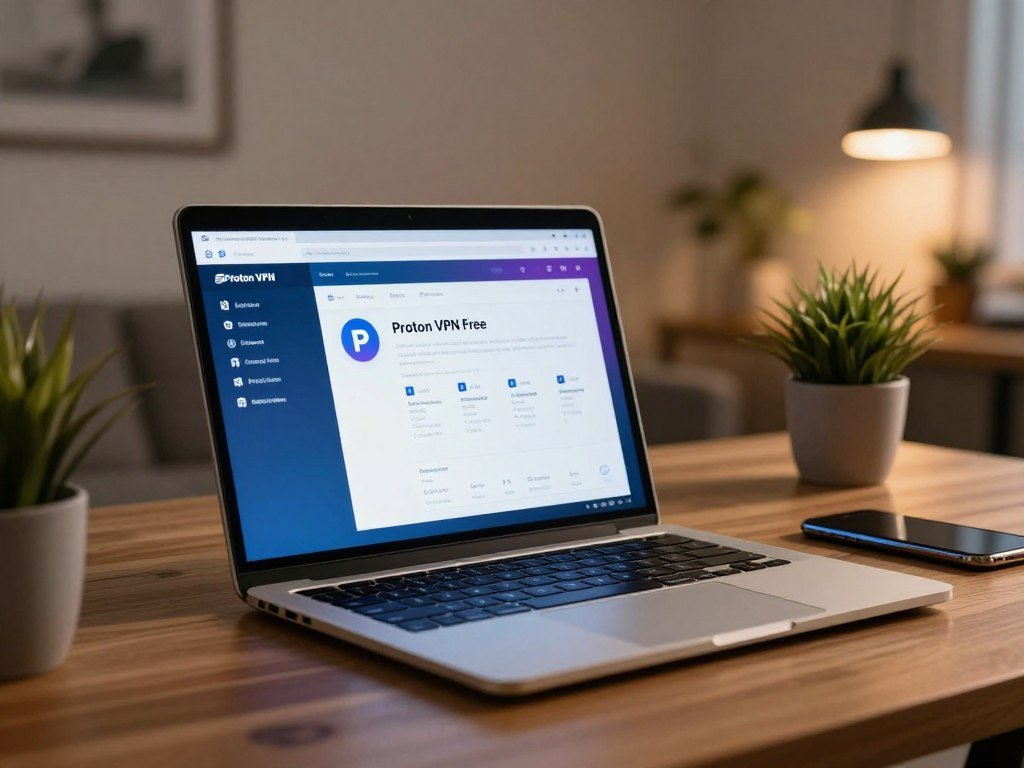
PCMag’s 2026 free VPN review lists Proton VPN Free among tested options and describes its limits and features. A no-logs policy means the provider says it does not keep records of your online activity.
A free plan with meaningful privacy protections
Proton VPN Free provides a no-cost way to use a full VPN app. Its unlimited data can suit browsing that lasts longer than a small monthly allowance would permit.
The kill switch matters when a connection fails unexpectedly. It can help prevent your device from sending traffic outside the VPN until the connection returns.
Limits that still shape everyday use
Proton VPN Free supports one device at a time and offers medium VPN speed. It assigns servers at random across 10 countries, so you cannot choose a specific location freely.
P2P support, Secure Core, and guaranteed streaming support require a paid plan. Those limits can be reasonable for occasional browsing, even when they frustrate streaming or location choice.
For quick browsing on one device, the free tier’s limits may be a fair trade for avoiding a subscription.
Why Can Free VPNs Put Privacy at Risk?
A free VPN can create a privacy risk when its business model depends on tracking or its app has weak safeguards. Running servers costs money, so some services rely on ads, data collection, or pressure to upgrade.
A CSIRO analysis of 283 free Android VPN apps found serious privacy and security problems in that sample. It reported that 84% leaked user data, 18% did not encrypt data, and 38% contained malware or malvertising.
The analysis also found third-party tracking libraries in two-thirds of the apps and sensitive data access requested by 80%. These results describe the 283-app sample, not every free VPN or today’s entire market.
The CSIRO Android VPN study measured privacy and security risks in apps from its sample. A provider’s location alone does not prove its practices are good or bad. Proton VPN is based in Switzerland, while NordVPN is headquartered in Panama.
How no-cost services can cover their costs
Some providers use a free tier to attract subscribers to paid plans. Others may show ads or collect data, so read the policy before installing an app.
Server upkeep, software work, and support all take money. A business model that explains how the service pays those bills is easier to assess than one that stays vague.
What to check before installing a free app
Use this three-part check before trusting a free VPN with your traffic:
- Read the privacy policy and the provider’s explanation of how it earns money.
- Check whether an independent review has assessed its no-logs policy.
- Review who owns the app and what permissions it requests on your device.
Treat vague data practices or unexplained permissions as a reason to choose another provider.
What Does a Paid VPN Cost, and What Do You Get?
A paid VPN can cost a few dollars per month on a long subscription, while monthly billing generally offers more flexibility at a higher listed rate. NordVPN Basic is a paid plan, not a free VPN, and its listed rate depends on the billing term.
In 2026, NordVPN Basic costs $14.99 monthly, $5.49 per month on a one-year plan, or $3.49 per month on a two-year plan. The two-year price is billed upfront, then renews at $139.08 per year.
Compare the total subscription bill
The NordVPN Basic two-year price is an advertised monthly equivalent, not a monthly payment. NordVPN subscriptions renew automatically unless you cancel auto-renewal.
NordVPN sends an email before a renewal-price change takes effect. The first subscription purchase has a 30-day money-back guarantee, subject to refund terms and the purchase channel.
That guarantee does not mean every payment can be refunded in the same way. Check the terms that apply to how you bought the plan.
Features and terms that change the value
NordVPN allows up to 10 simultaneous connections. Its no-logs policy has six published independent assessments from 2018 through 2025, with the sixth published February 3, 2026.
The 2025 Deloitte assessment examined the policy from November 10 to December 12, 2025. NordLynx, based on WireGuard, ranked among faster consumer VPN protocols in 2025 and 2026 benchmark coverage.
Proton VPN Plus costs $3.49 per month on a 24-month subscription. You pay $83.76 for the first 24 months, then $83.88 every 12 months, with access to servers in more than 140 countries.
Compare the renewal bill, not just the discounted monthly equivalent, before committing to a long plan.
Free VPN vs Paid VPN: Which Is Better?
A reputable paid VPN is usually the stronger choice for regular streaming, multiple devices, and advanced features, while a reputable free plan can be enough for occasional browsing. Your routine matters more than the plan label.
Paid plans usually give you broader server choice and more tools, while free plans cost nothing upfront. These are common trade-offs, not guarantees, so compare the actual features each provider offers.
| Feature | Free VPN | Paid VPN |
|---|---|---|
| Upfront cost | No subscription fee | Subscription fee |
| Data allowance | May be capped or unlimited | Often unlimited |
| Server choice | Commonly more limited | Commonly broader |
| Extra tools | May be limited | More likely to include split tunneling or leak protection |
Free VPNs can work for occasional browsing if their limits suit your needs. Paid VPNs may offer more room for streaming, but a subscription cannot guarantee that every service will work.
WireGuard and OpenVPN are examples of modern VPN protocols. AES-256 is an encryption standard used by some services, but neither a protocol name nor an encryption standard proves a provider’s overall privacy practices.
For a wider feature and provider comparison, see this VPN service comparison. Choose based on the limits you will actually encounter, not on the free or paid label alone.
Which VPN Fits Your Needs Best?
Windscribe is the strongest overall pick in the 2026 results, while Mullvad and Proton VPN suit readers prioritizing privacy and value. There is no single fit for every budget, speed need, or server preference.
Windscribe scored 9.2 out of 10 overall in 2026. Mullvad was the privacy pick, Proton VPN the value pick, and ExpressVPN the fastest VPN tested.
| Provider | 2026 score | Distinction |
|---|---|---|
| Windscribe | 9.2/10 | Best overall |
| Mullvad | 8.2/10 | Privacy pick |
| Proton VPN | 8.0/10 | Best-value pick |
| ExpressVPN | 8.0/10 | Fastest tested |
| NordVPN | 8.4/10 | Renewal prices are a drawback |
Windscribe costs $9 per month or $69 per year in 2026. Its Build a Plan option starts at $3 per month, which may suit you if you want a smaller package.
Mullvad costs 5 euros per month and allows five simultaneous connections. NordVPN is another highly rated option, but its renewal cost can make a long plan less appealing.
Speed tests and scores can help narrow your options, yet your own internet connection and chosen server affect daily results. Check whether the provider’s location choices fit where you need access.
Pick the provider whose strongest tested result matches your main need, then read its current terms before paying.
Choose the winner whose tested strength matches your main need, then review its current terms before subscribing.
Is VPN Use Legal in the United States?
Using a VPN is legal for individuals in the United States, but the VPN does not change whether an underlying activity is lawful. As of 2026, no federal restriction bars individual VPN use.
A VPN does not make an illegal act legal. The same activity remains subject to the law whether you use a VPN or connect directly.
Keep three points in mind when you use a VPN:
- Lawful browsing and privacy protection remain lawful when you use a VPN.
- Illegal activity remains illegal when routed through a VPN.
- Service and network rules still apply to your account and connection.
A VPN can change how your traffic travels, but it cannot give you permission to break a law or service rule.
Those rules can include terms for a website, workplace network, school network, or internet service. A VPN does not cancel agreements you accepted or the rules set by a network owner.
Follow the law and the relevant service terms, even when your connection is routed through a VPN.
Conclusion
Start with a reputable free plan if your needs are occasional, and consider paying when its limits interfere with your routine. A paid plan is generally a better fit for dependable access, several devices, and heavier daily use.
Choose based on the privacy protection you need, not just the monthly cost. Before creating an account, check how the provider handles your data and what happens when your subscription renews.
Before signing up, read the privacy policy and confirm the renewal amount and cancellation settings.
FAQ
Are paid VPNs better than free ones?
Paid VPNs are usually better for regular use, server choice, and added features. A reputable free plan can still suit occasional browsing, especially when you use one device and do not need a specific location. Compare the actual privacy terms and limits, since paying a subscription does not automatically make a provider trustworthy.
Can the FBI see through VPNs?
Yes, investigations can still uncover activity even when someone uses a VPN. A VPN does not make you invisible or remove records tied to your device, accounts, or online services. Investigators may rely on device evidence, account records, or data that a provider still holds. A VPN changes a connection route, not the law or all available evidence.
Is having a paid VPN worth it?
A paid VPN is more worthwhile when you stream daily, protect several devices, or need steady access to more locations. A reputable free tier may cover occasional light browsing without a recurring bill. The value depends on whether the plan’s speed, features, and privacy terms solve a real problem in your routine.
What is the downside to having a VPN?
A VPN can add a subscription cost and may slow your internet connection. Some streaming or other online services may block VPN connections, which can disrupt access. A VPN also does not stop cookies from tracking you or protect your device from malware. You still need careful browsing habits and suitable security software.
What are the top 3 best VPNs?
The 2026 top three by these results are Windscribe, Mullvad, and Proton VPN. Windscribe scored 9.2 out of 10 as the best overall pick, while Mullvad scored 8.2 as the privacy pick. Proton VPN scored 8.0 and was the best-value pick. Your own needs may point to a different provider than the highest score.
Why avoid NordVPN?
You do not need to avoid NordVPN across the board; it scored 8.4 out of 10 in 2026. Its two-year Basic plan renews at $139.08 per year, which may not suit every budget. Compare that renewal bill with the service’s features and your likely use. Automatic renewal also means you should review cancellation settings.
Which VPN is most trusted?
No single trust label can prove that a VPN protects every user well. Look for an independent assessment of the provider’s no-logs policy, then check what the review covered and when it took place. Read the privacy policy and ownership details too. Clear terms and a defined review scope give you more to judge than a marketing claim.