Land Rover is owned by Jaguar Land Rover Automotive PLC, or JLR, a wholly owned subsidiary of Tata Motors Passenger Vehicles. The marque’s ownership matters if you are tracing its British history, choosing a vehicle, or checking who controls the brand today.
MSRP means the manufacturer’s suggested retail price for a vehicle before destination and handling charges, taxes, title, license, retailer fees, and optional equipment. Brand ownership does not tell you where a vehicle was designed or built, since JLR works across several countries.
Knowing the parent company is only the starting point, because the British origins and present-day corporate structure are separate parts of the story. This overview gives you the ownership facts and the context to judge them.
Key Takeaways
- JLR owns the vehicle marque.
- Tata Motors Passenger Vehicles is JLR’s immediate parent.
- Tata Group is the wider corporate group.
- The brand began with a Rover Company vehicle in 1948.
- JLR builds vehicles in the United Kingdom and other countries.
- Model, equipment, and condition affect a vehicle’s cost and value.
Who Owns Land Rover Today?
The direct corporate answer is Tata Motors Passenger Vehicles, through its wholly owned subsidiary JLR. Directly, JLR owns the Land Rover marque and manages the vehicles sold under its public-facing name.
The brand name and the company that owns it are different things. Land Rover is the name buyers see on vehicles and marketing, while Jaguar Land Rover Automotive PLC is the corporate owner of the marque.
JLR owns the marque, while Tata Motors Passenger Vehicles owns JLR.
This distinction helps when you read company records or compare brand names. A badge identifies the vehicle marque, not every company above it in the ownership structure.
Corporate ownership also does not mean every vehicle is made in India. JLR has manufacturing sites in several countries, and the model determines where a particular vehicle is built.
For a clear answer, name both levels: JLR owns the marque, and Tata Motors Passenger Vehicles owns JLR.
How Do Tata Motors, Tata Group, and JLR Fit Together?
The simplest way to read the structure is as a three-level chain, from Tata Group to Tata Motors Passenger Vehicles to JLR. Each name refers to a different part of the ownership structure.
Tata Motors Passenger Vehicles is JLR’s immediate parent; Tata Group is the wider corporate group. The distinction keeps the direct owner separate from the larger business family.
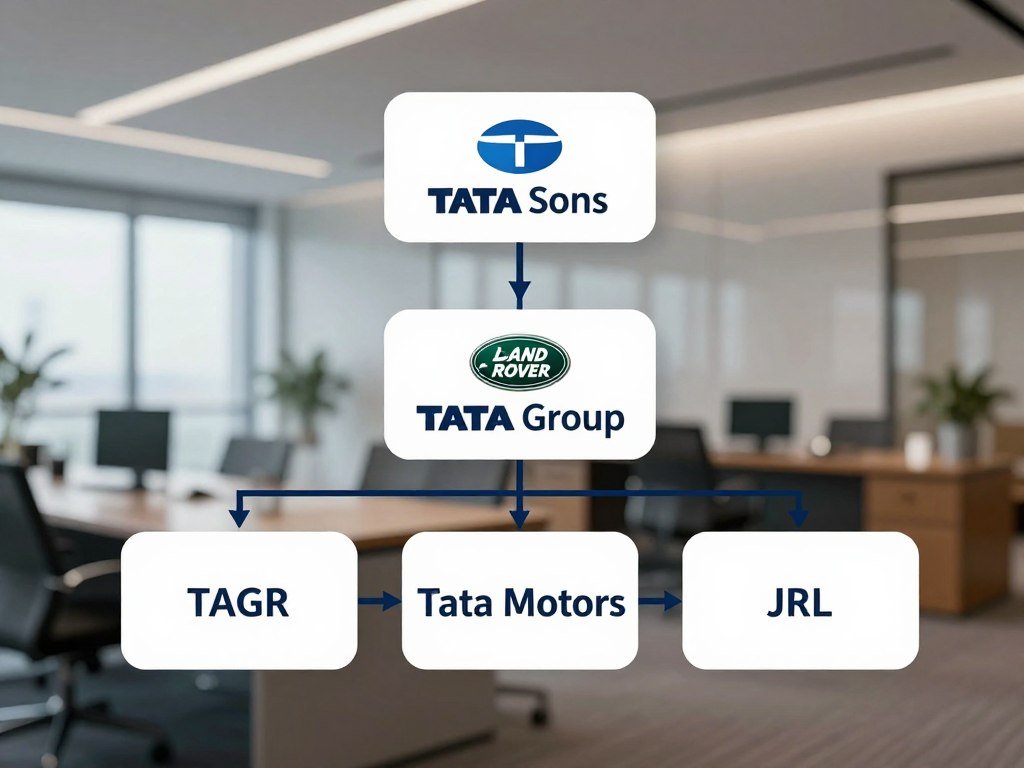
- Tata Group: the wider corporate group.
- Tata Motors Passenger Vehicles: JLR’s immediate parent.
- Jaguar Land Rover Automotive PLC: the company that owns the Land Rover marque.
Tata Motors Passenger Vehicles belongs to Tata Group, but the two names are not interchangeable. Use the first when naming JLR’s immediate parent and the second when describing its broader corporate home.
Land Rover is a marque within JLR, not another name for Tata Motors Passenger Vehicles or the whole Tata Group. That difference matters when a company profile lists subsidiaries and vehicle brands separately.
When naming the owner, use Tata Motors Passenger Vehicles for the direct parent and Tata Group for the wider corporate family.
Why Do Jaguar and Land Rover Share One Company?
Jaguar and Land Rover share JLR as their operating company, but they remain separate vehicle marques. One company can own distinct brands with separate identities and products.
Tata Motors Passenger Vehicles owns both marques through JLR. JLR is responsible for Jaguar- and Land Rover-branded vehicles, while each name continues to identify a different marque.
The two operations came together through a 2013 restructuring into one company. Jaguar Land Rover Automotive PLC is the corporate name used in the current ownership structure.
That shared company does not make Jaguar and Land Rover the same brand. The names remain distinct, so a Jaguar vehicle is not a Land Rover vehicle, even though both sit under JLR.
This setup also explains why people may see both names in corporate information. The company covers two marques, while its vehicles and brand identities remain separate.
The shared company explains common corporate ownership, not identical products or brand identities.
When Did Tata Motors Buy Land Rover?
Tata Motors acquired Land Rover and Jaguar Cars from Ford on June 2, 2008. The purchase brought both marques under Tata ownership in one transaction.
The acquisition price was US$2.23 billion. Tata Motors bought the two businesses together, rather than buying Land Rover in a separate later deal.
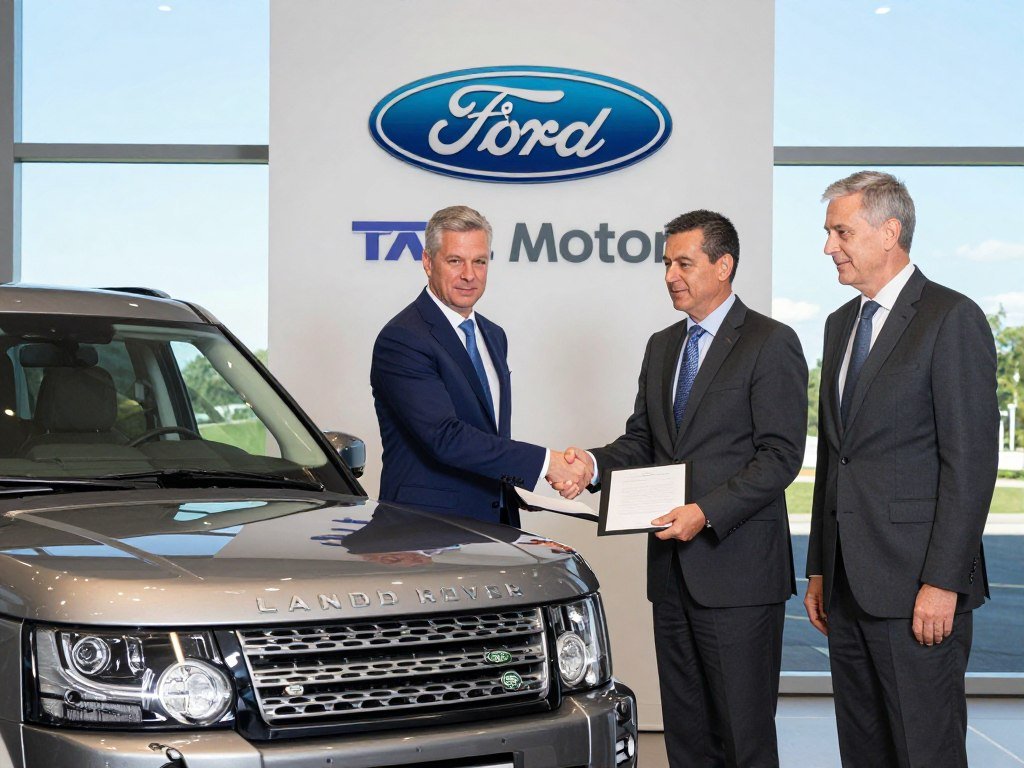
The company’s acquisition announcement states that Tata Motors completed the handover on that date. The purchase was distinct from the 2013 restructuring that later brought the operations into one company.
Land Rover was already under Tata ownership in 2020 through JLR. The intervening corporate changes did not mean the brand had returned to Ford or moved to another owner.
The year 2020 therefore falls within Tata’s period of ownership. The ownership chain in use today reflects a later corporate structure, not a new purchase of the marque.
Land Rover was already under Tata ownership by 2020, although the corporate structure was reorganized after the purchase.
Who Owned Land Rover Before Tata?
Before Tata, Land Rover’s corporate history passed through British automotive groups and two international automakers. Its ownership changed as the vehicle line moved from a Rover product to a separate company.
Land Rover became a separate company in 1978. The table shows the main ownership periods before Tata took control.
From the Rover Company to British Leyland
The Rover Company first sold Land Rover as a product line. Leyland Motor Corporation took ownership in 1967, followed by British Leyland in 1968.
| Period | Owner | What changed |
|---|---|---|
| 1948-1967 | Rover Company | Land Rover began as a Rover product line. |
| 1967-1978 | Leyland Motor Corporation and British Leyland | Ownership moved through two British groups. |
| 1978-1994 | Land Rover Limited under British Leyland and later owners | Land Rover operated as a separate company. |
| 1994-2000 | BMW | BMW acquired Rover Group in 1994. |
| 2000-2008 | Ford | Ford acquired Land Rover in 2000. |
BMW and Ford take ownership
Land Rover Limited operated as a separate company from 1978 to 2012, under British Leyland and later owners. BMW acquired Rover Group in 1994, then Ford acquired Land Rover in 2000.
These changes show why the marque’s history and its current owner are different questions. The company’s name and place in a corporate group shifted over time.
The useful dividing line is 1978, when Land Rover became a separate company rather than only a Rover product line.
How Did Land Rover Become a Brand?
Land Rover began as the name of a Rover Company off-road vehicle, not as a standalone automaker. That first name later grew into a marque with several model families.
Maurice Wilks began work on the original vehicle in 1947. The first Land Rover made its public debut at the Amsterdam Motor Show on April 30, 1948.
The vehicle name became a marque as the range expanded. Later introductions brought models with different designs and roles, while keeping the Land Rover name at the center.
The first vehicle and the Series name
The original vehicle was built for utility and off-road use. Its introduction established a vehicle line that could serve farm, work, and travel needs.
- 1948: the original Land Rover debuted.
- 1970: Range Rover debuted.
- 1989: Discovery debuted.
- 1997: Freelander debuted.
Range Rover, Discovery, and later families
Range Rover added a distinct luxury focus to the brand. Discovery later joined the range, followed by Freelander, showing how the name grew beyond one utility vehicle.
Each introduction added a new kind of vehicle and a new design direction. The brand history therefore includes both a rugged first model and later families aimed at varied buyers.
The dates of the major introductions show how a single utility vehicle developed into a broader family of models.
Is Range Rover a Separate Brand from Land Rover?
Range Rover is a model family within Land Rover, not a separate company or parent brand. The names describe different levels: Land Rover is the marque, and Range Rover is one family within it.
Neither Range Rover nor Jeep owns the other. Range Rover has a luxury-SUV focus, while Jeep has its own separate brand identity.
A fair comparison looks at specific vehicles and the job you need them to do. Luxury appointments, off-road use, passenger space, and price can differ even within one brand’s range.
For example, a buyer focused on cabin comfort may compare different vehicles than someone who needs room for passengers or regular trail use. The brand name alone cannot tell you which vehicle fits those needs.
Range Rover does not stand apart as an owner of Land Rover, and Jeep is not part of that ownership structure. Each name has its own place in the market.
For a fair comparison with Jeep, match individual models and intended use rather than comparing the brand names alone.
Where Are Land Rover Vehicles Made?
Land Rover vehicles are built in England and at JLR plants in several other countries. Two English plants, Solihull and Halewood, build vehicles for the marque.
Other models are built in Slovakia, Brazil, India, and China. The plant and model assignments below show how production is spread across countries.
UK plants and their models
Solihull builds Range Rover, Range Rover Sport, and Range Rover Velar. Halewood builds Discovery Sport and Range Rover Evoque.
| Plant | Country | Models built |
|---|---|---|
| Solihull | United Kingdom | Range Rover, Range Rover Sport, Range Rover Velar |
| Halewood | United Kingdom | Discovery Sport, Range Rover Evoque |
| Nitra | Slovakia | Discovery, Defender |
| Itatiaia | Brazil | Discovery Sport, Range Rover Evoque |
| Pune | India | Discovery Sport, Range Rover Evoque |
Production outside the United Kingdom
Nitra, Slovakia, builds Discovery and Defender models. Itatiaia, Brazil, and Pune, India, build Discovery Sport and Range Rover Evoque.
Changshu, China, also builds Discovery Sport and Range Rover Evoque. The country of assembly can vary by model, so the marque’s British roots do not identify every vehicle’s build site.
A British brand identity does not mean that every Land Rover is assembled in the United Kingdom.
Which Land Rover Models Are Available in 2026?
The 2026 lineup has nine named models or body styles across the Range Rover, Discovery, and Defender families. Those names include three Defender body styles, not just three trim levels.
Only the 2026 Defender 130 seats eight people. The 90, 110, and 130 labels identify distinct Defender body styles.
Range Rover and Discovery families
The Range Rover family includes four models, while the Discovery family has two. The complete lineup groups as follows:
- Range Rover family: Range Rover, Range Rover Sport, Range Rover Velar, and Range Rover Evoque.
- Discovery family: Discovery and Discovery Sport.
- Defender family: Defender 90, Defender 110, and Defender 130.
The names make it easier to separate a model family from a specific vehicle. Range Rover Sport, for example, belongs to the Range Rover family, while Discovery Sport belongs to Discovery.
Defender body styles and seating
Defender 90, Defender 110, and Defender 130 refer to different body styles. The lineup’s eight-seat option is the Defender 130, making it the specific model to consider when all eight seats matter.
Seating is one way the body styles differ, but the name alone does not describe every feature or equipment choice. Check the exact configuration when comparing a vehicle with your passenger needs.
The Defender 130 is the specific choice in this lineup for shoppers who need seating for eight.
How Much Do 2026 Land Rover Models Cost?
The 2026 starting MSRPs range from $49,900 for Discovery Sport and Range Rover Evoque to $114,400 for Defender 90. Starting MSRP is not the final amount you pay.
MSRP excludes destination and handling, taxes, title, license, retailer fees, and optional equipment. The table shows starting prices and destination charges for five models.
Starting MSRPs across the lineup
The 2026 Range Rover starts at $113,300, Range Rover Sport at $83,700, and Range Rover Velar at $61,600. Range Rover Evoque starts at $49,900.
| Model | Starting MSRP | Destination and handling |
|---|---|---|
| Range Rover | $113,300 | $1,825 |
| Range Rover Sport | $83,700 | $1,625 |
| Range Rover Velar | $61,600 | $1,375 |
| Range Rover Evoque | $49,900 | $1,275 |
| Defender 110 | $63,500 | $1,625 |
Discovery starts at $60,200, Defender 90 at $114,400, Defender 130 at $73,000, and Discovery Sport at $49,900. Each starting MSRP reflects a specific model’s base price.
Destination charges and the final price
Destination and handling is $1,275 for Range Rover Evoque and Discovery Sport, and $1,375 for Range Rover Velar. The charge is $1,825 for Range Rover and $1,625 for Range Rover Sport, Discovery, and Defender.
The 2026 starting MSRP figures provide a baseline, while a US configurator can show a selected configuration. It does not promise an out-the-door total with every local fee and tax.
Compare the same equipment and fees before treating two starting-price figures as an apples-to-apples comparison.
Do Land Rovers Hold Their Value?
The 2026 five-year results show substantial average depreciation for the three Land Rover models measured. Depreciation is the share of a vehicle’s value lost over time.
The Range Rover averaged 61.7% depreciation over five years. The same study reported 58.3% for Range Rover Sport and 57.9% for Discovery.
Five-year depreciation in context
iSeeCars analyzed more than 950,000 five-year-old used cars sold from March 2025 to February 2026. Across all vehicles, average five-year depreciation was 41.8% in 2026, compared with 45.6% in 2025.
The 2026 average was 44.9% for SUVs, 34.2% for trucks, 35.4% for hybrids, and 57.2% for electric vehicles. The three measured Land Rover models lost more value on average than the overall vehicle and SUV averages.
How selected Land Rover models compare
Dollar losses give another way to view the results. These averages are not a promise about the resale price or condition of a specific used vehicle.
| Model | Five-year depreciation | Average loss from MSRP |
|---|---|---|
| Range Rover | 61.7% | $69,856 |
| Range Rover Sport | 58.3% | $45,272 |
| Discovery | 57.9% | $34,878 |
The figures compare averages drawn from the study period, not every model year or vehicle configuration. A used vehicle’s actual value depends on its own history and condition.
Treat those averages as context for negotiation, not as a guaranteed resale value for an individual vehicle.
What Does Reliability Information Tell You About Land Rover?
A brand-level comparison cannot by itself predict the reliability of every Land Rover model year or used vehicle. The scope of a claim matters as much as its rating.
Consumer Reports’ 2026 brand comparison covers new cars. It excludes used-car reliability and maintenance and repair costs, so it does not answer every ownership question.
Before applying a reliability claim to a vehicle, check what the information measures. These three details help you read a brand comparison with care:
- Model year: identify the year covered by the evidence.
- Vehicle age: check whether the data concerns new or used vehicles.
- Costs: see whether maintenance and repair costs are included.
A new-car comparison and a used-car repair estimate answer different questions. The first concerns new vehicles; the second concerns costs and performance after use.
One brand score also cannot describe every model, engine, or year. A claim about one group of new cars may not fit a used vehicle with a different history.
Match any reliability claim to the specific model year and the kind of evidence it actually measures.
What Should You Check Before Buying a Used Land Rover?
A used Land Rover deserves a vehicle-specific inspection rather than a decision based only on its badge. The individual vehicle tells you more than a broad opinion about a model or brand.
US used Range Rover listings should be judged vehicle by vehicle. Check condition, service records, and configuration before you decide to buy.
Service records and vehicle condition
Service records can show how the vehicle was cared for, but they do not replace a close look at its current condition. A qualified independent inspection can flag issues that a folder of paperwork cannot show.
- Obtain the vehicle’s service records.
- Arrange an independent pre-purchase inspection.
- Compare the vehicle’s age and mileage with its condition.
- Confirm that its seating and cargo layout fit your intended use.
Age and mileage provide useful context, but they do not prove how a vehicle was used. A car with more miles may have been maintained well, while a low-mileage car can still need attention.
Match the used model to your needs
Check the exact model and layout before you buy. Passenger room, cargo space, and equipment can vary across model families and configurations.
Used Range Rover listings in the United States cover individual vehicles with different histories and setups. Read the listing as a starting point, then assess the specific car rather than assuming every example is alike.
Do not skip an independent inspection just because a vehicle has a complete-looking service folder.
How Can Land Rover Be British and Tata-Owned?
Land Rover can be British in origin and operations while belonging to an Indian parent group. Those facts describe different parts of a company’s identity.
JLR describes itself as a British company owned by Tata Motors Passenger Vehicles. Its roots and operating base do not change its shareholder ownership.
British origins and corporate identity
A vehicle brand can keep its national history even when its owner is based elsewhere. The country tied to a brand’s origins does not have to match the home of its corporate parent.
That distinction helps explain why a British marque can be part of a company owned by an Indian group. Brand identity, company operations, and corporate ownership each answer a different question.
JLR’s UK operations
JLR’s UK footprint includes two design and engineering sites and three vehicle manufacturing facilities. It also has one engine manufacturing center and one battery assembly center.
These sites support design, development, and production in the United Kingdom. They sit alongside the company’s wider operations in other countries.
Brand identity, corporate headquarters, and shareholder ownership describe different parts of a company’s story.
What Is JLR Planning for Land Rover’s Electric Future?
JLR’s stated plan is for each of its Range Rover, Discovery, and Defender collections to have a pure-electric model before the end of the decade. That plan looks beyond the 2026 lineup described earlier.
JLR has also set a carbon net-zero target for its supply chain, products, and operations by 2039. This is a company target, not a completed result.
The three collections named in the electric plan are:
- Range Rover: a planned pure-electric model.
- Discovery: a planned pure-electric model.
- Defender: a planned pure-electric model.
JLR has reported Range Rover Electric prototype testing, including off-road and cold-weather trials. Its Solihull production-line preparations are substantially complete, while plans for the wider collections remain forward-looking.
The 2039 target covers the supply chain, products, and company operations. Reaching it would require progress across those areas, not just the launch of electric vehicles.
A target describes a planned outcome, not a completed change.
Treat the electric lineup and net-zero date as company plans and targets, not as proof that every future step is complete.
Conclusion
Land Rover belongs to JLR, whose immediate parent is Tata Motors Passenger Vehicles within the Tata Group. The ownership chain is clear, while details such as price and equipment depend on the exact vehicle.
Before deciding, check the model, its equipment, and its condition. Those details matter more to your choice than the badge alone.
Before choosing a vehicle, confirm its configuration and inspect the specific car rather than relying on the brand name alone.
FAQ
Who owns the Land Rover car company?
Tata Motors Passenger Vehicles owns JLR, and JLR owns the Land Rover marque. Tata Motors Passenger Vehicles is part of the wider Tata Group. The names describe separate levels: the marque is the vehicle brand, JLR is its corporate owner, and Tata Motors Passenger Vehicles is JLR’s immediate parent. Vehicles may be designed or built in different countries.
What SUV models does Land Rover offer?
The 2026 SUV lineup has nine models or body styles in three families. Range Rover includes Range Rover, Range Rover Sport, Range Rover Velar, and Range Rover Evoque. Discovery includes Discovery and Discovery Sport. Defender includes Defender 90, Defender 110, and Defender 130. The three Defender numbers identify body styles, and the Defender 130 is the lineup’s eight-seat choice.
Do Land Rovers hold their value?
In the 2026 five-year study, Range Rover averaged 61.7% depreciation, Range Rover Sport averaged 58.3%, and Discovery averaged 57.9%. Depreciation measures the share of value lost over time. Those rates are averages from used vehicles, not guaranteed resale outcomes. A specific vehicle’s value can differ with its year, equipment, history, and condition.
How much is an oil change on a Land Rover?
An oil change has no single fixed price across every Land Rover vehicle. The bill depends on the model, engine, required oil specification, labor, and location. A vehicle needing a specific oil or more labor can cost more than another model. Ask for a quote tied to the exact vehicle and its engine before booking service.
Do Land Rovers break a lot?
No single claim fits every model year or used vehicle. Consumer Reports’ 2026 brand comparison is based on new cars, and it excludes used-car reliability plus maintenance and repair costs. That means the comparison cannot by itself predict how a specific used vehicle will perform. Check evidence for the exact model year and vehicle type you are considering.
Which Land Rover to stay away from?
Do not rule out a model without evidence for its specific year and configuration. Start with the individual vehicle’s service history, current condition, and independent inspection results. Ask what the records show, then have a qualified inspector assess the vehicle before you commit. A model name alone cannot reveal how a particular car was maintained or used.
Why do Land Rovers have such a bad reputation?
A reputation is not a diagnosis of every vehicle. Reliability perceptions, maintenance and repair costs, and the condition of one used car are separate issues. A brand-level comparison may cover new cars without measuring used-car costs or reliability. For a specific vehicle, its year, service record, and inspection findings offer more useful detail than a broad label.