Cadillac is General Motors’ luxury-vehicle division, so the direct answer is General Motors. The brand began its own history before joining that larger company. A brand is the public name and identity attached to products, while a company owns and runs the business behind them. A parent company is a company that owns another company or one of its divisions. That difference helps explain how Cadillac developed its own name and role while sharing a corporate owner with other vehicle brands. General Motors owns the division, but Cadillac has a distinct identity.
For U.S. readers, the question can come up when tracing a vehicle, learning about the auto industry, or sorting out the names behind a luxury car. The answer matters because the brand’s history and its current ownership are related, but they are not the same event. Its story includes years of independent development before it became part of General Motors. The distinction is easy to miss when a familiar brand sits inside a much larger company.
Key Takeaways
- General Motors is the parent company.
- The brand began before its GM ownership.
- Cadillac joined General Motors in 1909.
- The current General Motors company began in 2009.
- Cadillac holds GM’s luxury-vehicle role today.
The ownership answer is simple, but Cadillac’s origin and its later acquisition are separate milestones.
Who Owned Cadillac Before General Motors?
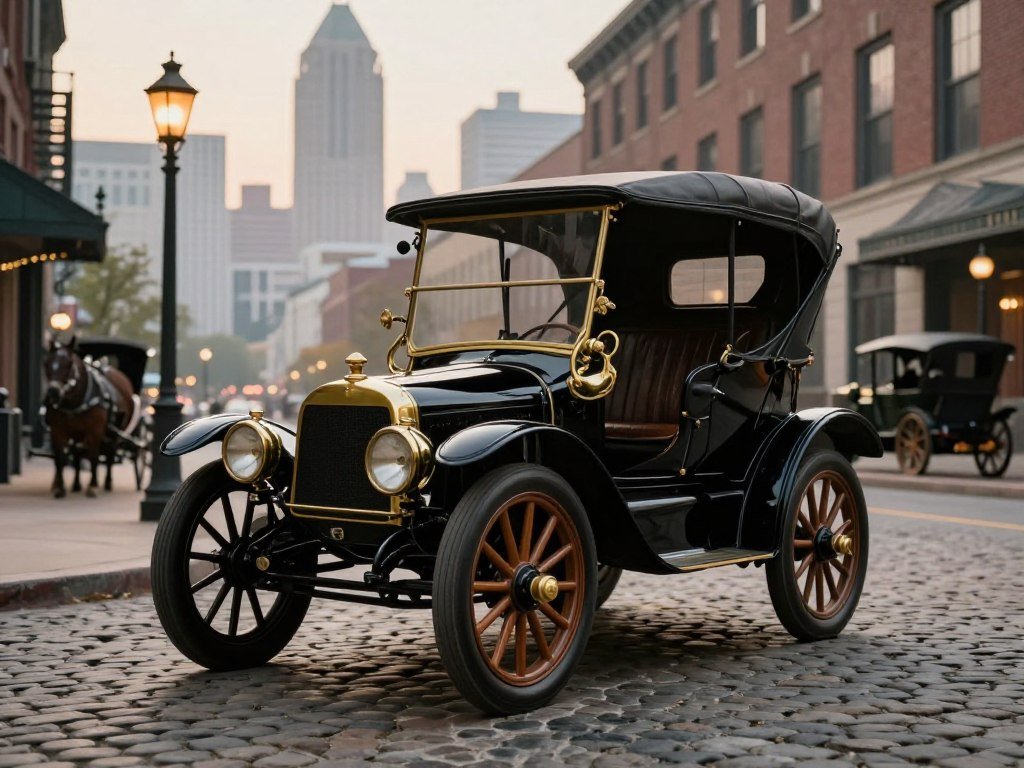
Cadillac began in Detroit in 1902, before General Motors existed. Three founders established the company, and it took shape from the remnants of an earlier auto venture. Henry M. Leland was one of the founders, not the sole founder.
Cadillac’s 1902 founding in Detroit
William Murphy, Lemuel Bowen, and Henry M. Leland founded Cadillac on August 22, 1902. The city was already a center of early car making, and Detroit became the setting for the new company’s first work. Leland brought experience in precision manufacturing, which helped the young firm build its reputation for careful engineering.
The name came from Antoine de la Mothe Cadillac, the French explorer who founded Detroit in 1701. His full name is often shortened to Antoine de la Mothe or Mothe Cadillac in historical references. The choice tied the new brand to Detroit’s earlier history, rather than to one of its founders.
Cadillac’s founding belongs to Murphy, Bowen, and Leland together. Naming Leland alone as the founder leaves out two partners.
From the Henry Ford Company to Cadillac Motor Company
Cadillac grew from the remains of the Henry Ford Company after Henry Ford left that business. Murphy and Bowen brought in Leland to assess the plant and its equipment. He advised them to keep the operation going, and the group formed a new company under the Cadillac name.
Cadillac’s first Runabout and Tonneau were completed in October 1902. These early vehicles helped turn a Detroit venture into a working car company. The company continued to change as its partners combined their work and resources.
In 1905, Cadillac Automobile Company merged with Leland & Faulconer, a manufacturing firm run by Henry Leland and his son, Wilfred. This step brought manufacturing and vehicle production under one company name. It also set up the company that General Motors would later acquire.
The 1905 merger created the Cadillac Motor Company, several years before its acquisition by GM.
When Did General Motors Acquire Cadillac?
General Motors acquired Cadillac in 1909, after GM itself had been founded the previous year. The acquisition date marks when Cadillac became part of General Motors, not when the current GM corporation began. General Motors owned Cadillac cars in 2022, as it does through the same parent-company relationship.
The Cadillac and GM ownership timeline
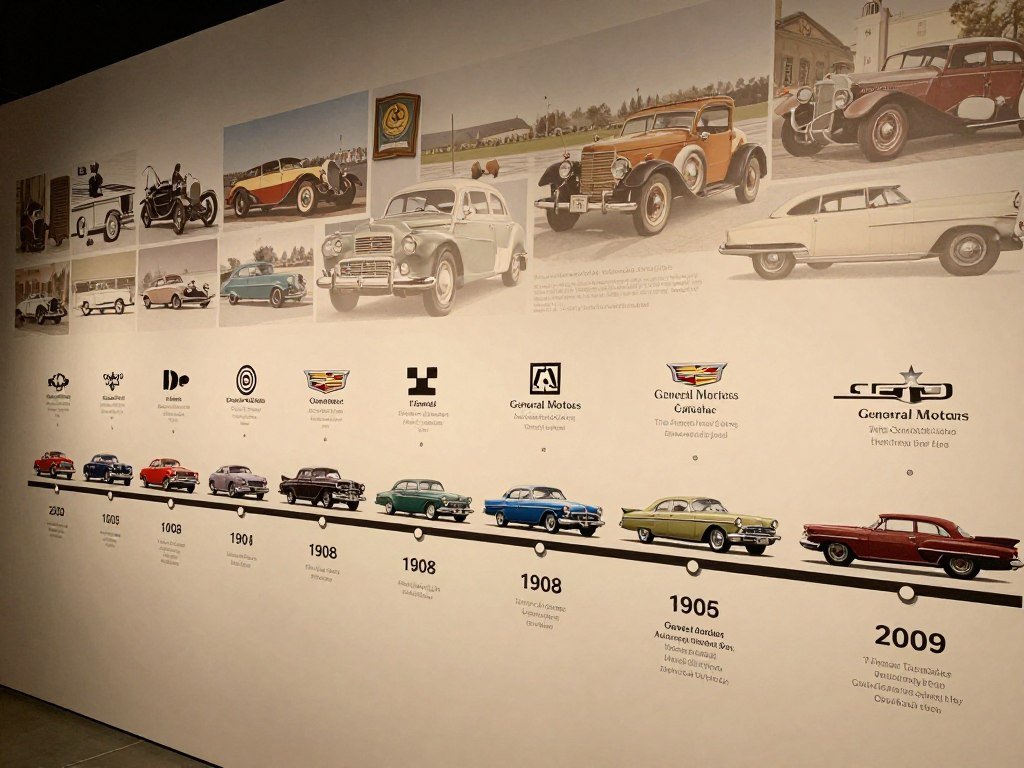
William C. Durant founded General Motors on September 16, 1908, as a holding company for Buick. GM bought Cadillac the next year. HISTORY’s account of the 1909 purchase says the deal closed on July 29 for $4.5 million in GM stock.
That history answers who owned Cadillac cars in 2022: General Motors. It also helps separate two different questions. GM owns the Cadillac division, while GM itself belongs to its shareholders.
| Year | Event | Detail |
|---|---|---|
| 1908 | GM founded | William C. Durant formed a holding company for Buick |
| 1909 | GM acquired Cadillac | Cadillac joined General Motors |
| 2009 | Current GM established | Followed a Chapter 11 reorganization |
The 2009 reorganization and today’s General Motors
The current General Motors company was established on July 10, 2009, after the General Motors Chapter 11 reorganization. Chapter 11 is a legal process that lets a company reorganize while addressing its debts. This later change created the current company, but did not change the earlier acquisition date.
Who owns GM? GM is a publicly traded corporation owned by its shareholders. That differs from General Motors owning Cadillac as a division. Readers comparing public stock ownership with private company shares can learn more in this guide to public and private company shares.
The 2009 reorganization established the current General Motors company, not a new date for Cadillac’s acquisition.
What Does Cadillac’s Place in GM Mean Today?
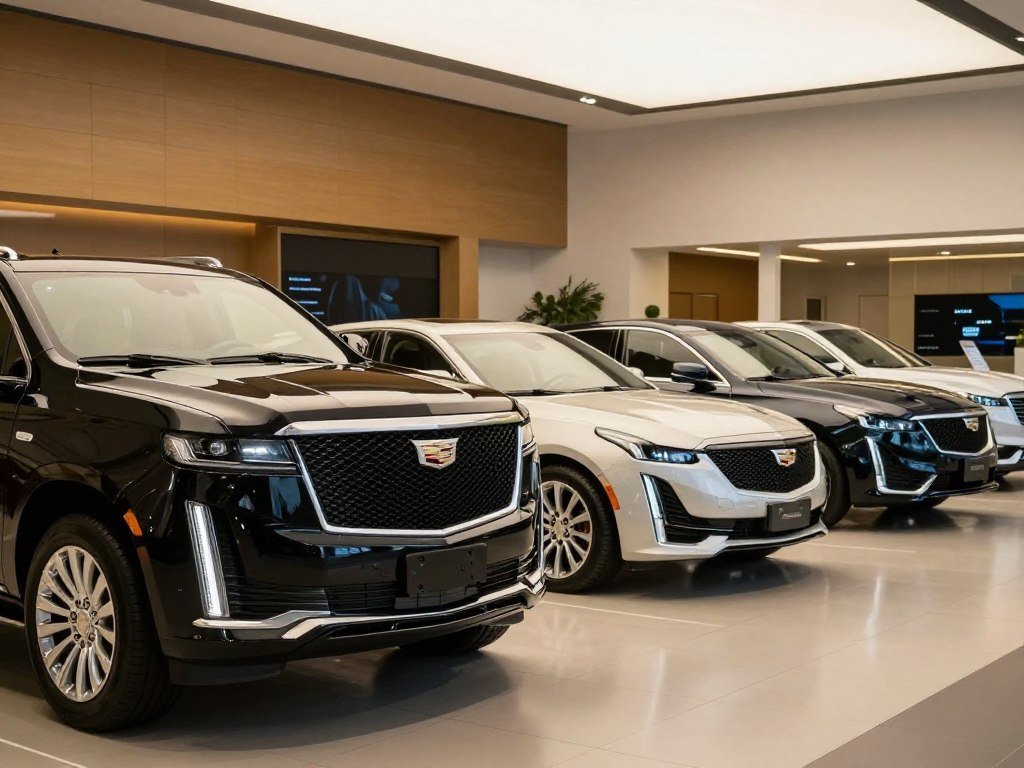
Cadillac is the luxury name in GM’s four-brand vehicle lineup. Its role differs from GM’s other brands, which serve other price points and types of buyers. General Motors lists Cadillac, Chevrolet, Buick, and GMC as its four vehicle brands.
Cadillac’s major markets include the United States, Canada, and China. The United States is a core market for the brand, while its sales also reflect demand in other countries. Shared engineering and parts are normal in a company with several brands, but that does not make every model identical.
| Brand | GM portfolio role | Broad emphasis |
|---|---|---|
| Cadillac | Luxury vehicle division | Luxury |
| Chevrolet | Mainstream brand | Broad everyday value |
| Buick | Premium brand | Comfort |
| GMC | Premium utility brand | Trucks and utility vehicles |
Cadillac sold 390,458 vehicles worldwide in 2019, a record for the brand at that time. The figure describes one year, not a current sales record. The brand’s best U.S. sales in a decade came in 2025, a separate measure from its worldwide total.
GM’s brands can share parts, manufacturing systems, or technology while keeping distinct models, features, and service needs. That approach lets a large company use common resources without making each vehicle serve the same purpose. A brand’s position comes from its products and market role, not from having a separate corporate owner.
Cadillac’s 2019 worldwide sales record and its best U.S. sales in a decade in 2025 describe different measures and years.
Why Is the Cadillac Cimarron Still Discussed?
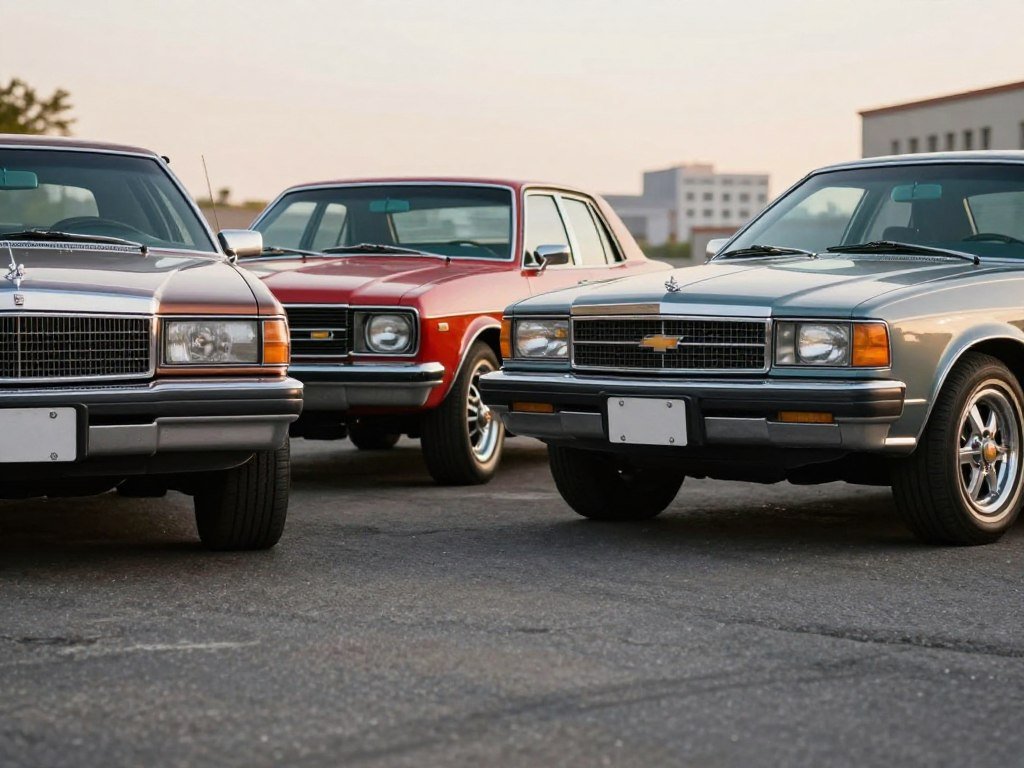
The Cimarron is often remembered as a Cadillac whose shared GM underpinnings weakened its luxury distinction. The criticism centered on how closely the car related to less expensive models. The Cimarron was a frequently criticized Cadillac model, not a proven worst car of all time.
Produced for model years 1982-1988, the Cimarron shared GM’s J platform with the Chevrolet Cavalier and other GM models. A platform is the basic structure and engineering used beneath a vehicle. The cars could share that foundation while differing in styling and equipment.
This practice is called badge engineering: using shared underlying vehicle engineering for different brands or models, often with changes to styling or equipment. Carmakers use common platforms to lower costs and support many models. The Cimarron drew criticism because buyers saw a familiar car foundation beneath a Cadillac name.
Its U.S. sales changed over its production run:
- 1983: 19,188 cars
- 1985: 23,754 cars
- 1988: 5,884 cars, its final model year
The figures show that sales fell sharply by the model’s last year. They do not, by themselves, prove that it was the worst car ever made. Its reputation rests on the gap critics saw between the vehicle’s shared parts and Cadillac’s luxury promise.
The Cimarron became a warning about how a brand’s name can shape expectations. Shared engineering is not automatically a flaw, but a car needs features and a feel that support the identity attached to it. That gap between expectation and experience kept the model in discussions of Cadillac’s history.
Its 1988 U.S. sales were 5,884, down from 23,754 in 1985.
What Does the Cadillac Escalade Show About the Brand Today?
The 2027 Escalade lineup shows how one Cadillac SUV family can span standard luxury and high-performance versions. It remains a Cadillac vehicle within General Motors’ luxury division, not an independently owned vehicle division. Its versions differ in power, price, length, seating, and cargo room.
Here are key 2027 details for the Escalade, Escalade ESV, and Escalade-V. Both engine output figures use premium gasoline. Cadillac’s official Escalade specifications list the performance and size details.
- Escalade: $102,700 starting price, 420 horsepower, 460 lb.-ft. of torque, and seating for up to 8. It is 211.9 inches long, with up to 25.5 cubic feet behind the third row.
- Escalade ESV: 226.9 inches long, with up to 41.5 cubic feet behind the third row.
- Escalade-V: $169,300 starting price, 682 horsepower, 653 lb.-ft. of torque, and seating for 7.
Escalade and Escalade-V performance
The standard Escalade uses a 6.2-liter V8 that makes 420 horsepower and 460 lb.-ft. of torque. The Escalade-V has a supercharged 6.2-liter V8 that makes 682 horsepower and 653 lb.-ft. of torque. The higher output pairs with a much higher starting price.
Passenger and cargo space across the lineup
The 2027 Escalade seats up to 8 passengers, while the Escalade-V seats 7. The Escalade’s 211.9-inch length gives way to a longer ESV body at 226.9 inches. Their cargo figures show why that extra length matters for luggage behind the third row.
For a larger third-row cargo area, the 2027 Escalade ESV offers up to 41.5 cubic feet behind the third row.
What Cars Have Warren Buffett and Jeff Bezos Driven?
Warren Buffett is the billionaire in these examples associated with a Cadillac, while Jeff Bezos’s cited car was a Honda. The examples come from different years and do not establish what either man drives today. Buffett’s 2014 Cadillac XTS replaced his 2006 Cadillac DTS.
Warren Buffett’s Cadillac XTS
Buffett’s daughter Susie handled the purchase of his 2014 Cadillac XTS. It replaced his 2006 Cadillac DTS, continuing his use of the Cadillac brand. The detail matters because stories about a person’s car can refer to a specific vehicle and period, not a lifetime choice.
In 2001, Buffett said he drove about 3,500 miles a year. He also said he bought a new car very infrequently. That low annual mileage helps explain why a car could stay in his life for years without frequent replacement.
A car linked to a famous person is still a dated snapshot. It does not prove what that person drives now.
Jeff Bezos’s 1997 Honda Accord
Bezos’s car example is a 1997 Honda Accord, not a Cadillac. In a 1999 interview, he called it “a perfectly good car.” The remark offers a small glimpse of his view of a practical vehicle at that time.
The phrase is easy to misread as a statement about his current vehicle. It only describes the Accord discussed in that interview. A person’s vehicle can change, so the year and context matter when a car story gets repeated.
Bezos’s Accord remark describes his 1997 car in a 1999 interview, not a claim about his current vehicle.
Conclusion
Cadillac’s story shows that a brand can develop its own identity within a larger company. Corporate ownership and a vehicle brand’s public character are different things. General Motors owns the division, while drivers may know it through its name, vehicles, and place in the luxury market.
When tracing a specific Cadillac, start with its model year and name, then check those details against the relevant historical records. That simple check can help separate one model or period from another.
FAQ
What is Cadillac?
Cadillac is General Motors’ luxury-vehicle division. The name also identifies a vehicle brand with its own models and history. General Motors owns the division, but the brand has a distinct role within the larger company. That setup is common in the auto industry, where one parent company may own several brands aimed at different buyers.
What car was the biggest flop?
The Cadillac Cimarron is a frequently criticized example, but calling it the biggest flop treats a subjective judgment as settled fact. The model shared a platform with the Chevrolet Cavalier and other GM cars. Critics questioned whether its shared engineering matched Cadillac’s luxury image. Its sales also dropped to 5,884 in its final model year, 1988.
Which country buys the most Cadillacs?
The United States is a core Cadillac market, and it is the clearest answer among the countries named here. Canada and China are also major markets for the brand. Cadillac’s 2025 U.S. sales were its best in a decade, while its 2019 worldwide sales set a record for that time. Those figures describe different years and markets.
What car is the poor man’s Cadillac?
Buick is sometimes called a “poor man’s Cadillac” as an informal comparison, not as the name of a specific model. Both brands belong to General Motors, but Buick has a premium role focused on comfort. The phrase can oversimplify both brands, since their lineups and buyers differ. It should not be treated as an official title.
What billionaire drives a Cadillac?
Warren Buffett is associated with a 2014 Cadillac XTS, which replaced his 2006 Cadillac DTS. His daughter Susie handled the XTS purchase. Buffett said in 2001 that he drove about 3,500 miles each year and bought a new car very infrequently. That account describes his car at the time, not necessarily his current vehicle.
What car does Jeff Bezos drive?
A 1999 interview described Jeff Bezos’s 1997 Honda Accord, which he called “a perfectly good car.” That statement concerns the vehicle discussed in that interview. It does not show what Bezos drives today. Car stories about public figures often refer to one known vehicle and period, so the model year and interview date help keep the claim clear.
Who owns GM?
General Motors is a publicly traded corporation owned by its shareholders. That is different from General Motors owning Cadillac as one of its divisions. Shareholders own stakes in GM, while the company owns and runs its vehicle brands. A public company share is not the same thing as buying or owning one of its products.



