Westin Hotels & Resorts is a Marriott International brand. If you are planning a stay, that answer matters because the brand name does not tell you who owns the building. Brand ownership and property ownership are separate, even when both connect to the same hotel.
A franchise agreement is a contract that lets an independent hotel owner or operator use a hotel brand’s name and systems while meeting its standards and terms. Marriott’s ownership of the brand does not mean it owns every hotel building. A hotel’s brand affiliation identifies the system it belongs to, not necessarily the company that owns its building.
Key Takeaways
- Marriott International owns the Westin brand.
- An individual property owner may own the hotel building.
- Marriott or an approved independent operator may run a property.
- Westin is in Marriott’s Premium portfolio.
- Features and services can differ between hotels.
- Marriott Bonvoy members can earn and redeem points under program terms.
Who Owns Westin Hotels?
Marriott International owns Westin Hotels & Resorts, which joined Marriott when Marriott completed its Starwood acquisition on September 23, 2016. Starwood Hotels & Resorts Worldwide was the former parent company that held Westin before the deal closed.
Marriott’s acquisition of Starwood Hotels & Resorts Worldwide brought Westin into its hotel portfolio. Marriott’s official historical page covers the acquisition and its completion date.
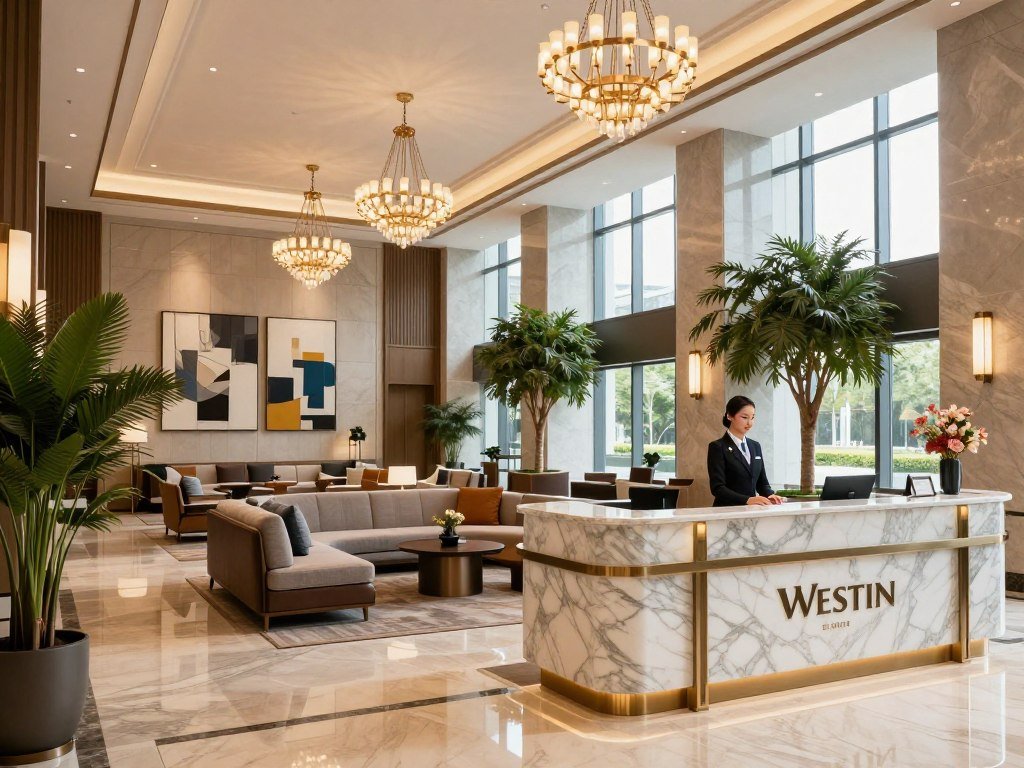
A Westin sign identifies the hotel’s brand system, not the owner of its real estate.
The distinction can be easy to miss because hotel companies use their names across many properties. A hotel chain can control a brand’s standards and guest systems without holding the deed to every building. Westin Hotels & Resorts is the brand; Marriott International is the company that owns it.
Starwood Hotels & Resorts no longer owns Westin as a separate parent company. Starwood was Marriott’s acquisition target, and the acquisition placed its hotel brands within Marriott International. The old company name may still appear in historical records, but that does not make Starwood the present brand owner.
Marriott Bonvoy is Marriott’s loyalty program across participating brands, including Westin. Its shared program helps travelers recognize one loyalty system across a large hotel portfolio. It does not change who owns an individual building or who operates a particular hotel.
Westin is part of Marriott International’s hotel portfolio, not a separate hotel group still owned by Starwood.
How Did Westin Grow From Western Hotels Into a Global Brand?
Westin began in 1930 as Western Hotels, a 17-property alliance formed by hotel owners Severt W. Thurston and Frank Dupar. Its early form was regional, built around independent hotels working together under one company name.
The founding group also included Peter Adolph Schmidt and Adolph Schmidt. Their story helps explain why the Westin brand name carries a history much older than its current corporate owner.
The regional hotel alliance
Western Hotels formed in 1930 with 17 properties. Severt Thurston and Frank Dupar helped create the alliance, while Peter and Adolph Schmidt joined the original group. Instead of starting as a single new hotel building, the company linked hotels under a shared identity.
The founding names sometimes appear in different forms in historical references. Severt Thurston, Frank Dupar, Peter Adolph Schmidt, and Adolph Schmidt are tied to the early Western Hotels group.
The Westin name takes hold
The company changed its name to Western International Hotels in 1963. In 1969, the Washington Plaza Hotel became the first property branded Westin. That branding milestone came before the company itself adopted Westin Hotels as its name.
- 1930: Western Hotels formed as a 17-property alliance.
- 1963: The company adopted the name Western International Hotels.
- 1981: The company changed its name to Westin Hotels.
These dates mark different steps in the brand’s growth. The 1969 Washington Plaza branding was the first use of Westin on a property, while 1981 marked the company name change.
Ownership changes before Marriott
The ownership of Western International Hotels changed several times. UAL, the parent company of United Airlines, acquired Western International in 1970. Aoki Corporation bought Westin in 1988, and Starwood assumed full ownership in 1998.
The shifts changed the company behind the hotels, while the brand identity continued to evolve. Western Hotels grew into Western International Hotels, then Westin Hotels, before becoming part of Starwood’s hotel group.
The Washington Plaza Hotel was branded Westin in 1969, before the company adopted Westin Hotels as its name in 1981.
Who Owns the Buildings at Westin Properties?
A Westin hotel can carry Marriott’s brand without Marriott owning the real estate beneath it. The brand owner sets the hotel’s system, while the property owner holds the building and land.
Marriott’s portfolio includes hotels that it manages, hotels run by independent hospitality companies under franchise agreements, and a smaller number it owns and manages. Those arrangements are not Westin-only figures, and the totals below should not be read as a full breakdown of every portfolio property.
Brand management is not building ownership
An individual property owner may own a Westin building while Marriott manages its daily hotel operations. In another arrangement, an independent hospitality company may own and operate the property under a franchise agreement with Marriott.
Marriott International was formed in 1993, when Marriott Corporation split into two companies. Marriott International franchises and manages properties; Host Marriott Corporation, now Host Hotels & Resorts, owns properties.
Marriott’s 2025 annual report says the company owned or leased less than one percent of its lodging properties. That figure describes Marriott’s overall business model, not a particular Westin hotel.
What Marriott’s 2025 portfolio figures show
Marriott International’s portfolio included 9,361 properties in 2025. Its 2025 annual report describes these operating arrangements across the company’s portfolio.
| Marriott portfolio arrangement | Ownership and operation | Property count in 2025 |
|---|---|---|
| Managed, not Marriott-owned | Marriott manages; another party owns | 1,981 |
| Franchise | Independent hospitality company owns and manages under a Marriott franchise agreement | 7,192 |
| Owned and managed by Marriott | Marriott owns and manages | 51 |
The three listed arrangements describe reported portfolio figures and do not add up to the stated total. They also do not show how Westin properties alone are owned or operated.
Check the ownership and operator information for the specific property rather than inferring it from the Westin sign.
What Type of Hotel Brand Is Westin?
Marriott places Westin in its Premium portfolio, not its Luxury portfolio. Premium is a brand tier, not a star rating or a promise that every hotel will offer the same experience.
The category helps travelers compare Marriott hotel brands. Westin’s Premium label describes its place in Marriott’s brand structure, while the facilities and service at each hotel depend on that property.
Marriott groups its brands into Luxury, Premium and Select portfolios. The Ritz-Carlton and St. Regis are Luxury examples. Westin, Marriott Hotels and Sheraton are Premium brands, while Courtyard and Aloft are Select examples.
| Marriott portfolio tier | Example brands | Westin’s position |
|---|---|---|
| Luxury | The Ritz-Carlton; St. Regis | A separate tier above Premium |
| Premium | Westin; Marriott Hotels; Sheraton | Westin’s tier |
| Select | Courtyard; Aloft | A separate tier |
A brand tier is useful when you are comparing hotel brands, but it does not replace a property’s local rating. Star systems may differ by place and rating provider. A hotel’s local star rating describes that property under the system used, while Marriott’s tier groups brands across its portfolio.
That difference matters when you compare an urban Westin with another hotel in the same city. Both may share a brand tier but offer different rooms, dining, meeting space or recreation. The brand name gives you a starting point, not a room-by-room guarantee.
Use Marriott’s tier to understand the brand family, then check a specific property’s facilities and rating separately.
What Does Westin’s Wellbeing Focus Include?
Westin organizes its wellbeing message around six pillars that cover rest, food, movement, feelings, work and recreation. The idea is to support everyday routines during a hotel stay, rather than make every property a wellness retreat.
Westin’s wellbeing offerings include sleep features, fitness spaces and other services. What you can use depends on the individual hotel, since facilities and programming differ across the network.
The six wellbeing pillars
The six pillars give the Westin brand a framework for its guest features. Each one points to a different part of a traveler’s daily routine.
- Sleep Well: Rest with sleep-focused room features.
- Eat Well: Choose food and drink that support a balanced routine.
- Move Well: Stay active with fitness spaces or movement programs.
- Feel Well: Make space for comfort and a sense of ease.
- Work Well: Keep work tasks moving while away from home.
- Play Well: Make room for recreation during the stay.
The Heavenly Bed and sleep features
The Heavenly Bed is one of Westin’s best-known sleep features. Westin began selling its Heavenly Bed mattresses to the public in 1999, extending the product beyond hotel rooms.
The mattress is one part of a sleep setup, and sheets can affect how a bed feels. Fabric, weave and sleep temperature all shape sheet comfort, while fitted-sheet depth needs to match the mattress and bedding. Travelers comparing options can also review this guide to sheets for different sleep styles.
Fitness features vary by property
WestinWORKOUT is the brand’s name for its fitness studios. Some hotels also offer running-related programming, such as routes or maps. These features can make it easier to keep an exercise habit while traveling.
Do not assume that every hotel has the same workout room, route options or sleep features. A resort and a city property may have different spaces and services, even under the same brand. The property’s own details are the best guide to what is on site.
Confirm a specific fitness or sleep feature with the property before treating it as part of a stay.
Where Can Travelers Find Westin Hotels?
Westin’s footprint is worldwide, with 250 locations recorded in March 2025. That is a dated count, not a promise that the current total remains unchanged.
Westin serves travelers in many settings, from city centers to resort areas. The right property type depends on the trip, so the brand name alone does not tell you what the hotel’s location or layout will be.
A worldwide hotel footprint
Westin hotels operate around the world and serve a range of travel needs. The brand’s property types include:
- Urban hotels
- Convention hotels
- Airport hotels
- Resorts
- Mixed-use hotels
Selected branded residences are another format, separate from a standard hotel stay. They are not a feature of every property or destination.
Match the property type to the trip
An airport hotel may fit a flight-focused stay, while a resort may suit time set aside for recreation. Convention hotels can serve event travel, and urban hotels may place you near city activities. Mixed-use hotels combine hotel space with other uses in one development.
If an island stay is part of your plans, compare the destination with the kind of trip you want. This guide to Caribbean islands by travel style weighs beaches, culture, family trips and outdoor activities.
Choose a destination first, then compare the Westin property’s specific setting and facilities with the trip you have planned.
How Does Marriott Bonvoy Work at Westin?
Westin participates in Marriott Bonvoy, Marriott International’s shared loyalty program. Members earn and redeem points at participating hotels under the program’s current terms.
Marriott Bonvoy launched in 2019, bringing three loyalty programs together under one name. Marriott’s announcement described the change as a way to unite its loyalty program brands.
One loyalty program across the brands
Marriott Bonvoy replaced these programs:
- Marriott Rewards
- Ritz-Carlton Rewards
- Starwood Preferred Guest
The move gave members a shared loyalty program across Marriott’s brands, including Westin. A Marriott Bonvoy launch announcement names the three predecessor programs.
Joining a shared program does not mean every hotel stay earns points in the same way. Earning and redemption depend on the terms that apply to the member, reservation and participating property.
Earning and using points at a Westin
Marriott Bonvoy members can generally earn points on eligible stays at participating Westin hotels. Members may also redeem points for eligible stays and other program options, subject to the rules in effect.
Check that the hotel participates and that the reservation type qualifies before relying on points. A credit card or other offer may have its own terms, and it should not be confused with a hotel’s standard earning rules.
Point costs, earning rates and benefits can change under program terms. A benefit available to one member or reservation may not apply to another, so read the rules tied to your account and booking.
Review the current Marriott Bonvoy terms for the stay and benefit you plan to use.
What Should Travelers Check Before Booking a Westin?
A Westin convention hotel, airport hotel and resort can serve very different trips even though all carry the same brand. The property’s purpose can shape its location, room choices and facilities.
Westin properties also include urban hotels, mixed-use developments and selected branded residences. Services are not identical across the network, so one hotel’s options should not be treated as standard at another.
What differs from one property to another
Room types, dining choices and meeting facilities can vary by hotel. A resort may offer different spaces from an airport property, while a convention hotel may focus on event needs. The exact mix depends on the individual location.
Marriott’s booking and mobile systems may offer mobile check-in, mobile key and service requests. Availability varies by hotel, and a feature shown for one location may not appear for another.
Confirm the details for your stay
Start with the exact hotel listing and the dates you plan to travel. Read the room description, then check the amenities and dining details that matter to your trip. This step helps you match the listed room to the stay you have in mind.
For a destination stay, compare the setting with the activities you want and the travel time involved. A resource on choosing a Caribbean island for your trip can help frame that choice.
Do not assume a service offered at one Westin is available at every Westin.
Look for mobile features in the booking details if you plan to use them. Check the room name carefully, since different room options may include different layouts or views.
Verify the specific room and service details for your dates before relying on a feature at any one property.
Conclusion
Marriott International owns Westin, but that does not mean it owns every Westin hotel building. Individual properties may have different owners and operators, even though they share the brand’s standards and systems.
For your trip, focus on the hotel you plan to book rather than assuming every Westin offers the same setup. Check its room details, facilities and available services, then review how Marriott Bonvoy applies to your reservation.
Before booking, confirm the specific property’s details and the Marriott Bonvoy terms that apply to your stay.
FAQ
What are the different types of Hotels?
Hotels commonly include full-service, select-service, extended-stay and resort properties. Full-service hotels often offer several guest services, while select-service hotels focus on core lodging needs. Extended-stay hotels cater to longer visits, often with room features for daily living. Resorts focus on leisure stays, and one hotel brand may operate more than one property format.
What brands are part of the Marriott Group?
Marriott International has brands across several portfolio tiers, including Westin, Marriott Hotels, The Ritz-Carlton, Courtyard and Residence Inn. Those names represent different styles and market positions within the company’s hotel portfolio. Marriott also has other brands, so this short list is only a sample. The specific property and its facilities matter more than the brand name alone when planning a stay.
What’s the nicest Marriott chain?
The Ritz-Carlton is a clear traditional luxury choice in Marriott’s formal Luxury tier. St. Regis and JW Marriott are also Luxury brands in the company’s portfolio. Westin belongs to the Premium tier, which is separate from Luxury. The best fit depends on the hotel and the trip, since each property can offer a different setting, room mix and range of services.
Is Marriott 5 star or 4 star?
Marriott International is a hotel company, not one hotel with a single star rating. Star ratings apply to individual properties, and the result depends on the rating system used. A Marriott brand tier, such as Premium or Luxury, is not the same as a local star rating. Check the rating for the specific hotel if that measure matters to your booking.
Is Westin a good choice for a business trip?
Westin can suit a business trip when the specific property has the work or meeting facilities you need. A convention hotel may offer a different setup from an airport or urban hotel. Check the room details, meeting options and available mobile services for the location you plan to use. The Westin name alone does not guarantee the same business features at every hotel.