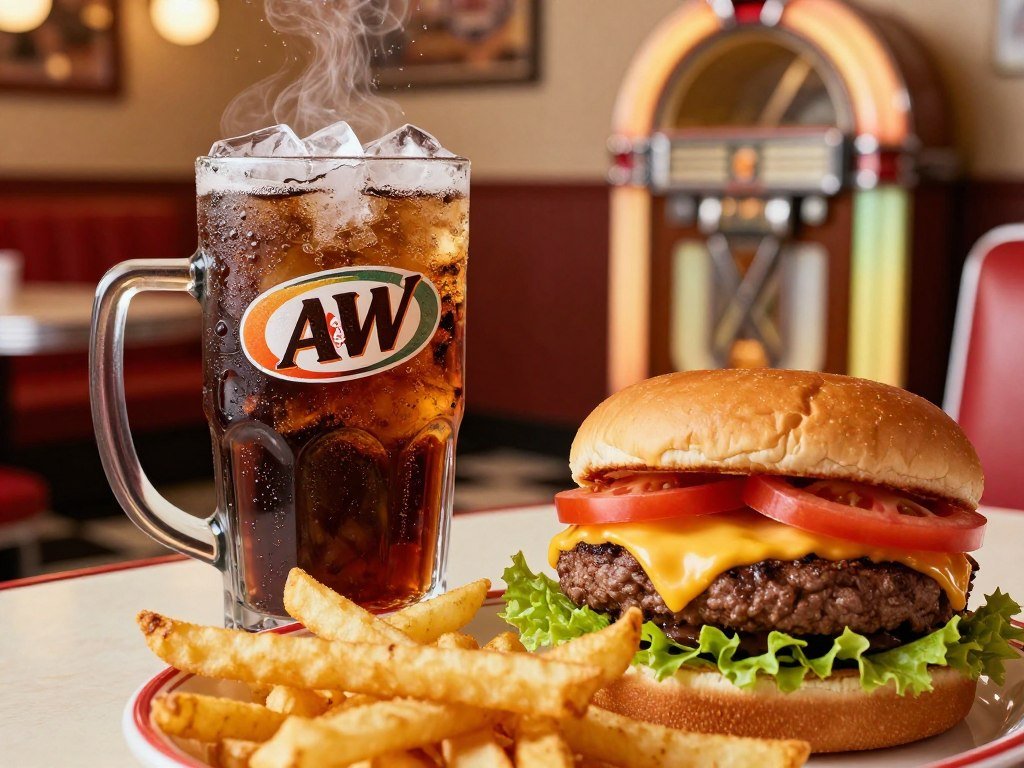
A&W Root Beer and A&W Restaurants are connected by their name, but their U.S. ownership is not the same. The United States is the main focus here, though regional arrangements differ around the world. When you see the name on a drink or a restaurant, the business behind it may depend on which one you mean. That difference matters when you want to know who controls a brand, sells a product, or runs a local restaurant. This overview separates those roles and gives you a simple way to tell them apart. The key distinction is whether a question concerns the beverage brand or the restaurant business.
Key Takeaways
- The drink and restaurant chain share a name, not the same U.S. ownership.
- Regional business arrangements differ, especially between the United States and Canada.
- Packaged beverages and restaurant servings are different ways to enjoy the drink.
- The brand’s history began with a California root beer stand.
- Serving size matters when comparing nutrition labels.
Who Owns A&W Root Beer in the United States?
Keurig Dr Pepper owns A&W’s U.S. beverage brand rights, while the restaurant chain has separate franchisee ownership. Brand licensing means permission for a separate business to use a trademark under agreed terms.
The drink is not a Pepsi product. Keurig Dr Pepper owns the U.S. rights to the A&W beverage brand and licenses the name to the U.S. restaurant chain.
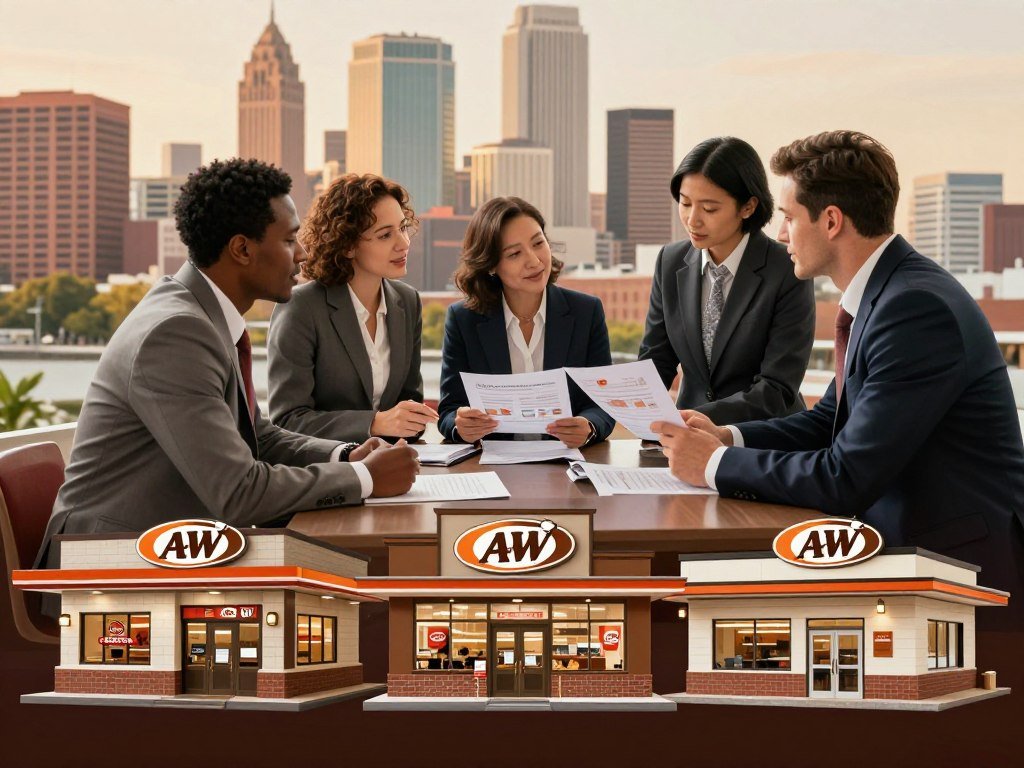
A&W Root Beer is not a Pepsi product; Keurig Dr Pepper holds its U.S. beverage brand rights.
Keurig Dr Pepper’s role in the beverage brand
Keurig Dr Pepper controls the U.S. beverage brand rights, but retail bottling involves other companies. Various U.S. bottlers distribute packaged A&W Root Beer.
The restaurant chain can use the brand under its license, while the beverage company holds those rights. A trademark license sets terms for how another business may use a brand.
This arrangement separates the owner of the beverage name from the businesses that bottle and distribute retail drinks. A bottle’s path to a store can involve a bottler beyond the rights holder.
How the restaurant chain is owned
A group of domestic and international A&W franchise partners purchased the U.S. restaurant business in 2011. A&W Restaurants is now owned by franchise partners, rather than by Keurig Dr Pepper.
The chain’s official A&W Restaurants media fact sheet describes the business as entirely franchisee-owned. Individual franchise partners operate locations within the chain.
The company behind a local restaurant is therefore not automatically the same company that owns packaged drink rights. The shared name reflects a business relationship, not one combined company.
| Market | Brand or restaurant role | Retail bottling |
|---|---|---|
| United States beverage | Keurig Dr Pepper owns brand rights and licenses the restaurant chain | Various U.S. bottlers |
| United States restaurants | Franchise partners own the chain | Not applicable |
| Canada | A&W Food Services of Canada handles restaurants and marketing | Coca-Cola Canada Bottling Company |
Why Canada has a separate arrangement
A&W Food Services of Canada is independent of Keurig Dr Pepper and the U.S. restaurant chain. It handles Canadian restaurants and root beer marketing.
Coca-Cola Canada Bottling Company bottles and distributes Canadian retail products. That role differs from the various bottlers that distribute U.S. retail drinks.
The Canadian company is not simply another branch of the U.S. restaurant chain. Its separate role helps explain why a shared name can have different business arrangements across borders.
For a U.S. purchase, check whether the question is about a packaged drink or a restaurant location.
Do A&W Restaurants Make Their Own Root Beer?
A restaurant serving and a grocery-store bottle are two different ways to get A&W Root Beer. U.S. restaurants prepare the drink fresh, while retail bottles and cans arrive as packaged products.
Restaurant root beer takes about 45 minutes to prepare. The restaurant version uses real cane sugar and a blend of natural flavors.
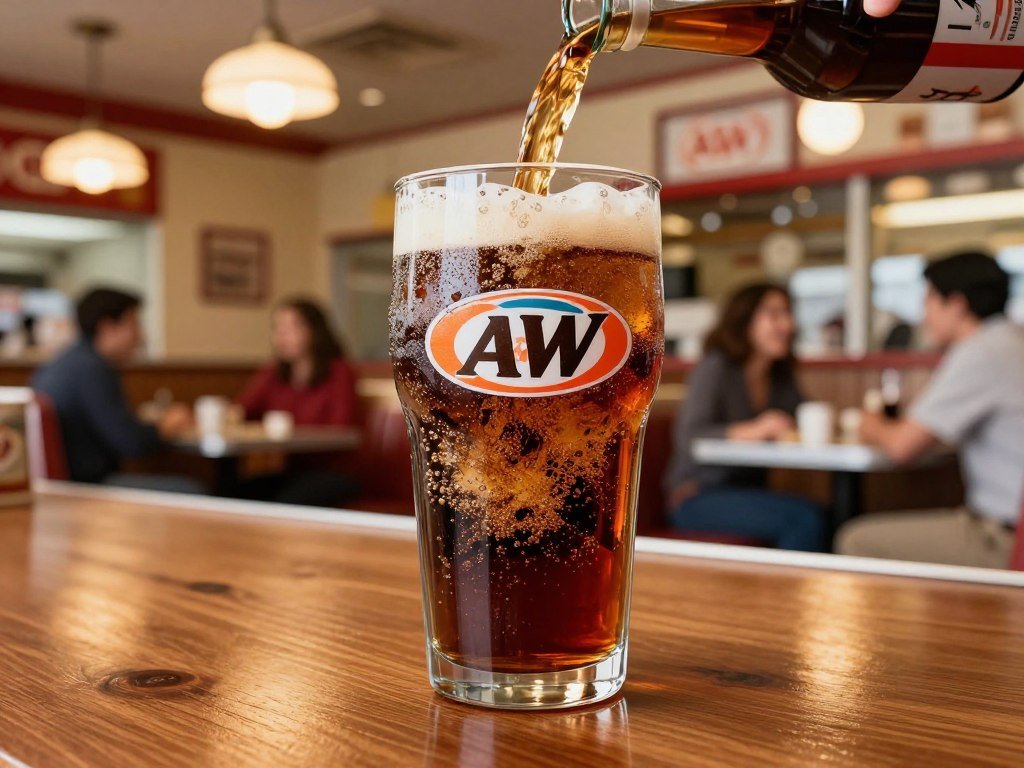
That preparation happens at the restaurant, not inside a retail bottle or can. The restaurant recipe details do not establish that packaged drinks use the same preparation or recipe.
A&W Root Beer became available in bottles and cans in 1971. The packaged format let people enjoy the drink away from restaurant locations, with a different path from preparation to serving.
The drink is caffeine-free. That fact applies to A&W Root Beer, whether you order it at a restaurant or choose a packaged version.
- A freshly prepared restaurant serving, poured cold with a meal.
- A bottled or canned retail drink, sold as a packaged beverage.
- A root beer float, served with ice cream for a creamy treat.
Each option offers a different way to enjoy the root beer. A restaurant serving is prepared on-site, while a retail bottle or can is packaged for sale.
The phrase “made fresh” describes the restaurant drink, rather than a claim that every A&W Root Beer product follows one identical process. The U.S. restaurant preparation details name cane sugar and natural flavors, without setting out an exact formula.
Markets can have separate business arrangements. In Canada, A&W Food Services of Canada handles restaurants and root beer marketing, while Coca-Cola Canada Bottling Company bottles and distributes Canadian retail products.
That Canadian arrangement does not establish that the U.S. restaurant serving and every packaged drink share one recipe. The format and business role are distinct, so keep those details separate when describing the beverage.
A root beer float combines the drink with ice cream, making it a familiar dessert choice. At a restaurant, you can also order the drink on its own or with food.
The roughly 45-minute restaurant preparation time applies to the restaurant drink, not to a packaged bottle or can.
How Did Roy W. Allen and Frank Wright Start A&W?
On June 20, 1919, Roy W. Allen opened his first root beer stand in Lodi, California. Allen’s stand began the business that later carried the A&W name.
A&W stands for Allen and Wright. Roy Allen partnered with Frank Wright in 1922, and the partners’ surnames became the brand name.
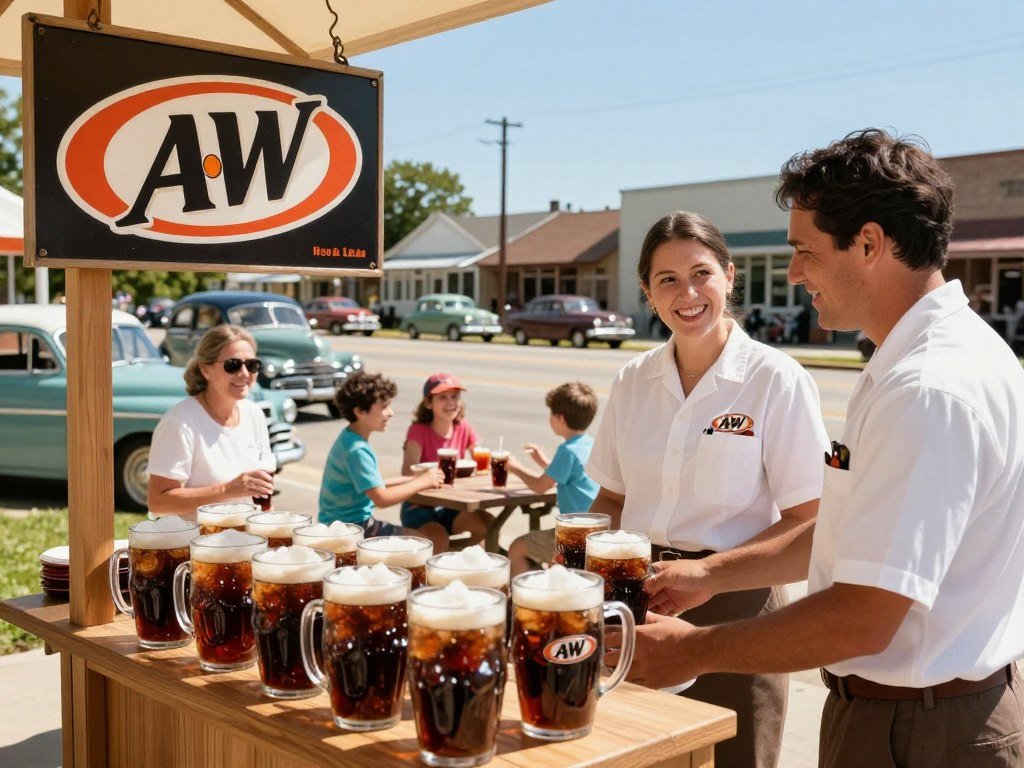
Allen’s Lodi stand and the A&W name
Allen started with a stand selling root beer, then joined with Wright as the business grew. Their partnership gave the name a clear link to its founders.
The 1919 launch also came after other American root beer products had appeared. Hires Root Beer was introduced in 1876, before Barq’s began selling its sarsaparilla-based root beer in 1898.
A&W Root Beer arrived in 1919, after both of those introductions. An earlier product date alone does not prove that the same company owned a brand continuously over time.
People also ask whether Roy W. Allen’s children inherited the business. The documented ownership history follows Allen’s sale of the business and a later purchase by franchise partners, not an inheritance claim.
From root beer stands to restaurant franchises
A&W grew from stands into a restaurant franchise business. Franchising allowed other operators to run restaurants using the A&W name and business system.
- June 20, 1919: Roy W. Allen opened his first root beer stand in Lodi.
- 1922: Allen partnered with Frank Wright, and A&W took its name from them.
- 1925: A&W began selling restaurant franchises.
- 1950: Allen sold the business to Gene Hurtz.
The milestones show how the business moved from one stand toward a network of restaurants. Selling franchises spread the name beyond the original location.
Allen’s 1950 sale marks a documented change in business ownership. The later restaurant history continued through franchise partners, rather than a claim about the founders’ children.
The A&W name marks the partnership, while the franchise system began three years after Allen and Wright joined forces.
What Do A&W Root Beer’s Nutrition Facts Show?
Start with the serving size on the label, since nutrition values are only comparable when the portions match. For an equal serving, an 8.1-fluid-ounce (240-milliliter) portion provides a clear basis for comparing drinks.
An 8.1-fluid-ounce (240-milliliter) serving has 120 calories, 31 grams of carbohydrates, 31 grams of sugar, and 30 milligrams of sodium.
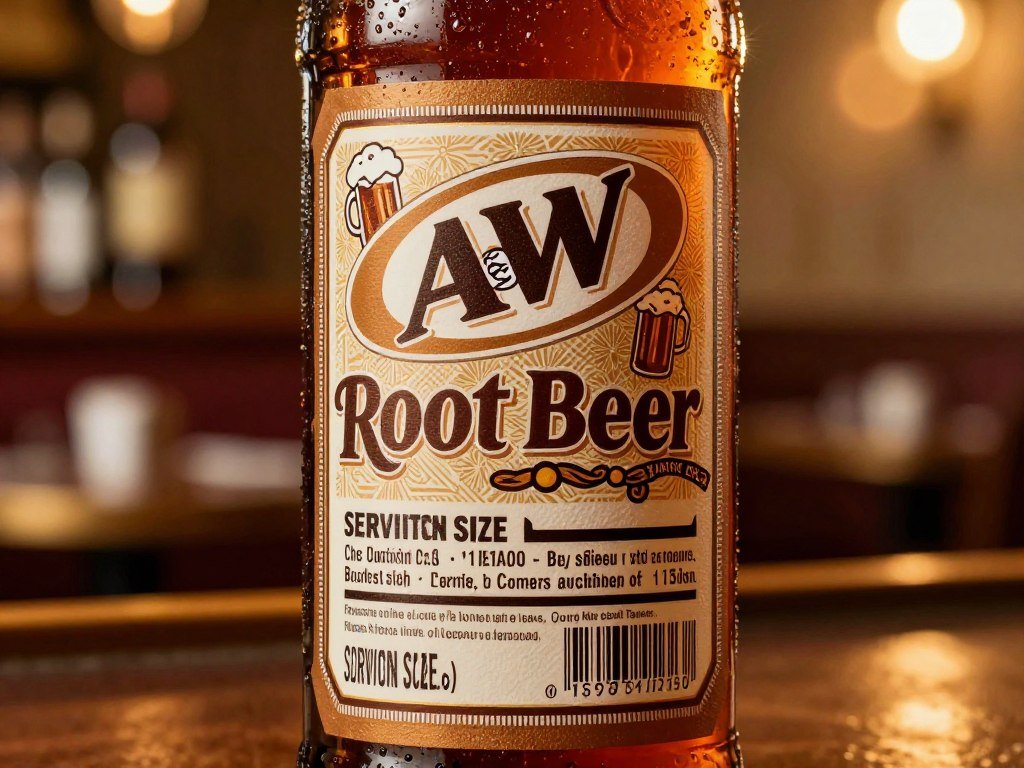
One 8.1-fluid-ounce (240-milliliter) serving contains 31 grams of sugar.
Those figures describe the stated serving, not every bottle size or restaurant pour. A larger portion contains more drink, so the label’s serving amount matters before you compare products.
For a fair comparison of root beer labels, use the same serving size for each product. Then check calories, carbohydrates, sugar, and sodium across those equal portions.
Package sizes can differ, so the front of a bottle does not always show the amount used for nutrition figures. Read the serving line before comparing numbers from two containers.
The four values answer different questions about a drink. Calories show energy, carbohydrates include sugars, the sugar line gives a separate amount, and sodium is listed in milligrams.
A&W Cream Soda and A&W Diet Cream Soda are separate products from regular A&W Root Beer. The cream soda drinks are not simply different names for the root beer.
A&W Cream Soda and A&W Diet Cream Soda were introduced in 1986. The brand later changed the name Diet A&W to A&W Zero Sugar in 2020.
A&W Zero Sugar is also its own product, not an interchangeable version of regular root beer. Its name signals a different product choice, so compare its label separately.
Nutrition facts can help you pick a drink that fits your preferences. They do not, by themselves, prove that one root beer is the healthiest choice.
A health ranking would need comparable nutrition details for other products and the same serving size. A single label can describe one drink, but it cannot rank every root beer.
Labels also help when you compare regular root beer with cream soda or a zero-sugar option. Keep the drink type and serving size consistent for the clearest comparison.
If you are choosing between two packages, note their serving amounts first. A larger serving can make the listed totals look higher even when the drinks are different.
Compare the same four label figures for an equal serving before deciding which drink fits your preferences.
Conclusion
A&W’s name links the drink and restaurant chain, but their U.S. ownership is distinct. Keurig Dr Pepper owns the U.S. A&W beverage brand rights, while franchise partners separately own the U.S. restaurant chain.
For a question about a bottle, can, or restaurant, check the package or location context first. That detail points you toward the business role that matters. For a specific A&W question, identify whether it concerns a packaged beverage or a restaurant first.
FAQ
Is root beer a Pepsi product?
No, A&W Root Beer is not a Pepsi product. Keurig Dr Pepper owns the A&W beverage brand rights in the United States. PepsiCo does not own those rights. A&W Restaurants has a separate ownership structure, so the brand on a drink and the business running a restaurant are different parts of the story.
Who is A and W owned by?
Keurig Dr Pepper owns A&W’s U.S. beverage brand rights, while franchise partners own the U.S. restaurant chain. A group of domestic and international franchise partners purchased the restaurant business in 2011. The two businesses use a shared name through a brand license, but they are not one company. Canada has its own separate arrangement.
Does A&W root beer have caffeine?
No, A&W Root Beer is caffeine-free. That makes it different from many colas, which often contain caffeine. The caffeine-free detail applies to the A&W Root Beer drink, not every beverage sold at A&W Restaurants. Check a product label when you need details about another drink or a different product.
Who founded A&W root beer?
Roy W. Allen started the business, and Frank Wright became his partner. Allen opened his first root beer stand in Lodi, California, in 1919. The two men joined forces in 1922, and A&W comes from their last names. The restaurant franchise system started later, in 1925.
Which is older, BarQS or A&W?
Barq’s began selling its sarsaparilla-based root beer in 1898, making it older than A&W Root Beer. A&W Root Beer was introduced in 1919. The dates compare the products’ introductions, not a claim that either brand kept the same owner throughout its full history.
What is the oldest root beer company in America?
Hires Root Beer was introduced in 1876, earlier than Barq’s or A&W Root Beer. That makes Hires the earliest product introduction among these three brands. An early product date does not prove continuous ownership by the same company, so the oldest product and oldest continuously owned company are not automatically the same claim.
Who makes the best root beer in the USA?
Taste preference decides which root beer is best for you; there is no objective national winner. Some people favor a sweeter drink, while others look for spice or stronger carbonation. Try comparing those traits in the same serving style, such as chilled bottles or fountain pours, to find the taste you enjoy.
What is the healthiest root beer to drink?
No single root beer is the healthiest choice for everyone. Compare equal servings for calories, sugar, and sodium, since package portions can differ. An 8.1-fluid-ounce (240-milliliter) serving of A&W Root Beer has 31 grams of sugar. Your choice depends on which nutrition details matter most to you.



