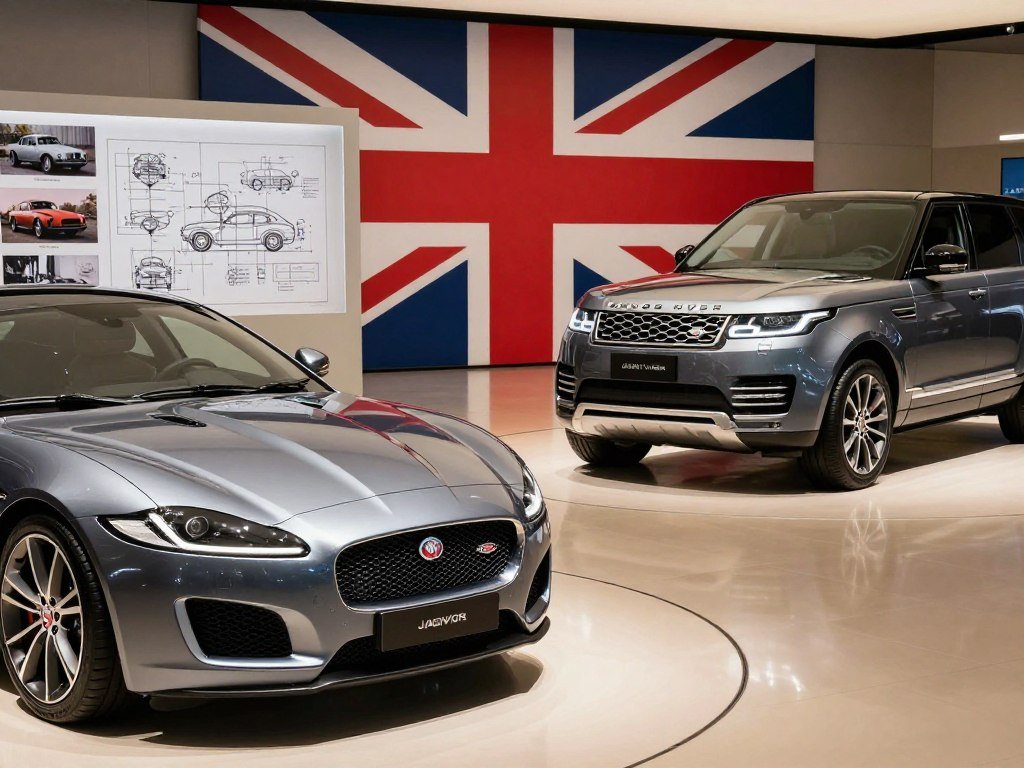
Tata Motors Passenger Vehicles owns Jaguar through Jaguar Land Rover, the British automotive company that operates the Jaguar and Land Rover marques. For U.S. drivers, that answer joins two facts that can seem at odds: the parent company is based in India, while Jaguar keeps its British identity. The company’s structure helps explain how one owner can support two distinct marques and how that setup may shape their future.
This difference matters when you compare a car’s brand, its maker, and the company that owns the business. Those names can describe separate parts of the same corporate structure. A demerger is a corporate reorganization that separates one business from a parent company.
Key Takeaways
- Tata Motors Passenger Vehicles owns Jaguar Land Rover.
- Jaguar and Land Rover are JLR’s two vehicle marques.
- Range Rover and Defender are Land Rover vehicle families.
- JLR has a British base and an India-based parent.
- Ownership alone does not tell you where a vehicle was made.
- For a used car, check its exact model year and VIN.
Ownership answers who controls the company. It does not settle questions about design, factories, or the history behind a marque. Keep the parent-company question separate from the question of where the vehicles are designed and built.
Who Owns Jaguar Cars Today?
Tata Motors Passenger Vehicles is the direct parent of Jaguar Land Rover, which owns and operates the Jaguar marque. Jaguar belongs to JLR, not to a separate parent company. That structure also answers who owns Land Rover: Land Rover sits within the same automotive business.
Jaguar Land Rover is a wholly owned subsidiary of Tata Motors Passenger Vehicles, formerly called Tata Motors. The company was established as a British-registered subsidiary on January 18, 2008, a corporate milestone that came before Tata completed its purchase.
Tata Motors Passenger Vehicles owns JLR, and JLR operates Jaguar and Land Rover.
That distinction helps when you see Jaguar, JLR, or Tata Motors in company news. A marque is a vehicle brand, while a subsidiary is a company owned by another company. Jaguar is a marque within JLR, not a stand-alone automaker with a different owner.
JLR designs, develops, makes, and sells vehicles under its two marques. A Jaguar car therefore belongs to the Jaguar marque, while its operating company is JLR and its parent is Tata Motors Passenger Vehicles.
The legal owner and the public brand name can look like one thing from the outside. In practice, a brand name on a vehicle does not need to match the name of the company that owns its business. For the ownership chain, the key distinction is Tata Motors Passenger Vehicles as parent and JLR as the vehicle business.
How Does Tata Motors Fit Into Tata Group?
Tata Motors belongs to the India-based Tata Group, while Tata Motors Passenger Vehicles is the parent company that owns JLR. The company above Range Rover is based in India. That ownership country does not, by itself, tell you where a vehicle was designed or made.
A demerger is a corporate reorganization that separates one business from a parent company. Tata Motors used that kind of change in October 2025 to separate its commercial-vehicle business.
Where Does Tata Motors Sit in the Ownership Chain?
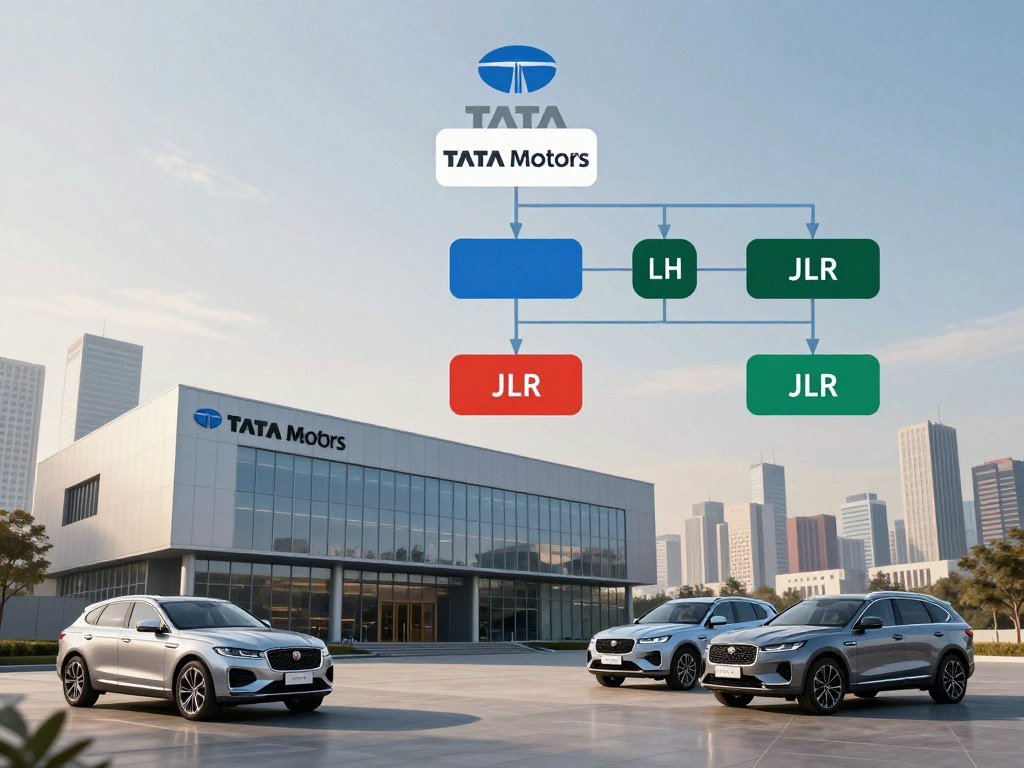
The ownership chain has three distinct layers. Tata Group is the wider group, Tata Motors Passenger Vehicles is the parent company, and JLR is the automotive business.
- Tata Group: India-based business group that includes Tata Motors.
- Tata Motors Passenger Vehicles: parent company of JLR.
- JLR: company responsible for Jaguar and Land Rover vehicles.
In everyday terms, the Range Rover owner’s corporate parent is based in India. The vehicle family remains part of Land Rover, which sits within JLR. A parent company’s location does not turn every marque into a local brand or show where each model’s parts come from.
What Changed in Tata Motors’ 2025 Restructuring?
In October 2025, Tata Motors demerged its commercial-vehicle business and renamed the original company Tata Motors Passenger Vehicles. JLR stayed with that passenger-vehicle business, rather than moving with the separated commercial-vehicle operation.
The change matters when you read later company descriptions. A reference to Tata Motors Passenger Vehicles identifies the continuing passenger-vehicle parent, while commercial vehicles became a separate business.
For readers following corporate changes in other industries, a company restructuring and ownership change can also leave different businesses with different outcomes. In Tata Motors’ case, the clear point is that JLR remained with the passenger-vehicle company. When describing the reorganization, say that JLR stayed with the passenger-vehicle business rather than implying it moved with commercial vehicles.
How Are Jaguar, Land Rover, Range Rover, and Defender Connected?
Jaguar and Land Rover are JLR’s two vehicle marques, while Range Rover and Defender are Land Rover vehicle families. Range Rover and Defender are not separate automakers with separate parents. They are names for vehicle families within Land Rover.
JLR designs, develops, manufactures, and sells vehicles under the Jaguar and Land Rover brands. Jaguar vehicles sit under the Jaguar marque; Range Rover and Defender vehicles sit under Land Rover.
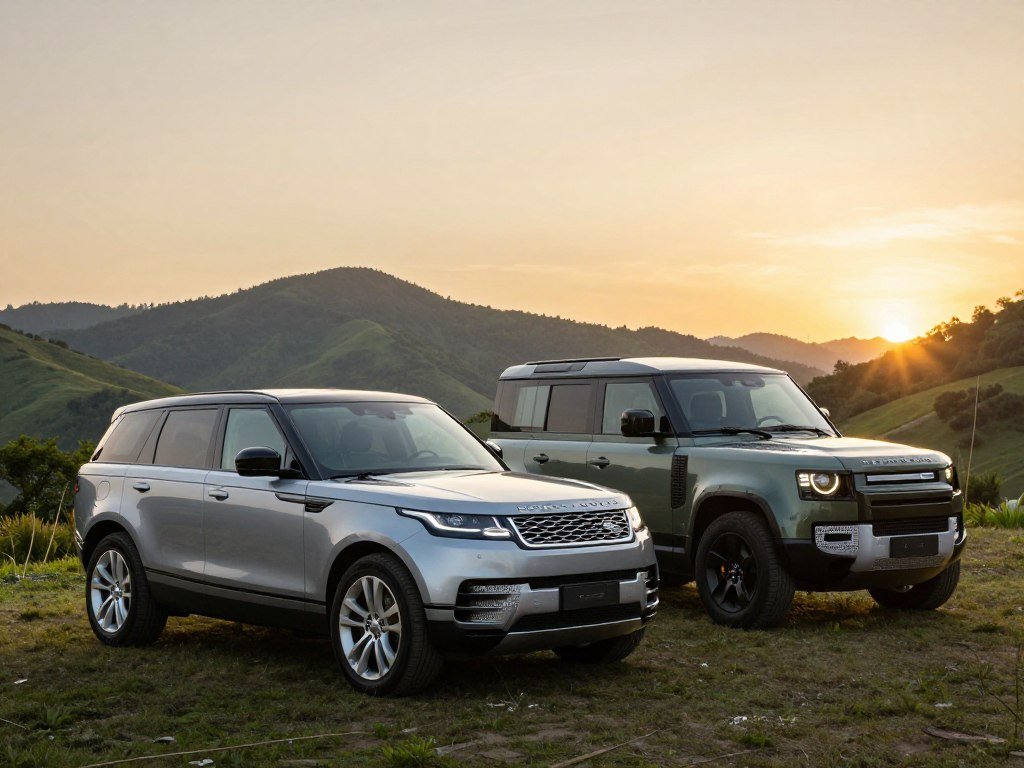
The phrase “JLR cars” refers to vehicles sold under either marque. Jaguar Land Rover is the combined business name, not a third vehicle marque that replaces Jaguar or Land Rover.
In 2013, Jaguar Cars Limited and Land Rover’s vehicle business were brought under Jaguar Land Rover Limited. That milestone helps explain why company names, brand names, and vehicle-family names can appear together in company records or news.
A model name can be prominent without naming the legal company that owns it. Range Rover, for example, identifies a Land Rover vehicle family. Defender does the same for another family, while Jaguar names the other marque in JLR’s business.
This distinction also answers which company owns Defender: JLR operates Land Rover, and Defender is a Land Rover vehicle family. The name on a vehicle may not match the name of its parent or operating company.
Use JLR for the combined business and reserve Range Rover or Defender for the relevant Land Rover vehicle family.
When Did Ford Bring Jaguar and Land Rover Together?
Ford did not acquire Jaguar and Land Rover in the same transaction: it acquired Jaguar Cars first and Land Rover later. Tata bought both businesses from Ford in 2008. Their shared corporate history began before Tata owned either business.
The timeline shows why the Ford years should not be treated as one purchase. Jaguar and Land Rover first came together within British Leyland, then became separate businesses before Ford acquired them at different times.
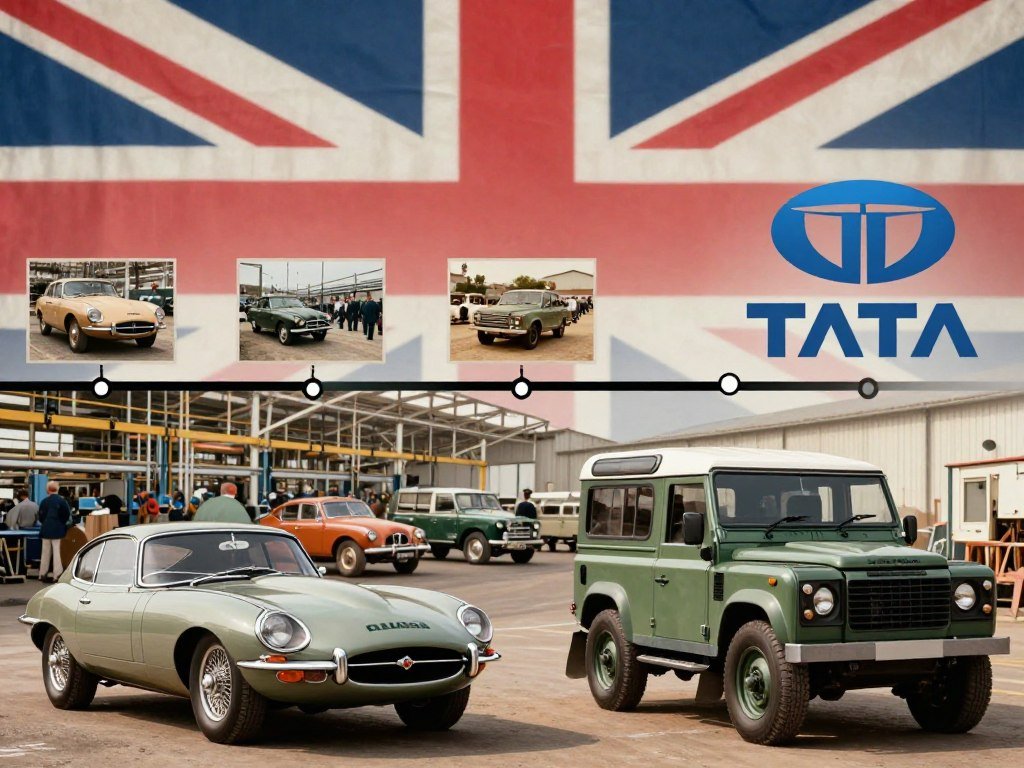
| Year | Event | Ownership or company context |
|---|---|---|
| 1968 | Jaguar and Land Rover join British Leyland | Both businesses are part of British Leyland |
| 1989 | Ford acquires Jaguar Cars | Jaguar joins Ford before Land Rover |
| 2000 | Ford buys Land Rover from BMW | Ford acquires Land Rover separately |
| 2002 | Ford reunites the businesses | Jaguar and Land Rover come together under Ford |
| June 2, 2008 | Tata completes the purchase of both from Ford | Purchase price: US$2.23 billion |
How Did Ford Acquire Each Brand?
Ford acquired Jaguar Cars in 1989. Land Rover followed in 2000, when Ford bought it from BMW. The two acquisitions were separate events, eleven years apart.
After the Land Rover deal, Ford brought both businesses together in 2002. That reunited the marques under one owner, though their earlier corporate histories had taken different paths.
When Did Tata Acquire Both Brands?
Tata Motors completed its purchase of Jaguar Cars and Land Rover from Ford on June 2, 2008. The deal covered both businesses for US$2.23 billion.
The date that answers who bought both businesses from Ford is June 2, 2008.
What Did Jaguar’s Ownership Look Like Before Ford?
Jaguar’s corporate story began with a sidecar business, not with a carmaker founded under the Jaguar name. The company began with sidecars before making cars. Its early history includes a model name that appeared years before the company adopted that name.
William Lyons and William Walmsley founded the Swallow Sidecar Company in 1922. Its move into car production and later changes in ownership shaped the Jaguar name over several decades.
From Sidecars to the Jaguar Name
The company’s name changed as its business changed. This short chronology separates the first use of Jaguar as a model name from the later company rename.
- 1922: William Lyons and William Walmsley found the Swallow Sidecar Company.
- September 1935: The Jaguar name appears on an SS 2.5-litre sports saloon.
- 1945: S.S. Cars changes its name to Jaguar Cars Limited.
- 1965: Jaguar joins British Motor Holdings.
- 1984: Jaguar regains independence after the British Leyland period.
The 1935 sports saloon carried the Jaguar name, but the company was still called S.S. Cars at that point. The model name came first; the company later adopted it as its own name.
From British Motor Holdings to Independence
Jaguar joined British Motor Holdings in 1965. In 1975, the company became part of nationalized British Leyland, a major change from its later independent status.
Jaguar regained independence in 1984, after its time within British Leyland. These shifts explain why Jaguar’s company history includes several different business names and owners before Ford acquired Jaguar Cars.
Use the dates carefully when describing the change: Jaguar Cars Limited was the 1945 company name, while British Motor Holdings and British Leyland describe later ownership settings. The 1935 model name and the 1945 company rename are separate milestones.
Is Jaguar Still a British Brand?
Jaguar remains a British brand headquartered in Coventry, even though its parent company is based in India. Jaguar’s owner is based in India, not the United States. Jaguar Land Rover is headquartered in Whitley, Coventry, in the United Kingdom.
British identity, corporate ownership, and factory location describe different things. Jaguar has a British base, while JLR also has facilities outside the United Kingdom.
Where Are Jaguar Cars Made Now?
Jaguar assembly takes place in the United Kingdom and at JLR facilities in India and China. JLR also has UK sites in Whitley and Solihull, though not every facility makes complete vehicles.
| Location | Country | Role or production detail |
|---|---|---|
| Whitley | United Kingdom | JLR headquarters and engineering |
| Solihull | United Kingdom | Vehicle assembly |
| Castle Bromwich | United Kingdom | Complete-car assembly ended in May 2024; pressed body panels continued |
JLR facilities also include Pune, India, and Changshu, China. Their existence does not mean every JLR facility builds Jaguar vehicles, or that each Jaguar model comes from every listed site.
Are Any Jaguars Made in the United States?
Jaguar vehicles are not made in the United States. U.S. sales and U.S. assembly are different matters: a vehicle can be sold to American buyers without being built in the country.
What Keeps Jaguar a British Brand?
Jaguar’s British identity comes from its history and its British base, not from the location of its parent company. The company’s Indian ownership does not erase its British marque identity.
Castle Bromwich is a useful exception to the simple “factory” label because it continued making body panels after complete-car production ended.
Who Makes Jaguar Engines Today?
Jaguar Land Rover makes the Ingenium engine family used by its vehicle business today. JLR began producing Ingenium engines in 2015. The family includes petrol and diesel engines in several cylinder sizes.
Jaguar used Ford-sourced Duratec engines in much of its lineup before Ingenium arrived in late 2015. That history does not mean every Jaguar engine from the Ford era came from Ford.
What Ford-Sourced Engines Did Jaguar Use?
Ford-sourced Duratec engines served much of the Jaguar lineup before JLR introduced Ingenium. The phrase “Ford engine” is too broad for every Jaguar from that period, because Jaguar also developed its own engine designs.
The AJ-V8 was an in-house Jaguar design. Its development began before Ford bought Jaguar, even though production continued through later ownership changes.
Who Makes Jaguar Engines Now?
JLR produces the Ingenium family, which includes petrol and diesel engines in three-, four-, and six-cylinder configurations. The range gives the company more than one engine size and fuel type to use across its vehicle business.
- Three-cylinder: petrol and diesel versions are part of the family.
- Four-cylinder: petrol and diesel versions are part of the family.
- Six-cylinder: petrol and diesel versions are part of the family.
Jaguar Cars produced the AJ-V8 from 1996 to 2012. Jaguar Land Rover continued production from 2013 through 2024, showing that an in-house engine can span more than one corporate period.
Ingenium replaced Ford-sourced Duratec engines used in much of the lineup, but the transition does not make every earlier engine a Ford design. Do not label the AJ-V8 a Ford design: its development began before Ford bought Jaguar.
What Is JLR’s House of Brands Strategy?
JLR’s “House of Brands” strategy keeps Jaguar within one corporate group while giving the marque its own identity and direction. Jaguar remains part of JLR, even as the company pursues a distinct brand plan.
The approach positions Jaguar and Land Rover as separate marques under one corporate owner. They are not independent automakers with separate parent companies.
JLR says Jaguar is pursuing a renaissance as an all-electric brand. That is a stated direction for the Jaguar marque, not proof that a particular new Jaguar is already for sale.
The Type 00 concept car, unveiled on December 4, 2024, presented a design direction. It is a non-production concept, rather than a model buyers can order as a production vehicle.
For shoppers, the difference between a concept and a production car is practical. A concept can show a brand’s intended look or direction, but it does not establish retail availability, final features, or a sale date.
The strategy gives Jaguar its own identity while keeping the marque within JLR. Land Rover remains the other marque in that wider business, with its own vehicle families and market identity.
A concept reveal should not be mistaken for a new model on dealer lots. Treat the Type 00 as a design concept, not as a production Jaguar available to buy.
How Reliable Are Jaguar and Land Rover Vehicles?
The 2026 Land Rover Range Rover is expected to be less reliable than other new cars, and its recall history is a separate check. The model had three NHTSA recalls reported. A brand-history prediction and a vehicle’s recall record measure different things.
Consumer Reports’ expectation for the 2026 Range Rover is based on Land Rover’s brand history. It is not a report on the condition of every Range Rover or every Land Rover vehicle.
The 2026 Range Rover’s three reported recalls refer to that model year. A recall count does not show whether a specific vehicle has an open recall or whether a repair has already been completed.
Reliability estimates and recalls can help you ask better questions, but neither gives a full account of one used car. A model may have a brand-level reliability outlook, while an individual vehicle’s service and repair history differs.
Recall status is specific to a vehicle identification number, or VIN. A general rating describes an expected pattern across vehicles; an open safety recall identifies a repair action tied to a particular vehicle.
For a used vehicle, the year and model matter, but its records also help explain its present condition. Check the specific vehicle’s VIN for open recalls instead of treating a model-year count as its current status.
What Does Land Rover Maintenance Cost?
Land Rover’s average annual repair cost is $1,174, but that brand-wide figure is not a quote for a specific vehicle. The average is a planning reference, not an individual estimate. A particular car’s repair needs can differ from the brand average.
RepairPal rates Land Rover reliability at 2.5 out of 5.0 and ranks the brand 31st of 32 car brands. The rating averages 345 unique models, rather than diagnosing one used Land Rover.
| Measure | Land Rover figure | What it describes |
|---|---|---|
| Annual repair cost | $1,174 | Brand average |
| Annual repair-shop visits | 0.7 | Visits per year |
| Severe-repair probability | 16% | Chance a repair is severe |
The figures describe the brand across many models. They do not say that every Land Rover costs $1,174 each year, visits a shop 0.7 times, or faces the same chance of a severe repair.
Repair needs depend on the model, age, mileage, and condition. A newer vehicle with a clear service record may need different work than an older vehicle with high mileage or gaps in its records.
Use the average to help plan for ownership, not to price a repair before a mechanic sees the vehicle. Model details and the car’s history matter when you assess one example.
Use the model’s service history and a pre-purchase inspection to judge an individual vehicle.
What Does a 2026 Range Rover Cost and Offer?
The 2026 Range Rover’s listed base MSRP spans $113,300-$260,900 before its $2,450 destination charge. Those prices apply to the 2026 Range Rover only. They do not set the price for every Jaguar or Land Rover model.
The standard engine is a mild-hybrid turbo inline-six. Buyers can also choose an available twin-turbo V8 or a plug-in hybrid, or PHEV.
The listed EPA fuel economy is 20 mpg. The PHEV has a 51-mile electric-only range, a figure that belongs to the plug-in hybrid rather than every Range Rover.
The 2026 Range Rover’s $113,300-$260,900 base MSRP covers a wide price span across the model. The destination charge is listed separately at $2,450.
The engine choice changes what the vehicle offers. The mild-hybrid inline-six is standard, while the twin-turbo V8 and PHEV are available options.
If you are comparing plug-in hybrid range and gasoline use across SUVs, this PHEV range comparison covers other choices. Its electric-mile figures belong to those models, not to the Range Rover.
Compare the powertrain you would actually choose, since the 51-mile electric-only figure applies only to the plug-in hybrid.
What Should U.S. Buyers Check Before Buying a Jaguar or Land Rover?
For a used Jaguar or Land Rover, check the specific vehicle’s records and VIN rather than relying on the parent company’s name. A VIN lets you check recall information for that vehicle. Modern U.S.-market VINs have 17 characters, though older vehicles may use a different format.
An open safety recall is not the same as a general reliability rating. The recall lookup checks a specific vehicle, while a reliability rating describes broader expectations for a model or brand.
Check the exact vehicle, not just the name on its badge. A VIN search and a review of its records can reveal details that a brand reputation cannot.
Use these four checks before you decide:
- Confirm the vehicle’s exact model year and VIN.
- Search the VIN in NHTSA’s recall lookup.
- Review maintenance and repair records.
- Arrange an independent pre-purchase inspection.
Write down the VIN exactly as it appears on the vehicle and its records. A modern U.S.-market VIN has 17 characters, so a typo can affect a search result.
Maintenance records can show work over time, while an inspection gives a mechanic a chance to assess the vehicle directly. Neither replaces the other when you are weighing a used car.
Compare the inspection findings with the maintenance records before deciding whether the vehicle fits your needs.
Conclusion
Tata ownership and Jaguar’s British identity describe different parts of the same story. Tata Motors Passenger Vehicles owns JLR, while Jaguar remains a British marque within the company.
For Land Rover, Range Rover and Defender are vehicle families rather than separate automakers. That naming structure helps you separate the vehicle badge from the company that owns the business.
If you are considering a used car, start with the vehicle itself rather than its corporate history. Before evaluating a particular used vehicle, start with its exact model year and VIN.
FAQ
Who bought the Jaguar?
Tata Motors bought Jaguar Cars and Land Rover from Ford on June 2, 2008, for US$2.23 billion. Ford had acquired the businesses at different times, then reunited them before the sale. Tata’s purchase covered both businesses together. Today, Tata Motors Passenger Vehicles is the parent company of JLR, which operates the Jaguar and Land Rover marques.
Which car companies are owned by Tata Motors?
Jaguar Land Rover is a wholly owned subsidiary of Tata Motors Passenger Vehicles. The company operates the Jaguar and Land Rover marques, including Land Rover families such as Range Rover and Defender. In October 2025, Tata Motors separated its commercial-vehicle business through a demerger. JLR remained with the passenger-vehicle business, rather than moving with the separated commercial-vehicle operation.
Are Land Rovers expensive to maintain?
Land Rover’s average annual repair cost is $1,174, a brand-level average rather than a quote for one vehicle. RepairPal also reports an average of 0.7 repair-shop visits per year and a 16% chance of a severe repair. Those figures cover many models. A specific vehicle’s repair needs depend on its model, age, mileage, and condition.
Where are Jaguar Cars made now?
Jaguar vehicles are made in the United Kingdom and at JLR facilities in India and China. JLR’s British base includes its headquarters in Whitley, Coventry, and vehicle assembly in Solihull. The company’s facilities do not all build Jaguar vehicles. Jaguar vehicles are not made in the United States, even though U.S. buyers can purchase them.
Who makes Jaguar engines now?
Jaguar Land Rover produces the Ingenium engine family, with production beginning in 2015. Ingenium includes petrol and diesel engines in three-, four-, and six-cylinder configurations. Before its arrival, Ford-sourced Duratec engines served much of the Jaguar lineup. Jaguar also had an in-house AJ-V8 design, so not every engine used during the Ford era was a Ford design.
Which Jaguar has a Ford engine?
Ford-sourced Duratec engines were used in much of the Jaguar lineup before the Ingenium family arrived in late 2015. That does not mean every Jaguar engine from the Ford ownership period came from Ford. The AJ-V8 was a Jaguar design, and its development began before Ford bought Jaguar. Engine details can differ by model and year.
Are any Jaguars made in the USA?
No, Jaguar vehicles are not assembled in the United States. Jaguar production takes place in the United Kingdom and at JLR facilities in India and China. U.S. sales do not mean U.S. manufacturing; a car can reach American buyers after assembly in another country. The country where a vehicle was made is separate from its parent company’s location.
Are Jaguar Cars reliable?
Reliability depends on the model and vehicle, so a brand rating does not settle the question for every Jaguar. RepairPal’s 2.5 out of 5.0 rating applies to Land Rover and averages 345 unique models, not every Jaguar. For a specific used car, review its service and repair records, check its VIN for open recalls, and arrange an independent inspection.



