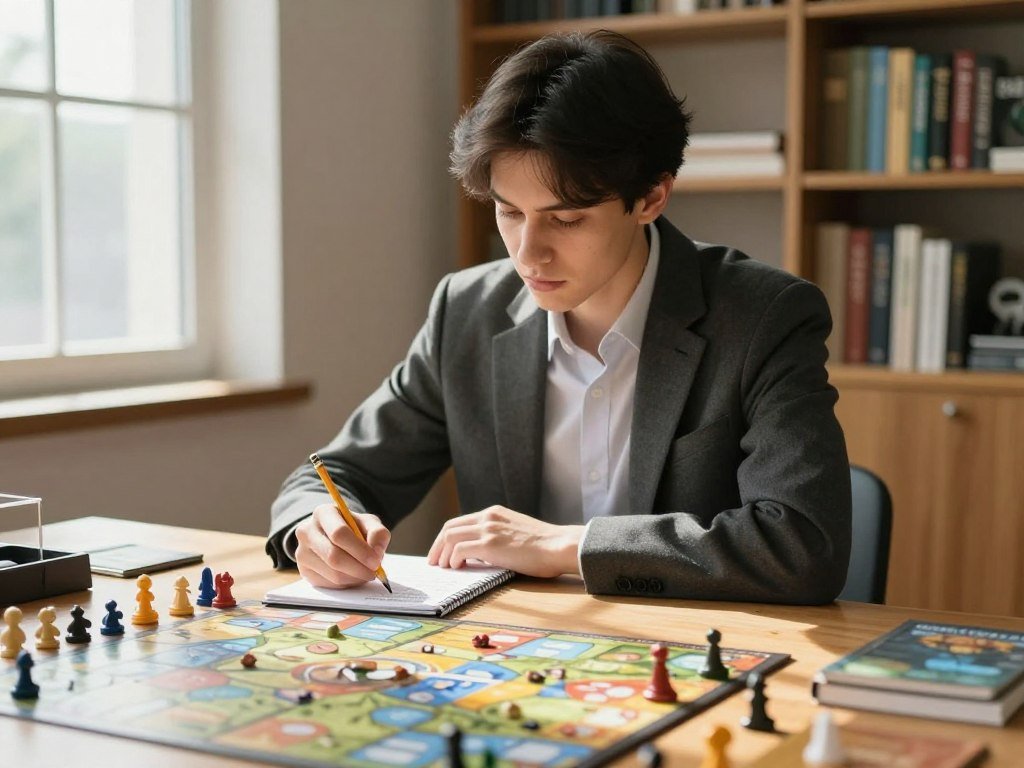
The phrase “mind games” can describe anything from a friendly strategy match to behavior that damages trust. For a beginner, it can mean game strategy, practice for sharper thinking, or harmful behavior between people. This guide centers on focus, problem-solving, and decision-making without asking you to deceive anyone.
Strategic thinking means deliberately considering likely moves and outcomes before choosing what to do. It helps you compare options, spot patterns, and pause before reacting. Practice can help you make better choices in games and daily life, though skills do not always transfer between settings.
Harmful manipulation uses pressure or deception to control another person at their expense. Learning to notice it can help you trust your own experience. A useful starting point is to choose whether you want to sharpen your own thinking or understand someone else’s behavior.
Key Takeaways
- Strategy means planning for likely moves.
- Practice can sharpen attention and choices.
- Shared rules keep play fair.
- Repeated pressure can signal harm.
- Respect matters in play and daily life.
How Do You Apply Mastering Mind Game Skills in Strategic Play?
In a strategy game, a strong move accounts for what your opponent may do next. Mastering mind game psychology means noticing patterns and weighing a player’s likely response, not controlling people outside play. Choose games with clear rules and willing players.
Good psychology mind games to play with friends include Mastermind, chess, and poker, if everyone agrees to the rules. In Mastermind, feedback shows whether a color is right and whether it sits in the right position. The meaning of mind games changes with context: a game is a contest of strategy, while relationship manipulation uses pressure outside shared rules.

Ethical influence leaves room for a real choice. In negotiation, use clear framing and genuine give-and-take instead of pressure or mixed messages.
Chess rewards planning around an opponent’s moves, while poker can include bluffing. You can find strategy games for different play styles, including turn-based planning and card choices. For more options, free Steam games include team strategy and one-on-one card play.
| Tactic | What it does | Example |
|---|---|---|
| Bluffing | Hides intent through play | Poker betting |
| Predictive play | Anticipates a move | Review earlier chess moves |
| Feinting | Invites a response | Leave an apparent opening in a fighting game |
| Resource management | Holds or spends resources with care | Save a card for a later turn |
| Adaptive gameplay | Adjusts to an opponent’s habits | Change a repeated move after a response |
Keep bluffing inside a game whose participants have agreed to its rules.
How Can You Train Focus and Better Decisions?
A short reset can make the next decision more deliberate than reacting to the pressure of the moment. Challenge an unhelpful thought instead of treating it as fact, then take one controlled breath. Choose one small action for your next turn.
A brief cue can bring your attention back to the task. Picture the next step, not the whole match, and try a focus timer or a blocker for distracting apps and websites. A short test can help you find the right level of support.

Reset attention when pressure rises
Use this four-step practice after a distracting thought or a tense turn. The same routine works before a choice that feels rushed.
- Pause and name the distraction.
- Take one slow breath.
- Choose a cue, such as “focus on the next move.”
- Review the outcome after the turn.
A study app guide describes Forest as a focus timer and Freedom and Cold Turkey as tools for blocking distracting apps and websites. A visual cue on your screen can make a practice session easier to track.
Learn from social influence experiments
In an Asch conformity experiment, one person judged line lengths while other group members gave wrong answers on selected trials. Participants conformed less when one person gave the correct answer, and more when they answered publicly than privately. The Asch Conformity Experiment explains the line-judgment setup.
One participant judged line lengths while others deliberately gave incorrect answers on selected trials. In 1961, Albert Bandura’s Bobo Doll study tested whether children copied aggressive and non-aggressive adult models.
Children who watched an aggressive adult model acted more aggressively toward the doll than children in the control group or those who watched a non-aggressive model. These studies illustrate conformity and imitation, but they do not prove one approach works for everyone.
A practical mastering mind game example is noticing a repeated move in chess, testing a considered response, then reviewing the result. Do not treat one turn as proof that you have found a pattern. Judge a practice session by whether you followed your chosen cue, not only by whether you won.
How Do You Recognize and Respond to Harmful Mind Games?
A disagreement is not automatically gaslighting, but repeated denial of your experience can be a warning sign. Watch for patterns such as passive aggression, blame-shifting, guilt, lies, flattery, or emotional blackmail. Repeated behavior matters more than one tense exchange.
Passive aggression can sound like “fine” when someone is annoyed. Gaslighting denies or invalidates your experience until you question what happened. Blame-shifting pushes responsibility onto you to avoid accountability or undermine your view.

Spot common tactics in relationships and films
Manipulation may use guilt, lies, blackmail, or flattery to get another person to serve someone else’s goal. Emotional blackmail can include a partner threatening self-harm if you leave or saying you will be alone forever. These are concrete examples of mind games in relationships.
In movies, Gaslight is a well-known depiction of gaslighting, while The Game is a deception-focused thriller. Fiction can help you spot a theme, but a movie plot is not proof about real relationships. A website for finding a film from a screenshot can help identify a title.
Eric Berne’s Games People Play, published in the mid-1960s, offered a framework for repeated social patterns. Its Drama Triangle describes Victim, Rescuer, and Persecutor roles. Treat these as historical ideas, not diagnoses.
A 2026 meta-analysis of 16 studies, 53 effect sizes, and 10,874 participants found a negative link between manipulation and relationship quality: r = −0.215, p < .001. The meta-analysis on manipulation in close relationships found similar links for Machiavellianism (r = −0.219) and emotional manipulation (r = −0.210), with no significant difference between them.
Age, gender, relationship type, and measurement method did not significantly change that association. The findings show a link, not proof that manipulation causes poor relationship quality.
Set boundaries and protect your perspective
Calmly name the behavior you observed, ask for direct communication, and state a clear limit. If threats or coercion occur, seek support from someone you trust or a qualified service.
You may not know another person’s intent, but you can pay attention to repeated behavior and its effect on you.
If a threat of self-harm is used to keep you in a relationship, take it seriously and involve appropriate emergency or crisis support rather than handling it alone.
Conclusion
Better thinking comes from making choices deliberately, not from trying to control everyone around you. Curiosity about likely outcomes works best with respect for other people’s choices. A plan can guide your next move, while respect keeps that plan fair.
Try one small exercise today: choose a familiar game or an everyday decision. Write down one likely response and one alternative, then review what happened. That record can show whether your guess helped, even when the result was not what you hoped.
Pick one decision today and take a minute to consider a second option before acting.
FAQ
What is the difference between strategic mind games and manipulation?
Strategic play follows rules that all players understand, while manipulation pressures or deceives someone outside that agreement. A poker bluff stays within the game because players know bluffing may happen. Pressure in a personal relationship is different because the other person did not agree to be part of a contest. Shared rules and real choice mark the difference.
Can mind games improve critical thinking?
Yes, strategy games can give you practice with planning, pattern recognition, and weighing possible moves. That practice may help you notice options during play. It does not guarantee that you will make better choices in every daily situation. People face different pressures and goals outside games, so treat each real decision on its own terms.
What is an easy mind game to play with friends?
Mastermind is an easy code-breaking game to try with friends. One player makes a hidden color code, and the other uses feedback to guess it. The feedback shows whether a color is correct and whether it sits in the right position. Agree on the rules before starting, including how many guesses each player gets.
How can I stop overthinking during a game?
Pause, take a controlled breath, and choose one short action cue. For example, tell yourself to focus on the next move rather than the whole match. Then picture that step and play it. After the turn, review whether the cue helped you stay focused, instead of judging your whole performance by one result.
Can a disagreement be gaslighting?
A disagreement alone is not gaslighting. Look for repeated denial or invalidation that makes you question your memory or view of events. People can remember a tense moment differently without trying to control each other. A repeated pattern that dismisses your experience deserves more attention than one conflict or one poor choice of words.
What should I do if a partner threatens self-harm if I leave?
Take the threat seriously and contact appropriate emergency or crisis support. You do not have to manage the danger by yourself or stay in a relationship to keep another person safe. Share the threat with a trusted person or qualified service, and give them clear details about what was said and when.



