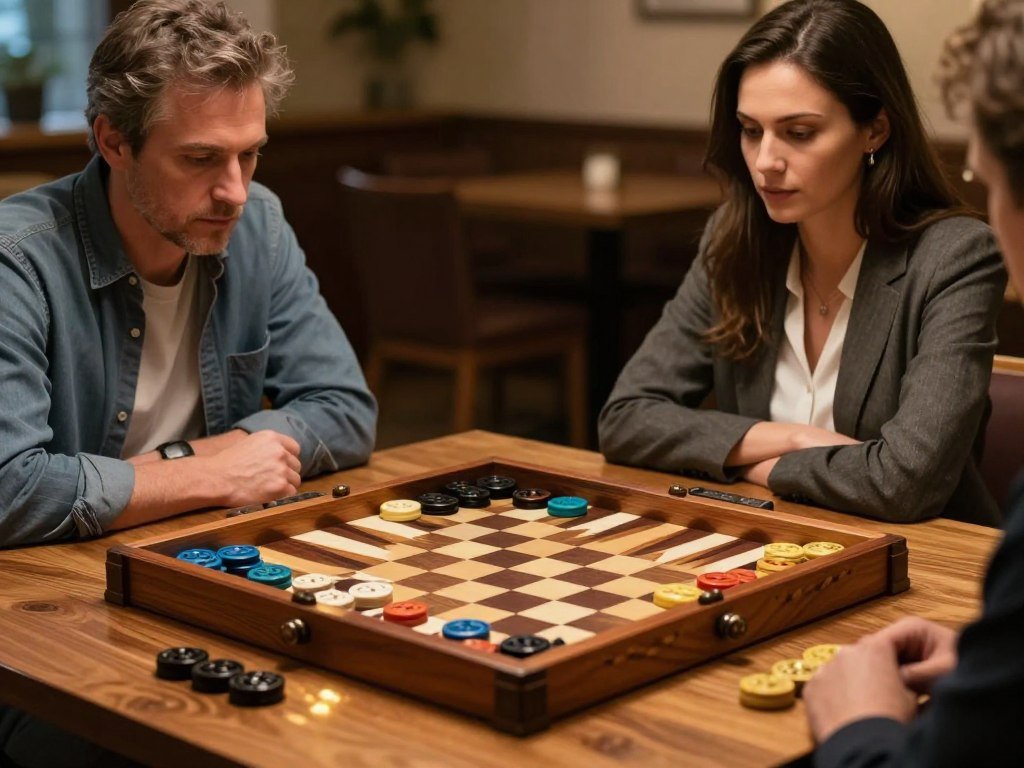
Backgammon is a two-player race: you move your checkers around the board and try to bear them off before your opponent does. You want to move all 15 checkers into your home board, then remove them from play. Each turn brings a choice: race ahead, block a route, or hit an exposed checker.
The rules for backgammon board game play can be learned one turn at a time. You do not need to plan every move before you begin; focus on the dice and the choices in front of you. A game can take 5-60 minutes, depending on the pace and how often players pause. Keep the goal in mind as you learn each part of a turn: bring every checker home, then remove them all.
Key Takeaways
- Each player moves 15 checkers toward their own home board.
- The dice set how far your checkers may move.
- A point with one checker can be hit by an opponent.
- Checkers hit by an opponent wait on the bar until they re-enter.
- You must bring every active checker home before bearing off.
- The doubling cube tracks the stake, not your race progress.
How Do You Set Up the Board and Find Your Home Board?
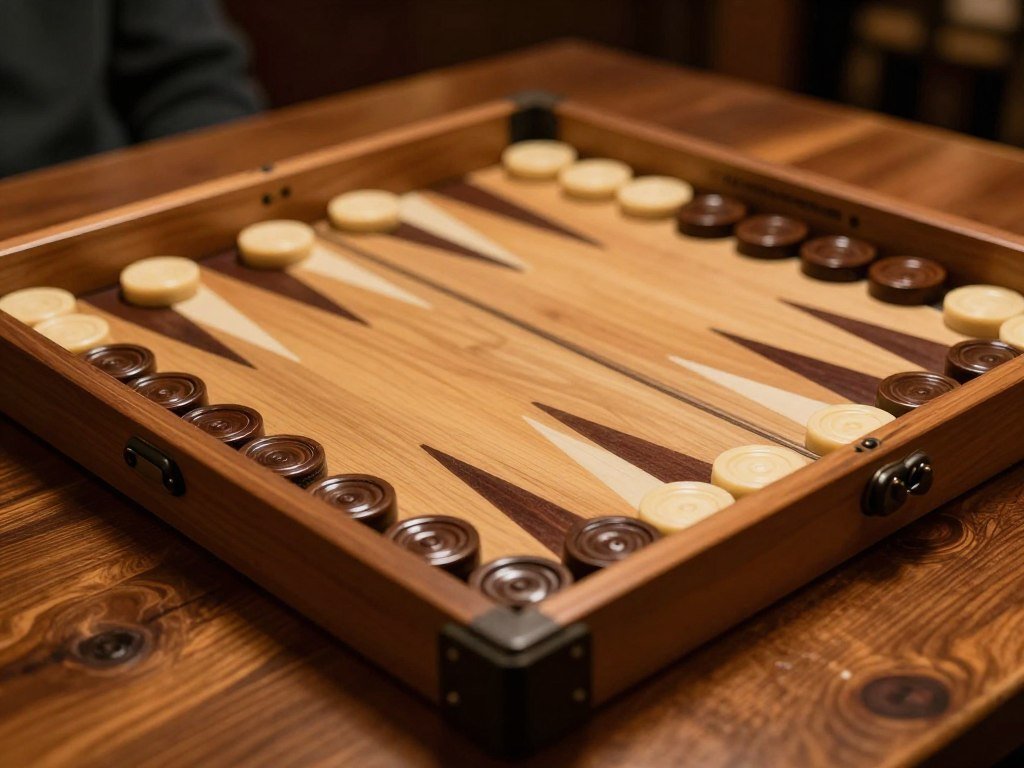
Put each player’s 15 checkers on the four starting points before beginning the opening roll. The board has four quadrants, each with six narrow triangles called points. Players move in opposite directions toward their own home board.
Board Layout and Starting Checkers
Each player starts with 15 checkers in four groups, for 30 checkers total. Use the same layout from your own side of the board:
| Starting point | Checkers on that point | Location relative to the player |
|---|---|---|
| 24-point | 2 | Opponent’s 1-point |
| 13-point | 5 | Outer board |
| 8-point | 3 | Outer board |
| 6-point | 5 | Home board |
The starting checker arrangement places pieces in both the home and outer board. The center bar divides those areas and separates the two home boards.
Each player counts points outward from their own home board.
How Backgammon Beginners Can Orient the Board
For rules of backgammon for beginners, start by finding your home board and tracing the route toward it. Your 6-point is in your home board; the 8-point and 13-point sit in the outer board.
Your opponent follows the same layout from the other side, moving in the opposite direction. The board’s point numbers are player-based, so the same physical point can have a different number for each player. A point across the bar may belong to one player’s home board and the other player’s outer board.
These rules for the backgammon board game for beginners are easier to follow when each player uses their own point numbers. Confirm that each player’s 24-point is the other player’s 1-point so both players can follow their own numbering.
How Do the Rules for Backgammon Board Game Work?
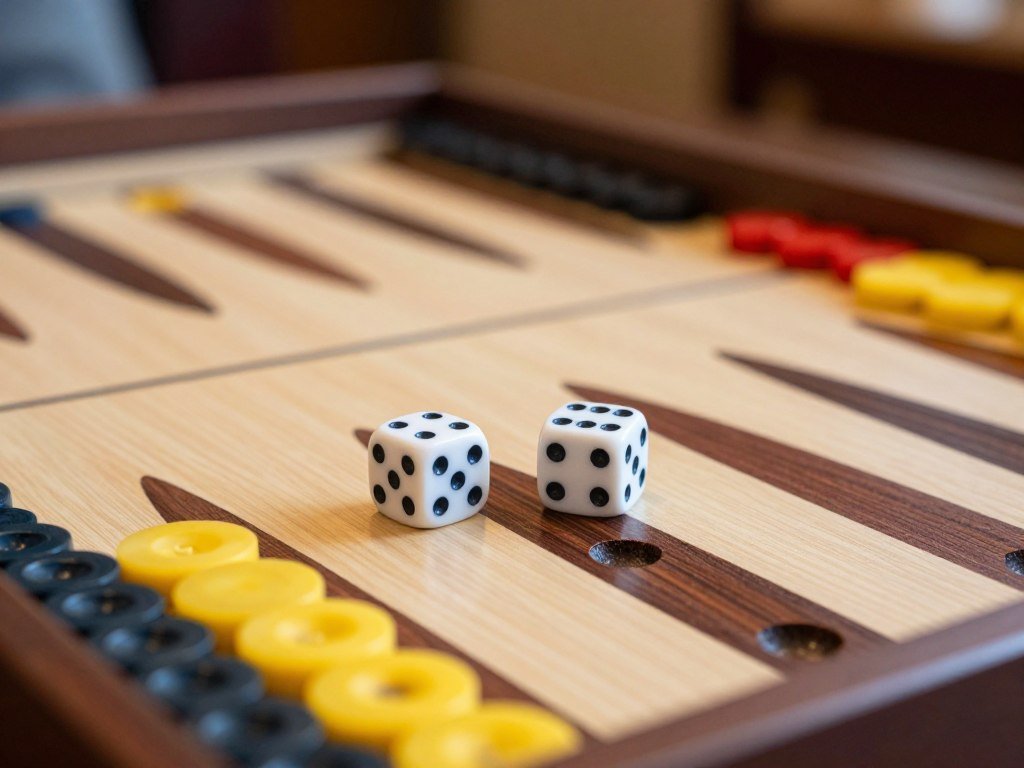
On the opening turn, the higher of the two opening dice sets the first player and supplies both numbers for that player’s move. After that, players alternate turns and roll two dice. Checkers move forward toward lower-numbered points, and each die counts as a separate move.
The Opening Roll and Separate Dice Moves
A legal move lands on an open point, one not held by two or more opposing checkers. You may move one checker by both numbers, but the point between its start and finish must also be open.
- Identify the separate move shown by each die.
- Check whether each destination point is open.
- When combining dice, check the intermediate point too.
- Use the greatest legal amount required by the dice-use rules.
For example, a roll of 3 and 5 can move one checker eight points only if the three-point step and the five-point step are both legal. You may instead use the dice on two different checkers. Tied opening dice are rolled again.
Open Points, Doubles, and Required Moves
For simple rules for the backgammon board game, remember that doubles give you four moves of the number shown. A double 2 gives four moves of two points each, which may be split among checkers.
Use both dice when possible. If only one number works, use that number; if either works but both cannot, use the larger number. When no legal move exists, you lose the turn. These are the basic rules for the backgammon board game and the easy rules beginners need to choose moves.
Dice must land flat in the right-hand board area. If either die lands off the board, on a checker, or tilted, reroll both. Your opponent may accept an illegal play or require you to make a legal one. An opponent’s roll before your turn ends is void. Picking up the dice completes your turn, so before lifting them, check that you have used every number the rules require.
What Happens When a Checker Is Hit?
A checker is not out of the game when it is hit; it waits on the bar until its owner can re-enter it. A blot is a point occupied by exactly one checker, which an opponent can hit. Landing on a blot sends that checker to the bar.
A player with a checker on the bar must enter it into the opponent home before moving any other checker. Use this three-step check:
- Use one die to find its matching point in the opponent’s home board.
- Check whether that point is open or closed.
- Enter a bar checker first, then use any remaining die if possible.
A point with two or more opposing checkers is closed. If neither die offers an open entry point, you lose the turn. If only some of your bar checkers can enter, enter as many as possible and forfeit the rest of the turn. After your last checker enters, use any remaining die for a legal move.
Standard play allows hit-and-run moves, where a checker hits a blot and then moves away with the other die. Some variations restrict hitting in a player’s home board, so agree on that rule before play. If both entry points are blocked, do not move another checker; the turn is lost.
When Can You Bear Off Checkers?
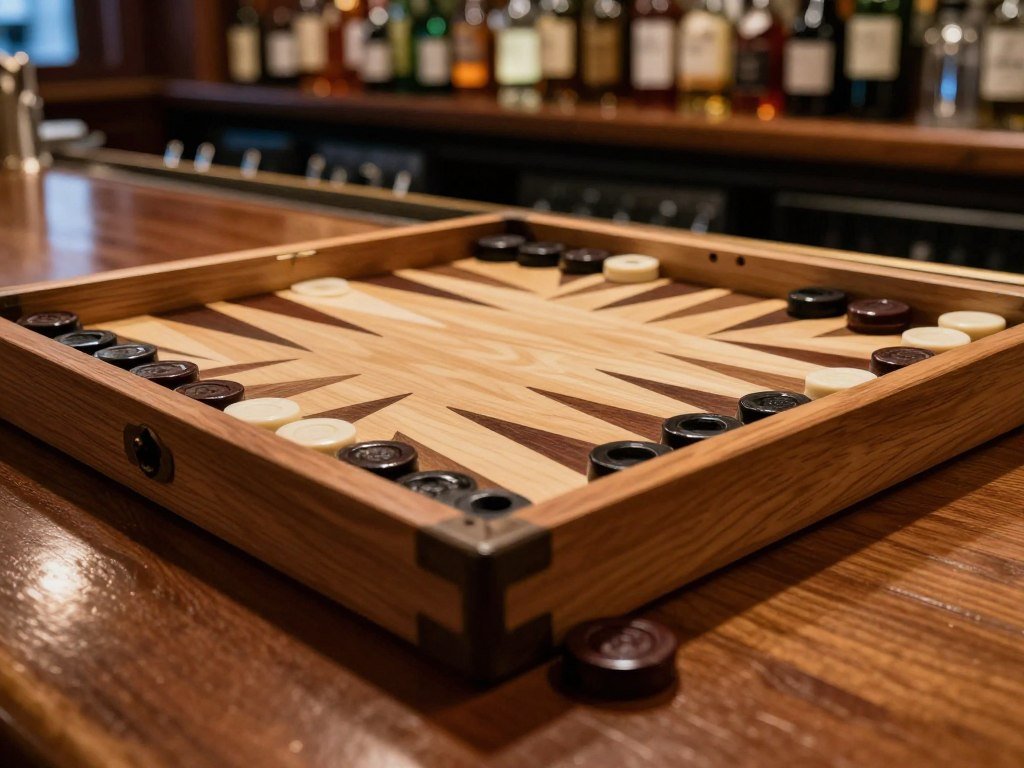
Bearing off starts only after every active checker is inside your home board. You cannot remove checkers while even one of your own remains outside it. The rule includes checkers waiting on the bar, which must re-enter and reach home first.
The Requirement to Start Bearing Off
Once all 15 active checkers are home, a die can remove a checker from its matching point. A checker on the 4-point, for example, can bear off with a 4. You do not always need an exact roll, though.
Exact Rolls and Higher-Numbered Points
A roll higher than your highest occupied point can bear off a checker there, but only when no checker sits on a higher-numbered point. If your highest checker is on the 3-point, a 5 can remove one from that point.
If the number rolled has no checker on its point, look at the checkers above it. When any remain on higher-numbered points, you cannot bear off a lower checker with that die. Instead, make a legal move from a higher point. For instance, if you have a checker on the 6-point and none on the 5-point, a 5 must move a checker from a higher point when possible.
You may use one die to move a checker to a lower-numbered point, then use the other to bear it off if the number matches. A player need not bear off when another legal home-board move is available. That choice can matter when a move improves your position or protects a checker.
A hit during bearing off sends the checker to the bar. Re-enter it, bring it back into your home board, and then continue bearing off. If an opposing checker hits you during the bear-off race, re-enter it and bring it home before removing any more checkers.
How Do the Doubling Cube and Scoring Work?
The doubling cube changes how much a game is worth, but it does not change how checkers move. The doubling cube is the object used to track the game’s stake. A game starts at 1 point, and the cube shows 2, 4, 8, 16, 32, or 64; 64 represents the starting value.
Offering and Accepting a Double
You may offer a double only at the start of your turn, before rolling. Your opponent can accept or decline. Declining a double ends the game at the current stake. Refusing an initial double concedes 1 point.
When your opponent accepts, that player becomes the cube owner. Only the cube owner may offer the next double. There is no fixed limit on redoubles. Declining a redouble costs the points at stake before that redouble, rather than the new doubled amount.
Single Wins, Gammons, and Backgammons
The score depends on how many checkers the loser has borne off and where the remaining checkers are. Multiply the cube value by the result below:
| Result | Loser’s position | Score in cube-value multiples |
|---|---|---|
| Single | Loser has borne off at least one checker | 1 times |
| Gammon | Loser has borne off no checkers | 2 times |
| Backgammon | Loser has borne off no checkers and still has a checker on the bar or in the winner’s home board | 3 times |
A single win earns the cube value. A gammon earns twice that value, while a backgammon earns three times the value. For example, a gammon at a cube value of 4 scores 8 points.
Match Play and Optional Rules
In match play, the Crawford Rule removes the cube for the game after a player reaches one point from winning the match. The cube returns for the following game.
Some groups add automatic doubles, beavers, or the Jacoby Rule. These are optional rules, not standard play, and they change how stakes or wins work. Dutch Backgammon and Acey-Deucey are variants with different checker rules. Players who enjoy family tabletop play may also like these educational game picks. Agree on any optional rules before the first roll so both players use the same scoring and movement rules.
Which Opening Moves Help Beginners Start Well?
A 3-1 is the opening roll to remember: use 8/5 and 6/5 to make your 5-point. The U.S. Backgammon Federation lists it as the best opening roll for a player. This move builds a strong point in your home board and gives your checkers a useful base.
Opening Rolls to Practice
For a 4-2, make the 4-point. With a 6-1, make the 7-point, also called the bar point. A 5-3 is played by making the 3-point. These opening plays give you concrete moves to practice before weighing riskier choices.
Pip Counts and the Five-Point Idea
The phrase “5-point rule” is not a formal rule. Players use it to describe the strategic value of making the 5-point, which can help block an opponent’s route. A useful point makes it harder for the other player to pass, especially when several points form a barrier.
A checker’s remaining movement distance is its pip count. Count each checker by its point number; a checker on the bar counts as 25. Add the counts for all 15 checkers to get a player’s total. Both players start at 167 pips.
The doubling cube tracks stakes, not race progress.
A lower pip count means less distance remains in the race, but it does not promise a win. A hit can send a checker back to the bar and change the race quickly. A game is listed at 5-60 minutes as a rough range, not a promised duration. The pace depends on how quickly players choose moves. For other ways to pass the time, browse these games to play when bored. Use pip counts to compare race distance, not as a guarantee of who will win.
Conclusion
A first game is easier when you focus on one legal move at a time. You now know the order of play, from moving checkers to bearing them off. Judgment takes longer to build, so mistakes in early games are part of learning.
Try a practice game with no stakes and pause when a move feels unclear. After a few turns, the board and dice will feel less like a puzzle and more like a set of choices. Set up the checkers, agree whether you will use the doubling cube, and play a practice game without stakes.
FAQ
How to get a piece back in backgammon?
Enter a checker from the bar onto an open point in your opponent’s home board, using a matching die. A checker on the bar must enter before you move any other checker. If both matching points are blocked, you cannot move another checker that turn. If one die works, use it to enter; after your last checker enters, use any remaining die for a legal move.
Is backgammon easy to learn?
Yes, the basic sequence is straightforward to learn, but choosing moves and cube decisions takes practice. You roll, move checkers by the dice, and try to bring them home before bearing them off. The harder choices come when a move could block an opponent or leave a checker exposed. Start by learning legal moves, then add strategy as you play.
How long does an average game of backgammon take?
A game is listed at 5-60 minutes, and the pace depends on the players and their pauses. New players may take longer while they check points and consider each move. Experienced players often make choices faster. Treat the range as a rough guide, since a single game can move quickly or stretch out.
How to keep score in backgammon?
A single win scores the cube value, a gammon scores twice that value, and a backgammon scores three times that value. The loser’s position decides which result applies. A gammon means the loser bore off no checkers. A backgammon also requires a losing checker on the bar or in the winner’s home board.
What is the best opening move in backgammon?
The U.S. Backgammon Federation lists 3-1 as the best opening roll and recommends 8/5 and 6/5 to make the 5-point. The notation shows the checker’s starting point and destination. This play gives you a made point, which blocks an opponent from landing there. Practice the move so it feels familiar when the dice show 3 and 1.
What is the 5 point rule in backgammon?
The 5-point rule is not a formal rule; the phrase refers to the strategic value of making the 5-point. A made point has two or more of your checkers, so an opponent cannot land there. Making the 5-point can help block the opponent’s route and give your own checkers a safer path through the board.
What is the secret to winning backgammon?
There is no guaranteed winning trick; make legal moves, build useful blocked points, and avoid blots when a safer legal play fits. Dice add luck, so even a sound plan can face a rough roll. Look at both dice before moving, then weigh how much progress a move offers against the risk of leaving one checker open.
What does 64 mean in backgammon?
On the doubling cube, 64 represents the game’s starting value of 1 point. The cube’s numbered faces show doubled stakes, including 2, 4, 8, 16, and 32. The 64 face stands for the starting value rather than a stake that has been doubled six times. The cube changes the score at stake, not checker movement.



