
A horse-racing game can turn a family game night into a shared race, with the right set depending on who will play and what kind of rules they enjoy. A complete set can make setup easier, though the best fit depends on your group. If you want a low-prep option instead of a long strategy game, a tabletop race may suit the evening. It gives everyone a shared track to follow, but each set brings its own play style.
This page compares two distinct sets to help you match the format to your players. A scratch means removing a horse from a race before it begins. Some groups may prefer card choices, while others may want a simpler race night. You can also explore family multiplayer games if your group is still choosing an activity. Keep the players’ ages and preferred play style in mind as you compare the sets.
Key Takeaways
- Two distinct sets offer different equipment and play formats.
- Garrett Wade uses matching-number dice movement and horse cards.
- Horse Racing Night supports individual play or teams.
- Check group age, player count, and rules before choosing.
- A track template may need extra pieces and rules.
What Is a Horse Racing Board Game Like to Play?
A tabletop horse race turns dice results into movement along a track, so players can follow the race as it unfolds. The shared race is easy to watch: numbered horses move, turns pass around the table, and everyone can see who leads.
A board game often uses a track with spaces, numbered horses, and dice to set movement. The rules tell players which horse moves and how far it travels. The basic loop is simple: roll, move the horse named by the rules, and watch the finish.
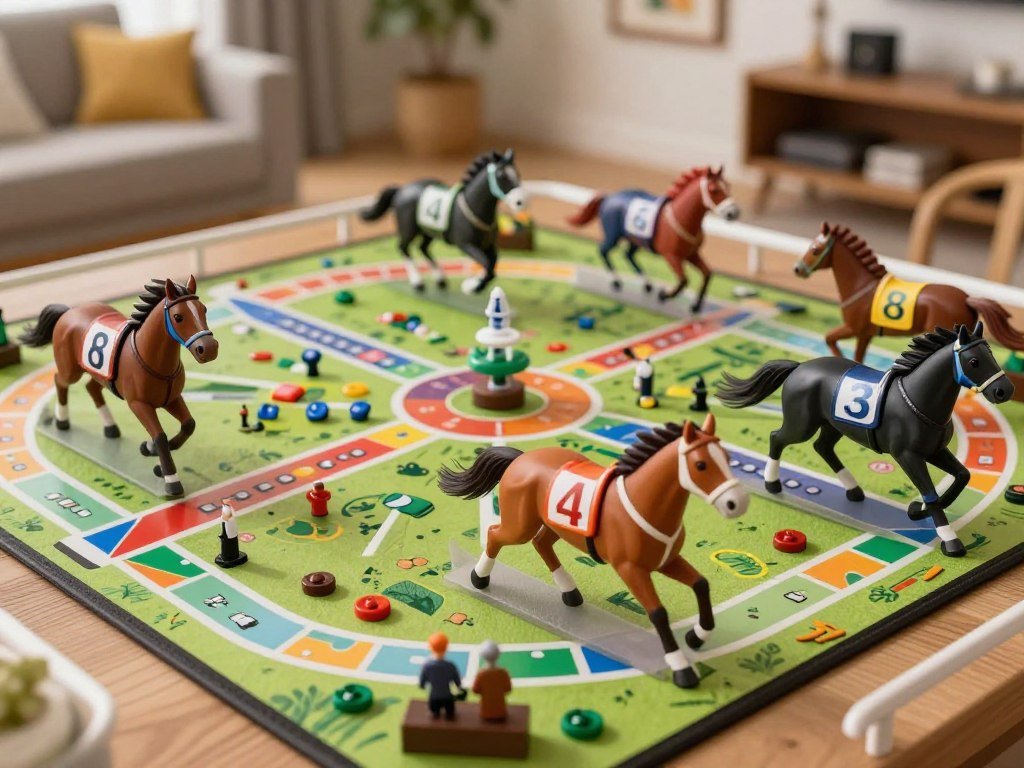
That clear track can make a horse racing game easier to follow than a long strategy game with many choices. Players can cheer for a horse, watch the standings, and take turns without tracking a large set of actions. A scratch means removing a horse from a race before it begins.
Dice totals are not equally likely: 7 appears in six combinations, while 2 and 12 each appear in one.
One standard six-sided die has six faces. Two standard six-sided dice create 36 ordered outcomes, with totals ranging from 2 through 12. This matters when a ruleset moves a horse based on the combined total.
Some formats let players make choices with cards or wagers, while others focus on the race itself. The group can also choose a clear stopping point, such as one race or a set number of rounds. For more home activities across different moods and group sizes, consider these games to play at home.
Remember that a matching number on the dice does not make every horse equally likely to move.
How Do the Race Rules and Bets Work?
Garrett Wade’s rules use cards to scratch horses and build the pot, while the winning horse’s card determines who collects it. The pot is the pool of game contributions, not the same thing as a real-race wager.
Horse race board game rules can differ by set, so players should settle on one ruleset before starting. Garrett Wade’s matching-number rule and a traditional two-dice total ruleset are separate approaches. They do not describe one combined set of supplied rules.
Cards, scratches, and the pot
In Garrett Wade’s game, cards determine which horses are scratched and help build the pot. Each horse has a number, and players hold cards tied to horses. A dice roll advances the horse whose number matches the roll by one spot.
For example, a roll of 12 moves horse #12 one spot. The player holding the card for the winning horse takes the pot. The rules tie the card to the payout, so a card’s horse number matters throughout the race.
Players should agree whether contributions use cash or tokens. A token pot keeps the focus on play without requiring real-money stakes. The exact card steps depend on the rules being used.
Two dice can follow different movement rules
A horse race game with dice may use a traditional two-dice total ruleset instead. That version starts with 11 horses, scratches 4, and uses two six-sided dice. The horse matching the combined total advances.
The race ends when a horse reaches the finish line. This total-based movement differs from Garrett Wade’s matching-number rule, where the roll matches a horse’s number and moves it one spot. Keep the approaches separate when explaining the game to new players.
Optional house rules add player choices
An optional variant has players draft hands of cards. Kings pass scratch antes, while Aces let a player ignore them. Jokers move a horse one space.
Doubles can award an Advantage Die. Scratch-position antes rise from 1x to 4x as the race progresses. These are optional rules, so the group can decide whether to use them before play.
Tabletop horse racing can be simple or more hands-on, depending on which rule choices the group adopts. A draft adds card choices, while the basic race can stay focused on movement and the finish.
What Does an Across-the-Board Horse Racing Bet Cover?
An across-the-board horse racing bet backs one horse to win, place, and show. In real racing, those terms refer to finishing first, in the top two, or in the top three. The Churchill Downs wagering guide explains the three parts of this wager.
That wager is separate from a game pot. A pot collects game contributions, while an across-the-board bet is a real-racing wager with separate win, place, and show parts. Agree on which ruleset and whether any pot uses cash or tokens before the first roll.
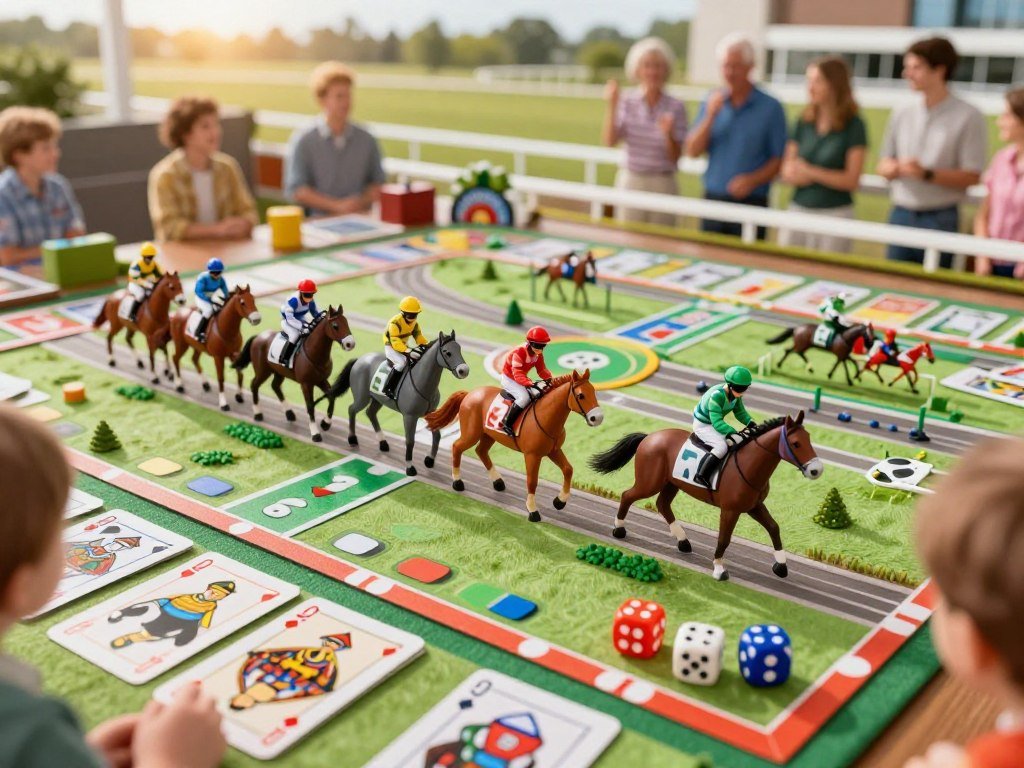
What Comes in Each Horse Racing Game Set?
The clearest difference between these sets is the kind and quantity of equipment packed with each one. Garrett Wade centers on a maple board and numbered horses, while Horse Racing Night includes many cards and player aids.
Garrett Wade’s board measures 21-1/4″ x 11″, and its horses are plastic, not metal. Metal eyelets are board hardware. The table separates each set’s parts so you can compare the equipment at a glance.
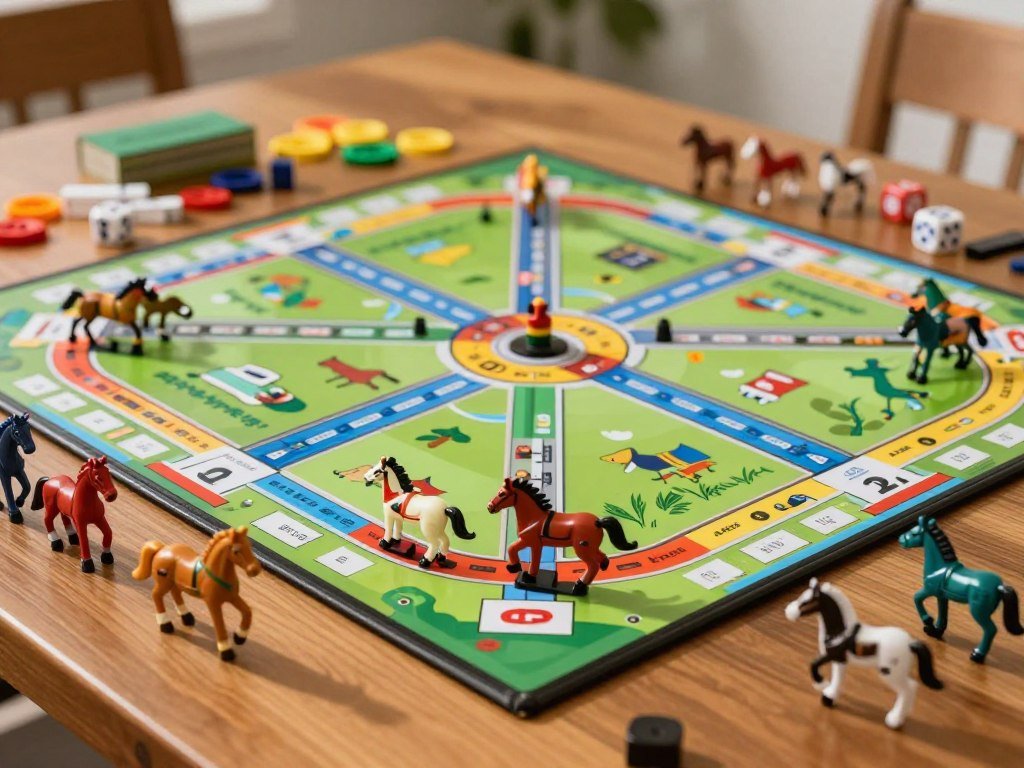
Garrett Wade board, finish, and horses
The Garrett Wade board is maple and has metal eyelets with a water-based clear acrylic finish. Its horses are plastic and numbered 2 through 12. The finish and hardware describe the board, not the playing pieces.
Horse Racing Night cards and accessories
Horse Racing Night includes a wooden die, playing pieces, cards, and a notepad. Its collection and profile cards add to the gameplay cards, so the box has several kinds of cards rather than one deck alone.
| Set | Item category | Included components | Specific details |
|---|---|---|---|
| Garrett Wade board | Board | 1 maple board | 21-1/4″ x 11″; metal eyelets; water-based clear acrylic finish |
| Garrett Wade horses | Playing pieces | Plastic horses numbered 2 through 12 | Horses are plastic, not metal |
| Garrett Wade accessories | Dice, cards, storage | Dice, playing cards, fabric storage bag | Includes a fabric bag for storage |
| Horse Racing Night board and pieces | Board and playing pieces | 1 gameboard; 6 playing pieces; 1 wooden dice | One board and six pieces |
| Horse Racing Night cards and other contents | Cards and extras | 2 instruction booklets; 420 gameplay cards; 6 collection cards; 6 profile cards; 1 notepad | Card counts are listed by type |
Are the horses metal?
No, Garrett Wade’s horses are plastic. The board has metal eyelets, but those small hardware parts do not make the horses metal. Horse Racing Night lists playing pieces, without describing them as metal.
For a maple board with a water-based clear acrylic finish, distinguish the board’s surface and hardware from its pieces. Treat the board’s metal hardware and the playing horses as separate parts when comparing materials.
Who Can Play Horse Racing Night Board Game?
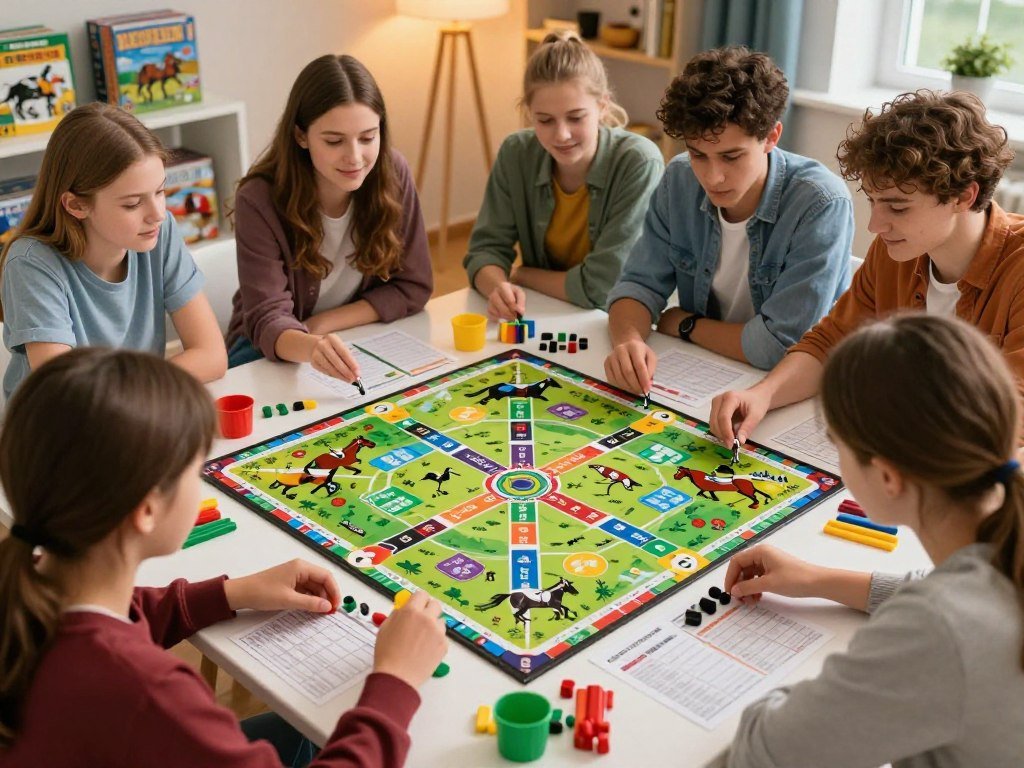
Horse Racing Night is the more clearly defined fit for groups of at least 3 players who are 14 or older and want individual or team play. The age label gives a useful starting point, while the group’s comfort with the rules matters too.
Horse Racing Night is recommended for ages 14+ and 3+ players. Players can take part individually or form teams. That flexibility can help a group include people who prefer sharing decisions over playing alone.
Garrett Wade has an overall customer rating of 4.6923075 / 5 from 13 reviews. Treat that figure as a snapshot of those reviews, not as a durability test or proof of quality. A small review count cannot tell you how the board will hold up in your home.
Use this short checklist to see whether the group and game seem like a match:
- Age recommendation: Are players comfortable with the 14+ label?
- Headcount: Will at least three people play?
- Play style: Does the group prefer individual or team play?
- Customer reviews: Do reviews matter in your choice?
Group taste varies: some players want a quick, light race, while others enjoy handling cards and team choices. If you are weighing family activities by age and play style, compare them with these multiplayer game ideas for families. A fun game night depends on whether the format suits the people at the table.
Read the age recommendation alongside the group’s patience for card-based rules before choosing a set.
What Should You Check Before Ordering?
Before ordering, verify the exact set and its checkout terms, since a listed game price does not establish shipping or return conditions. Horse Racing Night Board Game costs $56.99; the other order details can vary by seller and checkout.
Check the final order details before paying, especially if the game is a gift with a planned arrival date. The listed price alone does not include enough information to judge the full order cost.
Check price and order terms
Review these five details on the seller’s checkout page:
- Exact item or edition
- Listed price
- Shipping charges
- Delivery estimate
- Return window
Seller terms can change, so read the current details shown at checkout. A stated delivery estimate helps you plan a gift, while the return window sets the time allowed for a return.
Can a template stand in for a complete set?
A horse race game board template provides a track layout, but it may not supply pieces, dice, cards, or rules. A playable homemade track needs a board or layout, race pieces, and a way to determine movement, such as dice.
A template gives you a track layout, not a complete game; plan to find the missing pieces and rules.
That can work for a group that enjoys making its own game, but it adds setup choices. You will need to decide how horses move and what happens when one reaches the finish. A ready-made set is more practical when you want the parts and instructions together.
A template is a practical choice only when you are prepared to source the pieces and rules it does not provide.
Conclusion
The best fit is the set whose play style feels right for the people gathering around the table. Box contents matter, but a race night works best when the group enjoys the way turns and choices unfold.
Think about whether your players want card choices, team play, or a simpler shared race. That preference can guide your pick as much as the equipment itself. Count the players who will join game night, then choose the set that matches the kind of race they want to play.
FAQ
Can you play a horse-racing game without cash?
Yes, you can play with points or tokens instead of cash. Agree on a no-cash pot before the first turn, including how players contribute and who collects it. That keeps the game’s pool separate from real-money horse racing wagers. A casual race needs no real-money stakes, so the group can focus on the horses and the finish.
How much table space does the Garrett Wade board need?
The Garrett Wade board measures 21-1/4″ x 11″, with extra room needed for cards, dice, and players. Leave space beside the board so pieces and game items do not crowd the track. Each group’s layout will depend on the table shape and how many people are playing. A clear surface makes it easier for everyone to see the race.
Can a regular playing-card deck replace the cards in either game?
Not in every ruleset; card assignments depend on the rules being used. Garrett Wade includes playing cards, but a house-rule deck may assign cards differently. Before substituting a deck, match each card’s role to the chosen rules. If the group changes card roles, explain the changes before play so everyone uses the same system.
Does the wooden die change the rules?
No, the wooden die is a material choice, and movement still follows the die result and the game’s rules. The type of wood does not set a new movement rule. Players should use the instructions for their chosen game, since different rulesets may handle dice results in different ways. The die’s material is separate from how the race works.
What does a 14+ recommendation mean for Horse Racing Night?
Horse Racing Night is recommended for ages 14 and older. The label offers a starting point, but consider whether players feel comfortable with the instructions and play format. A younger player may need more help following card choices, while an older player may prefer a different pace. The group’s comfort matters alongside the age recommendation.
Is the maple board solid wood or veneer?
The board is described as maple, but that wording alone does not say whether it is solid maple or veneer. Check the exact construction wording before assuming either. A maple veneer playing surface and a solid maple board are different constructions, even when both use maple in the description. The material detail can matter if construction is important to your choice.