
A good deal fits your full budget, not just the number shown in an ad. The out-the-door price is the full amount due to buy a vehicle, including its price, required taxes, and fees. You can compare new and used options by setting a maximum total budget first.
That approach helps you judge listings by what they will really cost. It also helps separate general vehicle offers from local dealerships that share a name. Set a firm maximum total budget before contacting a seller.
Key Takeaways
- Set your limit using the full amount due, not only the advertised price.
- Compare listings with similar year, mileage, trim, and condition.
- Check the seller’s business name and the vehicle’s identity.
- Review written financing terms before choosing a monthly payment.
- Confirm the vehicle and total price before visiting a dealership.
What Does Deals on Wheels Mean for Car Shoppers?
Deals on Wheels is not necessarily one nationwide dealership or a single inventory source. Deals on Wheels cars listings can come from unrelated dealerships, so check the exact business identity before you rely on an offer. The United States has 50 states, and a local name may belong to just one business.
Deals on Wheels used cars means inventory tied to a particular seller, not one shared national stock of vehicles. A dealership may own the inventory, while a financing program or publication may use a similar name. Match the business name on the listing to the name on the sales paperwork before proceeding.
Do not treat similar business names as proof that two listings come from the same seller. Check the name and location tied to each offer.
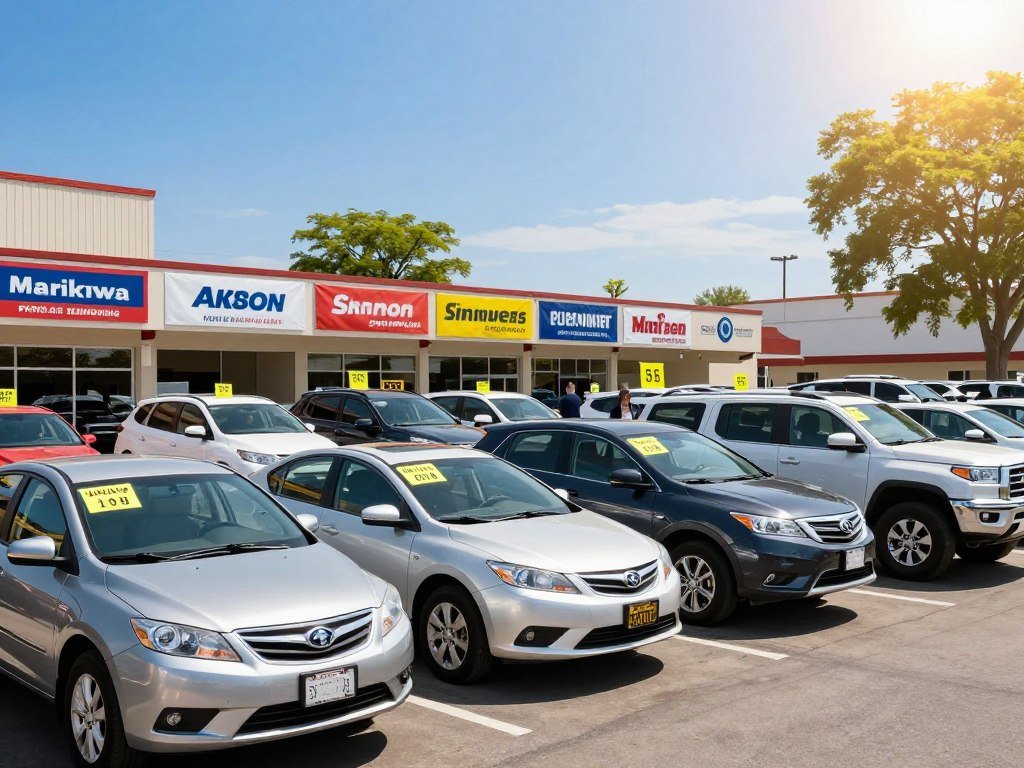
For local sales, a business profile can help you distinguish one dealership from another. The Better Business Bureau lets consumers check business profiles by name and location. Read the listed address and contact details, then compare them with the seller’s information.
A program or publication may show vehicle offers without selling those vehicles itself. Check who owns the listing and who will complete the sale. This matters when a business name appears in an ad but a different company appears on the paperwork.
The Federal Trade Commission’s Buyers Guide is a dealer disclosure for used cars. It explains whether a dealer offers a warranty or sells the vehicle as-is. Read the guide displayed for the specific vehicle, since it is part of the sales information you receive.
Sales pages can use similar words while pointing to different services. A dealership’s own inventory identifies its vehicles, while a financing program describes how buyers may pay. Confirm which role the business has before sharing personal or payment details.
Do not assume a name used in one state identifies a seller in another. Confirm the dealership’s address, business identity, and role in the sale. Then make sure the paperwork names that same business.
How Do You Compare a Deal’s Total Price?
Two ads with different sticker prices can reverse places after fees and financing. A lower advertised price may come with added charges, while a higher price may include items the other offer lists separately. Compare the full amount due, not the first number you see.
Start with a written out-the-door quote for each vehicle. Taxes and government charges depend on location, and optional add-ons should appear separately. The table shows what to check in each quote.

| Cost item | Usually in advertised vehicle price? | What to verify |
|---|---|---|
| Vehicle price | Yes | Exact listing and agreed price |
| Sales tax | No | Rate for your location |
| Title and registration | No | Required government charges |
| Dealer fees or optional add-ons | Not always | Each charge and whether it is optional |
The out-the-door price includes the vehicle price, required taxes, and fees. Sales tax and title or registration charges depend on where you register the vehicle. Ask the dealership to separate required charges from optional products or services.
A monthly payment does not show the entire cost of a loan. A lower payment can hide a longer loan term, which may raise the total repayment. The Consumer Financial Protection Bureau focuses on comparing total loan costs, not just monthly amounts.
When you compare deals, keep the same items in view for every listing. Include any required charge in the total, and keep optional add-ons distinct. Interest can raise the amount you repay above the amount you borrow.
Write down the vehicle price, required charges, and any add-ons you accept. That makes it easier to compare offers without treating different quotes as if they cover the same things. Ask for a written out-the-door quote before comparing two listings as if they cost the same.
Which Price Range Fits Your Budget?
Four buyer-set price bands make a broad inventory easier to compare, but they do not promise what a set amount will buy. Use the bands as search filters, not as claims about typical inventory or current market prices.
Choose the band that matches the most you can spend overall. Taxes and fees may push the final total above the selected band, so leave room beneath your limit. Compare vehicles with similar year, mileage, trim, and condition within each range.

| Buyer-set budget band | Options to compare | Compromise to inspect |
|---|---|---|
| Under $10,000 | Similar used vehicles and trims | Age, mileage, and wear |
| $10,000-$19,999 | Listings with similar history | Features and service records |
| $20,000-$29,999 | Used and new options | Equipment and total cost |
| $30,000 or more | New, CPO, and used options | Warranty and condition |
The bands help you sort great deals listings without assuming that every vehicle in a range is alike. One listing may have fewer miles but less equipment; another may have a newer model year and a different service history.
Price filters can also help you compare sale great deals across several dealerships. Treat the filter as a starting point, then compare the details attached to each listing. A vehicle’s listed price alone does not show every cost due at purchase.
For a small camper van, layout and included equipment can matter as much as its price. Compare those details with the vehicle’s condition and mileage, as you would with other used cars. The small camper van comparison by price covers layouts and buying points for that type of vehicle.
Keep the same comparison rules across every range. A filter cannot tell you whether the vehicle fits your needs or whether the final total fits your budget. Set the filter using the maximum out-the-door total, not only the vehicle’s advertised price.
What Can You Expect Below $10,000?
Under $10,000, a documented, well-maintained vehicle can be a better choice than a cheaper listing with unresolved repairs. Condition matters more than a low asking price by itself.
Expect variation in age, mileage, service history, and wear across listings below this ceiling. A $10,000 limit is your chosen budget, not a promise of a certain model year or mileage. Read the listing as one part of the vehicle’s story.

A 2012 model is about 14 years old in 2026. Its maintenance history deserves attention alongside its mileage in mi. A low number on the odometer does not show how often the vehicle was serviced or how it was driven.
Four checks can change the value of a low-priced listing:
- Repair needs: note known problems and work the vehicle may need soon.
- Tire condition: check tread and signs of uneven wear.
- Maintenance records: look for dated service entries and repeat repairs.
- Title status: confirm whether the title is clear or carries a brand.
These details matter because a repair can change what the listing costs you after the sale. The same asking price can represent very different ownership costs when one vehicle has records and another has unresolved issues.
Read the listing’s description closely, but do not treat it as a full record of the vehicle. Ask for the service information that supports its claims. Photos can show visible wear, but they cannot settle every question about how the car runs.
A well-kept older vehicle may suit your budget better than a lower-priced car that needs immediate work. Compare the condition and the records, not just the model year or mileage. Keep money available for immediate repairs rather than spending the entire budget on the sale price.
What Changes Between $10,000 and $20,000?
A higher asking price helps only when the specific listing offers a verifiable advantage. The $10,000-$19,999 band is a buyer-set comparison range, not a promise of a certain age, feature set, or condition.
Look for a clear difference between similar used cars, such as stronger service records or equipment you value. Availability changes by location and vehicle condition. Compare listings with similar model year, mileage, trim, and history rather than judging by price alone.
The amount available for the vehicle is lower when taxes, fees, and immediate repairs share the same budget. A $19,999 asking price may not fit a $19,999 total limit once required charges are added. Include your repair reserve in your own budget math.
Use these three points to compare options:
- Maintenance records: compare dates, services, and noted repairs.
- Ownership history: review the number and type of prior owners when known.
- Quoted fees: compare written charges alongside the vehicle price.
Listings starting at a lower price may omit details that explain the difference between two vehicles. Ask what the listing includes and compare the answer with the written quote. Do not assume that a higher figure reflects better care or a stronger warranty.
Look for value you can confirm. A different trim may add useful features, while a similar vehicle may have a clearer history. Those details matter more than a price gap without a reason.
Keep the comparison close: same model line when possible, similar mileage, and similar equipment. That makes it easier to see whether the higher-priced option offers something real. Compare at least two similar listings before treating a higher-priced option as better value.
What Should You Compare at $20,000 to $30,000?
In the $20,000-$29,999 band, compare equipment and condition across similar listings instead of comparing model names alone. The listing details must support the asking price.
Check the same features on each vehicle, including trim and included equipment. A new-car option, a used vehicle, and a better-equipped older vehicle may all appear in your comparison. The total can exceed the advertised price after taxes and fees.
| Listing feature | What to compare across vehicles | Why it matters to the buyer |
|---|---|---|
| Model year and trim | Year, trim name, and included features | Shows whether equipment is alike |
| Mileage and service records | Odometer reading and dated service | Adds context to use and care |
| Included equipment | Safety, comfort, and utility features | Shows what you would actually use |
| Seller’s quoted total | Out-the-door price for each listing | Reveals the full amount due |
A vehicle with more equipment may cost more, but a longer feature list is not automatically useful. Check which features matter in your daily driving and which ones you can do without. That keeps a sale great deals claim from distracting you from the actual fit.
Some cars sale ads use similar model names across different trims. Compare the exact trim shown in each listing, not just the badge on the vehicle. A model name alone does not tell you whether the vehicles share the same equipment.
Ask the seller to explain any difference between the listed price and the written total. That answer can help you judge whether two offers cover the same items. Keep the comparison tied to the specific vehicle and quote, not a broad claim about value.
Use the table’s points for each listing you consider. A difference in mileage, service records, or equipment may matter more than a small price gap. Check whether the added equipment is something you will use before paying more for it.
When Is Spending More Than $30,000 Worth It?
Spending more is worthwhile only when the added warranty, condition, or features solve a real need. The $30,000-or-more band is a buyer-set filter, not a promise that a vehicle is new.
Compare the terms for a new vehicle, a certified pre-owned vehicle, and a used vehicle without CPO status. CPO inspection rules and warranty coverage depend on the program. Read the written terms for the exact vehicle and program.
| Option | What to verify | Key distinction |
|---|---|---|
| New vehicle | Included warranty and equipment | New, with its own written terms |
| Certified pre-owned vehicle | Program inspection and warranty | Manufacturer-backed used vehicle program |
| Used vehicle without CPO status | Condition and any written coverage | No CPO program terms |
Kia K4, Nissan Sentra, Hyundai Elantra, and Toyota Corolla are compact-car model lines to price-check. Compare exact model year, trim, equipment, and warranty terms without assuming one line costs less than another.
For an electric vehicle, battery condition can affect its expected range. The displayed battery rating may help you judge battery state, but a dashboard range estimate is not a guarantee. Driving conditions and use can affect the distance you get.
Check whether the battery rating and the vehicle’s range information fit the driving you plan to do. Think about the miles you cover in a normal day and whether you can charge where needed. A range estimate should not replace a close look at the vehicle’s battery condition.
Consumer Reports explains trade-offs among used, certified pre-owned, and new vehicles in its used-car buying guide. Its guidance also describes reliability ratings and road tests, which can help you compare models without treating a model rating as a vehicle inspection.
Coverage can differ even between vehicles carrying the same CPO label. Compare the written warranty terms and the vehicle’s condition before paying extra for a CPO label.
Which Vehicle Type Suits Your Daily Drive?
Count the passengers and cargo you carry in a normal week before choosing a body style. Sedans, SUVs, minivans, and pickups serve different passenger, cargo, and driving needs.
Choose the type that fits your regular trips, not an occasional one. Start with the routine: commuting, school runs, errands, and the items you carry. A vehicle with more room may be useful, but that space may not matter every day.
Sedans for commuting and everyday errands
Sedans can suit commuting and errands when you need a passenger car that is easy to park. Compare EPA miles-per-gallon estimates for the exact model year and trim. Those estimates let you compare fuel economy across vehicles using the same measure.
A sedan’s trunk may fit your usual bags but not larger items. Check the cargo space against what you carry each week. EPA estimates give a useful comparison, but your actual fuel use can differ.
SUVs and minivans for passengers and cargo
SUVs and minivans can serve households that carry more passengers or larger items. Space and seat layouts differ by model, so do not assume every vehicle in either type offers the same room.
A minivan may have a different cabin layout from an SUV, while an SUV can vary in passenger and cargo space. Check the seating arrangement and cargo area that match your needs. High demand for a particular vehicle can affect how quickly listings change, but demand can shift over time.
| Vehicle type | Common use | Comparison to make |
|---|---|---|
| Sedan | Commuting and errands | Fuel economy and trunk space |
| SUV | Passengers and varied cargo | Seat layout and cargo area |
| Minivan | Passenger trips and family cargo | Seating flexibility and storage |
| Pickup | Work gear and larger loads | Bed size and load ratings |
Compare used cars by the exact version you plan to buy. A body style is only a starting point; the model, trim, and seating setup decide how it works for you.
Take the usual passengers and cargo into account before you narrow the listings. Compare fuel economy for the exact model year and trim rather than relying on a body-style average.
Which Pickup Truck Fits Your Work and Towing Needs?
The right truck is the one whose documented ratings meet your real load, not simply the most familiar nameplate. Towing and payload ratings vary by model year, configuration, and equipment.
Match the truck to the job you expect it to do. Chevrolet Silverado, GMC Sierra, and Ram are pickup nameplates to compare, but the name alone does not establish what a vehicle can carry or tow.
Chevrolet Silverado and GMC Sierra listings
For a Chevrolet Silverado or GMC Sierra listing, compare the exact model year, cab, bed, engine, and equipment. Those details can change the vehicle’s ratings and how it suits your work. Compare vehicles with the same setup when possible.
A familiar badge may help you identify a truck, but it does not tell you its exact capability. Check the listing details against the vehicle’s documentation. A different engine or configuration can make two similarly named trucks unlike each other.
Ram pickups and work-use comparisons
Use the same configuration checks when comparing Ram pickups. Match the truck’s actual ratings with the load you intend to carry or tow. A work truck should fit its planned task, not just look like it can handle it.
Payload and towing limits are different ratings. Payload concerns weight carried by the truck, while towing concerns a trailer. Do not use one number as a substitute for the other.
Check the owner’s manual and vehicle labels for the exact truck and setup before towing. A rating can depend on equipment, so a general figure for a model line may not apply to the listing you found.
Consider passengers, cargo, and trailer weight together when you assess a truck. The vehicle’s actual setup matters as much as its nameplate. Verify the exact vehicle’s towing rating and the trailer’s loaded weight before making a towing decision.
How Can You Check a Used Car’s Condition?
Verify a used car’s identity and condition separately, since a clean-looking listing proves neither. Use records and a hands-on review to judge the specific vehicle.
Begin with its identity, then check its history and physical condition. Reviews of a model or a rating can describe a vehicle line, but they do not establish the condition of one individual car.
Review the VIN, title, and recall record
Passenger vehicles from model year 1981 onward generally use a 17-character VIN. Match the VIN on the listing with the one on the vehicle and its paperwork. A mismatch needs a clear answer before you continue.
Check the title status and use the National Highway Traffic Safety Administration’s VIN recall lookup for open recalls. Read the dealer’s FTC Buyers Guide, which describes warranty or as-is information for dealer-sold used cars.
The VIN helps identify the vehicle, while the title and recall lookup answer different questions. Use each check for its purpose. A recall result does not describe every repair or issue the car may have.
Arrange an independent mechanical inspection
An independent mechanic can assess wear, tires, brakes, leaks, and battery condition where relevant. A model review or rating can help compare vehicles, but it cannot replace an inspection of the specific car.
Read mileage in mi. alongside the vehicle’s age and service records. A used 2012 vehicle, for example, may show low mileage but still need a careful review of its service history. How it was maintained adds important context.
Ask the mechanic to explain any findings in plain terms. That helps you understand which issues affect safety, which may need attention soon, and which are minor. Keep the inspection focused on the vehicle you plan to buy.
A completed recall lookup tells you about recall records, not the car’s full mechanical state. Do not treat a completed recall lookup as a substitute for a mechanical inspection.
How Do Financing Terms Change the Deal?
A manageable monthly payment does not automatically make financing affordable overall. Compare the full written repayment obligation before agreeing to a payment.
Look beyond the monthly figure to see how the loan changes the total cost. Auto loans commonly run about 36-72 months, depending on the lender and borrower. APR means annual percentage rate, the loan’s annual borrowing cost, including interest and certain fees.
Compare APR, loan length, and total repayment
Compare the APR, down payment, loan length in months, monthly payment, and total repayment. A longer loan can lower the monthly payment, but you spend more time paying. It can also increase the total cost.
Dealerships need five contract details to make the offer clear:
- APR: the annual borrowing cost shown in the contract.
- Amount financed: the amount you borrow after the down payment.
- Total of payments: the full amount due over the loan.
- Due dates: when each payment must arrive.
- Late-payment terms: charges or other results of a late payment.
Check buy-here-pay-here and other dealer financing
Buy-here-pay-here financing is arranged through the dealership. A no-credit-check offer still needs a close review of its written APR, fees, payment schedule, and payoff conditions.
Check any short-term payoff promotion in writing. Its exact terms show whether early payoff changes interest, fees, or the amount due. Do not assume a promotion makes a loan interest-free or cost-free.
Compare the amount financed with the vehicle’s written out-the-door price and your down payment. Make sure the payment schedule fits your budget and the dates you receive income. A payment that fits one month may still be costly across the full loan.
Read the complete agreement before signing, including terms about late payments and payoff. Ask the dealership to explain unclear wording in the contract itself. Compare the complete written repayment obligation before agreeing to a monthly figure.
How Can You Compare Local Listings and Dealerships?
Local results can share a name while representing different sellers and inventories. A local Deals on Wheels result near you may lead to an independent dealership, not a nationwide inventory.
Check who posted each offer and which vehicle it describes. Compare the VIN, mileage, model year, trim, and quoted price across sources. Great deals listings can appear in more than one place without representing different cars.
| Source | What it can show | What the shopper must confirm |
|---|---|---|
| Dealership website | Inventory and dealership details | Vehicle availability and written price |
| General listing marketplace | Vehicle details and seller contact | VIN, current listing, and seller identity |
| Local newspaper or classified listing | Local ads and contact information | Vehicle details and current offer |
Some pages sort deals listings starting at a selected price. The starting figure does not show whether each listing is current or what its final total will be. Compare the actual vehicle details instead of relying on a category label.
A reposted ad may describe the same car as another listing. Match the VIN and details before treating similar ads as separate offers. A local seller’s page may also show different information from a general marketplace.
Confirm the hours directly with the dealership, since online hours may not reflect changes. Ask whether the specific vehicle remains available and whether the quoted price still applies. Do not assume an ad is current just because it remains online.
Compare the business location and the vehicle details before setting out. The same name can appear in separate local results, each with its own inventory. Confirm the business location and the specific vehicle’s availability before planning a visit.
What Should You Confirm Before Visiting a Dealership?
Five details can prevent an unnecessary dealership trip: identity, availability, mileage, written total, and paperwork. Confirm each one before you travel.
Get the details in writing for the exact listing you plan to see. A phone call can help, but a written out-the-door price gives you a clear figure to compare with the purchase paperwork.
Confirm the vehicle and written price
Ask the dealership to confirm the exact listing and vehicle identity. Check that the mileage matches the information you saw. Confirm that the vehicle remains available and request its written out-the-door price.
Keep the five pre-visit details together:
- Vehicle identity: the specific listing and vehicle you plan to see.
- Availability: whether the vehicle is still for sale.
- Mileage: the current odometer reading.
- Written total price: the out-the-door amount due.
- Required documents: what you need to bring.
Compare the written out-the-door quote with the purchase paperwork. Ask the dealership to explain any new charge before you sign.
Prepare your documents and visit questions
Confirm what identification, payment, trade-in paperwork, or loan preapproval information to bring. Dealerships need five details for a smooth visit, but the exact documents depend on how you plan to pay and whether you have a trade-in.
Check title and registration requirements with the relevant state motor vehicle agency. Those rules vary by location, so the documents needed for one state may not match another state’s requirements.
Bring the listing details and your written quote. That gives you a clear record of the offer you discussed and helps you spot a different vehicle or price when you arrive.
Save the seller’s written price and appointment details so the visit can be checked against the agreed offer.
Conclusion
A confident vehicle purchase starts with a realistic total budget and a comparable set of offers. The best-fit offer is the one whose condition and full cost match your needs and spending limit.
Choose a budget band, shortlist comparable used cars, and request written totals from the dealerships. Compare the vehicle details and financing terms before you decide which listing deserves a closer look.
One clear next step is to pick the listing that best fits your daily use and budget. Choose one listing to verify and request its written out-the-door price before making a commitment.
FAQ
How many miles per year is too much for a used car?
About 12,000-15,000 miles a year is a common reference point, not a firm cutoff. A car driven more may still suit you if its service history is strong and its condition is sound. Review the age, records, and type of use together. Frequent short trips or heavy work can affect wear in ways mileage alone will not show.
Is a certified pre-owned car worth paying more for?
Yes, a certified pre-owned car can be worth more when its written inspection, warranty, and coverage terms justify the price difference. CPO programs differ, so compare the exact inspection rules, covered parts, and limits. Check what the warranty excludes and how long coverage lasts. The label alone does not show whether the added cost suits your needs.
Can I get a car with no credit history?
Yes, some dealerships offer in-house or buy-here-pay-here financing to shoppers with no credit history. Compare the APR, fees, payment dates, and total repayment in writing before you agree. Ask how payments are reported and what happens if one arrives late. A lender’s approval does not by itself mean the loan fits your budget.
How much should I budget beyond the listed price?
Budget for applicable taxes, title and registration charges, dealer fees, and any immediate maintenance. The exact amounts depend on your location and the seller. Ask for a written out-the-door price to see required charges together, then keep a separate reserve for repairs or maintenance. Optional add-ons should be listed clearly so you can decide whether to accept them.
Do I need a mechanic to inspect a used car before buying?
An independent mechanic’s inspection is a prudent check, especially when service history is incomplete or the vehicle shows visible wear. The mechanic can assess parts that photos and a test drive may not reveal. Ask for findings in writing and discuss any urgent repair needs. A model’s reviews or rating cannot confirm the condition of one specific car.
Can a dealership change the price after I arrive?
A dealership may present a different figure, but you can compare it with the written out-the-door quote and purchase paperwork. Ask the seller to explain any new charge before signing. Check whether the vehicle, included items, or fees differ from the original offer. Do not sign paperwork until the total and each charge make sense to you.