
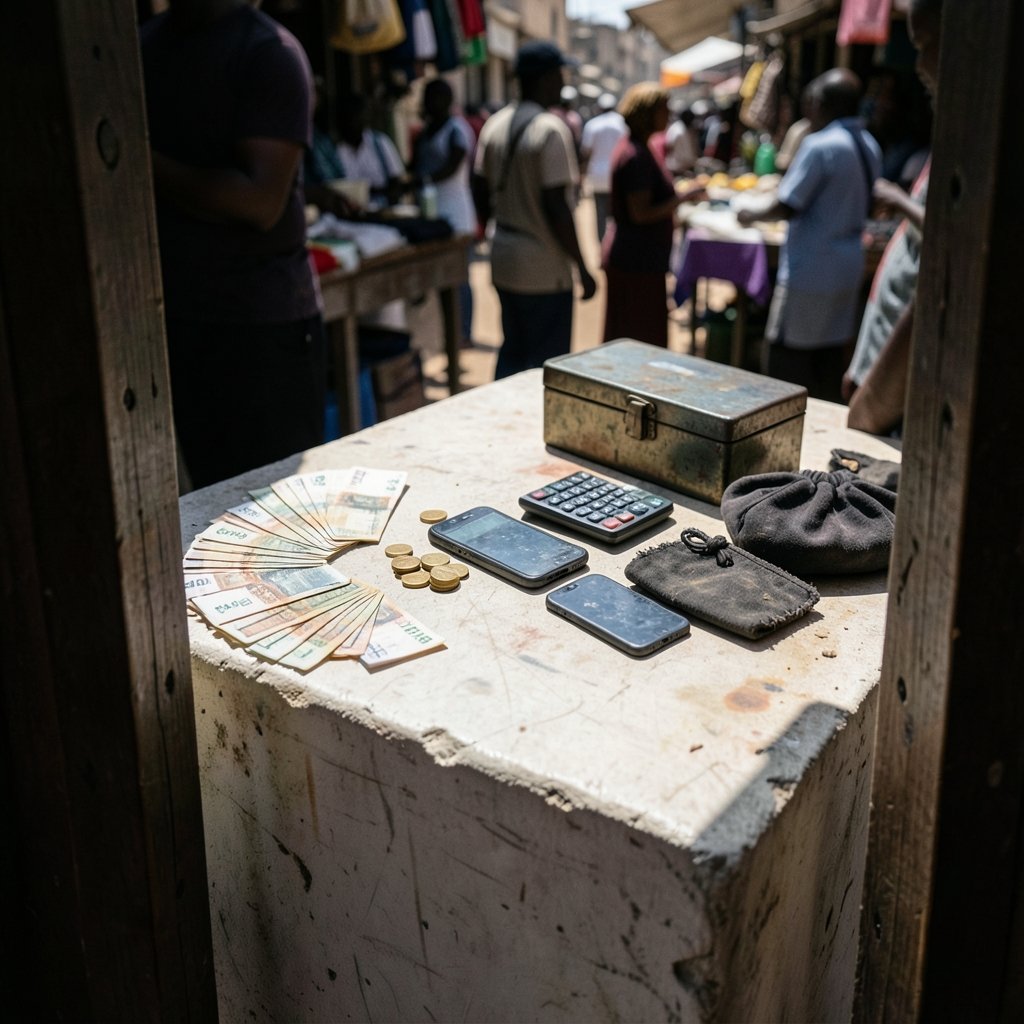
What if your wallet held fourteen different currencies, and the one in your pocket lost value faster than the milk in your fridge? For millions of people across Africa, that is not a thought experiment. It is Tuesday. African money is a patchwork of pegged francs, freely floating nairas, mobile wallets that never touch a bank, and ambitious plans for a single continental currency. Understanding how it fits together explains a lot about how the continent’s economies actually work, from a market trader in Accra to a fintech founder in Nairobi.
A Continent, Dozens of Currencies
Africa has 54 countries and roughly 42 to 45 separate currencies, depending on how you count shared monetary zones. That fragmentation is the first thing to grasp, because it drives everything else: exchange costs, inflation differences, and the long-running dream of monetary union.
The currencies fall into a few broad families:
| Type | Example | How it works |
|---|---|---|
| Pegged currency | West African CFA franc (XOF) | Fixed to the euro through the French Treasury |
| Floating currency | Nigerian naira (NGN) | Value set by markets, moves daily |
| Managed float | Kenyan shilling (KES) | Central bank intervenes to smooth swings |
| Shared currency zone | Common Monetary Area (rand) | South Africa’s rand circulates alongside local currencies |
Each arrangement creates different risks. A peg brings stability and predictable import prices. A float gives a central bank room to respond to local shocks, but it can also mean sudden, painful depreciation. Neither is “better” in the abstract. It depends on what a country produces, how much it imports, and how much foreign currency it holds in reserve.
The CFA Franc: Stability With Strings Attached

The CFA franc is one of the most misunderstood currencies in the world. It is actually two currencies: the West African CFA franc (XOF), issued by the Central Bank of West African States for eight countries, and the Central African CFA franc (XAF), issued by the Bank of Central African States for six. Both were pegged to the French franc and, since 1999, to the euro.
The peg has real benefits. Inflation in the CFA zone has historically stayed low and predictable, which helps households plan and businesses borrow. But critics argue the arrangement limits monetary sovereignty: the central banks cannot set interest rates purely for local conditions, and France has historically held centralised foreign-exchange reserves.
In December 2019, France and Côte d’Ivoire announced a reform that would rename the West African currency the eco, end the centralised reserves requirement, and remove France from the regional central bank’s governance bodies. Implementation has been repeatedly delayed, and the renaming had not happened as of the most recent reporting. Anyone writing about this should check current statements from the regional central bank before treating the reform as complete.
The Eco Dream and the Single-Currency Puzzle
Separate from the CFA reform, the Economic Community of West African States has long planned its own single currency, also called the eco, for its 15 members. The convergence criteria covering inflation, budget deficits and debt ratios were set in the 2000s. The launch target, originally 2020, has slipped again and again.
Why is it so hard? A currency union requires members to give up independent monetary policy and accept shared rules on spending. That works when economies move together. It strains when one member is an oil exporter and another depends on cocoa prices. Europe’s experience with the euro shows both the upside (lower transaction costs, price transparency) and the downside (a single interest rate that fits no one perfectly).
The African Union’s Agenda 2063, adopted in January 2015, goes further, setting a goal of an African single currency and an African Central Bank. Neither institution exists yet. Treat the goal as a long-term direction rather than a forecast.
Mobile Money: The Real Revolution
If you want to see African money in action, skip the bank branch and visit a kiosk. Mobile money has reshaped how people save, send and borrow across the continent. Kenya’s M-Pesa launched in 2007 and grew to tens of millions of users by the early 2020s, becoming a template copied from Tanzania to Ghana.
The mechanics are simple. A user deposits cash with an agent, receives an electronic balance on a basic phone, and sends value by text. No smartphone required, no formal bank account needed. For people who live far from a branch, that is transformative.
What actually works in practice, based on widely reported operator experience:
- Agent networks beat apps. Cash-in and cash-out points matter more than polished software.
- Interoperability widens reach. Systems that let users send money across networks reach more people than closed systems do.
- Merchant payments are the hard part. Sending money is easy; persuading a market stall to accept digital payment takes low fees and instant settlement.
- Trust is everything. Fraud and failed transactions push users back to cash faster than marketing can win them.
For anyone building or buying into this space, the cost side deserves scrutiny. The real expense of fraud detection and identity verification often lands in places budgets do not anticipate, as this breakdown of identity threat detection‘s true costs shows.
Digital Currencies and the CBDC Experiment
Africa has not sat out the central bank digital currency wave. Nigeria’s central bank launched the eNaira in October 2021, one of the first CBDCs in Africa. Adoption has been widely reported as low, though figures vary by source and methodology. The lesson so far is that issuing a digital currency does not automatically create demand for it. (Currency)
The broader question of state-backed digital cash is still being worked out globally. If you want to understand the underlying concept, this explainer on how CBDC digital currency works covers the mechanics of central bank money going digital. (Central Bank Digital Currencies)
Meanwhile, crypto assets have found real use cases in some markets, particularly for cross-border transfers and as a hedge against inflation. That brings risk too. Scams thrive where regulation is thin, and recovery is rare. The pattern behind the gift card scam and why victims rarely get their money back illustrates how quickly value can vanish when fraudsters exploit payment rails.
Inflation, Depreciation and the Cost of Holding Cash
Currency values across Africa diverge sharply. In 2023 and 2024, the Nigerian naira and Egyptian pound both saw steep depreciation, while the CFA franc’s peg kept volatility low. For households, that difference is not academic. It decides whether savings keep their purchasing power or quietly erode.
The practical responses people actually use:
- Holding foreign currency such as US dollars for larger savings
- Buying gold or goods as stores of value
- Spreading money across mobile wallets and bank accounts
- Sending remittances through formal channels to avoid black-market risk
Remittances themselves are a massive flow. Money sent home from abroad supports families and often exceeds foreign aid in value. Reducing the cost of those transfers is one of the most direct ways to put more money in African households.
Trade, Settlement and the Push for Local Currency
The African Continental Free Trade Area entered into force on 30 May 2019 and began trading on 1 January 2021. It covers goods and services across most African Union members. It does not create a common currency, but it does change the economics of payment.
The Pan-African Payment and Settlement System, launched commercially in January 2022 by Afreximbank and the AfCFTA Secretariat, aims to settle intra-African trade in local currencies. The logic is straightforward: if a Kenyan buyer and a Nigerian seller must convert through US dollars, both pay twice. Settling directly in local currency cuts cost and delay.
That matters for small businesses most. A trader importing goods from a neighbour should not need three currency conversions to complete one transaction.
What Actually Works: Practical Lessons
Talk to people who move money across Africa, and a few themes repeat.
Cash is not going away soon. Digital systems grow fast, but informal economies still run on notes. Any product that ignores cash will miss most of the market.
Fees decide adoption. A transfer that costs 10 percent is a transfer people avoid. Low, transparent pricing beats features.
Regulation shapes everything. Licensing rules, capital controls and foreign-exchange restrictions can make or break a payment business overnight.
Local context wins. A model that works in Nairobi may fail in Kinshasa. Agent density, phone penetration and trust networks differ enormously.
For entrepreneurs thinking about where opportunity sits, the question of how to make money with AI is increasingly relevant in African fintech, particularly in credit scoring and customer service. But automation only pays off when it is deployed against a real cost problem, not as a novelty. The same is true of broader digital transformation: using AI business automation without wasting money comes down to measuring before you spend.
The Human Side of African Money
Behind every exchange rate is a person making a decision. A mother in Lagos deciding whether to change nairas today or wait. A student in Dakar receiving money from an uncle in Paris. A shopkeeper in Kigali weighing whether the mobile money fee is worth the safety of not carrying cash.
Those decisions, multiplied by hundreds of millions, are what African money really is. The grand projects, the currency unions, the central bank digital currencies, all ultimately serve or fail those small choices.
Conclusion
African money is not one thing. It is pegged francs and floating nairas, kiosk wallets and central bank experiments, a free trade area searching for cheaper settlement and a continent-wide currency that remains a distant goal. The through-line is pragmatism: people adopt whatever works, whether that is a text-message wallet or a dollar under the mattress. Understanding the patchwork, rather than looking for a single story, is the only honest way to grasp how money moves across Africa.
Frequently Asked Questions
How many currencies are there in Africa?
There are roughly 42 to 45 separate currencies across 54 countries, depending on how shared monetary zones are counted. Some countries use the CFA franc, which exists as two distinct currencies, while others share South Africa’s rand through the Common Monetary Area.
What is the CFA franc pegged to?
The CFA franc was pegged to the French franc and has been pegged to the euro since 1999. The peg is supported by the French Treasury, which has historically required centralised foreign-exchange reserves. A 2019 reform plan would change these arrangements, but implementation has been delayed.
Is mobile money the same as a bank account?
No. Mobile money is an electronic value stored with a telecom or payment provider, usually accessible on a basic phone without a bank account. It allows deposits, transfers and payments through local agents. It is regulated differently from a bank deposit and typically offers no deposit insurance.
Why do some African currencies lose value so fast?
Currency values depend on inflation, trade balances, foreign reserves and investor confidence. When a country imports more than it exports and holds limited reserves, its currency tends to weaken. Sharp depreciation in Nigeria and Egypt during 2023 and 2024 reflected these pressures.
What is the eco currency?
The eco is a planned single currency for the 15 members of the Economic Community of West African States. Convergence criteria were set in the 2000s, but the launch target has been repeatedly postponed. Separately, the 2019 CFA franc reform proposed renaming the West African CFA franc as the eco.
Will Africa have a single currency soon?
Unlikely in the near term. The African Union’s Agenda 2063 sets a long-term goal of a single currency and an African Central Bank, but neither institution exists. Regional projects like the eco have slipped repeatedly, suggesting monetary integration will take decades rather than years.



