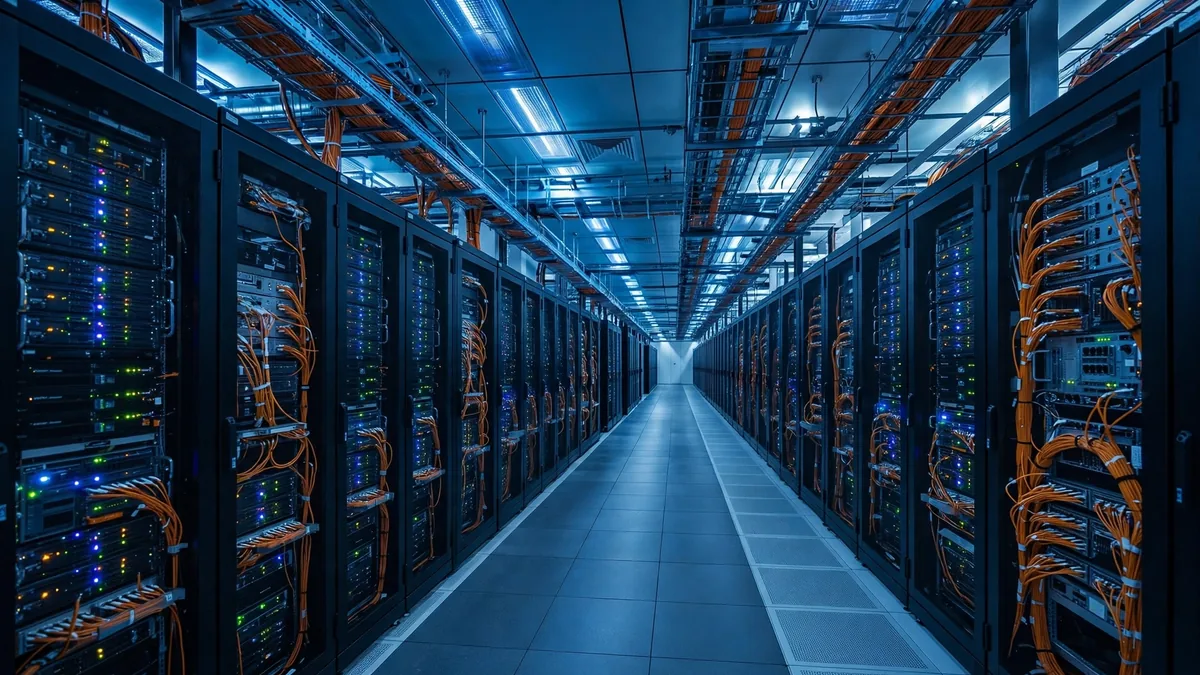
The largest technology companies are spending more than $600 billion on AI infrastructure in 2026, and the promises behind that spending now total more than $3 trillion. The bill is being paid by hyperscalers, lenders, private equity and sovereign wealth funds, and eventually by the customers who buy the computing power. Amazon alone expects capital expenditure of about $200 billion to $220 billion in 2026, much of it on cloud and AI infrastructure, while Meta expects $115 billion to $145 billion and Alphabet has lifted its guidance to about $175 billion.
The scale is hard to take in, and that is part of the story. The International Energy Agency puts capital expenditure across the largest data-centre operators above $700 billion this year, and Bank of America expects global data-centre spending to reach around $1 trillion in 2026. A credit rating agency, KBRA, reported in August 2026 that the seven largest AI companies had more than doubled their AI capital spending since the end of 2024, from about $243 billion to $574 billion, while their contractual commitments and maximum contingent support jumped from $575 billion to about $3.2 trillion over the same stretch.
Those numbers raise an obvious question that the industry would rather not dwell on: who actually pays, and what happens if the revenue does not arrive on schedule? The money is moving through a chain of companies, lenders and landlords, and the chain only works if every link holds. This article follows the money from the chipmakers to the end customer, and separates what is confirmed in filings from what is inferred from them.
Key takeaways
- The five largest hyperscalers are guiding to combined capital expenditure of more than $600 billion in 2026, mostly for AI infrastructure.
- Off-balance-sheet commitments at five of them total about $3.2 trillion, according to KBRA and a Goldman Sachs credit note.
- OpenAI had signed contracts to pay for $659.3 billion of computing power not yet delivered, as of 30 June 2026.
- Hyperscalers issued about $120 billion in debt during 2026, and private equity and sovereign wealth funds are financing much of the rest.
- Data centres used about 485 terawatt-hours of electricity in 2025, according to the IEA, and that figure is expected to approach 950 TWh by 2030.
What the spending actually looks like
The five largest hyperscalers, Amazon, Microsoft, Alphabet, Meta and Oracle, are guiding to combined capital expenditure of more than $600 billion in 2026, with the overwhelming majority directed at AI infrastructure. Amazon has raised its guidance to roughly $200 billion. Microsoft has said its fiscal 2027 growth rate will be higher than fiscal 2026. Alphabet has lifted its guidance to approximately $175 billion. Meta has raised its range to $115 billion to $135 billion. Oracle has committed to $350 billion in total gross capital expenditure for its fiscal year, split roughly between cash and finance leases.
That capital is not coming from operating cash flow alone. Hyperscalers issued approximately $120 billion in debt during 2026, alongside their equity. Private equity and infrastructure funds, including Blackstone, KKR, Brookfield, DigitalBridge, Apollo, Macquarie and Global Infrastructure Partners, have built or acquired data-centre platforms, some exceeding $100 billion in enterprise value. Sovereign wealth funds, including Mubadala, the Qatar Investment Authority, GIC and MGX, have become significant funders of late-stage infrastructure and AI compute assets, and private credit is funding construction, with data-centre debt issuance reaching record levels.
Our report on the tech stock sell-off and AI bubble fears looked at how investors are reacting to this spending, and the reaction is mixed. Some see a once-in-a-generation build-out; others see a bubble. The spending figures themselves are not in dispute. What is disputed is whether the revenue will arrive fast enough to justify them, and the market has been swinging between those two views for months.
How the money flows, and who is owed what
The build-out runs through a chain. The cloud giants sign leases with data-centre developers, often financed by private credit. They sign purchase orders with Nvidia, AMD, Broadcom and the memory makers for chips, and with server makers such as Dell and Super Micro. They sign power deals with utilities, and they rent extra capacity from so-called neoclouds such as CoreWeave and Nebius, and from former bitcoin miners that have reinvented themselves as AI landlords. Some deals are pushed into separate companies so they stay off the books of the firms that signed them.
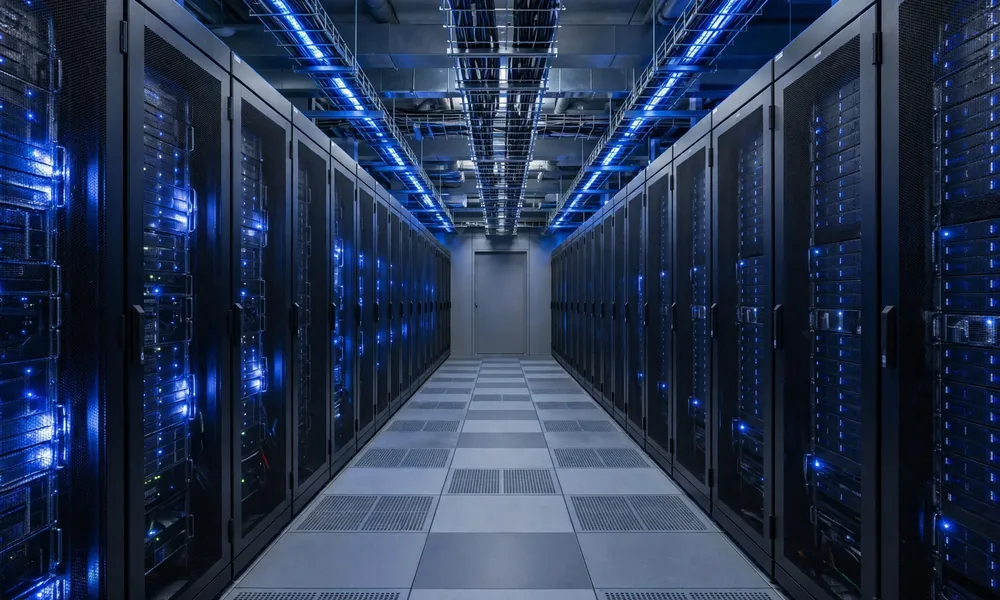
A working paper released in November 2026 by the National Bureau of Economic Research tries to draw the whole chain at once. Stijn Van Nieuwerburgh and Zijin Su, both of Columbia Business School, built a ledger of who owed whom as of 30 June 2026, working from securities filings, earnings calls and news reports. By that date, OpenAI had signed contracts to pay for $659.3 billion of computing power that its suppliers had yet to deliver. At $259.8 billion, Oracle was owed the most under a five-year deal that begins in 2027. On the same date, Oracle’s entire stock market value was $422.1 billion.
Oracle owed plenty itself. Its ledger shows $386.3 billion in obligations, among them $179.9 billion in data-centre leases that have not started and $129.5 billion of unsecured debt. Whether Oracle can honour those depends partly on whether OpenAI can honour its own, and OpenAI’s ability depends on a question nobody can answer yet, which is how much money artificial intelligence will make. Anthropic’s registration statement, dated 26 October 2026, reports $265.6 billion in purchase commitments and $321.4 billion in leases that have not yet begun.
When Microsoft borrows money, the loan shows up as debt right away. But when it signs a 20-year lease on a data centre that has not been built yet, nothing goes on the balance sheet until the lease starts, usually when the building is handed over. These are promises in writing. They are legally binding, and they are disclosed in the footnotes of company filings, but they have not turned into debt yet. Goldman Sachs counted about $1.3 trillion in leases that have been signed but have not started, and about $1.9 trillion in other purchase commitments, covering third-party cloud capacity, servers and networking gear, power supply and construction, plus backstops that only have to be paid if something goes wrong, such as a partner failing to pay.
The physical side: power, land and time
The building around the servers is absorbing almost as much attention as the chips themselves. New facilities require land, construction, cooling, backup systems, electrical equipment and a connection to the grid, and larger AI sites consume power on a scale once associated with industrial plants rather than office buildings. The IEA expects shortages of high-bandwidth memory to persist at least through the end of 2027, while data-centre construction is adding to demand for transformers and other electrical equipment.
Electricity consumption by data centres reached about 485 terawatt-hours in 2025, according to the IEA, and is expected to approach 950 TWh by 2030. Google’s agreement with Constellation Energy covers 3.59 gigawatts of nuclear power and supports additional output from existing reactors. Amazon says spending on a data centre starts roughly two years before servers are installed and revenue begins, yet the company still reports more demand for computing capacity than it can currently supply. That two-year lag is the heart of the financing problem: money goes out long before it comes back, and the gap has to be bridged by someone.
Our look at Nvidia’s AI rally and its outlook for 2026 shows the other side of the same ledger: the chipmakers are the first to be paid, and their order books are the fullest they have ever been. Nvidia’s next-generation Rubin platform is already in full production, and analysts project about 5.7 million Rubin GPUs could ship in 2026. The suppliers are doing well. The question is whether the customers at the end of the chain will do well enough to keep paying them.
The caveats that matter
The first caveat is that the $3 trillion figure is a total of commitments, not spending. Multi-year capital expenditure guidance is not deployed capital, and total project values are not the amounts funded by any individual investor. The commitments include leases that have not started, purchase orders for equipment not yet delivered, and guarantees that may never be called. Treating the whole figure as debt would be wrong, but so would ignoring it: the commitments are legally binding, and they reduce the companies’ future financial flexibility, as KBRA warned in its August report.
| Detail | What is known |
|---|---|
| Combined hyperscaler capex, 2026 | More than $600 billion (Amazon, Microsoft, Alphabet, Meta, Oracle) |
| Amazon capex guidance, 2026 | About $200 billion to $220 billion |
| Meta capex guidance, 2026 | $115 billion to $145 billion |
| Alphabet capex guidance, 2026 | About $175 billion |
| Off-balance-sheet commitments | About $3.2 trillion (KBRA, August 2026; Goldman Sachs, November 2026) |
| OpenAI compute contracts, 30 June 2026 | $659.3 billion not yet delivered |
| Data-centre electricity, 2025 | About 485 TWh, expected to approach 950 TWh by 2030 (IEA) |
| Global data-centre spending, 2026 | Around $1 trillion (Bank of America) |
The second caveat is that the NBER paper is a working paper, circulated for comment and not peer reviewed. Its losses come from a calibrated model. In the worst case, AI productivity falls to 5 percent of its average, and the authors give that state a 25 percent probability. They describe the risk prices behind their valuations as illustrative assumptions, not estimates from market data. The paper is a map of the exposure, not a prediction of a crash, and it should be read that way.
Checklist: reading the AI spending numbers honestly
Use these checks before drawing conclusions from a headline figure about AI infrastructure spending.
- Is the figure capital expenditure, a commitment, or a total project value? They are different things, and they are often mixed up.
- Does the figure count money already spent, or promises to spend later? Leases that have not started are not debt yet.
- Who is the counterparty? A commitment is only as strong as the company that signed it, and some of the largest commitments are between companies that owe each other.
- What is the time horizon? A five-year deal beginning in 2027 is not the same as cash spent in 2026.
- Where does the power come from? A data centre without a grid connection and a power contract is a building, not a business.
- What would have to go wrong for the chain to break, and who would lose first? If the answer is lenders and landlords, that is where the risk sits.
Frequently asked questions
Who is paying for the AI data centre boom?
Everyone in the chain, in order. Hyperscalers pay from cash flow and debt, private equity and sovereign wealth funds finance the buildings, lenders fund the construction, and chipmakers and contractors are paid first. End customers pay last, through cloud bills, subscriptions and advertising.
How much are the big tech companies spending?
The five largest hyperscalers are guiding to more than $600 billion in capital expenditure in 2026. Amazon is at about $200 billion to $220 billion, Alphabet at about $175 billion, Meta at $115 billion to $145 billion, and Oracle at $350 billion in total gross capital expenditure for its fiscal year.
What does the $3 trillion figure actually mean?
It is the total of off-balance-sheet commitments at five large companies, counted by KBRA and by Goldman Sachs: about $1.3 trillion in leases signed but not yet started, and about $1.9 trillion in other purchase commitments, plus guarantees. It is not debt, but it is legally binding.
Is this an AI bubble?
That is the question the market is arguing about. The spending is real and the demand for computing is real, but the revenue from AI applications has not yet caught up with the capacity being built. Whether it does, and how fast, will decide whether this was a build-out or a bubble.
How much electricity do data centres use?
About 485 terawatt-hours in 2025, according to the International Energy Agency, rising toward 950 TWh by 2030. That is why power deals, including nuclear agreements such as Google’s 3.59 gigawatt deal with Constellation Energy, have become central to the build-out.
What happens if the revenue does not arrive?
The chain strains from the far end first. Customers who cannot pay leave their suppliers short, and suppliers short of cash cannot pay their landlords and lenders. Our guide to cloud hosting for high-traffic websites explains how the same capacity is sold to smaller customers, who are the last link in the chain.
The bottom line
The AI data centre boom is being paid for by a chain that runs from hyperscaler balance sheets through debt markets, private equity, sovereign wealth funds and landlords, to the customers who will eventually buy the computing power. The suppliers are being paid now. The customers will pay later. The $3 trillion of commitments is the measure of how much faith the industry has placed in that order of events.
What to watch next is not the spending announcements, which will keep coming, but the revenue. Watch whether cloud growth, AI subscriptions and enterprise AI budgets grow fast enough to cover the capacity being built, and watch the lenders and landlords, who are the first to feel it if they do not. The build-out is the biggest capital project in technology history. The bill is coming due, and the only question is who pays it, and when.
Note: Commitment figures are taken from company filings and credit research as reported in 2026. Multi-year guidance is not deployed capital, and the NBER working paper cited here is not peer reviewed. Figures should be read as the industry’s own disclosures, not as a forecast.