This AI Hedge Fund Spends $49,315 a Day on Claude — and Still Lost 65%
Here is a number that stops you mid-scroll: $49,315 a day. That is what Situational Awareness, the AI-focused hedge fund run by former OpenAI researcher Leopold Aschenbrenner, was spending on Anthropic’s Claude, according to a Yahoo Finance report on 29 November 2026. The fund runs its research and analysis on Claude-powered tooling, and the bill has grown from an annualised $100,000 in late February to roughly $18 million a year by mid-November.
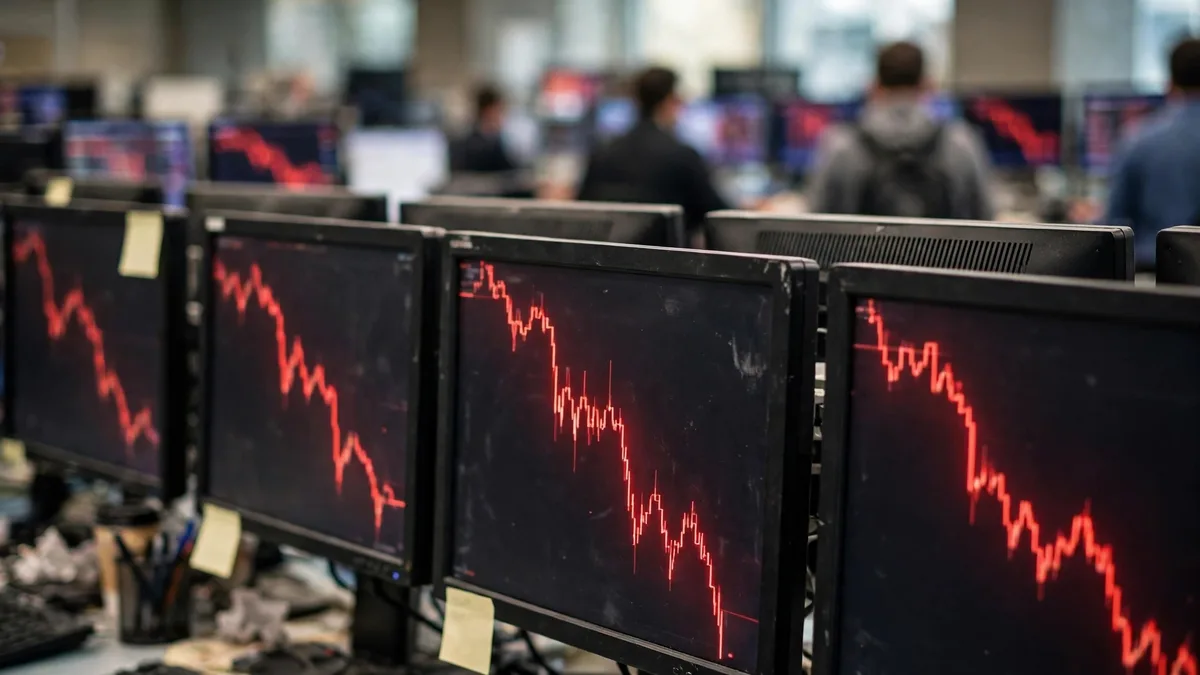
Here is the number that makes the first one sting: 65%. That is what the same fund lost, after fees, in the third quarter of 2026, according to an investor letter reported by the Wall Street Journal on 25 November. Together they are the sharpest reality check yet for AI in finance: the most AI-native fund on Wall Street spends more on an AI assistant than most companies spend on software — and still had one of the worst quarters in hedge fund history.
Key takeaways
- Situational Awareness lost 65% after fees in the third quarter of 2026, according to an investor letter reported by the Wall Street Journal on 25 November.
- The fund was spending $49,315 a day on Anthropic’s Claude, an annualised rate of about $18 million — up from about $100,000 a year in late February.
- Despite the quarter, the fund is still up 88.5% after fees for the year through September, after a very strong first half.
- The loss was driven by leveraged positions in AI stocks during a sharp July reversal, with margin calls forcing sales of much of the public portfolio.
- The founder says he has restructured the portfolio and is hiring a chief risk officer.
What the $49,315 a day actually buys
The spending figure comes from the fund’s own third-quarter investor letter, as reported in coverage of it. Situational Awareness has moved its analysis and research processes onto Claude-powered tooling, and with roughly 30 people on staff, the daily spend works out to more than $1,600 per person per day. Annualised, the daily spend comes to around $18 million as of mid-November 2026. Earlier in the year the number was far smaller: in late February, the fund’s annualised spending on Claude was about $100,000, an amount a mid-sized startup might expense without a second meeting.
That 180-fold rise in less than nine months is the real story inside the spending number. It is not about Anthropic raising prices. It is about a fund that reorganised its work around an AI assistant and kept giving that assistant more to do — more research, more analysis, more of the daily work of running a portfolio.
It is worth being precise about what the money does not buy. Claude is a research and analysis tool for this fund, not a trader that places orders by itself. The $49,315 a day buys reading, summarising, modelling and drafting — the cognitive work around investing, not the investing itself. That distinction matters, because the temptation is to read the story as “an AI lost 65%”. It did not. A leveraged portfolio of AI stocks lost 65%, while the humans running it used an AI assistant to do their research. The assistant was expensive. The leverage was the problem.
How a 65% quarter happens
The third quarter of 2026 was brutal for the fund, and the damage was concentrated in a single month. The fund lost 65% after fees in the quarter, according to the investor letter cited by the Journal, and it is still up 88.5% after fees for the year through September. That combination — a catastrophic quarter inside a strongly positive year — only makes sense if the first half was extraordinary. It was: the fund was up about 439% through June, having multiplied its assets many times over in the first half of the year.
The reversal came in July, when a sharp fall in AI stocks triggered margin calls on the fund’s leveraged positions. The fund had come into July running about 1.6 times long and 1 time short, according to an account of the letter, meaning it had borrowed heavily to amplify its bets. When prices fell, the lenders wanted their money back, and the fund had to sell. By late July it had sold the bulk of its public equities portfolio to Citadel, according to reporting on the episode, while keeping its private stake in Anthropic. The fund’s own letter describes a July drawdown of about 67% in a single month — a figure reported from the letter itself rather than from the Journal’s original report, so it should be read as the fund’s own account of its worst month.
The founder’s letter does not hide the failure. It says the fund should have experienced a severe drawdown when AI stocks fell, but should never have been at risk of collapse, and calls that a failure in how he built it. The risk was not in the thesis, or in the tools. It was in the leverage.
From $100 million to $40 billion — and back
The scale of the fund’s rise makes the fall harder to grasp. The fund launched in November 2024 with a bit over $100 million and opened 2026 with net asset value a bit above $4 billion. It then multiplied that almost tenfold in six months, mostly from trading profits, reaching something like $40 billion at its peak. One report put the fund past $20 billion before the summer, making it the best-known public-market vehicle for the thesis that artificial general intelligence is near.
The portfolio that emerged looks very different from the one that went into July. After Anthropic’s initial public offering, the portfolio was about 70% publicly traded stocks and 30% positions in private companies, according to the letter as reported. The private stake in Anthropic, the fund’s top conviction, was retained through the crisis, and the fund says it would still be its largest holding by a clear margin if the portfolio were rebuilt from scratch at the IPO price. The Fed has put a $3 trillion number on the AI stock risk, and this fund is the clearest example of what that risk looks like when it lands on a single portfolio.
What the 167-page letter says next
The founder’s response to the worst quarter of his fund’s life was to write a 167-page investor letter. Its forecasts did not shrink with the fund: it argues superintelligence will arrive in the coming years, AI labs will be doing more than $1 trillion in revenue by the end of next year, and superintelligence will strip most incumbent companies of most of their value, naming Nvidia, Microsoft and Tesla. Every one of those claims is the fund’s claim, reported from its letter — not an established fact — and this article makes no investment recommendation of any kind.
The practical changes are more modest than the forecasts. The founder says he has restructured the portfolio and is hiring a chief risk officer, and that the fund may resume shorting and using borrowed money at lower levels. Those are the moves of a manager who has learned that risk controls are not a tax on returns but the thing that keeps a fund alive to earn them. What Jensen Huang’s return reveals about the AI trade is part of the same picture: the AI stock story in late 2026 is no longer a straight line up, and the people closest to it know that better than anyone.
| Item | What was reported |
|---|---|
| Fund | Situational Awareness, founded by Leopold Aschenbrenner, former OpenAI researcher, launched late 2024 |
| Claude spending | $49,315 a day, about $18 million annualised, up from about $100,000 annualised in late February |
| Third quarter 2026 | Lost 65% after fees, per the investor letter reported by the Wall Street Journal on 25 November |
| Year through September | Still up 88.5% after fees, after rising about 439% through June |
| Cause of the loss | Leveraged AI stock positions hit by a sharp July reversal and margin calls |
| Portfolio now | About 70% public stocks, 30% private companies after Anthropic’s IPO |
| Response | Portfolio restructured; chief risk officer being hired; leverage may return at lower levels |
The cost-versus-performance question
The question this story raises is not whether AI tools are worth $49,315 a day. For a fund running tens of billions of dollars, $18 million a year is a rounding error. The question is whether the tools change the decisions. A research assistant that reads faster and models more scenarios is genuinely useful, but it does not set position sizes, decide how much to borrow, or say no when the manager wants more of a winning trade. Those are the decisions that lost 65%.
That is the cost-versus-performance reality check in its simplest form. AI can make research cheaper, faster and broader — this fund is the proof. But research was never the bottleneck. The bottleneck was risk: how much to bet, how much to borrow, and what happens when the bet goes wrong. How to use AI to prepare for investor meetings shows the same pattern from the other side: AI is excellent at the preparation, and the judgement still belongs to the person.
What to watch next
The figures in this story end on 30 September, so they do not capture the further sell-off in AI stocks since October. The year-to-date gain of 88.5% is a snapshot from before the latest leg down, and the fund’s current position is not publicly known.
Frequently asked questions
How much does the fund spend on Claude each day?
$49,315 a day, according to the Yahoo Finance report on the fund’s investor letter. That annualises to about $18 million, up from about $100,000 a year in late February 2026.
How much did the fund lose in the third quarter?
It lost 65% after fees in the third quarter of 2026, according to an investor letter reported by the Wall Street Journal on 25 November. The loss was concentrated in July.
Is the fund still up for the year?
Yes, on the reported figures: up 88.5% after fees for the year through September, after rising about 439% through June. Those figures end on 30 September and do not capture the sell-off since October.
What caused the loss?
Leveraged positions in AI stocks. The fund came into July running about 1.6 times long and 1 time short, and margin calls forced the sale of much of its public portfolio.
Did Claude, the AI, make the losing trades?
No. Claude is a research and analysis tool for the fund, not a trader. The losing positions were chosen by the fund’s humans; the assistant did the research around them.
What is the fund doing differently now?
The founder says he has restructured the portfolio and is hiring a chief risk officer. Its top conviction, the private stake in Anthropic, was retained.
Bottom line
Situational Awareness spent $49,315 a day on Claude and still lost 65% in a quarter, and the two facts belong together only if you read them carefully. The spending shows a fund that genuinely reorganised its work around AI — the bill grew 180-fold because the tool kept proving useful. The loss shows that research was never the risk. Leverage was.
The lesson for everyone else using AI at work is the same one the fund’s founder wrote in his own letter: the tools can make you faster and better informed, but they do not set your position sizes or decide how much to borrow. That is still a human job, and in the third quarter of 2026, it was the human job that failed. This article is market reporting only, not investment advice.