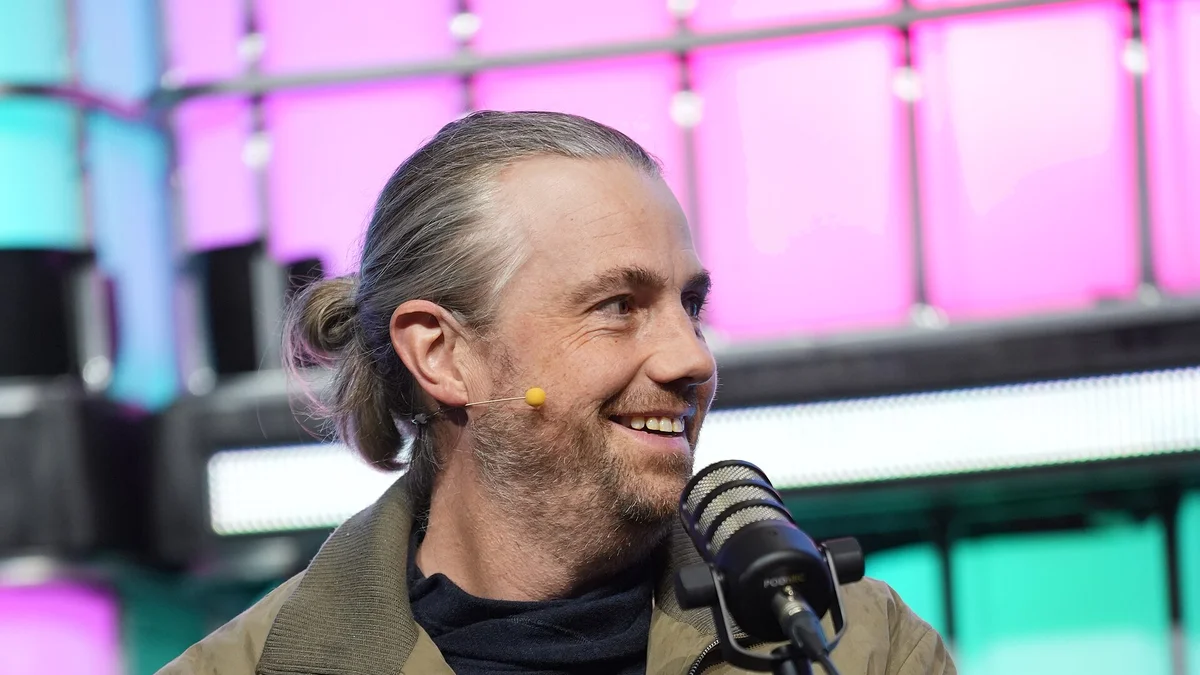
Airbnb chief executive Brian Chesky has admitted that some of his own staff probably call him a control freak, and he is not running away from the label. Speaking to Time in an interview reported by Fortune on 27 November 2026, Chesky said the habit came from studying Apple co-founder Steve Jobs, who carried the same reputation at Apple. It is a striking admission from the head of a travel platform with more than 9 million active listings in over 150,000 cities across 220 countries.
Chesky’s argument is that being deep in the details is not the same as telling people what to do. He told Time that Jobs was described in exactly those terms, saying, “People called him a control freak. He probably was a control freak. He held people to extremely high standards. He spent a lot of time recruiting. He was in the details.” Asked whether Airbnb staff would say the same about him, Chesky answered plainly: “I think some people do.”
Rather than denying the description, Chesky is trying to redefine it. He draws a line between a leader who stays close to the work and a manager who strips people of their judgement. His comments also arrive as founders across technology argue over “founder mode,” the hands-on style popularised by a 2024 essay from Y Combinator co-founder Paul Graham, inspired by a talk Chesky himself gave.
Key takeaways
- Brian Chesky told Time that some Airbnb staff probably call him a “control freak,” a label he says Steve Jobs also carried at Apple.
- Chesky says he learned the habit from studying Jobs, who held people to high standards, spent heavily on recruiting, and stayed in the details.
- He spends about three hours a day on recruiting and has told hiring managers they can leave if they dislike his input.
- Chesky draws the line at giving orders: he calls direct micromanagement a last resort and a sign someone is struggling.
- He focuses his hands-on attention on product, marketing, and operations, not on accounting or tax law.
| Topic | What was reported |
|---|---|
| The label | Chesky says some Airbnb staff probably call him a “control freak”; Jobs was called the same at Apple. |
| The source | Chesky speaking to Time, reported by Fortune on 27 November 2026. |
| Recruiting time | About three hours a day, with hiring managers told they can leave if they dislike his input. |
| Where he goes deep | Product, marketing, and operations; not accounting or tax work. |
| The Jobs test | Jony Ive, who worked with Jobs for nearly 15 years, told Chesky he never felt micromanaged. |
| Airbnb scale | More than 9 million active listings in over 150,000 cities across 220 countries. |
What Chesky actually said about the label
The heart of the story is a short exchange. Chesky was talking about Jobs and what he took from studying the Apple co-founder’s way of running a company. Jobs, in Chesky’s telling, was demanding in a specific way: he set extremely high standards, devoted serious time to hiring, and stayed close to the details of the products his company made. Those habits, Chesky suggested, are what earned Jobs the “control freak” tag.
Then came the turn that made the interview travel. Asked whether the people who work for him at Airbnb would use the same words about him, Chesky did not dodge. “I think some people do,” he said. It is a small sentence, but it accepts that the perception exists inside his own company, links his style openly to Jobs, and refuses the usual chief executive move of insisting the criticism is simply wrong.
His explanation has two parts. The first is time: Chesky says he spends three hours a day recruiting, a striking share of a chief executive’s working day, and he has told his hiring managers they can leave if they do not like his input.
The Jony Ive test: partnering, not ordering
To make his case, Chesky reached for the person who worked most closely with Jobs. He once asked former Apple design chief Jony Ive, who spent nearly 15 years working alongside Jobs on the iMac, iPod, iPhone, iPad, and Apple Watch, what it was actually like to work for him. According to Chesky, Ive’s answer was: “I never felt like Steve was micromanaging.”

That distinction is the hinge of Chesky’s whole argument. Micromanagement, as he defines it, is telling people exactly what to do. Partnership is asking questions, such as “What if we did this? What if we did that?” and staying close enough to the work to help shape it.
The idea connects to how Chesky says he works at Airbnb: he partners with teams by asking questions, aiming to help people think bigger. In an earlier CNBC interview he put it as a question: “So here’s the question: If I’m in the details with somebody, am I making them better or am I disempowering them?”
Founder mode and the lesson Chesky took from Apple’s near-collapse
Chesky’s Jobs fixation did not start with a management book. It started with a crisis. He has spoken before about looking to Jobs when Airbnb itself was in danger, studying how Jobs brought Apple back when the company was about twelve weeks from bankruptcy. What he says he found was a leader who got into all the details, cut a string of projects, made hard decisions, and was present rather than absent.
The parallel with Airbnb’s own crisis is direct. During the pandemic, bookings collapsed by about 80 percent within weeks, and the company delayed its plans to go public, laid off about a quarter of its staff, and rebuilt its structure around functions, with Chesky personally centralising product planning.
That experience became the basis of a talk he gave at a Y Combinator event in September 2024, which inspired Paul Graham’s essay on “founder mode”: founders staying directly involved in the details rather than managing only through layers of managers. Supporters say founders have a feel for the product that managers cannot replicate.
Why the label sticks, and what it costs
Labels like “control freak” stick because they contain a grain of truth that is easy to see. A leader who spends three hours a day on recruiting, tells hiring managers to leave if they dislike his input, and involves himself deeply in product, marketing, and operations will look controlling to someone who experiences only one side of that involvement.
There is a second, subtler cost. A leader known for being in the details can train an organisation to wait. Chesky’s counter is that being in the details speeds decisions up, because a leader who can sign off in the room removes approval chains and follow-up meetings. He told CNBC: “There’s a paradox where being in the details sounds like micromanagement; it sounds like it’s slowing teams down. But when you’re in the details, you can actually help make decisions faster.”
What this means for teams and managers in 2027
For managers in the middle of an organisation, the useful part of Chesky’s comments is the practical detail. He does not go deep everywhere; he goes deep where he thinks he can add value, and he names the areas where he stays out. That selectivity is something any manager can copy.
The recruiting detail is the most transferable of all. Three hours a day is extreme, but the principle is straightforward: hiring is the highest-leverage decision a manager makes, and it deserves time that matches its importance. Readers wanting the practical side of the platform can start with our guide to booking stays with Airbnb, which covers the basics of the service Chesky built.
The broader context is that leadership styles are being renegotiated across technology as companies grow larger and more distributed. The old model, in which a founder steps back and lets professional managers run the company, is under challenge from founders who argue that stepping back was the mistake. For a sense of how the wider landscape is shifting, see the five trends set to define 2027.
Checklist: staying hands-on without micromanaging
- Go deep where you add value, such as product or hiring, and stay out of areas where specialists know more than you do.
- Ask questions instead of giving orders: “What if we did this?” keeps the team’s thinking in play.
- Apply the better-or-smaller test after every involvement: did the team leave stronger, or just quieter?
- Make decisions in the room when you have sign-off power, instead of adding another approval layer.
- Treat hiring as the highest-leverage work, and give it time that matches its importance.
- If you have to tell someone exactly what to do, treat it as a signal to coach or reassign, not as a routine.
Frequently asked questions
What did Brian Chesky say about being called a control freak?
Chesky told Time that some Airbnb staff probably call him a “control freak,” saying, “I think some people do.” He linked the label to Steve Jobs, saying Jobs was called the same thing because he held people to extremely high standards, spent a lot of time recruiting, and stayed in the details.
Did Chesky say he learned his management style from Steve Jobs?
Yes. Chesky said he picked up the habit from studying Jobs, and he has spoken before about studying how Jobs rescued Apple when it was close to bankruptcy, including getting into the details, cutting projects, and making hard decisions while staying present.
What did Jony Ive tell Chesky about working with Jobs?
According to Chesky, Ive said he never felt micromanaged by Jobs, despite working with him for nearly 15 years. Chesky recalls Ive describing their working relationship as constantly partnering, with the two having lunch together every day and Jobs wanting to be immersed in the details.
How much time does Chesky spend on recruiting?
Chesky says he spends about three hours a day on recruiting, and he has told his hiring managers they can leave if they do not like his input.
What is founder mode, and how does it relate to Chesky?
Founder mode is a term popularised by Y Combinator co-founder Paul Graham in a September 2024 essay, inspired by a talk Chesky gave about running Airbnb. It describes founders staying directly involved in the details of their companies rather than managing only through layers of managers, with Jobs often cited as the leading example.
Is being in the details the same as micromanaging?
Not according to Chesky. He defines micromanagement as telling people exactly what to do, which he calls a last resort and a sign someone is struggling. Being in the details, in his account, means partnering with teams, asking questions, and helping them think bigger, and he argues it can make decisions faster rather than slower.
The bottom line
Chesky’s admission is less a confession than a reframing. He accepts the label, ties it to a leader he admires, and argues the label confuses two different things: staying close to the work, and taking the work away from the people doing it.
For the rest of us, the lesson is narrower and more practical than the headlines suggest. Go deep where you can genuinely help, stay out where you cannot, ask questions before giving orders, and check whether your involvement leaves people bigger or smaller. That is a standard that does not need a famous comparison to be worth using. Leaders with punishing early schedules are a recurring theme in chief executive profiles, and the Lands’ End chief executive’s 4:30am routine is another example of how far top bosses go to set the pace for their companies.