
Five trends that will define 2027 are already visible, and they do not all point in the same direction. Interest rates are heading higher, AI spending is still accelerating, defence stocks are struggling despite rising demand, weight-loss medicines are reaching far more patients, and solar construction is heading for a rush. That is Fortune’s outlook for the coming year.
The piece, written by Morgan Chittum and Jeff John Roberts for Fortune’s December 2026 and January 2027 issue, is an outlook, not a forecast with a single message. Some of what is coming is already in plain sight, like the AI revolution. Other forces are quieter but could prove just as consequential.
This article describes the five trends and what Fortune argues about each of them. It is business news, not investment advice. The companies named here are the ones Fortune and the analysts it interviewed discussed. Nothing here is a recommendation to buy or sell anything.
Key takeaways
- Fortune expects the Federal Reserve to keep raising interest rates in 2027 after tariff and war-driven price shocks pushed it to hike in 2026, hurting homebuyers and helping big banks and savers.
- AI spending by Meta, Microsoft and Amazon is still going full speed despite bubble worries, and Fortune’s analysts argue the question is which suppliers win, not whether AI itself is the future.
- Defence stocks have mostly lagged even as demand for weapons has grown, because spending plans in Washington remain uncertain, so Fortune suggests staying on the sidelines.
- Weight-loss medicines known as GLP-1s are set to reach far more patients in 2027 as insurance coverage expands and pill versions arrive, with JPMorgan forecasting a $200 billion market by 2030.
- Solar construction is heading for a rush as developers race to meet an end-of-2027 deadline for federal clean-electricity tax credits, while data centres add demand for power.
| Trend | What Fortune expects | Who benefits | Who is squeezed |
|---|---|---|---|
| Higher rates | Fed keeps raising rates after 2026 hikes | Savers, large banks | Homebuyers, real estate, AI firms |
| AI build-out | Big Tech keeps spending despite bubble fears | Chip, chip-equipment suppliers | Firms facing energy, financing limits |
| A world at war | Defence spending stays uncertain | Few, until funding clears | Large defence contractors, Boeing |
| Weight-loss boom | GLP-1s reach more patients via coverage, pills | Lilly, Novo Nordisk, suppliers | Smaller rivals lacking scale |
| Solar surge | Developers race end-of-2027 deadline | First Solar, Nextpower, Array | Projects missing the deadline |
Interest rates go even higher
In 2024, it appeared that pandemic-era inflation had been tamed, and the Federal Reserve responded with a series of cuts to its benchmark interest rate. That optimism did not last. Price shocks from tariffs and the Iran war led the Fed to boost rates in 2026, and Fortune expects the central bank to continue on this path.
But high interest rates are not bad for everyone. Beneficiaries include individual savers, who can look forward to higher income on their deposits, and big banks whose business involves lending money. While banks tend to earn more from loans when rates are higher, it is the largest banks that do best, said Mike Mayo of Wells Fargo Securities.
Mayo cautions that high interest rates only act as a tailwind up to a point, and that a rapid series of hikes would put larger portions of the economy under strain. He also dismissed concerns over yield-seeking AI agents threatening the biggest banks’ deposits. “The death of large banks has been exaggerated for 50 years,” he said. “The reason is trust.”
AI, AI, and more AI
It has been about four years since OpenAI’s launch of ChatGPT set off a massive rally in AI stocks. Some investors are getting nervous about the scope of the AI build-out amid fears that it is a bubble. Still, the tech giants at the centre of the boom, including Meta, Microsoft and Amazon, are going full speed.
In this environment, Fortune argues, looking for opportunities is not about deciding whether artificial intelligence is the future. The real question is which companies are positioned to succeed, no matter the pace of the AI build-out. Bernstein analyst Stacy Rasgon likes the chipmaker Broadcom because its stock is “very, very cheap,” he told Fortune, even though chip stocks sold off sharply in late 2026.
Applied Materials is another company Fortune highlights. It sells equipment to manufacture chips, positioning it to benefit from investment in advanced processors, memory and chip packaging. Fortune also reports, in its own account, that Nvidia’s shares took a major hit in November; that detail comes only from the Fortune syndication and could not be independently corroborated.
The headwinds are real. Arun Sundaram, an investment strategist at CFRA, points to potential energy bottlenecks and concerns that higher interest rates could make AI financing more expensive. He cites political pushback against data centre construction as another obstacle. Rasgon’s optimism and Sundaram’s caution are the key debate for 2027. Readers can compare the names in our roundup of the best AI stocks to buy for 2027.
A world at war
Most of Fortune’s recommendations point toward stocks or sectors to buy. When it comes to the defence industry in 2027, Fortune argues the opposite: stay on the sidelines. Russia’s invasion of Ukraine dragged into its fifth year in February 2026. That same month, the US and Israel launched a war against Iran.
Even as demand for weapons has grown and a slew of tech startups have entered the sector, the stock prices of the big military contractors known as the “primes”, including RTX, Northrop Grumman and General Dynamics, have largely flailed. Only one, Lockheed Martin, outperformed the S&P. Shares of Boeing lagged the index by 30 percent.
The reason is ongoing uncertainty over US defence spending, said Peter Arment, a senior analyst at Baird. While the Pentagon and President Donald Trump are keen to pass a massive allocation for the military, it is unclear where the money would come from. Arment said lawmakers may rely on ad hoc measures without significant military spending in 2027.
The weight-loss boom, supersized
The fourth trend is the one most readers will already know by name. GLP-1s, the blockbuster medicines delivering dramatic results in treating obesity and Type 2 diabetes, are poised to reach even more patients in 2027 as insurance coverage expands and pills offer an alternative to injections.
The scale Fortune cites comes from JPMorgan, which forecasts that the global market for incretin-based medicines, which include GLP-1s, will reach $200 billion by 2030. In the US, the bank predicts patients taking these medicines will jump from roughly 10 million in 2025 to 25 million by the end of the decade. The Medicare GLP-1 Bridge, which launched in July and runs through December 2027, offers certain weight-management medicines for $50 a month.
Pills could draw more users too. Novo Nordisk’s oral Wegovy won FDA approval in December 2025, followed by Eli Lilly’s Foundayo in April 2026. Both are taken daily and could appeal to people who have held off on treatment because they do not like injections. Lilly and Novo stand to benefit the most, in Fortune’s account.
Solar is ready to shine
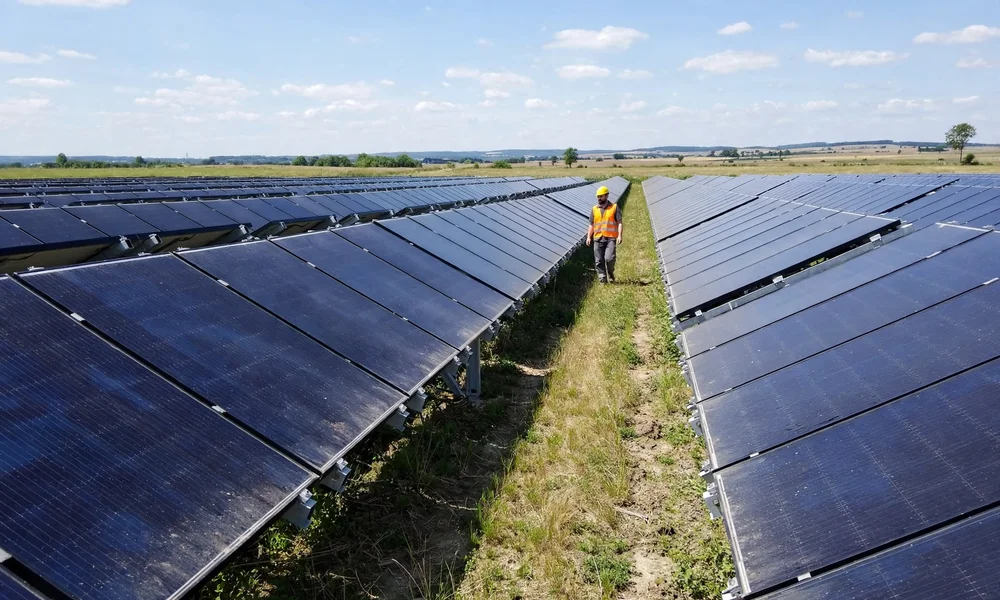
Those who assumed the solar sector was dead are missing out on one of the more surprising twists of 2027, Fortune argues. Demand for energy is stronger than ever, and that is good news for solar power. Solar companies are also poised to benefit from developers rushing to meet a key end-of-2027 deadline for federal clean-electricity tax credits. The Inflation Reduction Act of 2022 established the credits, but the 2025 One Big Beautiful Bill Act accelerated their expiration: projects begun after 4 July 2026 must be placed in service by the end of 2027. The investment credit generally covers 30 percent of qualifying costs.
Regardless of how many installers meet the tax-credit deadline, overall energy consumption will rise in 2027. UBS projects this will lead to 310 gigawatts of combined US solar and wind additions through 2030, driven partly by power-hungry data centres. Goldman Sachs forecasts global data centre power demand will rise 220 percent from 2023 levels by 2030. Gregory Nemet, a professor at the University of Wisconsin, told Fortune that developers planning data centres may choose solar if they cannot get gas turbines.
What the five trends mean together
The collisions matter. Higher rates make AI financing more expensive and data centre construction harder to fund, which feeds into the energy bottleneck that could favour solar. Readers who want to follow the AI side can start with our look at the best AI stocks to buy now, and those weighing how much of this is hype can read our guide on whether ChatGPT investing in 2027 is a smart assistant or a dangerous shortcut. Both are background, not advice.
Checklist: reading Fortune’s 2027 outlook
- Separate the trend from the trade: each trend is a real force, and none is by itself a reason to buy anything.
- Watch rates first: higher rates touch mortgages, real estate, AI financing and bank earnings, setting the background for the other four trends.
- Ask who supplies the boom: in AI, Fortune’s analysts focus on chip and equipment makers, not only the giants doing the spending.
- Do not confuse demand with funding: defence demand is strong, but Fortune argues share prices will stay flat until Washington agrees how to pay for it.
- Follow access, not just approvals: for weight-loss medicines, insurance coverage and the Medicare bridge matter as much as new pill versions.
- Mark the solar deadline: projects begun after 4 July 2026 must be in service by the end of 2027 to keep the federal credit.
Frequently asked questions
What are the five trends Fortune says will define 2027?
Higher interest rates, the continuing AI build-out, uncertainty around defence spending, the expansion of weight-loss medicines known as GLP-1s, and a surge in solar construction driven by a tax-credit deadline and rising power demand.
Why does Fortune expect interest rates to keep rising?
Fortune points to price shocks from tariffs and the Iran war, which led the Federal Reserve to raise rates in 2026 after cutting them in 2024. It expects the central bank to continue raising rates in 2027.
Which companies does Fortune name in the AI trend?
Meta, Microsoft and Amazon as the giants still spending heavily, Broadcom and Applied Materials as suppliers its analysts highlight, and Nvidia, whose shares Fortune reports fell sharply in November. The views are Fortune’s, not recommendations.
Why are defence stocks lagging if demand for weapons is rising?
Because of uncertainty over US defence spending. Fortune quotes Baird analyst Peter Arment, who says it is unclear where the money for a major military allocation would come from.
How big could the weight-loss medicine market get?
JPMorgan forecasts the global market for incretin-based medicines, including GLP-1s, will reach $200 billion by 2030, with US patients rising from roughly 10 million in 2025 to 25 million by the end of the decade.
What is driving the solar surge in 2027?
A federal tax-credit deadline. Projects begun after 4 July 2026 must be placed in service by the end of 2027 to qualify for clean-electricity credits, so developers are rushing to finish.
The bottom line
Fortune’s five trends do not add up to a simple story about 2027. They add up to a year in which money gets more expensive, machines get more powerful, wars stay unresolved, medicines reach more people, and the sun gets a deadline. Each trend is already in motion, and each depends on decisions that have not been made yet.
The useful way to read the outlook is as a map of forces to watch. Rates will shape everything else. AI spending will test whether profits follow the investment. Defence will test whether demand turns into funding. And solar will test whether a deadline can pull an industry forward.