
A family often begins exploring care when everyday tasks become harder to manage safely at home. Always Best Care helps families compare in-home care, senior living referral options, and specialized services. The network can give you a place to start when loved ones need more support, but the right choice depends on each person’s needs and local availability.
It can feel difficult to weigh safety, comfort, and a loved one’s wishes at the same time. You may be considering support at home, a senior living community, or a mix of services. The options are not identical in every area, so learn what a nearby franchise location offers before you plan around it.
Key Takeaways
- Start with the person’s daily needs, preferences, and safety.
- Local service options can differ between franchise locations.
- Ask which services are available in the client’s area.
- Compare home support with community living when needed.
- Request a care consultation to discuss a practical plan.
The first useful step is to match the level of help to the person’s routines, preferences and safety needs.
What Does Always Best Care Offer?
Always Best Care connects families with nonmedical home support, senior living referrals and, in some markets, skilled home health. Local options depend on the franchise location, so the network’s services are not the same everywhere.
Always Best Care Senior Services has three main service pathways: in-home care, referral services and clinical care in select markets. Families can use them separately or explore more than one, depending on the person’s needs.

How the network began
Michael Newman founded Always Best Care in 1996. The company began franchising in 2007 and has grown to more than 225 franchised territories across the United States and Canada.
That reach does not mean every local office offers the same care. Each franchise location operates independently, and available services can differ by area.
The main service pathways
The comparison below shows where each service takes place and its main purpose. Skilled home health is available only in select markets.
| Service | Where it happens | Main purpose | Availability |
|---|---|---|---|
| Nonmedical in-home care | At the client’s home | Daily support | Local offerings vary |
| Senior living referral | Community search and placement guidance | Help compare communities | Local options vary |
| Skilled home health | At home | Clinical nursing or therapy | Select markets |
Families comparing senior care services can ask which pathway fits the need and whether the local team offers it. A senior living referral helps with a community search, while in-home care provides nonmedical help where the client lives.
A network name does not guarantee identical services in every community.
When a plan involves a referral, ask what guidance the local team provides and which communities it can discuss. For clinical support, clarify whether the area has a skilled home health team.
Confirm a service is offered in the client’s area before building a care plan around it.
What Help Can Caregivers Provide at Home?
A caregiver’s daily support can range from preparing a meal to helping someone dress or move safely around the home. In-home care can support personal routines and household tasks, based on the agreed care plan.
Activities of daily living (ADLs) are routine personal tasks such as eating, dressing, grooming, toileting and moving around. Support may also include medication management, but reminders and hands-on help are different from clinical treatment.

Personal care and companionship
Some older adults need help with daily personal tasks, while others mainly benefit from steady company and a familiar routine. There is no single task every older adult needs help with most.
When families discuss care loved ones need, it helps to name the exact routine and the kind of support that feels comfortable. A caregiver may offer assistance while allowing the person to do as much as they safely can.
Everyday tasks and routines
Common examples of support include:
- Eating, including help during meals
- Dressing and choosing clothes
- Grooming and personal routines
- Toileting and related assistance
- Mobility and medication management
In-home care services may also include meal preparation, laundry, companionship and light household help. A caregiver might prepare lunch, sort clean clothes, or spend time talking with the client.
A reliable senior care plan should separate reminders and personal assistance from clinical tasks. For example, a caregiver may remind someone about a routine, while a clinician handles medical decisions.
Families should name each task they expect a caregiver to handle during care planning.
Which Specialized Care Technologies Are Available?
A phone check-in or alert system can add a layer of connection or response support between caregiver visits. Technology can supplement human care, but it does not replace hands-on help when someone needs it.
Always Best Care offers several tools for check-ins, balance testing, health monitoring and emergency alerts. Ask which services are active locally and what each one requires, including who will receive information.
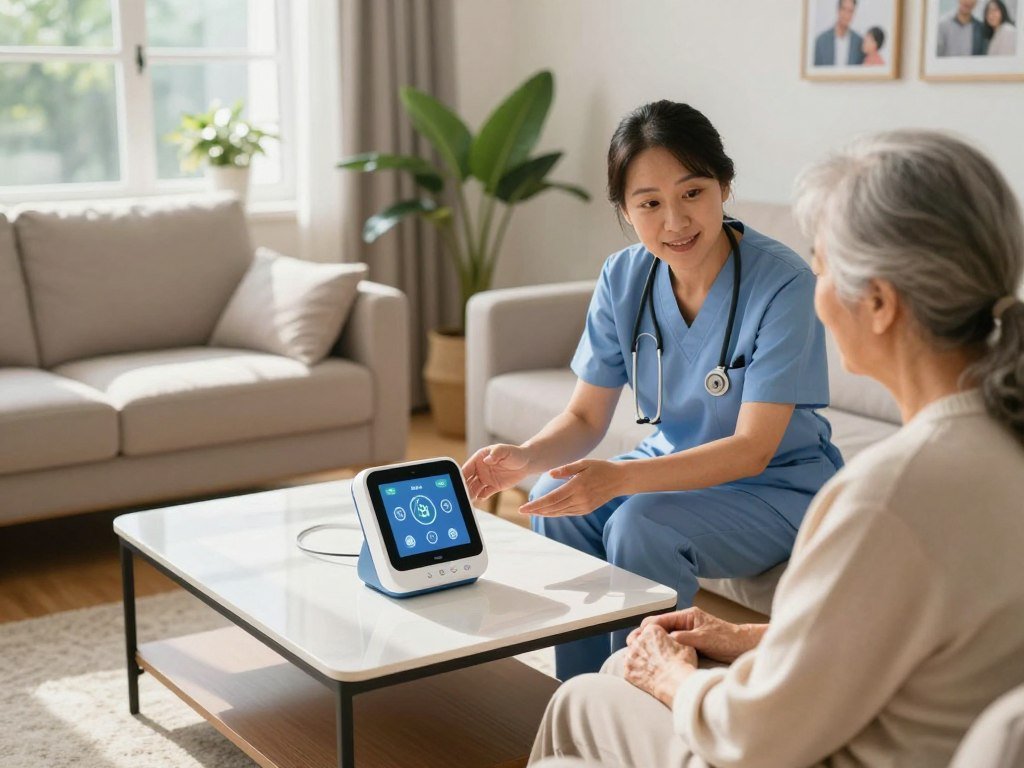
Telephone reassurance and emergency alerts
Always In Touch is a telephone reassurance program. Regular calls can provide a connection between visits and help a client stay in contact with the care team.
A Personal Emergency Response System gives a client a way to signal for help. The 24/7 Virtual Care Agent is another named service, but families should ask what it does in their area.
Remote monitoring and virtual support
Special care services may include equipment that tracks specific information or supports a response plan. These tools work best when the family understands their limits and the steps that follow an alert.
- Always In Touch telephone reassurance
- Balance Tracking System balance testing
- Remote patient monitoring with vital-sign reporting to a primary care physician
- Personal Emergency Response System and 24/7 Virtual Care Agent
The Balance Tracking System is intended for balance testing. Remote patient monitoring sends vital-sign information to the client’s primary care physician.
Remote patient monitoring is offered at no additional cost. That detail applies to this program, not automatically to other technology services.
Ask who receives an alert and who is expected to respond before relying on a monitoring tool.
How Can a Senior Living Referral Help?
A senior living referral can help turn a broad community search into a shortlist to discuss and visit. It can help a family compare settings, though it cannot promise that a particular community will suit someone.
Always Best Care provides referral services for families considering senior living. A clear picture of the person’s care needs, preferences and budget can make the search more focused.

Comparing community options
Independent living is generally for people who want a residential community but do not need regular personal assistance. Assisted living offers help with daily routines while residents live in a community setting.
Memory care is designed for people who need support related to memory loss. Services and settings vary, so a family should learn what each community provides before making a choice.
These community types are not interchangeable. A person who needs a high level of clinical care may need a different plan than someone seeking social connection and a simpler daily routine.
Getting support through the decision
Community referral services can help narrow options and guide conversations about possible placements. The family can use a shortlist to arrange visits and ask direct questions about daily life.
Before those conversations, talk with the older adult about what matters most. A preferred location, privacy, activities, meals or family access may shape which settings feel right.
Write down the care needs and preferences the family wants to discuss. Include a budget range so you can focus on options the household can consider.
Living referral services can help find right options to explore, but no referral ensures a fit or a placement. The older adult’s input should remain part of the choice whenever possible.
Bring the older adult’s daily support needs and preferred living setting into every community conversation.
When Is Skilled Home Health Appropriate?
Skilled home health is the clinical option to ask about when a person needs nursing or therapy rather than only daily-living assistance. Licensed clinicians provide care based on the person’s clinical needs.
Always Best Care offers skilled home health only in select markets. Families should confirm the exact service and any required clinical evaluation with the local provider and clinician.
Nursing and therapy at home
Skilled home health may involve licensed nurses and therapists. A nurse may provide infusion therapy or injections, while therapy may support rehabilitation at home.
Some clinical needs require more specialized treatment. Chest tube management is one example of care that may involve a licensed clinician.
Confirming local clinical services
The table gives examples of skilled home health services and the professional who may provide them. The local team can explain what it offers.
| Service | Professional | Example | Local availability |
|---|---|---|---|
| Skilled nursing | Licensed nurse | Infusion therapy or injection | Confirm with the local office |
| Therapy | Therapist | Rehabilitation support | Confirm with the local office |
| Specialized clinical treatment | Licensed clinician | Chest tube management | Confirm with the local office |
Clinical care differs from nonmedical home care because it involves licensed health professionals and a clinical plan. A need for help at home does not by itself show which clinical service is appropriate.
Ask the treating clinician what type of care is needed and whether an evaluation is required. Then confirm that the local provider can deliver that service in the client’s area.
Have the treating clinician and local provider confirm the service, care plan and eligibility before arranging a visit.
Who Might Benefit From These Services?
Extra support may help when family members can no longer reliably cover the person’s daily needs on their own. Professional support can be considered for older adults and people with special needs.
The person’s preferences, clinical needs and available family support matter more than age alone. A care plan should reflect the individual’s situation, not a set idea of what seniors need.
In-home care may help someone who wants to remain at home but needs more help with routines. It can also give family members time to rest when they have been providing care themselves.
A person returning home after a hospital stay may need temporary support while daily life settles again. The right service depends on the discharge plan and what the person can safely manage.
Some families look into senior care services when care demands begin to affect work, sleep or other family duties. Respite support can give a family caregiver time away while the client receives planned assistance.
Always Best Care serves older adults and people with special needs through in-home care, senior living referrals and special care services. Which options are available depends on the franchise location.
Family members may also need to consider whether a community setting offers a better fit. The person’s wishes, health needs and available support can help guide that discussion.
Changing needs do not mean a family has failed. They can signal that the current routine needs a different kind of help or a new level of support.
Revisit the plan when a change in health, routine or caregiver availability changes what the household can manage.
How Much Does Care Cost, and How Can Families Pay?
Reported Always Best Care hourly rates are $25-$40, with complex care needs potentially costing more. This is a starting range, not a guaranteed quote for every location.
Care level, location and scheduled hours affect the estimate. An individual quote may also reflect the tasks in the care plan and the service terms offered locally.
Factors that shape an estimate
Ask for an estimate based on the actual schedule and support needs. A rate alone does not show the full cost if the family does not know how many hours are planned.
Before agreeing to care services, clarify the hourly amount, expected hours and any extra charges. Make sure the written estimate matches the service plan you discussed.
Payment routes and coverage limits
Families may pay privately or explore public benefits, but coverage has limits. The table outlines common routes and what to check.
| Payment route | Potential role | Key limit | What to verify |
|---|---|---|---|
| Personal funds | Private payment | Cost depends on chosen services | Confirm local quote and service terms |
| Medicare | Eligible short-term or part-time home health | Not 24-hour or custodial-only care | Confirm eligibility |
| VA benefits | Home-based care | Clinical need and availability apply | Confirm with the VA and provider |
| Medicaid waiver | Eligible home services | State rules and eligibility apply | Confirm with the state program |
Medicare does not cover 24-hour home care or custodial and homemaker services when those are the only care needed. Eligible home health coverage has its own rules.
VA home-based care depends on clinical need and availability. A veterans assistance program may have specific eligibility steps, so check with the VA and provider.
Medicaid waiver coverage depends on state eligibility and program rules. Families should ask the state program which services may qualify.
Request a written local estimate that separates the hourly rate, scheduled hours and any additional charges.
What Should Families Know About Scheduling?
Many locations do not require a weekly service commitment, but families should confirm local scheduling terms. Local rules can differ, so a flexible schedule in one area may not match another office’s terms.
A no-obligation care consultation is available, but it is not a confirmed start date. Care may begin within hours, days or weeks, depending on urgency and family needs.
Use a consultation to explain what support the household needs and when it would be useful. The local team can then discuss available services and possible timing.
Care may start quickly when the need is urgent and a suitable caregiver is available. A family may need to wait days or weeks when needs, schedules or staffing take longer to arrange.
Write down the times when help matters most, such as mornings or evenings. This can help the office discuss a schedule that fits the client’s routine.
Ask whether the local franchise location has a daily or weekly minimum. Also clarify how the office handles changes, missed visits and schedule updates.
Keep the consultation separate from a start agreement. Confirm the planned first visit, its timing and any local service terms before relying on a schedule.
Ask the local office to confirm the first available start date and any daily or weekly minimums in writing.
How Does Live-In Care Differ From 24-Hour Care?
Shift-based 24-hour care keeps a caregiver present through successive shifts, while live-in care relies on one resident caregiver with required breaks. The coverage pattern is the key difference for a household planning extensive support.
Always Best Care offers live-in care for 24/7 home support, subject to caregiver availability. A live-in caregiver needs planned rest and breaks, while 24-hour care commonly uses multiple caregivers working shifts.
Live-in care and rest breaks
A live-in caregiver may stay in the client’s home for four or five days at a time. The arrangement requires a dedicated bedroom, an eight-hour sleep break and a four-hour daytime break.
Those breaks matter when a client needs direct supervision. The family or another caregiver must cover them if the client cannot be left without direct support.
Shift-based 24-hour care
24-hour care commonly uses two to three caregivers who work 8-12-hour shifts. Planned shift handoffs keep staffing in place across the full day.
| Arrangement | Staffing pattern | Rest or break coverage | Home setup |
|---|---|---|---|
| 24-hour shift care | Two to three caregivers working 8-12-hour shifts | Shift handoffs | No dedicated caregiver bedroom specified |
| Live-in care | Caregiver stays four or five days at a time | Eight-hour sleep and four-hour daytime break | Dedicated bedroom required |
| Live-in break coverage | Family or another caregiver covers breaks if direct supervision is needed | Breaks leave the client without direct supervision unless arranged | Confirm an appropriate room and coverage plan |
The two arrangements are not the same, even though each can provide extensive support. A live-in plan needs a suitable bedroom and a clear plan for all breaks.
Talk through the client’s overnight needs and whether the family can provide backup. Consider the room available for a live-in caregiver as part of the decision.
Confirm who covers every break, especially overnight, before choosing a live-in arrangement.
How Can Families Check Caregiver Quality?
Ask the local office who screens caregivers and how the office responds when a scheduled caregiver cannot attend. Clear answers can help you judge whether the local team is ready to manage care reliably.
Always Best Care caregivers receive background and reference checks and are insured. Training begins when caregivers are hired and continues afterward, though local procedures and experience can differ.
Ask how the office completes checks and who supervises caregivers after hiring. A proven track record for one franchise location does not establish the same experience at another.
Find out what happens if a caregiver calls out or cannot arrive. Ask whether the office contacts the family, seeks a replacement, or follows another process.
Caregivers may receive training at hiring and over time. Ask how the local team supports them when a client’s needs change or a concern comes up.
Ask how to report a concern and how quickly the office responds. A clear route for escalation matters when the issue affects a visit or the client’s comfort.
Families can also ask who reviews the care plan and who can make changes. Knowing the responsible contact helps prevent questions from getting lost between caregivers and the office.
Compare the answers with the family’s expectations before services begin. A reliable senior care relationship depends on clear communication as well as caregiver experience.
Get the name and contact route for the person responsible for urgent care concerns before services begin.
What Are Always Best Care Caregiver Jobs Like?
Caregiver job terms are set locally, so applicants should confirm the posted hourly rate with the hiring franchise. Pay and benefits vary by local franchise and position.
There is no single network-wide starting pay rate to rely on. Check the current local job listing or ask the hiring office about the hourly rate and pay terms.
Benefits and schedule options
Always Best Care careers may offer benefits, but not every role or franchise location has the same package. Potential benefits include:
- Health insurance
- Supplemental insurance
- A 401(k) program
- Mileage reimbursement
- Paid training and paid time off
Custom flexible schedules may be available. Applicants can ask whether a role offers preferred days, shorter shifts or a schedule built around other commitments.
Anyone comparing Always Best Care Senior Services pay rate details should check the current local posting. Always Best Care starting pay is set by the hiring franchise, not by a single national figure.
Training and support for new hires
Training may include orientation, online learning and hands-on instruction. Some teams also offer mentorship and specialized training.
Ask who provides support after orientation and how new hires get help during their first shifts. A local office can explain what training applies to the position and when it takes place.
Caregiver roles involve direct work with clients, so applicants should understand the expected duties before accepting a schedule. Ask how the office communicates changes in a client’s care plan.
Before accepting a role, ask which benefits apply to that position and when paid training begins.
What Do Always Best Care Reviews Show?
The 2026 Yelp review reported a 3.8-out-of-5 rating based on 88 reviews across 75 locations. That is a network-wide view, not a score for every local office.
A rating drawn across many locations cannot establish the quality of one local team. Recent comments about a specific office offer more useful detail for your decision.
Always Best Care Senior Services reviews may describe different franchise locations, clients and care experiences. A network rating cannot show how one caregiver communicates or fits a particular client.
When you read local feedback, look for repeated comments about reliability and communication. Notice whether people describe clear updates, timely visits and a good match with caregivers.
One review may reflect a single difficult event or a specific situation. Several recent comments about the same issue can point to a question worth raising with the office.
Reviews can help you form questions, but they do not replace a direct conversation about the client’s needs. Ask the local office how it handles a concern that appears in recent feedback.
A proven track record should be assessed at the level of the team you may use. Look for details about the local office rather than assuming a broad rating describes every location.
Read local feedback for patterns in reliability and communication, then raise any recurring concern directly with the office.
How Can Care Support Alzheimer’s Bathing Routines?
For a person with Alzheimer’s, trying a bath or shower two or three times a week can be a starting point, with flexibility. The right routine should account for the person’s comfort and response.
That frequency is a guide for someone with Alzheimer’s, not a rule for every older adult. Age alone does not set a bathing schedule.
A familiar routine may feel easier than an unexpected request. Pay attention to the person’s preferred time, level of privacy and response to different bathing steps.
Bathing can cause distress for some people with dementia. A calm pace and a simple explanation may help, but families should avoid forcing a routine that feels unsafe or upsetting.
Discuss preferences, signs of distress and safety concerns with the care team and clinician. They can help the family consider an approach that fits the person’s needs.
Persistent difficulty may call for a change in timing or support. A clinician can also help assess whether a health issue affects bathing or comfort.
Adjust the routine to the person’s comfort and discuss persistent bathing difficulties with the care team.
How Can You Find a Local Office?
Use the company’s ZIP-code location finder to identify the office serving the client’s area. Local service details can then be confirmed with the franchise location.
A no-obligation care consultation is available through a local office. The office can explain which services it offers for the client’s address.
Follow these steps to contact a nearby team:
- Enter the client’s ZIP code in the location finder.
- Confirm the local office serves the client’s address and offers the needed service.
- Contact the office to request a no-obligation care consultation.
If you cannot use the location finder, call 855-470-2273 for assistance. Have the client’s location ready so the team can direct your request.
The closest office may not serve every nearby address or offer every type of care. Confirm the service area and the specific support you need before making plans.
A consultation gives the family a chance to describe the situation and ask about local care options. You can also explain any preferences that may shape the conversation.
Before booking a consultation, have the client’s ZIP code and a short description of the needed support ready.
What Should Families Confirm Before the First Visit?
A clear care plan gives the caregiver and family a shared understanding of what the first visit should cover. Specific details can make it easier to follow the client’s normal routine.
A care coordinator reviews the plan and matches a caregiver to the client’s needs. Franchise locations employ their caregivers, so the local office handles the working relationship.
Before services start, make sure the plan covers the points that matter most:
- Tasks included in the visit
- Schedule and arrival window
- Preferred routine and communication style
- Who to contact about a change or concern
- How the family will receive updates
Share details that may help a caregiver feel welcome and support the client’s comfort. A familiar greeting, preferred name or usual meal time can make the first visit feel less abrupt.
Families should know how the coordinator will share updates if the care plan changes. Agree on who in the family receives those messages, especially when several people help with decisions.
A written plan should give the caregiver and family the same clear picture of the first visit.
Keep the agreed care plan and the office’s contact details somewhere the family can find them quickly.
Conclusion
The right senior care arrangement starts with a clear picture of the support a person needs and prefers. The best starting point is the client’s daily life, not a service name or a general idea of what older adults need.
Local availability matters because franchise locations do not all offer the same services. A practical care plan should fit the client’s routines, safety needs and wishes.
Choose one next step that helps your family move forward. Enter the client’s ZIP code in the location finder and ask the local office for a consultation about the care plan.
FAQ
What does Always Best Care do?
Always Best Care connects families with nonmedical in-home care, senior living referral services and skilled home health in select markets. Local franchise locations decide which services they offer, so the available options differ by area. Families can discuss support at home or community choices with a nearby office. Confirm that the needed service is offered for the client’s address.
Who is the owner of Always Best Care?
Michael Newman founded the network in 1996, but the owner of a local office depends on its franchise location. Each franchise location operates independently. That means a local owner, team and available services may differ from those at another office. Contact the specific location if you want to know who owns or manages it.
Is Always Best Care legit?
Always Best Care is a franchised senior care network founded in 1996, with more than 225 territories across the United States and Canada. That network size does not mean every location provides the same service or experience. Each franchise location operates independently. Check the local office’s services, staffing practices and client feedback before choosing care.
How long has Always Best Care been in business?
Always Best Care was founded in 1996 and began franchising in 2007. The network has since grown to more than 225 franchised territories across the United States and Canada. A local franchise location may have its own operating history and team. Ask the office how long it has served the client’s area.
What do elderly need help with the most?
Common support needs include eating, dressing, grooming, toileting, mobility and medication management. The most useful help depends on the person’s health, routines and home setting. Some people also need meal preparation, laundry, companionship or light household support. List the tasks that are difficult or unsafe, then discuss which ones a caregiver may handle.
How often should an 82 year old shower?
Age alone does not set a shower schedule. For a person with Alzheimer’s, a bath or shower two or three times weekly can be a flexible starting point. Comfort, distress and safety should guide the routine. Discuss ongoing bathing difficulty with the care team or clinician, especially when the person’s response changes.
At what age do seniors start eating less?
There is no single age when older adults start eating less. Appetite can change with health, medication, mood, activity or other life changes. A lasting drop in appetite or food intake deserves attention, especially if it affects strength or daily function. Discuss a persistent change with a clinician rather than assuming it comes from age.