Android vs iPhone in 2027 is a closer contest than it has been in years. iPhones now use USB-C, support RCS messaging with Android phones, and run Apple Intelligence features, while Android phones from Samsung and Google now promise seven years of updates and undercut iPhone prices at nearly every level. The two platforms have spent a decade copying each other’s best ideas, and both are now excellent — which makes choosing harder, not easier.
The real difference now is not the hardware. It is the ecosystem around the phone and the habits you have already built. An iPhone makes sense if your family, your watch, and your laptop are already Apple. An Android phone makes sense if you want more choice, more customisation, and a good phone at a lower price. Both take superb photos and last all day.
This comparison puts Android vs iPhone head to head on price, cameras, battery, software updates, privacy, and everyday use in 2027. Prices below are approximate starting prices for new flagship models, and you should check current pricing before buying, because carriers and retailers discount both sides heavily and trade-in values change often.
Key takeaways
- Android wins on choice and price: good phones start around $200, and flagships from Samsung and Google match iPhone quality for less.
- iPhone wins on consistency and longevity: every iPhone gets the same software on the same day, and iPhones hold their resale value best.
- Cameras are now a tie for most people: both take excellent photos in daylight, and the difference is style, not quality.
- Software updates are a tie at the top: Samsung and Google now promise seven years, matching Apple’s long support in practice.
- Switching is easier than ever, but your accessories decide a lot: Apple Watch only works with iPhone, and many Android watches only work with Android.
Android vs iPhone at a glance
The table below sums up the head-to-head. Read it as a starting point, then use the sections below to see where each side actually pulls ahead.
| Area | Android | iPhone |
|---|---|---|
| Starting price (flagship) | About $799 for a Pixel or Galaxy flagship | About $799 for iPhone 17 |
| Cheapest good phone | About $200 for a solid budget model | About $599 for iPhone 16e |
| Phone choice | Many brands, sizes, and prices | Four or five models a year |
| Software updates | Up to 7 years on Samsung and Pixel | Typically 6 to 7 years of iOS updates |
| Camera | Superb, with strong zoom and night modes | Superb, with the most consistent video |
| Customisation | Deep: launchers, widgets, default apps | Limited: widgets and lock screen options |
| Messaging | RCS, Google Messages, WhatsApp | iMessage, RCS, FaceTime |
| Resale value | Drops faster, except for Samsung flagships | Holds value best of any phone |
Android: the most phone for your money
Android’s greatest strength is that it is not one phone but hundreds. Samsung’s Galaxy phones lead the range, Google’s Pixel phones lead on smart software and cameras, and brands like OnePlus, Motorola, and Nothing fill every price gap below them. That competition means you can buy a genuinely good Android phone for $200 to $300, a great one for $500, and a flagship rivalling the iPhone for $799 — a range that matters most for buyers who refuse to spend $1,000 on a phone.
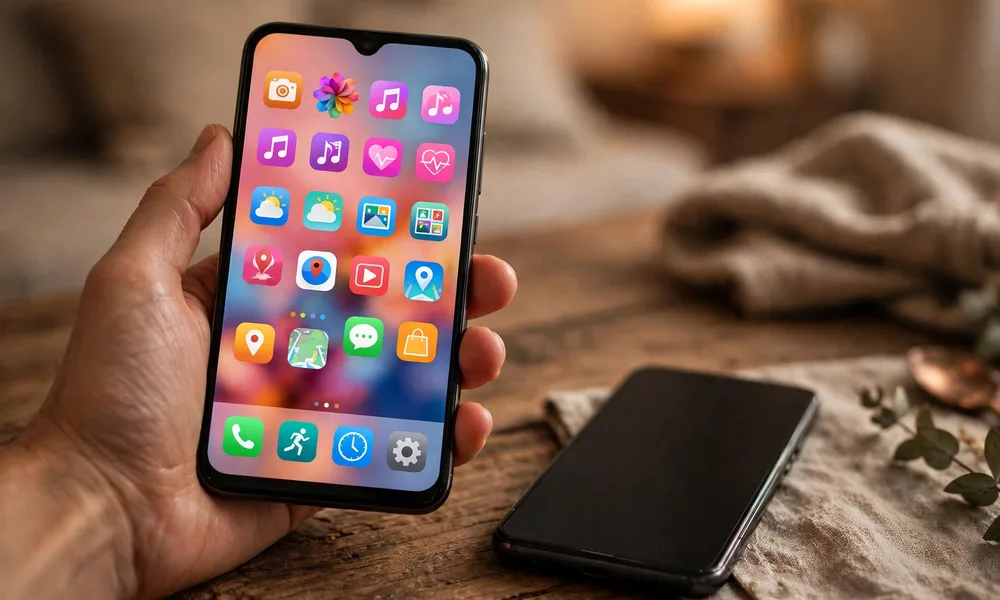
Android is also the more flexible system. You can change the launcher, reshape the home screen, pick your default browser and messaging app, and sideload apps the Play Store does not carry. The hardware is often ahead too: many Android flagships offer bigger batteries, faster charging, brighter screens, and stronger zoom cameras than the equivalent iPhone, and foldable Android phones remain a category Apple has not entered.
Google’s Pixel phones turned phone photography into a software contest: Night Sight and the Pixel’s portrait processing produce photos many people prefer to iPhone shots, especially in low light. Samsung’s zoom lenses go further than anything Apple sells, which matters if you photograph sport or travel. If you want to complete your setup, our guide to the best wireless earbuds in 2027 covers the earbuds that pair best with each platform.
The trade-offs are fragmentation and resale value. Cheaper Android phones may only get two or three years of updates, so check the update promise before buying, and even flagship Android phones lose value faster than iPhones. App quality is slightly less consistent too: popular apps usually arrive on iPhone first, and some Android apps feel less polished. Buy a Samsung or Pixel flagship and these gaps mostly disappear.
Pros: Huge choice and lower prices; the most customisation; faster charging and bigger batteries on many models; the best zoom cameras and the only foldables.
Cons: Update support varies by brand and price; resale value drops faster; some apps arrive later or feel less polished than on iPhone.
iPhone: the simplest phone that just works
The iPhone’s appeal in 2027 is consistency. Apple controls the hardware and the software, so every iPhone 17 runs the same iOS, gets updates on the same day, and behaves the same way from one year to the next. Apps are polished, the App Store is tightly curated, and features like Face ID, AirDrop, and the camera simply work. If you want a phone you never have to think about, this is still the strongest argument in the business.
Video is where the iPhone keeps its clearest lead. iPhone video quality, stabilisation, and colour are the standard other phones are measured against, and features like Cinematic mode and ProRes recording make it the default choice for creators who shoot on a phone. The camera rarely produces a bad photo, even in difficult light, and the editing tools are built in rather than bolted on.
The ecosystem is the deeper reason people stay. An iPhone pairs with the Apple Watch, AirPods, and Mac in ways Android cannot match: messages and calls follow you across devices, photos sync instantly, and AirDrop moves files in seconds. Apple’s privacy controls are also clearer than Android’s. And when it is time to upgrade, iPhones hold their value better than any other phone, which makes the higher upfront price easier to swallow.
The costs are choice and price. The cheapest current iPhone, the iPhone 16e, starts at about $599, and the iPhone 17 Pro starts at about $1,099 — and Apple’s storage upgrades are expensive. You cannot expand storage or customise the system deeply, and you are locked into Apple’s way of doing things, from the App Store to the Apple Watch. Charging is still slower than the best Android phones, and there is no foldable iPhone.
Pros: The most consistent software and the best video; superb ecosystem with Apple Watch, AirPods, and Mac; strongest privacy controls; the best resale value.
Cons: Expensive, with no true budget option; limited customisation; slower charging than Android rivals; no foldable model.
The verdict
For most buyers in 2027, the right choice follows the devices you already own. If you have an iPhone, an Apple Watch, or a Mac, stay with iPhone — the ecosystem is worth more than any single feature. If you have an Android phone, a Windows laptop, or a tight budget, Android gives you more phone for your money.
On hardware alone it is a draw: a $799 Pixel or Galaxy is every bit as good as a $799 iPhone for everyday use. So ignore the brand arguments and buy the phone that fits your life, your budget, and the people you message most.
How to choose
Start with your budget. Under $400, Android is the only real option, and a Pixel A-series or Samsung A-series phone will serve you well. Between $700 and $900, both sides are excellent: compare the iPhone 17 with the Pixel 10 and the Galaxy S25, and pay attention to camera style, battery life, and which of your friends use iMessage. Over $1,000, you are choosing between the iPhone 17 Pro and the top Galaxy or Pixel — at that price, try them in a shop and pick the one that feels right in your hand.
Next, check your accessories and subscriptions. An Apple Watch only works with an iPhone, and switching means replacing it; the same applies to some Android watches. Both platforms now offer transfer tools that move most of your data in under an hour. If you are an iPhone owner switching to Android, read our guide on how to back up your iPhone first, so nothing is lost in the move. Finally, check trade-in values: a recent iPhone often cuts hundreds off the price of a new one, whichever platform you choose next.
Checklist: before you buy
- Set a firm budget first, then check current pricing, carrier deals, and trade-in values.
- Check the update promise: aim for at least five years of software updates, and seven on a flagship.
- Confirm your must-have apps are available and work well on the platform you are considering.
- Test the camera in the shop with your own photos, not just the demo images, and check video quality too.
- Check battery life and charging speed against your day, and confirm the charger and cable situation in the box.
- Look at storage: 128GB is the minimum in 2027, and 256GB is the safer pick if you shoot a lot of video.
Frequently asked questions
Is Android better than iPhone in 2027?
Neither is clearly better overall. Android wins on choice, price, and customisation, while iPhone wins on consistency, video quality, and resale value. The best phone is the one that fits your budget and your other devices.
Can iPhone and Android phones message each other properly now?
Yes, mostly. iPhones now support RCS messaging, so texts between iPhone and Android show typing indicators, read receipts, and higher-quality photos. iMessage features like reactions and effects still only work between iPhones, and FaceTime remains Apple-only.
How long do Android phones get updates now?
Samsung and Google now promise up to seven years of software and security updates on their flagship phones, which matches Apple’s support in practice. Cheaper Android phones get less — often three to five years — so check the promise for the exact model before you buy.
Is it easy to switch from iPhone to Android?
Yes. Both Google and Samsung provide transfer tools that move your photos, contacts, messages, and most apps during setup. Some things do not move cleanly, such as iMessage history and some paid apps, so back up first.
Which phone has the best camera in 2027?
For photos, the Pixel 10 and iPhone 17 Pro are the usual leaders, with Samsung’s Galaxy close behind and ahead on zoom. For video, the iPhone remains the standard. All three take excellent photos in daylight, and the differences are mostly about colour style and zoom range.
Do iPhones still work with Windows computers?
Yes, but not as smoothly as with a Mac. You can sync photos and files through iCloud on Windows, but features like AirDrop and iMessage are Mac-only. Android phones pair more naturally with Windows through Microsoft’s Phone Link app, while iPhone owners who want the full experience should look at our guide to how to use AirDrop to see what the Mac pairing offers.
The bottom line
Android vs iPhone in 2027 is a choice between freedom and polish. Android gives you more phones, lower prices, and the freedom to shape the phone your way. iPhone gives you the most consistent experience and the best video.
Buy the iPhone if you already live in Apple’s world or you want the simplest phone that holds its value. Buy Android if you want more choice, a lower price, or features like foldables and faster charging. Either way, both platforms are so good now that the wrong choice is hard to make — pick the one that fits your life.