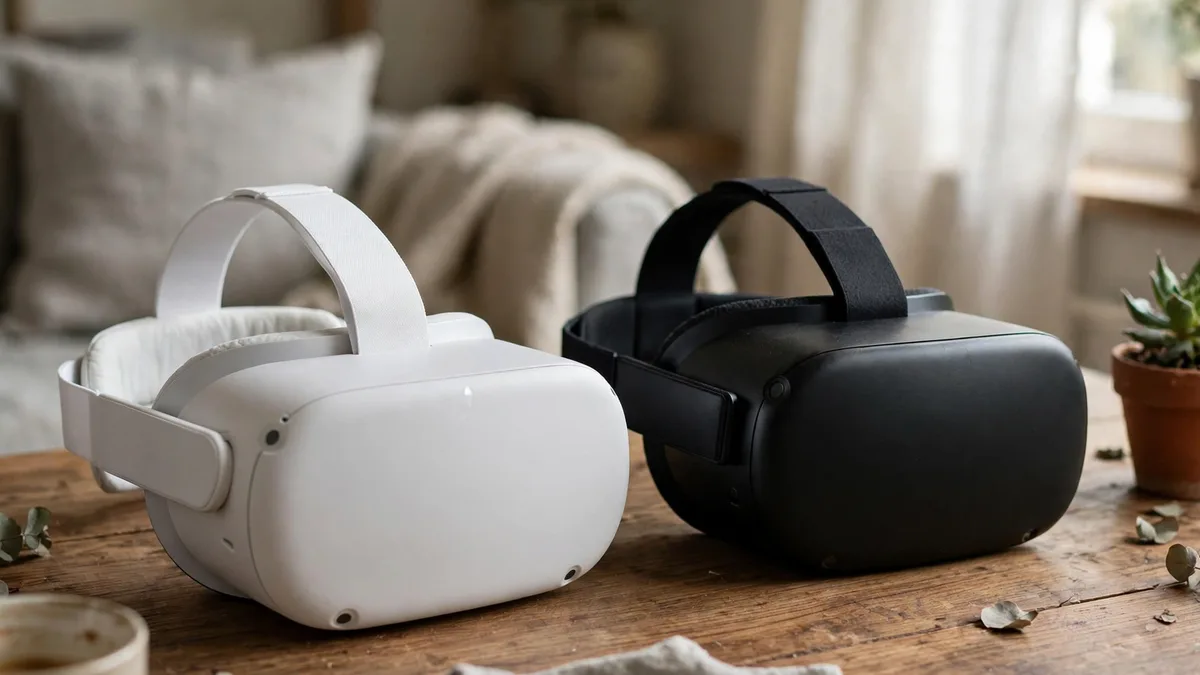
Apple Vision Pro 2 vs Meta Quest 4: Which Next-Gen Headset Wins?
The next round of the headset race is taking shape, and it is a familiar contest with new stakes. Apple Vision Pro 2 vs Meta Quest 4 is the comparison every premium mixed-reality headset buyer will face in 2027: Apple’s polished, expensive vision of spatial computing against Meta’s cheaper, friendlier, game-first approach. Both should be major steps forward, but they are built for different people.
Apple’s first Vision Pro showed what a headset could do when money was no object: stunning displays, precise eye and hand tracking, and a computing experience closer to a Mac than a games console. Its weakness was obvious too: the price excluded most buyers, and the weight made long sessions tiring. The second version is expected to fix exactly those problems, with a lighter design and a faster chip.
Meta, meanwhile, has spent years making headsets normal. The Quest line is the best-selling VR hardware in the world because it is affordable, standalone, and packed with games. The Quest 4 is expected to push display quality, comfort, and mixed reality much closer to Apple’s level while keeping the price far lower. This comparison weighs them on display, comfort, performance, software, and price, so you can decide which fits your life.
Key takeaways
- Apple Vision Pro 2 is expected to lead on display quality, eye tracking, and productivity, at a premium price.
- Meta Quest 4 is expected to lead on value, gaming, and comfort for long play sessions.
- Both should improve mixed reality, with better colour passthrough and wider fields of view.
- Apple’s fits best inside its ecosystem; Meta’s fits best with the biggest game and app library.
- For most buyers, the Quest 4 is the sensible pick; the Vision Pro 2 is the pick for professionals and Apple loyalists.
| Feature | Apple Vision Pro 2 | Meta Quest 4 |
|---|---|---|
| Expected price | Premium, around $2,500-$3,500 | Mainstream, around $400-$600 |
| Display | Micro-OLED, extremely sharp | High-res LCD or OLED |
| Best for | Work, media, Apple users | Gaming, fitness, and social VR |
| Controls | Eyes and hands | Hand tracking and controllers |
| Standalone use | Yes, built-in chip | Yes, built-in chip |
| Battery life | Around 2-3 hours per charge | Around 2-3 hours per charge |
Prices are approximate and based on current reports and expectations. Check current pricing when the headsets are officially announced.
Apple Vision Pro 2
The Vision Pro 2 is expected to be Apple’s correction of the original’s two biggest flaws: weight and price. Reports point to a lighter frame, a better-balanced strap, and a faster chip that runs cooler. The micro-OLED displays should remain the best in any consumer headset, with text sharp enough that reading documents and editing photos in a virtual workspace feels natural.
What makes Apple’s headset different is that it is a computer first, a games device second. Eye and hand tracking replace controllers for most tasks: look at an app and tap your fingers to open it. Mac Virtual Display turns it into a giant private monitor, and it ties in with iPhone, iPad, and Mac in ways Meta cannot match. For a professional who already lives in Apple’s world, that integration is the real selling point.
The problems are price and software depth. Even a cheaper Vision Pro 2 should cost several times more than a Quest 4, and the visionOS library still lacks the huge catalogue Meta has built over a decade. It is a superb productivity and media headset, but a luxury purchase, not a mainstream one.
Strengths: best-in-class displays and eye tracking; superb productivity and media experience; deep Apple ecosystem integration; premium build quality. Weaknesses: very high expected price; smaller game library; shorter battery life in heavy use; fewer social VR options.
Meta Quest 4

The Quest 4 should be Meta’s most polished headset yet, and its pitch is simple: most of the Vision Pro experience at a fraction of the price. Expect sharper displays, a wider field of view, better colour passthrough, a lighter design, and improved hand tracking alongside the familiar controllers.
Gaming remains Meta’s biggest advantage. The Quest store has the deepest library of standalone VR games, from fitness apps to full adventures, and the Quest 4 should run them better while adding mixed-reality titles that blend virtual objects with your real room. Social VR is another strength: meeting friends in virtual spaces is core to Meta’s platform in a way it is not on Apple’s. For play, the Quest 4 is the obvious choice, and our roundup of the best gaming headsets in 2027 covers audio gear that pairs well with long VR sessions.
The trade-offs are display quality and productivity. The Quest 4’s screens should be much better than the Quest 3’s, but they are unlikely to match Apple’s micro-OLED panels for fine text work. Virtual desktops and office apps are improving, yet they remain secondary rather than the main event. For buyers who mainly want games, fitness, and social experiences, none of that matters much.
Strengths: far lower expected price; biggest VR game library; strong social and fitness experiences; good controllers and hand tracking. Weaknesses: displays unlikely to match Apple for fine text; productivity features less polished; Meta account and data policies concern some buyers.
Display and visual quality
Displays are where Apple is expected to keep its lead. The original’s micro-OLED panels delivered roughly 4K resolution per eye with superb contrast, and the second version should be at least as good, possibly brighter. Reading small text, watching films, and editing photos all benefit directly from that sharpness.
Meta is closing the gap, though: the Quest 4 should move to higher-resolution panels with better lenses, reducing the screen-door effect and widening the field of view. For games and video, the difference may be hard to notice. For a full working day of documents and spreadsheets, Apple’s advantage should remain clear. If you wear glasses, check prescription lens insert compatibility and pricing before buying.
Comfort and design
Comfort decided many first-generation headset purchases, and both companies know it. The original Vision Pro was front-heavy, which made long sessions tiring despite its beautiful materials. The Vision Pro 2 should be noticeably lighter, with a redesigned strap that spreads weight better.
Meta has the advantage of iteration: the Quest line has been refined through several generations, and the Quest 4 should be the lightest and best-balanced Quest yet. For two-hour gaming sessions, Meta’s design should feel easier to live with. For shorter work sessions, Apple’s improvements should close most of the gap. Either way, try one on in a store before buying, because fit is personal and no specification sheet captures it.
Software, games, and ecosystem
Software is the real battleground. Meta has the games, fitness apps, and social spaces, plus a large developer community building for Quest. Apple has the productivity apps, the media experience, and the ecosystem lock-in that makes the headset a natural extension of a Mac or iPhone.
Consider what you already own. If your music, photos, documents, and messages live in Apple’s world, the Vision Pro 2 will feel familiar immediately. If you own a gaming PC, an Android phone, and a Quest library, the Quest 4 slots in without changing anything. Wearable tech is about the ecosystem around the device, as the best smart glasses in 2027 show: the hardware matters, but the software you already use matters more. Audio matters too: the best wireless earbuds in 2027 pair well with either headset for private sound.
Verdict: which headset should you buy?
Buy the Meta Quest 4 if you want the best value in VR in 2027: strong displays, great games, good mixed reality, and comfort at a price most people can justify. For gaming, fitness, and social VR, it is the right choice, and the money you save buys a lot of games.
Buy the Apple Vision Pro 2 if you work in Apple’s ecosystem and want a headset as a productivity and media device. Its displays, eye tracking, and Mac integration should be unmatched, and if the price cut and weight reduction land as expected, it becomes a realistic tool, not a showcase gadget. Just go in knowing you are paying a large premium for that polish.
How to choose between the Vision Pro 2 and Quest 4
Start with your budget, because the price gap is enormous. If the Vision Pro 2’s expected price makes you pause, the Quest 4 is the answer. Then think about what you will actually do with it most days. Games and fitness point to Meta, while work, films, and photo editing point to Apple.
Check your existing devices next. An iPhone and Mac owner gets far more from the Vision Pro 2 than a Windows and Android household would, while a Quest owner with a library of games has the least reason to switch. Finally, wait for official announcements and early reviews before pre-ordering, since final prices, battery life, and launch software can differ from expectations.
Headset buying checklist
- Decide your main use first: gaming, fitness, work, or media.
- Set a firm budget and include accessories such as lens inserts and a carrying case.
- Check which of your existing devices and accounts each headset supports.
- Try the headset on in a store to test weight, fit, and comfort.
- Compare the game and app libraries for the titles you actually want.
- Wait for official pricing and early reviews before pre-ordering.
Frequently asked questions
Which is better, Apple Vision Pro 2 or Meta Quest 4?
Neither is better for everyone. The Vision Pro 2 should lead on display quality and productivity, while the Quest 4 should lead on value, gaming, and social VR. The right choice depends on your budget and what you plan to do with the headset.
How much will the Apple Vision Pro 2 cost?
Apple has not confirmed a price. Current reports suggest less than the original Vision Pro, possibly around $2,500 to $3,500, but that is only an estimate. Prices are approximate, so check current pricing when Apple officially announces the headset.
How much will the Meta Quest 4 cost?
Meta has not confirmed a price either. Based on the Quest line’s history, around $400 to $600 is reasonable. Check current pricing when Meta officially announces the headset.
Can the Vision Pro 2 play VR games?
Yes, but its game library should be much smaller than Meta’s. It is a productivity-first headset, so serious gamers will find more choice and better value on the Quest 4.
Can the Quest 4 be used for work?
Yes: it should support virtual desktops, web browsing, and office apps, with improved displays that make text easier to read. It works for occasional work sessions, though Apple’s headset is likely to remain the stronger choice for a full working day.
Should I wait for these headsets or buy a current model?
If you want a headset now, current models such as the Quest 3 and the original Vision Pro are proven and often discounted. If you can wait, both should bring better displays, comfort, and mixed reality, so waiting is worth it.
The bottom line
Apple Vision Pro 2 vs Meta Quest 4 is a contest between polish and value. Apple should win on displays, productivity, and ecosystem integration; Meta should win on price, games, and everyday comfort. Both headsets will be big steps forward, and both will be worth owning for the right person.
For most buyers in 2027, the Meta Quest 4 is the smart purchase: it does the things most people buy a headset for, at a price most people can accept. The Vision Pro 2 suits Apple users and professionals who will use its best-in-class displays every day. Whichever you choose, wait for the official announcements, try one on, and buy the headset that fits your life, not the longest specification sheet.