The Apple Watch SE 3 vs Galaxy Watch 8 question is settled by one thing first: which phone is in your pocket. Both launched in 2025 and cost far less than their makers’ flagships, and both handle notifications, fitness, sleep and safety features well. Yet they are built for opposite ecosystems.
iPhone owners: the SE 3 is the natural pick. Samsung or other Android owners: the Galaxy Watch 8. The Samsung watch has the brighter display, longer battery and deeper health sensors; the SE 3 is cheaper and plugs into Apple services no rival can match.
Key takeaways
- Your phone decides first. The SE 3 only works with an iPhone; the Galaxy Watch 8 needs Android, and works best with a Samsung phone.
- The Galaxy Watch 8 wins on hardware. Its display reaches 3,000 nits (SE 3: 1,000), its battery lasts up to 40 hours (SE 3: 18), and it adds ECG, blood oxygen and body composition sensors.
- The SE 3 wins on price and Apple integration. It starts at $249 against $349.99, and brings Apple Pay, Siri and seamless iPhone pairing.
- Neither watch is a flagship. The SE 3 has no ECG or blood oxygen sensor, and the Galaxy Watch 8 sits below Samsung’s Classic and Ultra models.
- Best for iPhone owners: Apple Watch SE 3. Best for Android owners: Galaxy Watch 8.
Apple Watch SE 3 vs Galaxy Watch 8 at a glance
| Feature | Apple Watch SE 3 | Samsung Galaxy Watch 8 |
|---|---|---|
| Starting price | From $249 | From $349.99 |
| Case sizes | 40mm and 44mm aluminium | 40mm and 44mm aluminium |
| Display | Always-On Retina OLED, 1,000 nits | Super AMOLED, sapphire crystal, 3,000 nits |
| Chip and storage | S10 chip, 64GB | Exynos W1000 (3nm), 2GB RAM, 32GB |
| Battery life | Up to 18 hours; 32 hours in Low Power Mode | Up to 40 hours (Always-On off); 30 hours (on) |
| Health sensors | Optical heart rate, temperature sensor | BioActive: ECG, blood oxygen, body composition |
| Water resistance | 50 metres, swimproof | 5ATM and IP68 |
| Software | watchOS 27, iPhone only | Wear OS 6, Android only |
| Weight (smallest case) | 26.3g (40mm GPS) | 30g (40mm) |
| Launched | September 2025 | July 2025 |
Table 1: Headline specifications compared; prices are launch prices in US dollars.
Design: slim versus slimmer
Both watches come in 40mm and 44mm aluminium cases. The Galaxy Watch 8 is Samsung’s slimmest yet at 8.6mm thick, with a cushion-style case, in Graphite and Silver. At 30g (40mm) it is light enough to forget, though heavier than the SE 3’s 26.3g.
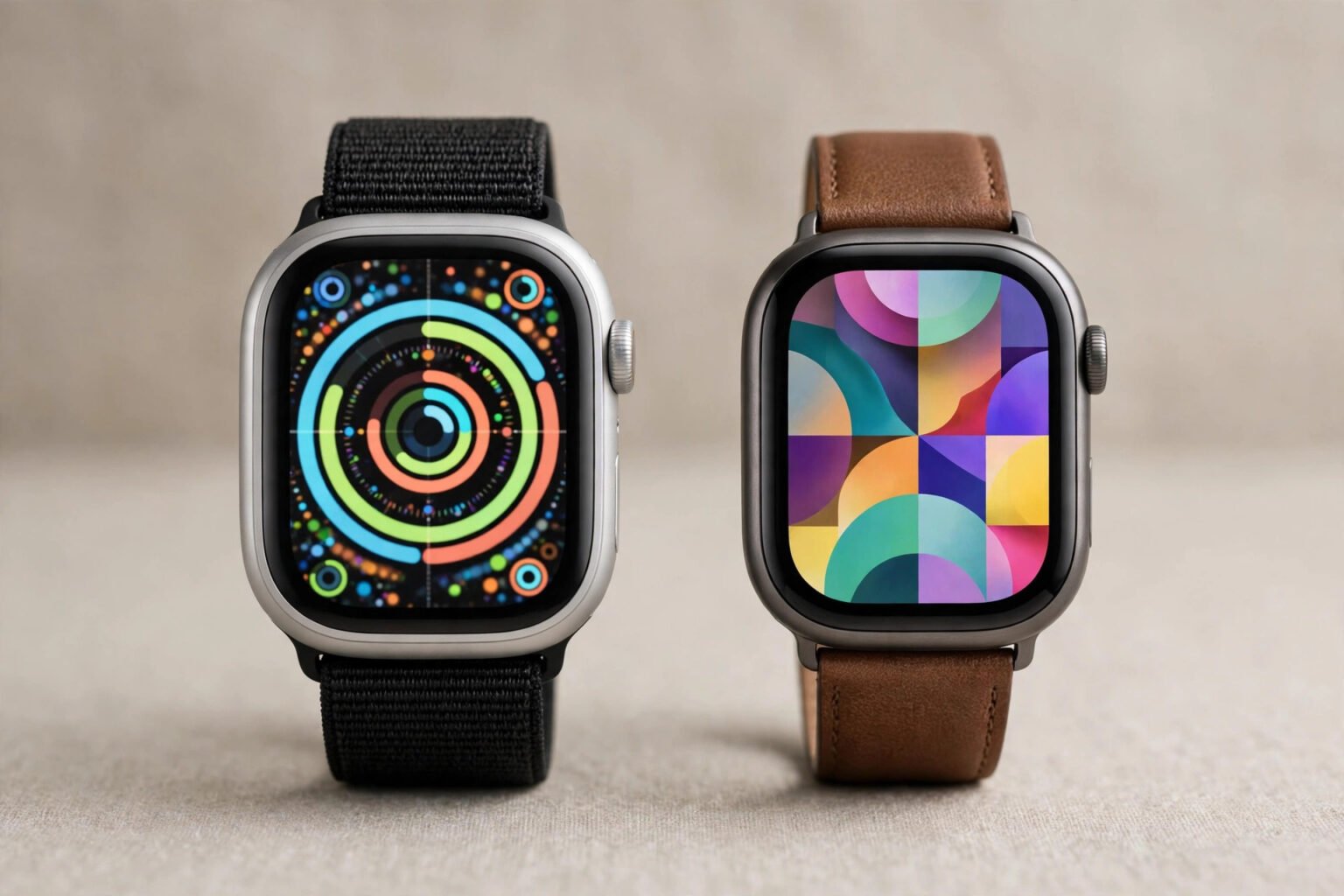
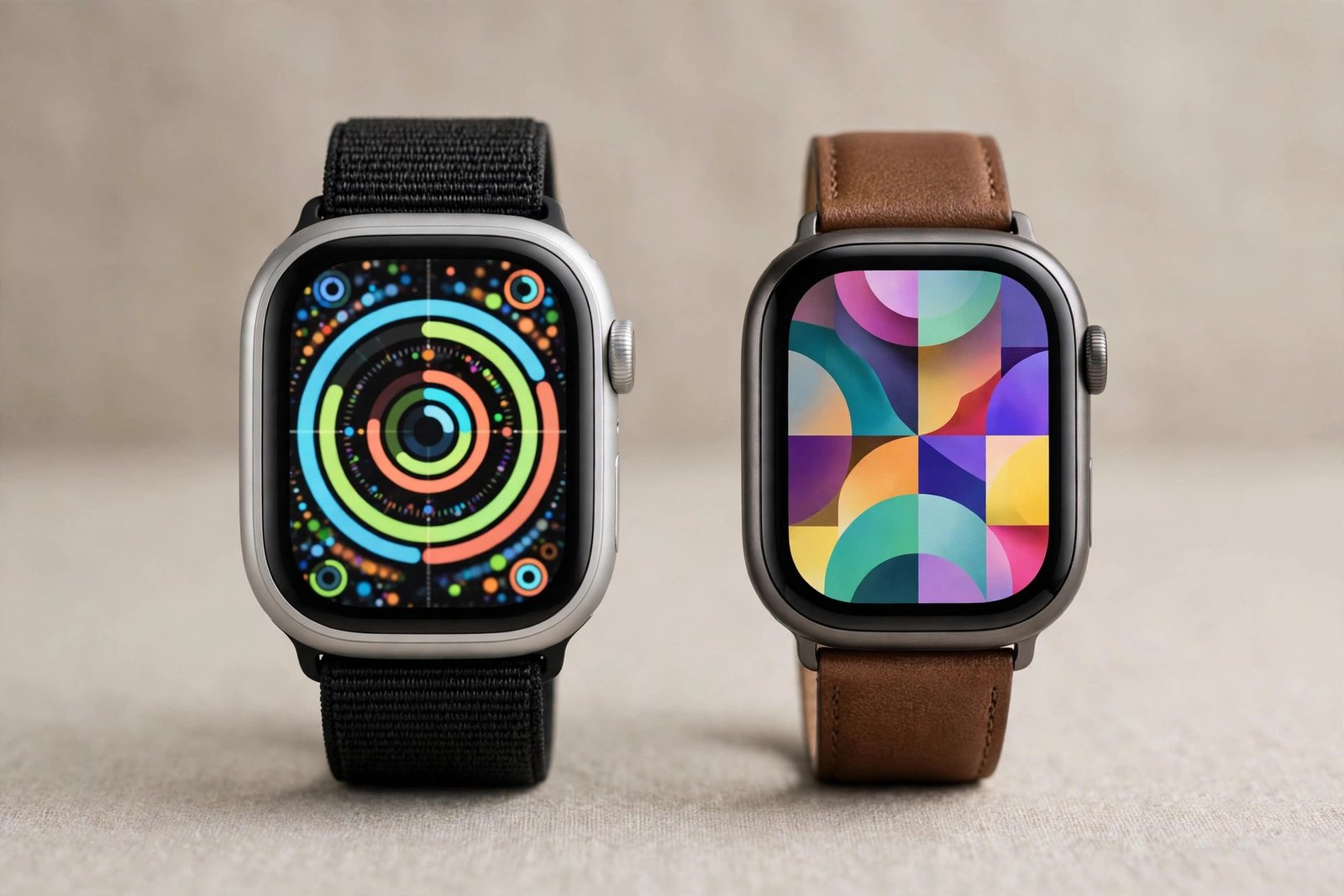
The SE 3 keeps Apple’s rounded-square design, Digital Crown and side button. Its Ion-X glass is, according to Apple, four times more crack resistant than the SE 2’s. The Galaxy Watch 8 answers with a sapphire crystal display, which resists scratches better than standard glass. Both are swimproof. Neither has a rotating bezel; that lives on the pricier Galaxy Watch 8 Classic.
Display: the Galaxy Watch 8’s clearest win
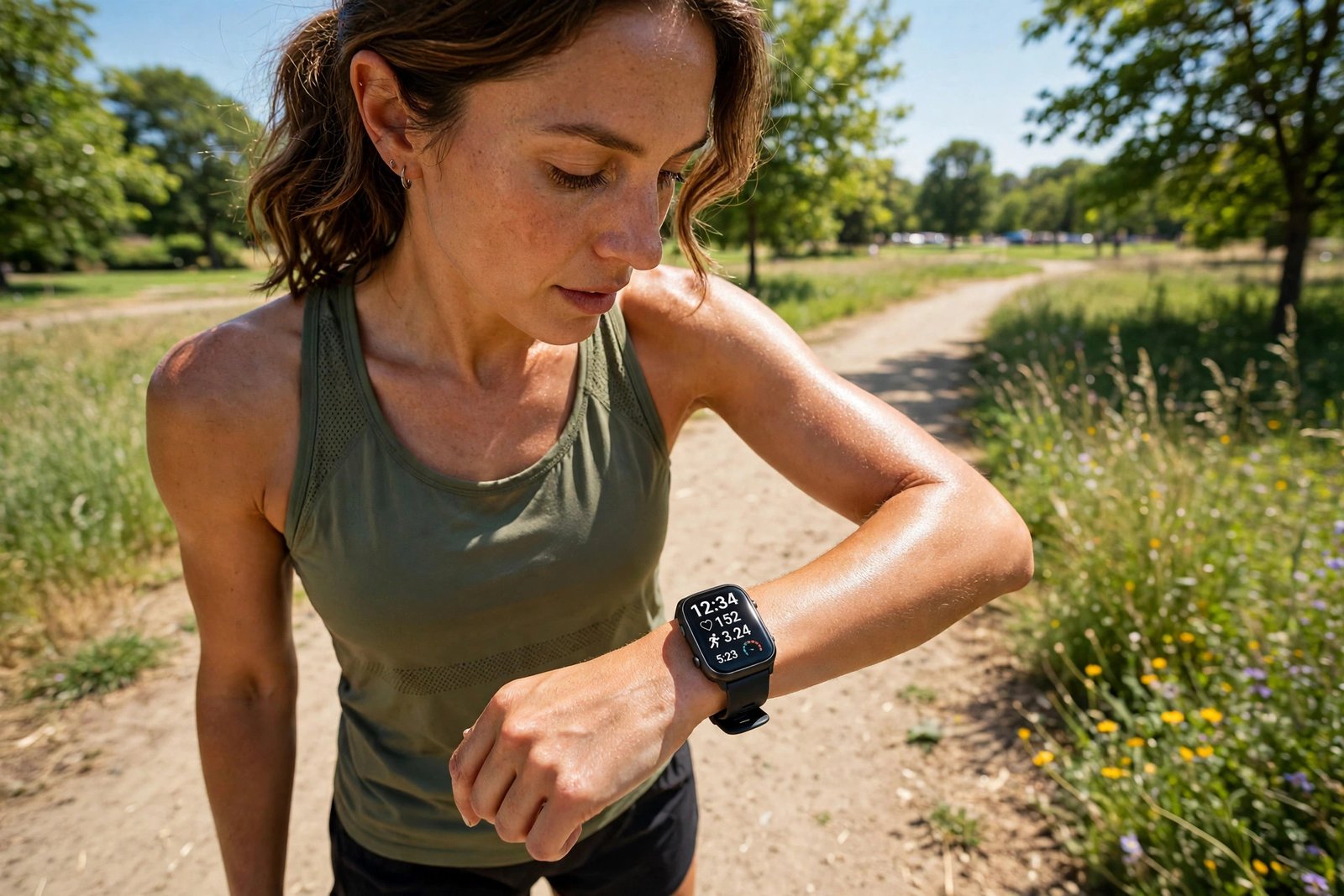
This is the most one-sided section of the comparison. The Galaxy Watch 8’s Super AMOLED display reaches up to 3,000 nits of peak brightness, three times the SE 3’s 1,000 nits. In direct sunlight the Samsung screen stays readable where the Apple screen washes out. Both are sharp: 438 x 438 pixels on the 40mm Galaxy Watch 8, 480 x 480 on the 44mm, and 326 pixels per inch on the SE 3.
The SE 3 closes one gap from the SE 2: its display is now always on, so you can glance at the time without raising your wrist, and it dims to 2 nits in a dark room. If you spend a lot of time outdoors, the Galaxy Watch 8’s brightness is a genuine reason to prefer it.
Health sensors: Samsung goes deeper
Health tracking is where the two watches diverge most sharply. The Galaxy Watch 8 carries Samsung’s BioActive sensor: optical heart-rate sensing plus an electrical heart sensor for ECG, blood oxygen measurement, body composition analysis and skin temperature sensing, plus an Antioxidant Index, Energy Score, Bedtime Guidance and Running Coach.
The SE 3 covers the basics: heart rate with high and low notifications and irregular rhythm alerts, a temperature sensor for cycle tracking, sleep stages with a sleep score, sleep apnoea notifications, and Fall, Crash Detection and Emergency SOS. What it lacks is an electrical heart sensor and a blood oxygen sensor, so there is no ECG app and no blood oxygen readings — Apple’s own specifications list neither. Those need a Series or Ultra model; see our Apple Watch Ultra 3 review.
Both makers stress their health features are for general wellness, not diagnosis. If health depth is your priority, the Galaxy Watch 8 measures more; if you only want reliable heart rate, sleep and activity tracking, the SE 3 covers that ground.
Battery: a full day versus nearly two
Battery life is the Galaxy Watch 8’s second clear win: up to 40 hours with the always-on display off, and up to 30 hours with it on. The 40mm model has a 325mAh battery and the 44mm a 435mAh one — enough for a full day, a night of sleep tracking, and well into the next day.
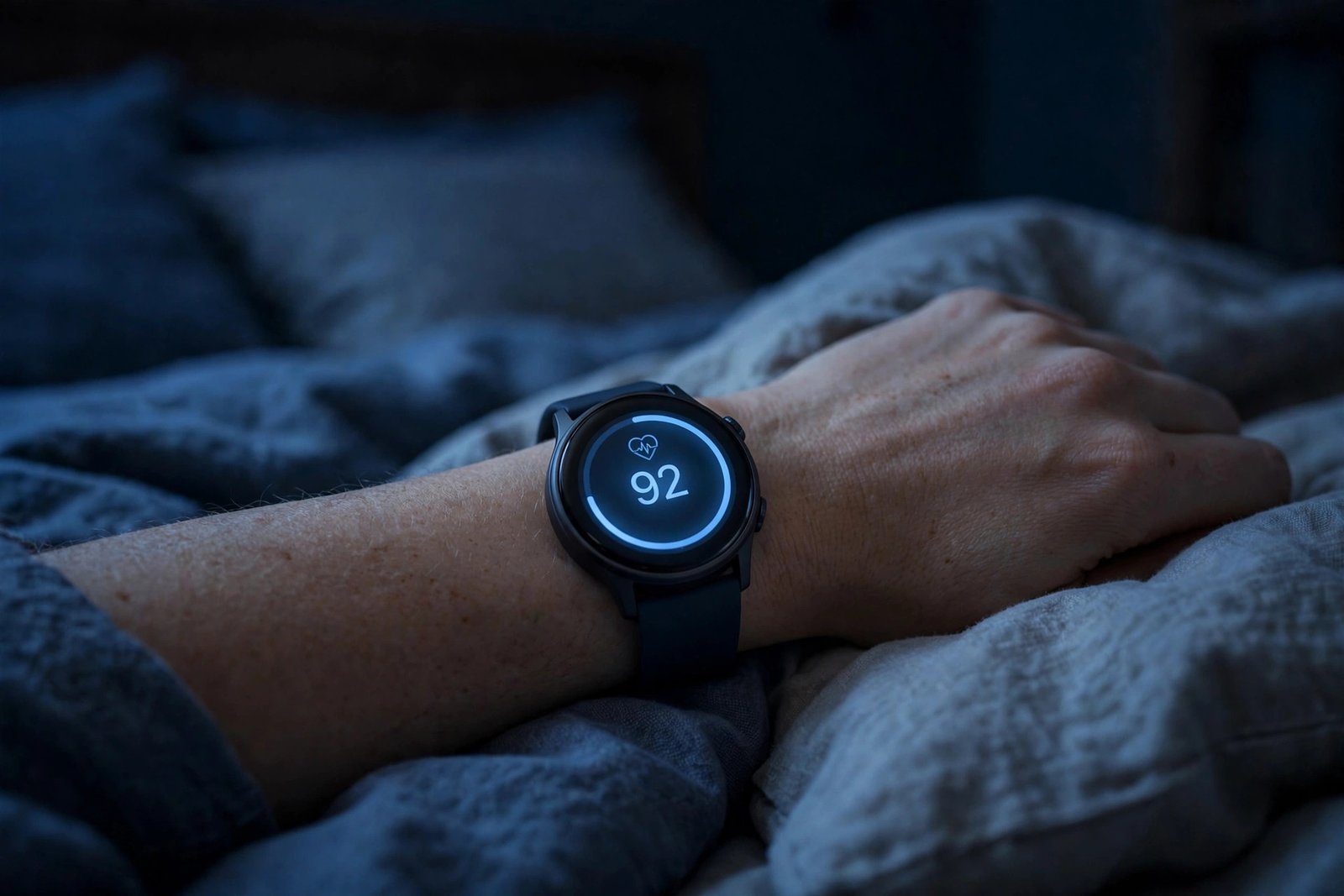
Apple rates the SE 3 at up to 18 hours of normal use, or 32 hours in Low Power Mode — enough for a day and a night of sleep tracking if you charge it while you shower, but not for a whole weekend. Fast charging gives about 80 per cent in 45 minutes; 15 minutes gives eight hours of use. With the Galaxy Watch 8, you can charge every other day and still track sleep nightly. With the SE 3, charging becomes a daily habit.
Software and ecosystem: the decision-maker
Software is where your phone makes the decision final. The SE 3 runs watchOS 27 and requires an iPhone 11 or later, or an iPhone SE (2nd generation or later), running iOS 27 or later. It does not pair with Android at all. In return it plugs into Apple’s world: Apple Pay, Siri, iMessage, AirPods switching, Apple Fitness+ and watch apps.
The Galaxy Watch 8 runs Wear OS 6 with Samsung’s One UI 8 Watch interface, and it needs an Android phone. It works best with a Samsung phone, where Samsung Health, Samsung Pay and Galaxy AI integrate most deeply, but it works with other Android phones too. Google Gemini is the built-in voice assistant, with Google Maps, Google Wallet and the Play Store available. It cannot pair with an iPhone.
The real gap is continuity: the SE 3 hands calls and audio between iPhone, AirPods and Mac invisibly, while the Galaxy Watch 8 does the same inside Samsung’s ecosystem. Switch phones, and the watch will not follow you.
Price: $100 apart at launch
At launch, the SE 3 started at $249, while the Galaxy Watch 8 started at $349.99 (40mm Bluetooth) and $379.99 (44mm). LTE costs more on both: the Galaxy Watch 8’s LTE models start at $399.99 and $429.99, and the SE 3’s cellular models carry a premium over the GPS-only versions.
That $100 gap is the SE 3’s strongest card — the cheapest route into a capable smartwatch from a major brand. If your budget is tight and you own an iPhone, the SE 3 is the obvious answer. Our guide to the best smartwatches under $100 covers even cheaper options if $249 is still more than you want to spend. Street prices change fast, though, and Samsung watches in particular tend to fall below launch price within months — so check current prices before buying. Samsung has since launched the Galaxy Watch 9 (August 2026, from $379.99), with the same design and display, a faster Snapdragon Wear Elite chip and a larger battery — the Watch 8 is now the previous model and often sells below its launch price.
Which watch should you buy? A quick checklist
Five questions, in order — the first clear answer wins.
- What phone do you own? iPhone means Apple Watch SE 3; Android means Galaxy Watch 8.
- What is your budget? Under $300: SE 3. $350 or more: Galaxy Watch 8.
- Do you need ECG, blood oxygen or body composition? Yes means the Galaxy Watch 8, unless you will pay for a higher-end Apple Watch.
- Do you track sleep every night? If yes, the Galaxy Watch 8’s 30 to 40-hour battery beats the SE 3’s 18 hours.
- Do you spend long hours outdoors? If yes, the Galaxy Watch 8’s 3,000-nit display is the practical choice outdoors.
The verdict
The Galaxy Watch 8 is the better watch on hardware: a display three times brighter, a battery lasting roughly twice as long, and health sensors that measure things the SE 3 cannot. On a specification sheet alone, it wins by a clear margin. But a smartwatch lives on your wrist next to your phone, and on that test the two tie — each is the best option for its own ecosystem and a non-starter for the other.
The SE 3 is $100 cheaper at launch and brings Apple’s services to the wrist at the lowest price Apple offers; for iPhone owners it is the right buy without hesitation. The Galaxy Watch 8 is the right buy for Android owners for the same reason. Still weighing the wider field? Our roundup of the best smartwatches for iPhone users puts the SE 3 alongside its Apple rivals, so you can see if a Series or Ultra model is worth the extra money.
Best for iPhone owners wanting the cheapest way into the Apple Watch: the Apple Watch SE 3.
Best for Android owners wanting the brightest screen, longest battery and deepest health tracking: the Galaxy Watch 8.
Frequently asked questions
Does the Apple Watch SE 3 work with Android?
No. The SE 3 requires an iPhone 11 or later, or an iPhone SE (2nd generation or later), running iOS 27 or later. Android owners should look at the Galaxy Watch 8 or another Wear OS watch.
Does the Apple Watch SE 3 have ECG and blood oxygen?
No. Apple’s specifications list an optical heart sensor and a temperature sensor, but no electrical heart sensor and no blood oxygen sensor — so no ECG app and no blood oxygen readings. Those are on Apple’s Series and Ultra models.
How long does the Galaxy Watch 8 battery last?
Up to 40 hours with the always-on display off, and up to 30 hours with it on. The 40mm model has a 325mAh battery and the 44mm a 435mAh one — comfortably longer than the SE 3’s 18 hours.
Which watch has the better display?
The Galaxy Watch 8: up to 3,000 nits from its Super AMOLED display with sapphire crystal, against the SE 3’s 1,000-nit Always-On Retina display. Both are sharp, but the Samsung screen is far easier to read in sunlight.
Is the Galaxy Watch 8 worth $100 more?
For Android owners, yes — the brighter display, longer battery and extra health sensors justify it. For iPhone owners, the question does not arise: the Galaxy Watch 8 cannot pair with an iPhone.
Can both watches track swimming?
Yes. The SE 3 is swimproof to 50 metres and the Galaxy Watch 8 is rated 5ATM with IP68. Both handle pool swimming and showering; neither is a dive watch.
The bottom line
Buy the watch that matches your phone. iPhone owners: buy the Apple Watch SE 3, enjoy the $249 starting price, and charge it daily without complaint. Android owners: buy the Galaxy Watch 8, enjoy the brighter screen and two-day battery, and use the ECG and body composition sensors the SE 3 lacks. Either way, you get a capable 2025 smartwatch — the only wrong choice is one that cannot pair with the phone you already own.