
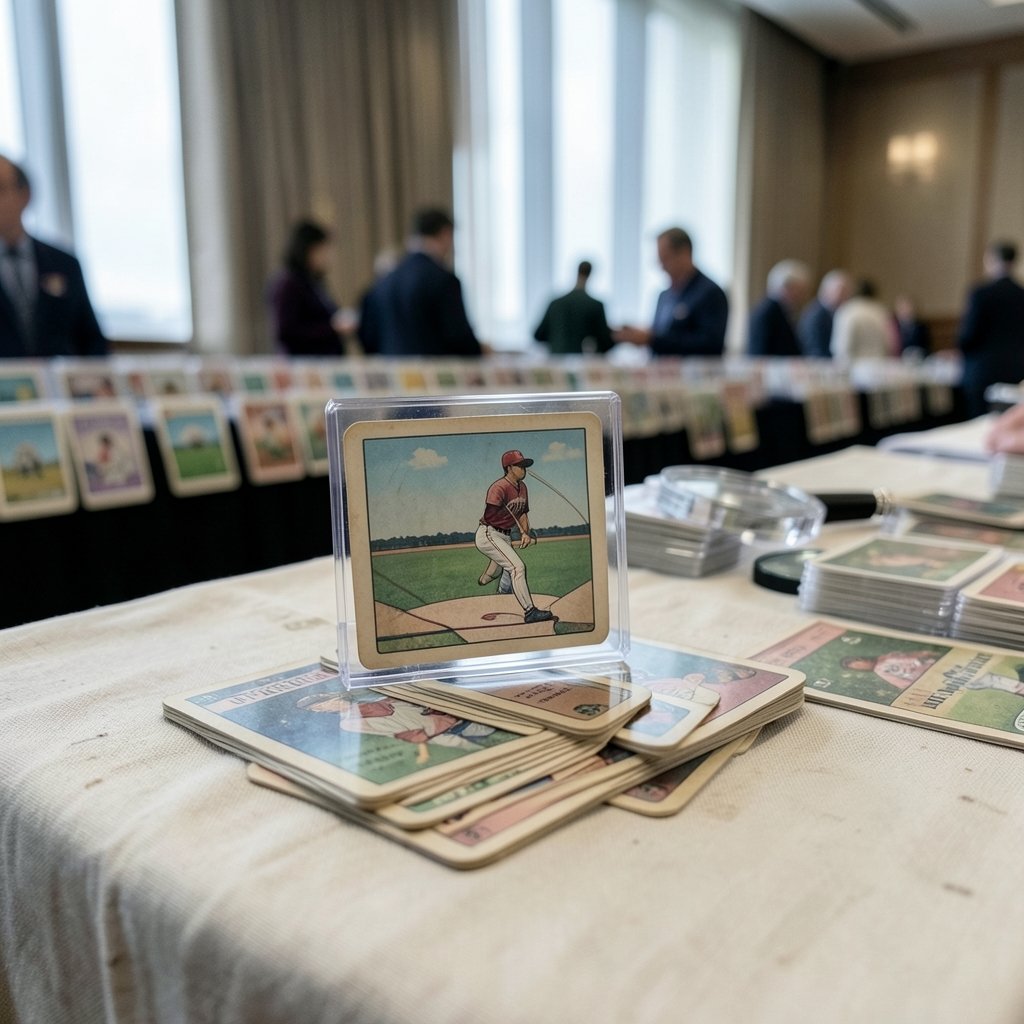
What makes a small piece of cardboard worth more than a house? Collectors’ daydreams start with that question, and the answer is stranger than most people expect. It is rarely about age. A 1910 card in poor shape can be worth less than a 1989 card in perfect shape. The real drivers are scarcity, condition, proof of authenticity, and demand from a small pool of serious buyers. (Best games nintendo switch 2 whats worth your time money)
This article walks through the cards that have actually sold for serious money, explains the mechanics behind those prices, and lays out the practical steps a normal person can take before spending a dollar.
The Card That Broke the Market
The T206 Honus Wagner is the most famous and most valuable baseball card in existence. The T206 set was issued between 1909 and 1911 by the American Tobacco Company, and Wagner’s card is scarce because he reportedly objected to his image being used to promote tobacco. Accounts differ on whether the dispute was about tobacco itself or about compensation, so treat any confident explanation with a little skepticism.
A PSA-graded example sold privately for $6.606 million in August 2021 through Goldin Auctions. That sale is the firm, well-documented anchor for the card’s value. Other examples have reportedly sold for more since then, but those figures are harder to verify in detail.
The lesson here is not “find a Wagner.” It is that the top of this market is driven by a handful of trophy hunters competing for a tiny supply. That dynamic does not repeat at lower price points.
The Post-War Icon: 1952 Topps Mickey Mantle
The 1952 Topps Mickey Mantle (#311) is the card most collectors name as the post-war grail. High-grade examples have sold for multiple millions, with a PSA 9 copy reportedly reaching $12.6 million in August 2022. That number is widely reported but difficult to independently confirm, so it is best treated as a headline figure rather than a settled fact.
What makes the Mantle instructive is the grade spread. A low-grade copy might sell for tens of thousands. A near-perfect copy sells for millions. Same card, same year, same player. The difference is entirely condition.
The Modern Entry Point: 1989 Upper Deck Ken Griffey Jr.
The 1989 Upper Deck Ken Griffey Jr. rookie card (#1) is the classic modern-era card. It matters because Upper Deck’s 1989 debut changed the hobby: better card stock, better photography, and a hologram on the back to fight counterfeiting. The Griffey was card number one in that set, which gave it outsized symbolic weight. (Gift card scam works victims rarely get their money back) (Baseball card)
Value here depends almost entirely on grade. Raw copies are common. High-grade examples command far more. This is the card that taught a generation of collectors that a modern card could still be worth real money if it is pristine. (Ynab vs monarch money zero based budgeting vs net worth)
What Actually Drives Price
Four factors do most of the work. Understanding them matters more than memorizing any single card.
| Factor | What It Means | Why It Matters |
|---|---|---|
| Scarcity | How few copies exist, especially in high grade | Supply sets the ceiling on price |
| Condition | Centering, corners, edges, surface | A grade can multiply value many times over |
| Authentication | Proof the card is genuine and unaltered | Counterfeits and trimmed cards are common |
| Demand | How many buyers want that specific card | A scarce card nobody wants is still cheap |
Condition Beats Age Every Time
A card’s grade is assigned on centering, corners, edges, and surface. Each flaw compounds. A card that looks fine to an untrained eye can grade several points lower than the owner expects, and that gap can mean thousands of dollars.
Population reports are the other half of the pricing puzzle. These reports show how many copies exist at each grade level. A card with 4,000 copies at a mid grade and 12 at the top grade will see enormous price separation between those tiers. Collectors who ignore population data routinely overpay.
Rookie Cards and Key Cards
Two categories carry most of the premium in the modern market. Rookie cards are a player’s first mainstream card, and key cards are tied to a milestone, a record, or a cultural moment. This is a market convention rather than a written rule, but it is remarkably consistent. When a player has a breakout season, demand for the rookie card spikes within days.
Authentication Is Not Optional
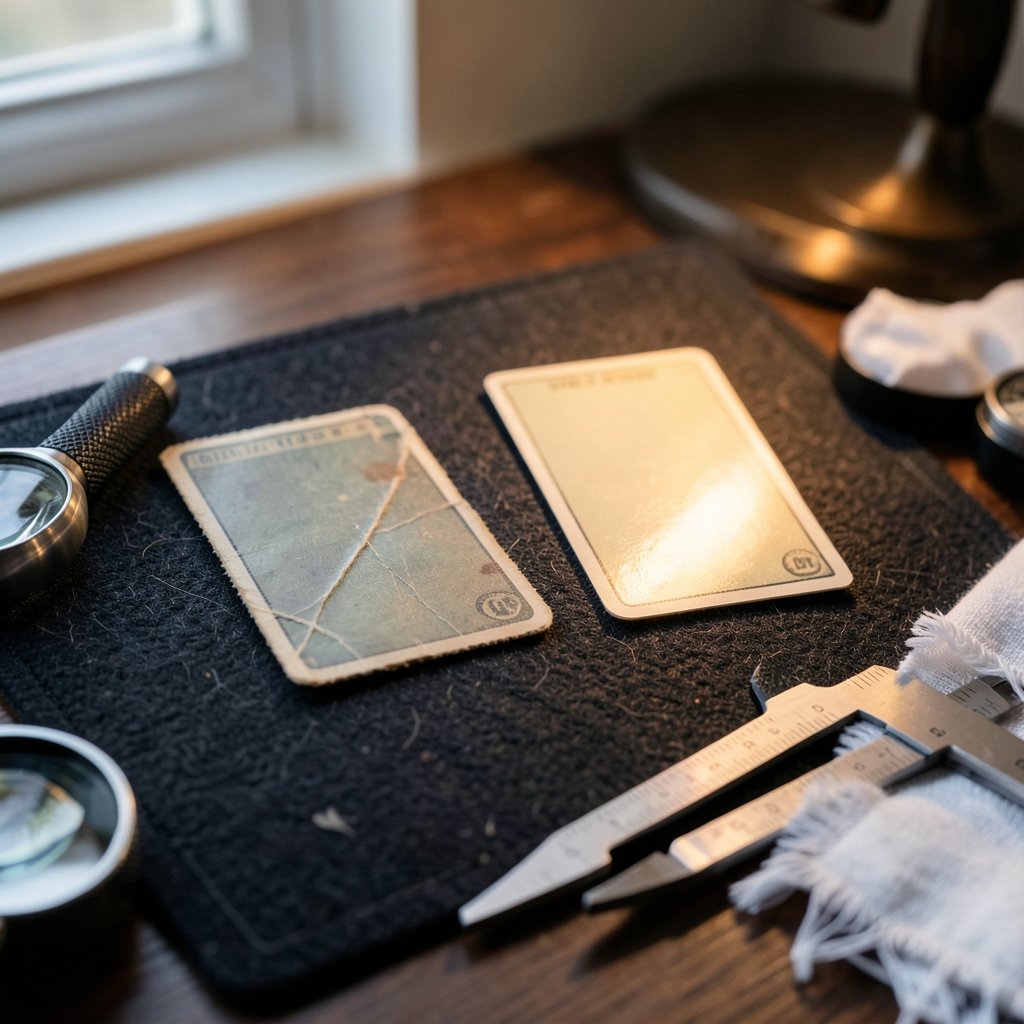
Counterfeits, trimmed cards, and recolored cards are common enough that buying raw high-value cards from strangers is a genuine gamble. Trimming a card’s edges to improve its apparent condition is one of the oldest tricks in the hobby, and it is hard to spot without equipment. Buying cards already graded by an established grader reduces that risk substantially.
Where Record Sales Get Documented
Public auction results are the most reliable price evidence available. Private sales happen constantly, but nobody can verify them. Auction houses publish realized prices, buyer’s premiums, and dates, which makes them the closest thing the hobby has to a public record.
For high-value cards, the major auction houses are where the headline numbers come from. eBay remains the largest secondary marketplace and is useful for watching asking prices, though asking prices are not the same as sold prices. A listing that sits unsold for six months tells you something useful too.
If you are researching a specific card, compare recent realized auction prices against current asking prices. When the gap is wide, the asking prices are usually fantasy.
Grading Companies and What They Do
PSA (Professional Sports Authenticator) was founded in 1991 and is the best-known grader. Beckett Media is the other household name, and SGC and CGC also grade cards. Founding dates for the smaller companies vary by source, so do not rely on them for anything important.
A numeric grade, such as a PSA 10 “Gem Mint,” is the shorthand the whole market uses. The grade affects price, liquidity, and how easily a card can be sold. A high-grade card from a major grader can be sold in days. The same card raw might sit for months.
Practical Tips That Actually Work
- Buy the grade, not the story. Sellers love narrative. The grade is the objective part.
- Check population reports before bidding. Scarcity at a specific grade is what creates price separation.
- Look at sold prices, not asking prices. Filter marketplaces by completed sales.
- Assume raw high-value cards are altered until proven otherwise. Budget for grading costs before you buy.
- Watch for shill bidding. On open marketplaces, a rapid series of bids from low-feedback accounts is a warning sign.
Common Mistakes People Make
The most common error is assuming old equals valuable. Mass-produced cards from the late 1980s and early 1990s were printed in enormous quantities, and most are worth very little regardless of age. The second most common error is overpaying for ungraded cards based on a seller’s photos. The third is ignoring the cost of grading, shipping, and insurance, which can eat a meaningful share of a mid-priced card’s value.
A fourth mistake deserves its own mention: getting excited about a card because a search result says it is “worth” a large sum. Those figures often describe the top grade, which almost no copy achieves. If you are comparing purchases of any kind, the same discipline applies as when weighing whether a graphics card is worth buying for everyday use: match the spec to your actual needs, not the headline number.
The Tax Detail Most Sellers Forget
In the United States, collectibles held for more than a year may be taxed at a higher capital-gains rate than ordinary investments. The collectibles rate under the Internal Revenue Code is 28%, which is higher than the long-term rate applied to most stocks. Whether a specific card qualifies as a collectible is a question for a tax professional, and this is not tax advice.
The practical takeaway: if you sell a card for a large gain, keep records of the purchase price, grading fees, and sale costs. Those records reduce the taxable gain and are painful to reconstruct years later.
Where the Money Actually Is
For most people, the realistic opportunity is not the seven-figure trophy card. It is the mid-market: a well-centered rookie card of a player on the rise, bought graded, held for years, and sold through a documented channel. That approach is boring, and boring is fine.
It also helps to think about adjacent spending decisions the same way. Whether you are weighing a subscription or a piece of hardware, the question is always the same: what does this actually return? That mindset shows up in comparisons like the ChatGPT Plus practical guide, where the real question is whether the monthly cost earns its keep.
Conclusion
Baseball cards worth money are not a mystery once you strip away the mythology. The T206 Honus Wagner sits at the top because it is scarce, authenticated, and desired by people with enormous budgets. The 1952 Topps Mantle sits just below because its grade spread creates a huge range of prices from the same card. The 1989 Upper Deck Griffey shows how a modern card can still carry real value when condition is exceptional.
Everything else comes down to four levers: scarcity, condition, authentication, and demand. Learn to read population reports, buy graded when the stakes are high, and check realized sale prices instead of asking prices. Do that consistently and you will avoid the expensive mistakes that catch most new collectors.
FAQ
What is the single most valuable baseball card?
The T206 Honus Wagner is widely considered the most valuable. A PSA-graded example sold privately for $6.606 million in August 2021 through Goldin Auctions, and other examples have reportedly sold for more since.
Why is the Honus Wagner card so rare?
Wagner reportedly objected to his image being used to promote tobacco, and the card was pulled from production early. The exact reason is not definitively documented, and accounts differ on whether the dispute concerned tobacco or compensation.
Does age alone make a baseball card valuable?
No. Condition and scarcity matter far more than age. Cards mass-produced in the late 1980s and early 1990s are often decades old and still worth very little, while a modern card in top grade can be worth thousands.
How much does grading affect a card’s value?
It can multiply value many times over. The same card in a low grade versus a top grade can differ by a factor of ten or more, which is why population reports showing how many copies exist at each grade are central to pricing.
Should beginners buy raw cards or graded cards?
For anything expensive, graded cards from established graders are the safer choice. Counterfeits, trimmed edges, and recolored surfaces are common, and those alterations are hard to detect without equipment or expertise.
Are baseball card profits taxed differently from stock profits?
In the United States, collectibles held over a year may be taxed at a higher capital-gains rate than ordinary investments, commonly cited as 28%. Confirm current law and whether your card qualifies with a tax professional before selling.
The same discipline applies to any purchase in the hobby: buy the card you can verify, at a price you can defend with sold data, and let time do the rest. None of this requires insider knowledge—only patience, records, and a willingness to walk away from a deal that doesn’t hold up under scrutiny. Start small, learn the grading scale, and treat every purchase as research. The collectors who last are the ones who never stopped asking what a card is actually worth, rather than what someone hopes it will bring.



