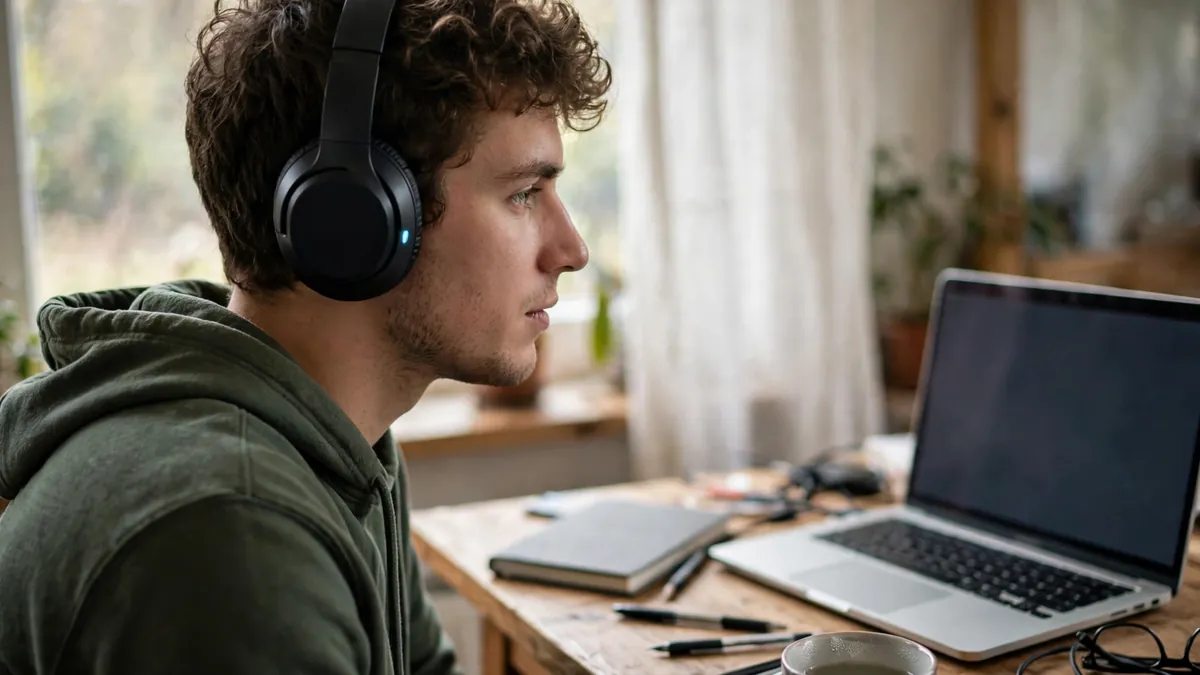
Best AI Headphones in 2027
The best AI headphones in 2027 do far more than play music. They listen to the room around you and adjust noise cancelling on the fly, translate a conversation almost as it happens, pick out one voice in a crowded cafe, and learn which sounds you want to hear and which ones you want gone. The AI part is no longer a gimmick tucked into an app; it is the main reason to buy.
That makes shopping harder than it used to be. Two pairs can share the same driver size, battery rating, and price, yet sound completely different in real life because one has a smarter chip doing the work. The right choice depends on where you listen most: a noisy commute, an open office, long flights, workouts, or calls.
We tested the current leaders for sound quality, adaptive noise cancelling, translation, call clarity, comfort, and battery life, and ranked them by how well the AI actually helps day to day.
Key takeaways
- Sony WH-1000XM6 is the best overall AI headphone, with the most reliable adaptive noise cancelling and natural-sounding voice isolation.
- Bose QuietComfort Ultra Headphones are the best for comfort and for travellers who wear headphones for hours at a time.
- Apple AirPods Pro 3 are the best AI earbuds for iPhone owners, with live translation and strong adaptive audio.
- Real-time translation is useful but still imperfect, so treat it as a helper for short exchanges rather than a replacement for learning a language.
- Skip headphones that lock their best AI features behind a subscription or a single phone brand you do not use.
At a glance: the shortlist
| Headphones | Best for | Starting price | Standout AI feature |
|---|---|---|---|
| Sony WH-1000XM6 | Best overall | Around $449 | Adaptive ANC that learns your surroundings |
| Bose QuietComfort Ultra | Comfort and travel | Around $429 | Spatial audio with head tracking |
| Apple AirPods Pro 3 | iPhone owners | Around $249 | Live translation, adaptive audio |
| Apple AirPods Max | Premium over-ear sound | Around $549 | Computational and spatial audio |
| Sennheiser Momentum 4 Wireless | Sound quality and battery | Around $299 | Adaptive ANC, long battery life |
| JBL Tour One M3 | Calls and smart features | Around $349 | Voice-aware ANC, smart talk mode |
| Anker Soundcore Space One Pro | Budget AI features | Around $199 | Adaptive ANC, mid-range price |
Sony WH-1000XM6 — Best overall
The WH-1000XM6 is the pair to buy if you want one set of headphones that does everything well. Its adaptive noise cancelling reads the environment several times a second and shifts the level without you touching a button, so a train platform, a busy street, and a quiet room all get handled differently. On calls, the AI voice isolation pulls your voice out of wind and crowd noise so cleanly that people often cannot tell you are outside.
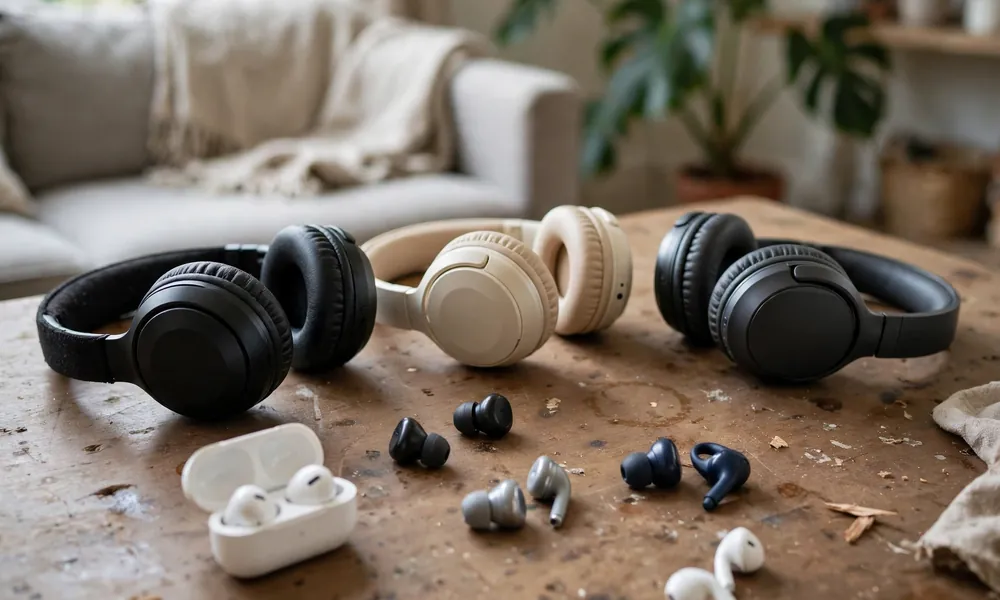
Sound is warm and detailed, with bass that stays controlled at high volume, and the app tunes the sound to your hearing with a short listening test. Battery life is around 30 hours with noise cancelling on. Our guide to the best noise cancelling headphones puts the XM6 in context with the other top ANC models.
Pros: best-in-class adaptive ANC; excellent call quality; comfortable; strong app customisation.
Cons: premium price; no water resistance rating; familiar design.
Bose QuietComfort Ultra Headphones — Best for comfort and travel
Bose has always won on comfort, and the QuietComfort Ultra keeps that lead. The earcups are soft, the clamping force is gentle, and the whole pair is light enough to wear through a long flight without the ache heavier headphones cause after two hours. The spatial audio mode adds a sense of space to music and films, and it follows your head movements.
The AI here is quieter than Sony’s, but it works: the noise cancelling adapts to cabin noise and street noise, and the voice pickup on calls is clear and natural. Battery life is around 24 hours.
Pros: outstanding comfort; excellent noise cancelling; immersive spatial audio; simple controls.
Cons: shorter battery life than rivals; fewer app options; premium price.
Apple AirPods Pro 3 — Best AI earbuds for iPhone owners
The AirPods Pro 3 are the smallest product on this list and the most surprising. The live translation feature listens to someone speaking another language and plays a translation into your ear with only a short delay, which is genuinely useful for travel and short conversations. Adaptive audio blends noise cancelling and transparency automatically, letting through a train announcement or a colleague’s question while keeping the engine drone out.
Sound quality is a clear step up from earlier AirPods, with fuller bass and cleaner highs, and the fit is secure enough for workouts. Battery life is around 6 hours per charge, plus several recharges from the case. Most of the smartest features only work fully with an iPhone, so Android users should look elsewhere.
Pros: live translation; excellent adaptive audio; tiny and light.
Cons: best features need an iPhone; short battery per charge; easy to lose.
Apple AirPods Max — Best premium over-ear sound
The AirPods Max remain the most luxurious-sounding headphones Apple makes, and the 2027 model keeps the big, detailed soundstage that made the original a favourite for film and classical music. Computational audio adjusts the sound in real time based on the fit, and spatial audio with head tracking makes films feel wider than any other headphone here.
Noise cancelling is strong, call quality is good, and the build is a cut above everything else here, with aluminium earcups and a mesh headband that breathes. The downsides are real, though: they are heavy, they cost more than most rivals, and the case takes up space in a bag.
Pros: superb sound and build; excellent spatial audio; strong noise cancelling.
Cons: heavy; expensive; bulky case.
Sennheiser Momentum 4 Wireless — Best sound quality and battery
If you care more about how music sounds than about having the cleverest AI, the Momentum 4 is the pick. Its sound is open and detailed, with a wide stage and tight, natural bass that suits everything from jazz to electronic music. The adaptive noise cancelling is good rather than class-leading, but it handles offices, trains, and flights well.
Where it wins outright is battery life: around 60 hours per charge, roughly double most rivals, which means a week of commuting without reaching for a cable. The app offers a solid equaliser, and the headphones fold flat for travel.
Pros: excellent sound; around 60 hours of battery; comfortable fit; good equaliser.
Cons: noise cancelling trails Sony and Bose; plain design.
JBL Tour One M3 — Best for calls and smart features
The JBL Tour One M3 is the dark horse of this list, and it earns its place with call quality. Its AI voice processing separates your voice from background noise better than most headphones at this price, and the smart talk mode automatically lowers the music and turns on transparency when you start speaking, so you can answer a colleague without fumbling for a button.
Sound is punchy, with deep bass that suits pop and hip-hop, and the battery lasts around 50 hours with noise cancelling on. The app includes a hearing test and customisable ANC levels, though it can feel busy at first. For people who spend half their day on calls, this is the most practical choice here.
Pros: excellent call clarity; smart talk mode; long battery life.
Cons: heavy bass for acoustic music; cluttered app; less comfortable than Bose.
Anker Soundcore Space One Pro — Best budget AI headphones
The Space One Pro proves you do not need to spend $400 to get genuinely useful AI in your headphones. Its adaptive noise cancelling adjusts to your surroundings, the app includes a hearing test and a decent equaliser, and the sound is balanced and pleasant for everyday listening.
There are trade-offs: the noise cancelling trails Sony and Bose on planes, and the call quality is good rather than great. But for commuting and everyday listening, the gap is smaller than the price difference suggests. Our roundup of the best wireless earbuds in 2027 covers the in-ear alternatives with the same AI tricks.
Pros: adaptive ANC at a mid-range price; good sound; long battery life.
Cons: noise cancelling trails the flagships; plasticky build.
How to choose
Start with where you listen. If your day is mostly flights, trains, and open offices, put adaptive noise cancelling and comfort first, and the Sony or Bose models will serve you best. If you mostly listen at home or at a desk, sound quality matters more, and the Sennheiser or AirPods Max will reward you. If you take calls all day, prioritise microphone quality and voice isolation, because the person on the other end suffers when the mics are weak.
Next, check the ecosystem. Apple’s smartest features need an iPhone, and some Android-only features need a matching phone brand too, so check the fine print before you buy. Then check the battery and the fit: a 60-hour battery is meaningless if the earcups hurt after an hour. Finally, check whether the AI features need a subscription or a constant internet connection; the best headphones here keep their core features free and on-device. Our guide to the best over-ear headphones compares the fit and sound of the leading models.
Checklist: before you pay
- Try the fit for at least 20 minutes, or buy from a store with a good return policy.
- Test noise cancelling in a noisy place, not a quiet shop.
- Make a test call from a busy street and ask how you sound.
- Confirm which AI features work with your phone and whether any need a subscription.
- Check battery life with noise cancelling on, not the headline figure with it off.
- Confirm the warranty, the return window, and the price of replacement ear tips.
Frequently asked questions
Do AI headphones really sound better than normal headphones?
Not automatically. The drivers and tuning still decide the basic sound quality. What AI adds is adaptation: the headphones adjust noise cancelling, EQ, and voice pickup to your environment and your ears, so they sound better in real-world conditions.
How good is live translation in AI headphones?
Good enough for short, simple exchanges like ordering food or asking directions. It still struggles with fast speech, slang, and long conversations, and there is a short delay, so do not rely on it for business negotiations or medical conversations.
Do AI headphones need an internet connection?
Most core features, like adaptive noise cancelling and voice isolation, run on the headphone chip and work offline. Translation and voice assistants usually need a phone connection, so check the spec sheet for the features you care about.
Are AI headphones worth the extra money?
For frequent travellers and people who work in noisy places, yes: adaptive ANC and voice isolation make a real difference every day. For quiet home listening, a cheaper pair with good drivers will sound just as good.
Can AI headphones help with hearing?
Some models include a hearing test and personalised EQ that compensates for your hearing profile, and a few offer a hearing-aid-style amplification mode. These are helpful extras, but they are not a replacement for a proper hearing test or a hearing aid.
How long should AI headphones last?
Expect three to five years of good service. The battery is usually the first thing to fade, and most flagship models are not designed for battery replacement, so buy from a brand with a good warranty and repair programme.
The bottom line
For most people, the Sony WH-1000XM6 is the best AI headphone in 2027: the adaptive noise cancelling is the most reliable, the call quality is the clearest, and the sound suits almost every genre. Travellers who value comfort should buy the Bose QuietComfort Ultra, iPhone owners who want earbuds should pick the AirPods Pro 3, and anyone watching the budget will be happy with the Anker Soundcore Space One Pro.
Whichever pair you choose, buy for the way you actually listen rather than the feature list. The smartest translation mode is worthless if the headphones hurt after an hour, and the best noise cancelling is wasted if you only ever listen in a quiet room. Get the fit and the basics right first.