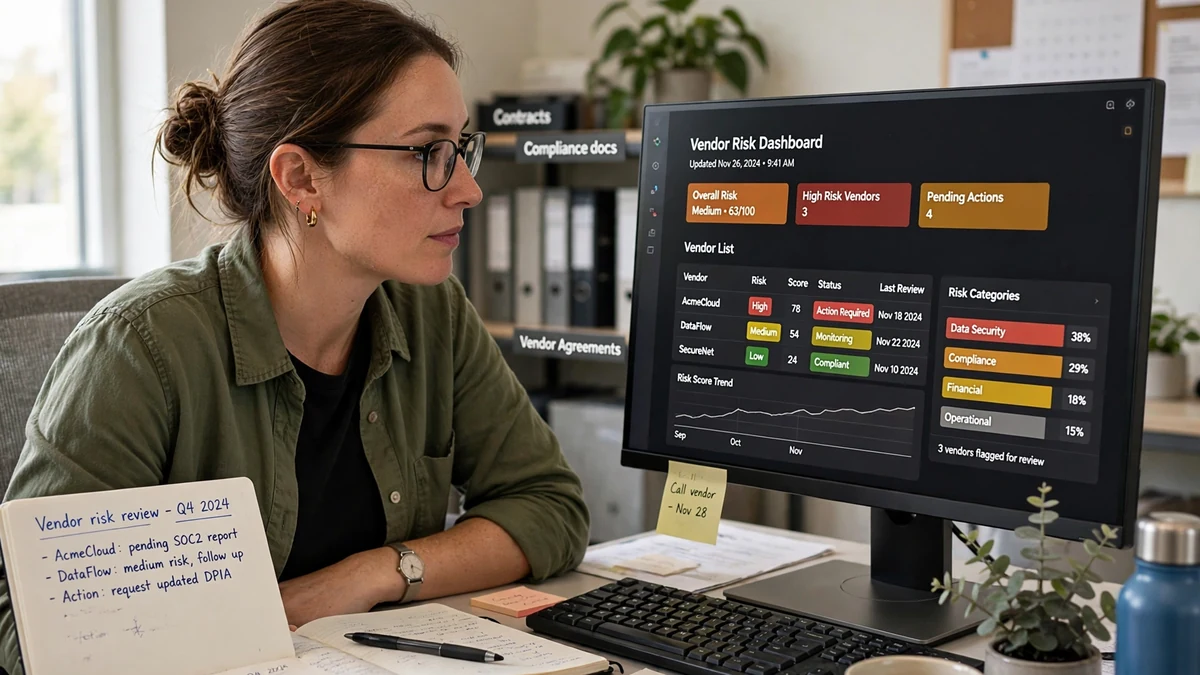
Best AI tools for vendor risk assessment in 2027 help procurement, security, and compliance teams answer one question fast: which of our suppliers could hurt us, and how badly? A modern company can easily depend on hundreds or thousands of vendors, from cloud providers and payment processors to logistics firms and marketing agencies, and a single weak supplier can cause a data breach, a service outage, or a regulatory fine. Spreadsheets and annual questionnaires cannot keep up with that scale.
AI changes the work in three ways. It monitors vendors continuously using public records, security signals, and news; it scores and ranks risk so teams focus on the suppliers that matter most; and it automates due diligence, such as chasing questionnaires and flagging contract gaps.
This guide compares eight leading platforms for 2027, covering continuous monitoring, third-party risk management, and questionnaire automation. We weighed coverage, scoring quality, workflow automation, integrations, and value, so you can shortlist two or three options and start a trial.
Key takeaways
- BitSight is the best overall choice for continuous, externally observable vendor risk scoring.
- OneTrust is the best fit for large enterprises that need vendor risk, privacy, and compliance in one platform.
- ServiceNow suits organisations already running ServiceNow, with strong workflow automation.
- Prevalent offers the best value for mid-sized teams that need assessments and monitoring together.
- Check current pricing before buying: most vendors quote by vendor count, and list prices are rarely the final price.
At a glance: the shortlist
| Product | Best for | Starting price | Standout limit |
|---|---|---|---|
| BitSight | Continuous risk scoring | From around $25,000 per year | External signals only, no internal audit data |
| OneTrust | Enterprise governance | Custom quote | Can feel heavy for small teams |
| ServiceNow TPRM | Workflow automation | Custom quote | Best value inside ServiceNow |
| SecurityScorecard | Security ratings at scale | From around $20,000 per year | Scores need human review |
| Prevalent | Mid-sized teams | From around $15,000 per year | Smaller threat-intel network |
| LogicGate Risk Cloud | Flexible risk workflows | Custom quote | Needs setup time to shine |
| Aravo | Large vendor populations | Custom quote | Enterprise pricing only |
| RiskRecon | Fast vendor screening | From around $18,000 per year | Less depth on questionnaires |
BitSight — Best overall
BitSight rates vendors on externally observable security performance, using data such as patching speed, exposed services, and malware infections. Its AI models turn that signal into a single score that updates as conditions change, so a vendor that fixes problems improves quickly and one that drifts gets flagged early. Teams can compare vendors side by side and watch critical suppliers daily without sending questionnaires.
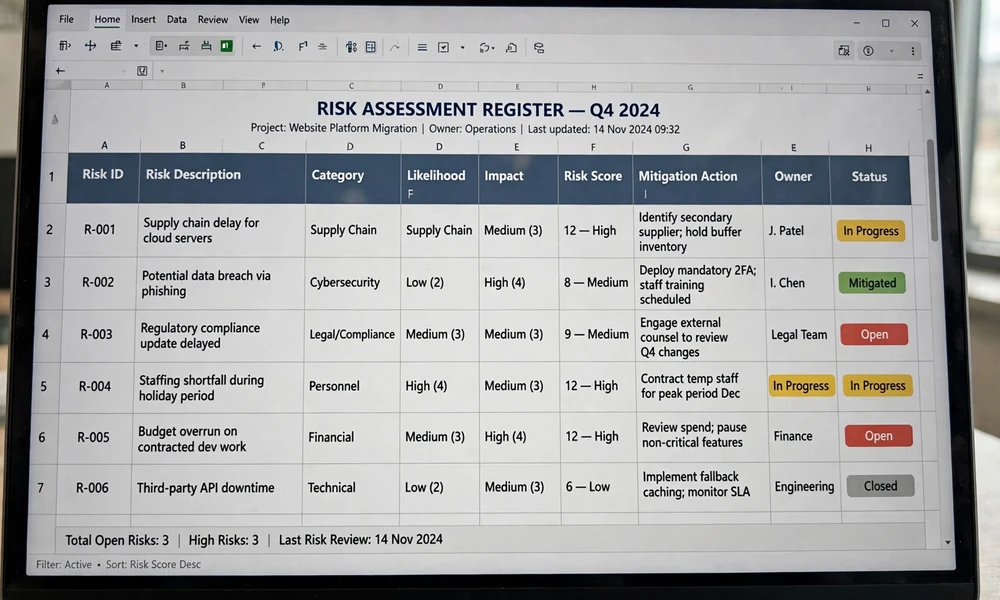
The platform also benchmarks vendors against peers, which makes supplier conversations concrete, and reporting is built for executives, with portfolio views showing how overall third-party risk trends over time. For a deeper look at the wider supplier risk picture, see our guide to the best AI tools for supplier risk management.
Pros: Continuous monitoring with fast updates; clear peer benchmarking; strong executive reporting.
Cons: Scores reflect only what is visible from outside; pricing is enterprise-level for small firms.
OneTrust — Best for enterprise governance
OneTrust combines third-party risk management with privacy, ethics, and governance tools, suiting large organisations that want one system of record. Its AI classifies vendors by inherent risk, suggests the right assessment, and extracts key facts from security documents, cutting the manual reading that slows onboarding. Questionnaires, evidence, and remediation all live in one workflow.
The platform supports the full vendor lifecycle, from intake and due diligence through monitoring and offboarding. Every assessment, approval, and follow-up is logged in one place, which matters when regulators ask for a complete trail.
Pros: Broad governance coverage in one platform; strong audit trail; good document intelligence.
Cons: Implementation can be lengthy; smaller teams may find it more than they need.
ServiceNow TPRM — Best for workflow automation
ServiceNow Third-Party Risk Management builds on the workflow engine many large IT departments already use. Vendor intake, risk tiering, assessments, and remediation flow through the same queues and approvals as other service work, keeping ownership clear. AI helps route assessments, summarise vendor responses, and surface the riskiest items first.
Because it sits inside the wider ServiceNow platform, vendor risk data connects with IT service management, security operations, and procurement. The trade-off is that organisations not already using ServiceNow pay for a large platform to get this one capability.
Pros: Excellent workflow automation; connects with IT and security operations; clear task ownership.
Cons: Custom pricing; weakest value outside the ServiceNow ecosystem.
SecurityScorecard — Best for security ratings at scale
SecurityScorecard gives every vendor a letter-grade security rating built from ten risk factors, including network security, DNS health, and patching cadence. Its AI continuously scans for signals about each supplier, so ratings change as vulnerabilities appear or are fixed. Teams can monitor thousands of vendors and set alerts for any supplier that drops below a threshold.
The platform works in two directions: checking your suppliers, and checking how your company looks to customers who rate you. Collaboration tools let teams share findings with vendors and track remediation without long email threads.
Pros: Easy to understand letter grades; monitors very large vendor lists; useful self-rating view.
Cons: Ratings are a starting point, not a full audit; some signals need context to interpret fairly.
Prevalent — Best for mid-sized teams
Prevalent pairs an assessment platform with a shared network of completed assessments, so teams can often reuse evidence another customer has already collected. Its AI scores questionnaires, flags inconsistent answers, and identifies vendors needing deeper review, while continuous monitoring adds external threat data on top.
The platform covers the essentials well: intake, tiering, questionnaires, evidence, remediation, and reporting. Pricing is more accessible than the largest enterprise suites, which makes it a sensible pick for companies with a few hundred vendors and a small risk team. Support is generally rated as hands-on during onboarding.
Pros: Shared assessment network saves time; good balance of features and price; solid onboarding support.
Cons: Threat intelligence is less extensive than the biggest rating platforms; advanced customisation is limited.
LogicGate Risk Cloud — Best for flexible workflows
LogicGate Risk Cloud is a no-code platform teams can shape around their own vendor risk process instead of adapting to a fixed one. Its AI assists with risk scoring and document review, while the workflow builder lets teams design intake forms, approval chains, and remediation steps without developers.
The platform also handles related risk areas, such as policy management and control testing, so vendor risk can sit alongside other governance work. Dashboards give leadership a live view of outstanding assessments and overdue remediation. The cost of flexibility is setup time: teams should budget for configuration before expecting full value.
Pros: Highly configurable without code; covers wider governance use cases; clear dashboards.
Cons: Needs configuration effort upfront; pricing is by quote, so budgeting takes a sales conversation.
Aravo — Best for large vendor populations
Aravo is built for enterprises managing tens of thousands of third parties, with strong support for complex vendor hierarchies, fourth-party relationships, and multi-region compliance. Its AI classifies vendors, prioritises assessments by real risk, and extracts data from documents at volume.
Reporting and analytics are a strength, with the ability to cut risk data by region, business unit, vendor type, or regulation. Integration with procurement systems keeps vendor master data in sync. Aravo is an enterprise tool with enterprise pricing, so it fits organisations where vendor risk is a board-level concern rather than a side task.
Pros: Handles very large vendor populations; strong fourth-party visibility; deep analytics.
Cons: Enterprise pricing; more complex than smaller teams need.
RiskRecon — Best for fast vendor screening
RiskRecon, part of Mastercard, focuses on fast, evidence-based vendor screening. It collects security data about a vendor and presents findings in plain language, with the evidence behind each issue, so teams can screen a new supplier in hours rather than weeks.
The platform is a good fit for teams that screen many vendors quickly, such as fintech companies onboarding partners or retailers adding new suppliers before a busy season. It integrates with common third-party risk workflows and can feed scores into broader governance platforms. Questionnaire depth is lighter than full assessment suites, so teams with heavy compliance needs may pair it with another tool.
Pros: Fast screening with clear evidence; good at tracking remediation; strong Mastercard backing.
Cons: Lighter on questionnaires; best as part of a wider risk stack.
How to choose
Start with your vendor count and risk appetite. A company with fifty vendors needs a different tool from one with fifty thousand: small teams should favour fast screening and shared assessments, while large enterprises need hierarchy management and audit trails. Ratings platforms give continuous visibility, but regulated industries still need documented assessments, so many teams use both.
Check integration before you commit: the tool should connect with your procurement system, security tools, and contract repository, or it will become another silo. Ask vendors to pilot on your twenty riskiest suppliers and compare results with what you already know. For teams with heavy reporting duties, our guide to the best AI tools for regulatory reporting is a useful companion read.
Checklist: before you pay
- Count your vendors and tier them by criticality before choosing a pricing model.
- Run a pilot on your twenty riskiest suppliers and check the findings against known issues.
- Confirm what is included: monitoring, questionnaires, and remediation tracking are often priced separately.
- Check renewal pricing and per-vendor fees, not just the first-year quote.
- Test data export, so your vendor history is not locked into one platform.
- Confirm support hours and onboarding help, especially for your first assessment cycle.
Frequently asked questions
What is vendor risk assessment?
Vendor risk assessment is the process of identifying, measuring, and managing the risks a supplier poses to your business, including security, financial, operational, compliance, and reputational risk. AI tools automate the monitoring and scoring parts of that process.
How accurate are AI vendor risk scores?
Scores are useful signals, not verdicts. They rank vendors by relative risk well, but they cannot see internal controls, so combine them with questionnaires and human review for critical suppliers.
How much do vendor risk tools cost?
Most platforms start from around $15,000 to $25,000 per year for smaller deployments and rise with vendor count and features. Enterprise suites are custom-priced and can exceed $100,000 per year. Always check current pricing and negotiate on vendor count.
Do I still need questionnaires if I use continuous monitoring?
Yes, in most cases. Monitoring shows what is visible from outside, while questionnaires and evidence reveal internal controls, policies, and certifications. Regulators and auditors usually expect both, especially for critical vendors.
How long does implementation take?
Simple rating platforms can run in days. Full suites with custom workflows typically take four to twelve weeks, depending on vendor count and data migration.
Can one tool cover all third-party risk?
One platform can cover most of it, but many teams combine a ratings tool for monitoring with an assessment platform for questionnaires. If forecasting vendor demand matters to your planning too, see our guide to the best AI tools for forecasting for a related shortlist.
The bottom line
For most teams, BitSight is the strongest starting point: continuous scoring, peer benchmarking, and clear reporting make vendor risk visible without adding headcount. Large enterprises that need governance in one place should shortlist OneTrust or ServiceNow, while mid-sized teams will get the best value from Prevalent or RiskRecon.
Whatever you choose, run a pilot on your riskiest vendors, check what is included in the price, and make sure the tool fits your procurement workflow. Vendor risk only works when the whole business uses it, not just the risk team.