The best camera bags for mirrorless cameras in 2027 protect your kit, give you fast access to it, and disappear on your back when you are not shooting. For most mirrorless photographers, that means a well-designed backpack — and the Peak Design Everyday Backpack remains the one to beat.
So which bag should you buy? If you want one bag for everyday shooting and travel, buy the Peak Design Everyday Backpack in 20L or 30L. If you shoot light with one body and one or two lenses, a sling bag will serve you better than any backpack. The right answer depends on how much kit you carry, how you travel, and how fast you need to reach your camera.
Key takeaways
- Mirrorless kits are smaller than DSLR kits, so a 20-litre backpack fits what used to need 30 litres.
- Fast access matters more than capacity: side access and a top opening beat a bag you have to take off and unpack.
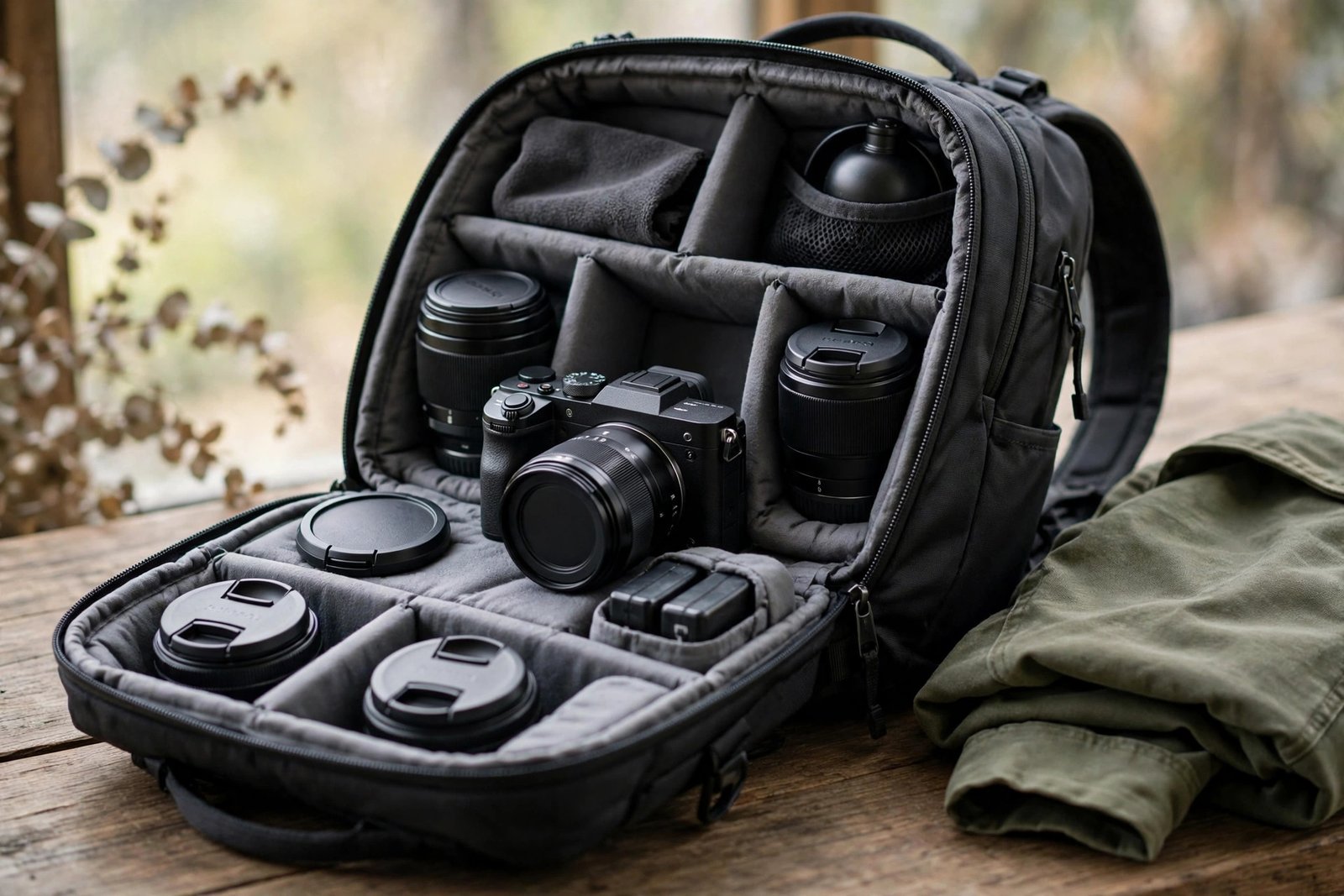
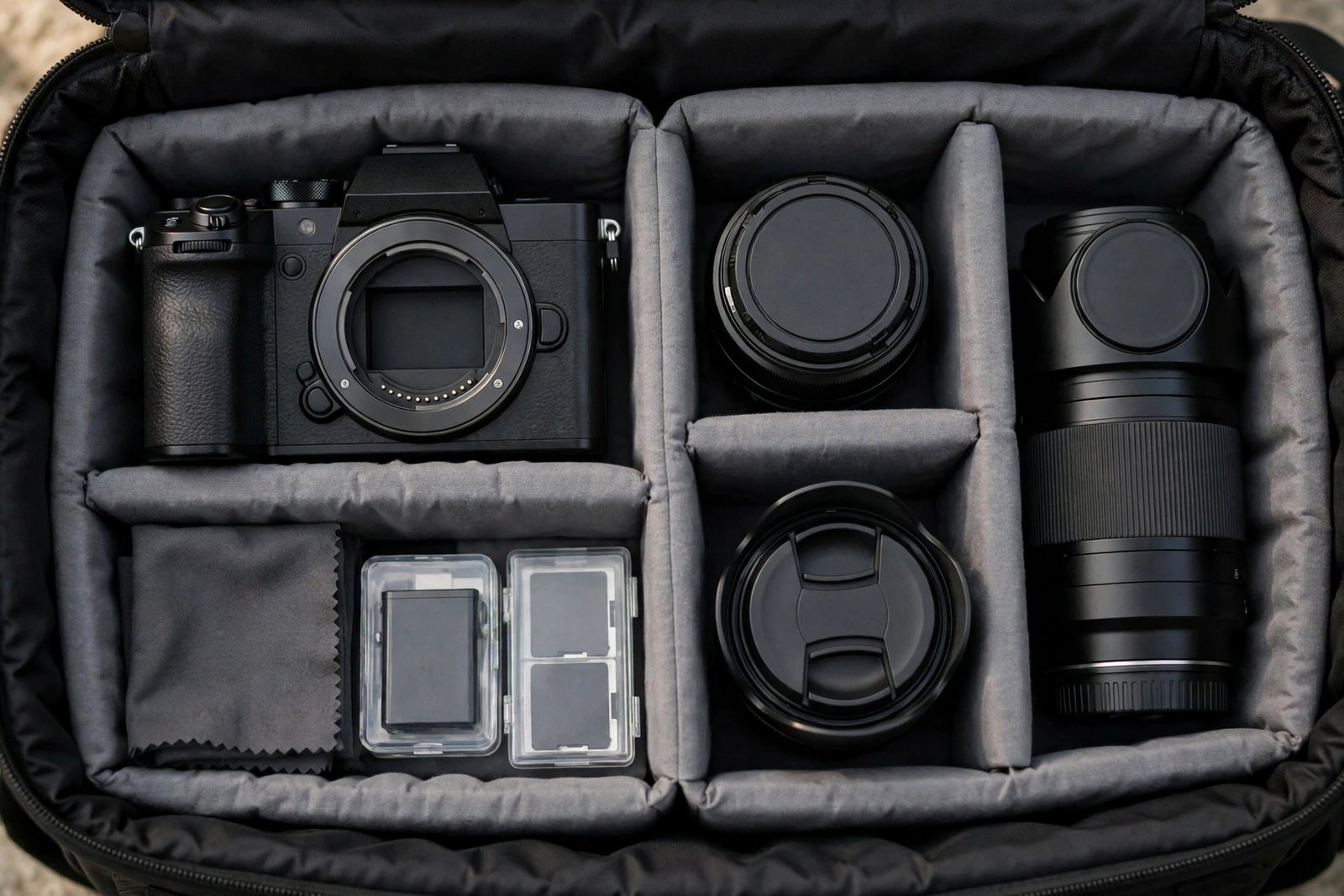
- Adjustable, padded dividers protect your kit and let the bag change shape as your kit changes.
- Weather resistance is not optional — look for weatherproof fabric, sealed zips or a rain cover included.
- Try the bag loaded before a trip: a bag that is comfortable empty can be miserable with a full kit inside.
What makes a good mirrorless camera bag
Mirrorless cameras changed the bag. A full-frame mirrorless body with two or three lenses is smaller and lighter than the DSLR kit it replaced, so the bags can be smaller too — but the priorities have not changed. Protection, access and comfort still decide whether a bag is good, and in that order.
Protection starts with padding and structure. Your camera and lenses need padded dividers that hold them apart so they cannot knock together, and the bag needs enough structure to keep its shape when you set it down — a bag that collapses flat offers little protection. Weather resistance matters just as much: mirrorless photographers shoot in rain, dust and snow, so look for weatherproof fabric, water-resistant zips, or a rain cover included rather than sold separately.
Access is the feature that separates a good camera bag from a frustrating one. The best bags let you reach your camera without taking the bag off and opening it fully: a side-access pocket you can swing round to, or a top opening you can reach into while the bag sits on your hip. If every lens change means stopping, taking the bag off and laying it on the ground, you will miss shots — and you will stop carrying the bag.
Comfort is the third test, and it is the one you cannot judge from a product page. A bag that carries well has a padded back panel, a waist strap that takes weight off your shoulders, and a fit that suits your torso. Mirrorless kits are lighter than DSLR kits, but a full day of walking with a laptop, a tripod and three lenses still adds up — try the bag loaded with your actual kit before you commit to it for a trip.
The best camera bags for mirrorless cameras
1. Peak Design Everyday Backpack 20L / 30L
Best for: most mirrorless photographers — the best all-round camera backpack.
The Everyday Backpack is the bag other camera backpacks are measured against. It comes in 20-litre and 30-litre versions, both with Peak Design’s MagLatch top closure, which opens and closes one-handed, and FlexFold dividers that fold and stack to fit whatever combination of bodies and lenses you carry. Side access on both sides lets you reach your camera without taking the bag off, and the weatherproof 400D nylon canvas shell with sealed zips keeps rain out. A 16-inch laptop sleeve, a tripod carry system and external carry straps round out a genuinely complete design. It is expensive, and the 30L version is heavy when fully loaded, but for a photographer who wants one bag for everyday shooting and travel, it is the strongest choice available.
2. Lowepro ProTactic BP 450 AW II
Best for: working photographers who need rugged, modular protection.
The ProTactic BP 450 AW II is built for photographers who work hard and carry a lot. Its interior uses Lowepro’s modular divider system, which you can rearrange to fit a mirrorless body, several lenses and a flash, and the bag opens from the top, the front and both sides, so you can reach your kit however it is sitting. An All Weather cover is built in and stows in a pocket at the base, with attachment points for a tripod and accessories all over the outside. It is heavier and more utilitarian-looking than the Peak Design, but for event, wedding and press photographers working fast in bad weather, it is the more practical bag.
3. Wandrd PRVKE 21 / 31
Best for: travel photographers who want one bag for camera and life.
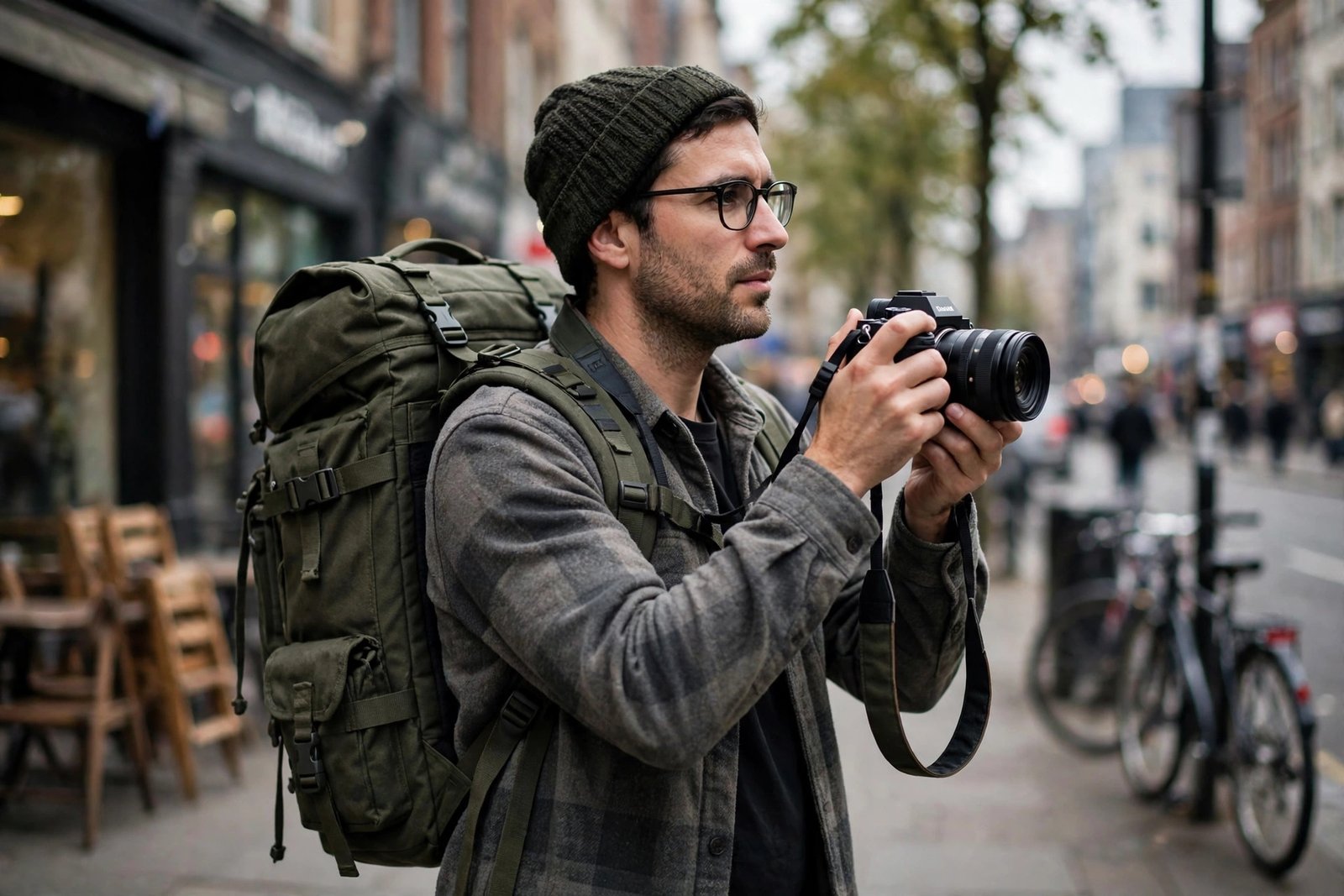
The PRVKE — pronounced “provoke” — is a roll-top backpack that works as both a camera bag and a travel bag, which is why travel photographers love it. It comes in 21-litre and 31-litre versions, with a removable camera cube inside that holds a mirrorless body and lenses, and the roll-top expands to fit a jacket, food or extra layers on top. Side access lets you reach your camera quickly, the weatherproof tarpaulin and ballistic nylon shell shrugs off rain, and there is a dedicated laptop sleeve and a hidden passport pocket. It looks like a normal backpack rather than a camera bag, a genuine advantage in cities where a camera bag advertises its contents.
4. Peak Design Everyday Sling 6L / 10L
Best for: light shooting — one body, one or two lenses, and nothing else.
Not every shoot needs a backpack, and the Everyday Sling is the best small camera bag for mirrorless shooters who travel light. It comes in 6-litre and 10-litre versions, both with the same FlexFold dividers and MagLatch-inspired closure as the backpack, and it sits on your hip or across your chest so you can swing it round, grab your camera, and shoot without stopping. It holds a mirrorless body with a lens attached plus one or two more lenses, a phone and a few small accessories — and nothing more, which is the point. If your kit is a body and a couple of primes, a sling will serve you better than any backpack — it is always within reach and never in the way.
Comparison table
| Bag | Type | Capacity | Laptop | Best for |
|---|---|---|---|---|
| Peak Design Everyday Backpack | Backpack | 20L / 30L | Up to 16 in | Most photographers |
| Lowepro ProTactic BP 450 AW II | Backpack | 25L | Up to 15 in | Working photographers |
| Wandrd PRVKE | Backpack | 21L / 31L | Up to 16 in | Travel and everyday |
| Peak Design Everyday Sling | Sling | 6L / 10L | Tablet only | Light shooting |
Caption: The best camera bags for mirrorless cameras compared on type, capacity, laptop fit and use. Capacities are manufacturer figures.
Capacity is the column most people overestimate: a 20-litre backpack fits a mirrorless body and three lenses, and a 30-litre bag fits a full kit with a laptop. Buy the smaller bag that fits your kit, not the larger bag you might one day need.
How to choose: a five-minute decision framework
Work through these questions before you spend anything — they will stop you buying a bag that is too big, too small, or built for a different kind of photography than yours.
- How much kit do you actually carry? Lay it out on a bed: body, lenses, flash, laptop, tripod. A body and two lenses fits in a sling or a 20L backpack; a full kit with a laptop needs 25L or more.
- How do you travel? Flying means a bag that fits carry-on limits. Hiking means an adjustable harness and weatherproofing. City shooting means a bag that does not advertise itself as a camera bag.
- How fast do you need access? Street and event photographers need side access they can reach without stopping. Landscape photographers can accept rear access, because they set up slowly anyway.
- Do you need a laptop sleeve? If you edit on the road, check that it fits your actual laptop, not just the size the manufacturer quotes.
- What is the weather like where you shoot? Rain, dust and snow demand weatherproof fabric and sealed zips, or a rain cover included. A bag without any of those is a fair-weather bag.
- Can you try it loaded? A bag that is comfortable empty can be miserable with a full kit inside. Load it with your real kit and walk around the shop before you buy.
If you are building out the rest of your kit, our guide to the best camera tripods for travel covers the supports that pair with these bags, and the best CFexpress cards for photographers covers the storage your mirrorless camera needs. For editing on the road, see the best laptops for photo editing.
Frequently asked questions
What size camera bag do I need for a mirrorless camera?
A 20-litre backpack fits a mirrorless body and two or three lenses with room for a laptop. A 6-litre or 10-litre sling fits a body and one or two lenses for light shooting. Buy the smallest bag that fits the kit you carry.
Are camera backpacks allowed as carry-on luggage?
Most camera backpacks under 25 litres fit carry-on size limits, but rules vary by airline, and budget airlines are stricter. Always check your airline’s current limits before you fly, and weigh your loaded bag.
Is a sling bag better than a backpack for a mirrorless camera?
For light kits — one body and one or two lenses — yes: a sling gives faster access and is more comfortable for short walks. For heavier kits, longer days or a laptop, a backpack carries the weight better.
How do I protect my camera bag from rain?
Choose a bag with weatherproof fabric and water-resistant zips, or one with a rain cover included. In heavy rain, a rain cover is still the best protection — put it on before you get wet, not after.
How do I stop my camera bag hurting my back?
Pack the heaviest items close to your back, use the waist strap to take weight off your shoulders, and adjust the harness to your torso. If the bag still hurts, it is too heavy or the wrong fit — a smaller kit or a better-fitting bag is the answer.
The bottom line
The best camera bag for mirrorless cameras is the one that fits the kit you actually carry, gives you fast access to it, and is comfortable enough that you forget you are wearing it. For most photographers, that is the Peak Design Everyday Backpack. And if you shoot light, buy a sling — the Everyday Sling 6L or 10L will change how often you take your camera out.
Your next step is simple: lay your kit out, measure it honestly, and try the bag that matches it — loaded, on your back, in the shop. If you can reach your camera without taking the bag off, and the weight sits comfortably on your hips, you have found your bag. Buy it once, and stop thinking about bags until your kit outgrows it.