

What if the most important part of picking a dryer brand has almost nothing to do with the logo on the door? That sounds like a trick question, but it is not. Ask ten people which brand makes the best clothes dryer and you will get ten confident answers, most of them based on a single machine that either lasted fifteen years or died in month fourteen. The truth is messier and more useful: there is no single best dryer brand, only the best brand for your home, your venting setup, your energy costs, and your tolerance for repairs. (Spider man brand new day showtimes find book seats)
This guide breaks down what actually separates the contenders, where the popular rankings disagree with each other, and how to read the signals that matter before you spend four figures on a box that spins hot air.
Why There Is No Single Best Dryer Brand
Testing labs, owner-satisfaction surveys, and repair-technician surveys frequently disagree about which brands are best. Each measures something different. A lab test measures how fast and evenly a machine dries a standardized load. An owner survey measures how happy people are with the machine they bought. A repair survey measures how often technicians get called out. A brand can lead on one and trail badly on another, and all three can be technically correct.
That is not a flaw in the data. It is the data telling you to pick your metric first. If you hate repair hassles, repair-frequency data should drive your decision. If you care about drying speed and wrinkle performance, lab results matter more. If you want a machine that feels premium every time you open the door, satisfaction scores are your signal.
There is also a market split that trips up a lot of shoppers. In the United States, vented electric and gas dryers dominate. In Europe, ventless condensing and heat-pump dryers dominate. A brand that tops a UK energy-class chart may barely sell dryers in Ohio, and a US favorite may be unknown in Germany. Cross-market rankings are not directly comparable, so always check which market a “best brand” claim comes from.
The Two Technologies That Shape Every Brand Comparison
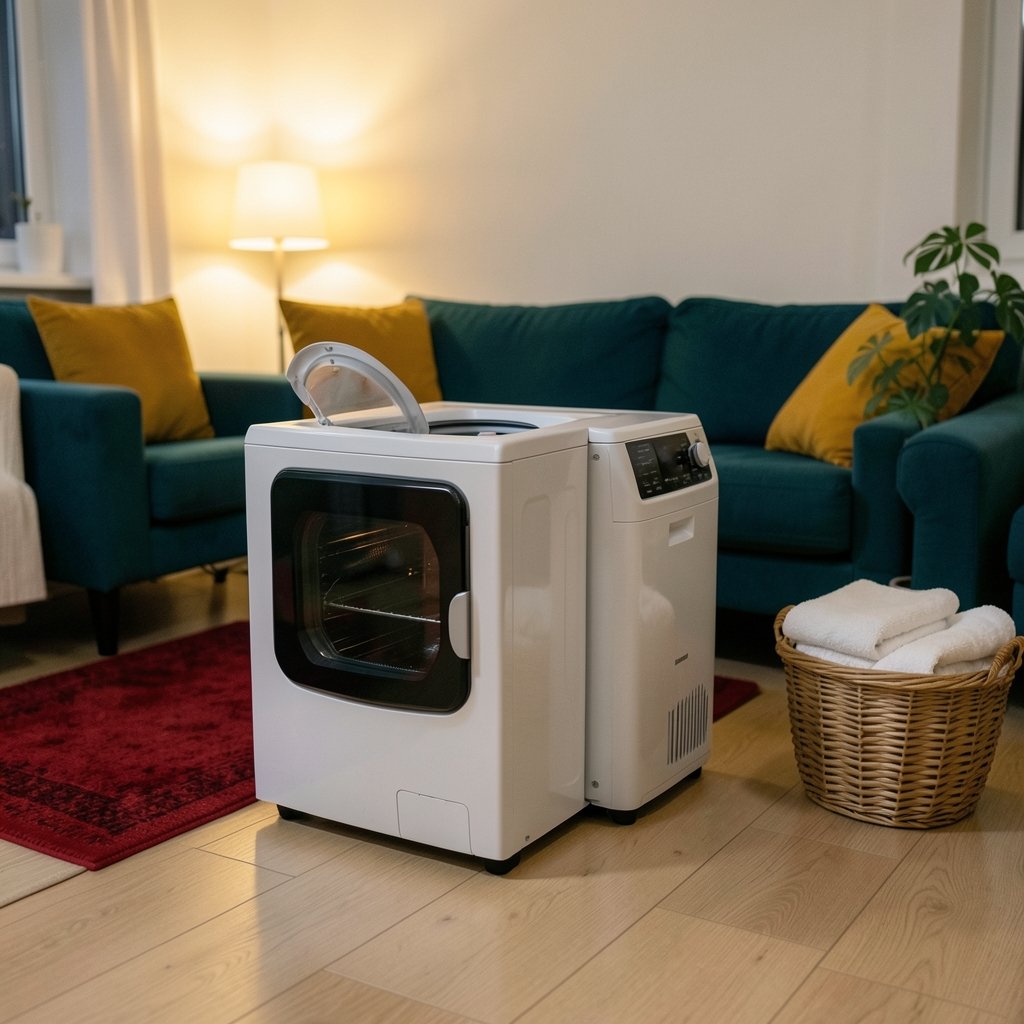
Before brand names, understand the technology, because it constrains what any brand can offer you.
Vented dryers push moist air outside through a duct. They are cheap to buy, fast, and simple. They are also the least efficient, because they dump heated air outdoors.
Ventless condensing dryers condense moisture into a tank or drain. They work in apartments and closets without exterior venting, but they typically run slower.
Heat-pump dryers reuse heat instead of venting it. They are often roughly half the energy of a conventional electric dryer, which is why heat-pump models dominate the top energy classes in Europe. The trade-offs are real: higher upfront cost and longer cycle times.
| Dryer type | Energy use | Speed | Upfront cost | Best for |
|---|---|---|---|---|
| Vented electric | High | Fast | Low to mid | Homes with existing ducting |
| Vented gas | High | Fast | Mid | Homes with gas lines |
| Condensing ventless | Mid | Moderate | Mid | Apartments, no venting |
| Heat pump | Low | Slow | High | Low energy bills, tight spaces |
A brand that excels at heat pumps may be mediocre at vented machines, and vice versa. When you read a ranking, check which technology was tested.
How to Read Dryer Rankings Without Getting Fooled
Here is where most shoppers go wrong. They read a single “best brands” list, pick the top name, and stop. That is how people end up with a machine that tests beautifully but racks up repair bills.
Match the metric to your priority
Write down your top two priorities before you read any ranking. Common ones: low repair risk, low energy cost, fast cycles, gentle fabric care, quiet operation, or a long warranty. Then find the ranking that measures your priority. A list built on lab performance will not tell you about reliability. A reliability survey will not tell you about wrinkle scores.
Check the EnergyGuide label, not the marketing copy
In the US, the FTC EnergyGuide label gives you estimated annual energy use and cost for a specific model, which lets you compare machines on the same footing. That number is far more useful than a brand’s vague “eco” badge. Compare the label across the two or three models you are considering and multiply the annual cost by ten. The gap between an efficient and an inefficient model often pays for a chunk of the price difference.
Look up recalls before you fall in love
Dryers are a fire-risk appliance, and recalls happen across every brand tier. Check the recall database for the specific model number before purchase, not after. It takes two minutes and it is the single most underused step in appliance shopping.
Treat warranty length as a real spec
Many mainstream brands offer a one-year standard warranty. Some premium and direct-to-consumer brands advertise longer coverage. Warranty terms change, so verify per model, but compare them side by side. A two-year or five-year warranty is a concrete, comparable number, unlike “quality engineering.”
What Repair Data and Owner Surveys Actually Tell You
Repair-industry data is its own signal, and it often conflicts with lab-test rankings. Technicians see which machines break and how often, which is genuinely valuable information. Owner-satisfaction surveys capture something different: how people feel about the machine day to day. A brand can lead on satisfaction while trailing on repair rates, and that combination is worth understanding rather than dismissing.
The practical takeaway: use repair data to screen out brands with chronic problems, then use satisfaction and lab data to pick among the survivors. Do not expect the two datasets to agree, and do not let a single glowing review override a pattern of repair complaints.
If you are also shopping for a washer to pair with your dryer, the same logic applies, and it helps to read up on what makes a washing machine with dryer best brand before committing to a matched set. Buying a pair from one brand can simplify service, but only if that brand is strong on both machines.
The Brands That Usually Come Up, and Why
Brand rankings shift with each model year and each survey cycle, so treat any specific ordering as indicative rather than permanent. What stays stable is the general reputation pattern.
Whirlpool and Maytag (same corporate family) are the volume leaders in the US. They are widely available, parts are easy to find, and service networks are deep. Repair data on these brands is mixed but generally unremarkable, which for a mass-market brand is a compliment.
LG and Samsung compete hard on features, capacity, and design. They often score well on lab performance and owner satisfaction, and their heat-pump and ventless offerings have grown. Repair-frequency data has been less kind to them in some survey years, so check the specific year’s report rather than assuming.
GE sits in the mainstream with broad availability and a strong service footprint. Bosch and Miele carry premium reputations, especially in Europe, where heat-pump efficiency classes matter more. Electrolux and its related brands are common in both markets.
The pattern: mainstream American brands win on serviceability and parts availability, Korean brands win on features and lab scores, and European brands win on energy efficiency. None of them wins everything.
Installation and Venting Matter More Than the Logo
This is the part almost nobody tells you, and it is the most important practical point in this article. Improper or clogged venting is a leading fire risk for dryers, and it wrecks performance regardless of brand. A premium dryer on a crushed, lint-packed duct will dry slowly, run hot, and wear out early. A mid-range dryer on a clean, short, straight duct will outperform it every day.
Practical steps that actually work:
- Keep the duct run as short and straight as possible, with minimal elbows.
- Clean the lint filter before every load, no exceptions.
- Inspect and clean the full duct run at least once a year, more if you dry heavy loads often.
- Never vent into a crawlspace, attic, or garage.
- Check that the exterior vent flap opens freely when the dryer runs.
Common mistakes: using flexible foil duct that sags and traps lint, stacking too many elbows, and assuming a new dryer will fix a venting problem that predates it. It will not.
Practical Buying Tips That Save Money and Regret
A few habits separate happy dryer owners from frustrated ones.
Measure the space and the door swing first. Dryers are bulky, and a machine that fits the alcove but not the doorway is a return waiting to happen.
Check depth as well as width. Many modern dryers are deeper than the old unit they replace, especially ventless and heat-pump models with larger drums.
Budget for installation and haul-away. These fees vary widely and are easy to forget.
Buy the matching pair only if both machines earn it. A great dryer does not excuse a mediocre washer.
Read the manual’s venting requirements before you buy. Some brands specify maximum duct length and elbow counts, and violating them voids coverage.
If you are the type who enjoys optimizing household spending, the mindset is similar to what you would find in a money saving mom frugal blogging brand really taught approach: small, consistent choices beat one big splurge.
When a Premium Brand Is Worth It
Premium brands earn their price in specific situations: small spaces where a compact heat-pump unit is the only option, households that run several loads a day and will actually capture the energy savings, and buyers who value quiet operation and gentle fabric care. In a rental with an existing vented setup and moderate use, a mainstream brand is usually the smarter buy.
The honest math: a heat-pump dryer often costs more upfront and dries more slowly, but uses roughly half the energy of a conventional electric model. If you dry frequently and electricity is expensive where you live, the payback is real. If you dry one load a week, it may never arrive.
Conclusion
The best clothes dryer brand is the one that matches your venting setup, your energy costs, your repair tolerance, and the metric you actually care about. Start with technology, check the EnergyGuide label and the recall database, weigh repair data against owner satisfaction, and treat installation and venting as seriously as the brand name. Do that, and the logo on the door becomes a detail rather than a gamble.
Frequently Asked Questions
Which dryer brand is the most reliable?
There is no stable, universal answer. Repair-technician surveys and owner-satisfaction surveys frequently disagree, and rankings shift by model year. Use repair data to screen out brands with chronic complaints, then choose among the survivors based on the features and warranty you need.
Is a heat-pump dryer worth the extra cost?
It depends on how often you dry. Heat-pump dryers often use roughly half the energy of a conventional electric dryer, but they cost more upfront and dry more slowly. Heavy users in expensive-electricity areas usually see the payback; light users may not.
Are ventless dryers as good as vented ones?
They are different tools. Ventless condensing and heat-pump dryers work where ducting is impossible and are far more efficient, but they typically run longer cycles. Vented dryers are faster and cheaper but waste heat outdoors.
How long should a clothes dryer last?
Most dryers are expected to last around a decade with normal use, but venting condition and load frequency matter enormously. A clean, short duct and regular lint removal extend life more than brand choice alone.
Do longer warranties mean a better dryer?
Not automatically, but warranty length is one of the few concrete, comparable specs you can check. Many mainstream brands offer one year, while some premium and direct-to-consumer brands advertise longer coverage. Verify the terms for the exact model.
Should I buy a matching washer and dryer set?
Only if both machines earn it. Buying a pair from one brand can simplify service and stacking, but a strong dryer does not excuse a weak washer. Evaluate each machine on its own merits before committing to a set.



