

Quick Answer: Which brand of electric range is best?
There is no single best electric range brand, because the right pick depends on whether you want conventional electric, induction, or a slide-in versus freestanding design. In practice, shoppers should compare model-level test results rather than brand logos, since a brand that excels at one price tier often falls short at another.
Induction models are a separate category from coil and radiant electric, and they generally beat both on speed and efficiency, though they require magnetic cookware. Premium brands tend to win on fit and finish while mainstream brands often deliver better value per dollar.
Before buying, check the fuel type and cooktop style, the tested performance of the specific model, the warranty and service network in your area, cookware compatibility if you choose induction, the physical cutout dimensions, and the safety certification.
Why the Brand Question Is Trickier Than It Looks
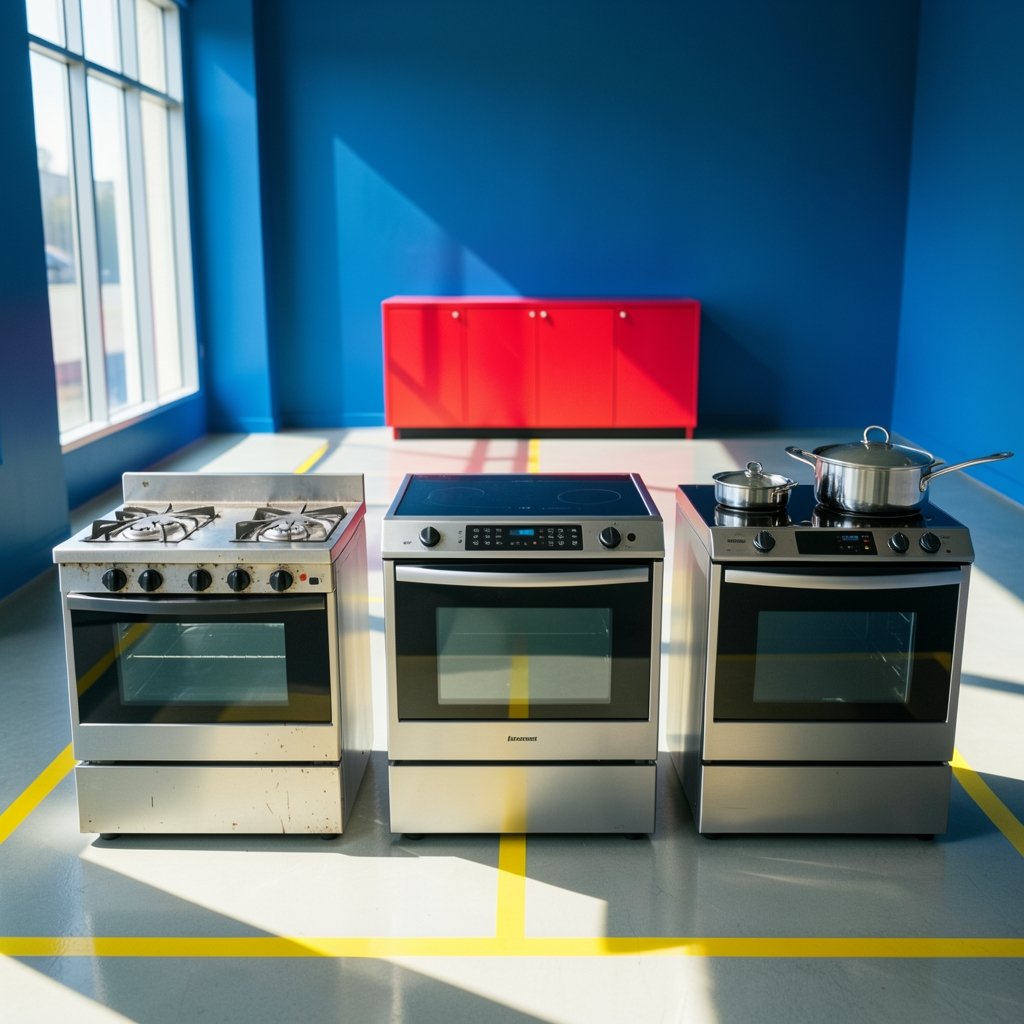
Ask five people which electric range brand is best and you will get five confident answers, usually shaped by whatever is sitting in their own kitchen. That is the first trap. Brand loyalty in appliances runs deep, and it is rarely backed by side-by-side testing.
The second trap is that “electric range” covers several very different machines. A coil-top budget range, a smooth radiant-top model, and an induction range share a power cord and little else. Testers rank brands by category for exactly this reason, so a claim like “Brand X makes the best electric ranges” is almost always incomplete. It should read “Brand X makes a strong induction range at this price, in this size.”
The third trap is reliability data. The most-cited independent source is member survey work from testing organizations, and survey data is self-reported. Manufacturer reliability claims are marketing, not evidence. That does not make surveys useless, but it does mean you should treat any single ranking as a snapshot, not a verdict.
The Four Electric Range Types, and Who Does Well in Each
Coil and radiant electric: the value tier
Conventional electric ranges are the cheapest to buy and the simplest to repair. Coils heat unevenly and respond slowly, while smooth radiant tops are easier to clean and look sharper. Mainstream brands dominate here because the technology is mature and margins are thin.
What actually works in practice: buy the simplest control panel you can live with. Touch controls on a budget range are a common failure point, and a physical knob is easier and cheaper to replace. A frequent mistake is paying for “smart” features on an entry-level range while skipping a better cooktop surface.
Induction: the performance tier
Induction is the standout of the electric world. Because the cookware itself heats rather than the surface, induction transfers energy more efficiently than conventional electric or gas. It also boils faster and cools down quicker, which matters if you have small children.
The catch is cookware. Induction needs a ferromagnetic base, so aluminum and copper pans without a magnetic layer simply will not work. Before you commit, walk around your kitchen with a magnet. If it does not stick to the bottom of a pan, that pan is retired.
Slide-in versus freestanding
This is a fit question, not a brand question, but it decides your shortlist. Slide-in ranges sit flush with countertops and look built-in. Freestanding models have finished sides and are cheaper. Measure your cutout and check the spec sheet before you fall in love with a model, because a range that does not fit is not a bargain at any price.
Wall ovens and ranges are not the same purchase
A brand with excellent wall ovens may have mediocre range models. Judge the exact product, not the family name.
How the Major Brands Tend to Position Themselves
Brand positioning shifts year to year, so treat this as a map of the landscape rather than a scoreboard.
| Brand tier | Typical strengths | Typical trade-offs |
|---|---|---|
| Premium European and design-led | Fit and finish, induction performance, styling | High price, expensive parts, longer service waits |
| Premium American | Large capacity, powerful burners, broad service network | Bulky designs, feature bloat |
| Mainstream mid-range | Strong value, wide model selection, easy parts | Fewer high-end touches, more plastic |
| Budget | Lowest entry price, simple repairs | Uneven heating, shorter feature life |
A practical rule: pick your tier by budget first, then compare two or three specific models within it. Shopping brand-first tends to push people toward features they never use.
What Test Scores Actually Tell You
Independent testing usually measures heat-up speed, low-temperature simmer control, evenness across the cooktop, oven accuracy, and broiler performance. Those are the numbers that affect daily cooking.
What tests rarely capture is how a range feels after three years. That is where warranty length, parts availability, and local service coverage matter more than a tenth-of-a-degree oven variance. Before buying, call a local appliance repair shop and ask which brands they see least. It is one of the most honest signals available, and it costs nothing.
One more caution: efficiency claims depend on test methodology. Induction is genuinely more efficient, but cooking is a small share of household electricity use, so efficiency alone rarely justifies a large price premium. Run the numbers on your own bill before you let efficiency drive the decision.
The Buying Checklist That Beats Brand Names
- Confirm your fuel type and whether your home is wired for a 240-volt range circuit.
- Measure the cutout width, depth, and height, then check the model spec sheet.
- Decide between coil, radiant, and induction, and test your cookware with a magnet if induction is on the table.
- Read model-level reviews from at least two independent sources, not brand-level summaries.
- Check the warranty terms and whether authorized service exists near you.
- Confirm the range carries the relevant safety certification for your region.
- Compare total cost of ownership, including any needed new cookware and a possible electrical upgrade.
If you are weighing adjacent tech purchases while you plan a kitchen refresh, the same model-first logic applies elsewhere. The reasoning behind mesh wi fi vs range extender which fixes weak signal better is a good example of why category-level claims rarely survive contact with a specific room.
Common Mistakes That Cost Real Money
Buying on brand reputation alone tops the list. A trusted name on a bad model is still a bad model.
Skipping the electrical check is the second. Induction and radiant ranges often need a dedicated 240-volt circuit. If your kitchen only has a 120-volt line, add an electrician’s quote to the budget before you order.
Ignoring the service map is the third. A brand with excellent national coverage may have no authorized technician within an hour of your home. Ask before you buy, not after something breaks.
Finally, do not assume a matching suite is a good deal. Bundling a range, fridge, and dishwasher from one brand rarely produces the best product in each slot. Pick each appliance on its own merits, the same way you would when comparing something like Samsung galaxy s26 vs iphone 17 which flagship fits your needs rather than defaulting to one ecosystem out of habit.
Where Safety and Standards Fit In
Safety certification is a baseline every legitimate range should meet, not a way to pick between brands. In the United States, household electric ranges fall under UL 858. In Europe, household cooking appliances are covered by EN 60335-2-6. Both standards get revised periodically, so if certification language matters to your purchase, check the current edition rather than trusting a spec sheet’s fine print.
Recall history is worth a quick look too. A brand with a clean recent record is not automatically better, but a pattern of recalls on a specific model line is a genuine red flag. Search the model number, not the brand name.
What Owners Complain About Most
Owner reviews are noisy, but patterns emerge. Across price tiers, the recurring complaints are slow simmer control on coil tops, scratched glass on radiant surfaces, touch panels that fail early, and difficulty getting parts for discontinued models.
The recurring praise is simpler: fast boiling, easy cleanup, and ovens that hold temperature. Notice that almost none of it is about the badge on the door.
Budget carefully for the extras too. A new range often pulls other costs along with it, and it helps to plan the whole spend rather than the appliance alone. If you are tracking a household budget through a kitchen project, the distinction between money synonym which word use when it fits is a small reminder that clear language about costs keeps plans honest.
Matching the Brand to Your Actual Cooking
Think about what you cook, not what the showroom suggests.
If you boil water daily and sear often, induction earns its premium through speed and control. If you bake more than you sauté, put your budget into oven accuracy and capacity instead. If you cook rarely and simply want something reliable, a mainstream coil or radiant range is the sensible, honest choice.
Households with young children should weigh cool-down speed and surface temperature heavily. Households with heavy cast iron should confirm pan compatibility before choosing induction. Renters replacing a range should prioritize standard sizing and simple controls.
The brand question dissolves once you describe your own cooking in a sentence or two. That sentence is your real buying brief.
How to Shortlist in One Afternoon
Narrow to two or three models, then verify each one against the same checklist. Read the full spec sheet, not the marketing page. Look up the model number for recalls and parts availability. Call one local repair shop. Check the return window and delivery terms, since a range is hard to send back.
Do that for a few adjacent purchases while you are in research mode, and you will notice the pattern holds. Whether you are comparing credit karma vs experian vs wallethub which free credit app suits you or choosing between which gaming desks best competitive gaming actually holds up under daily use, model-level evidence beats brand-level faith every time.
Conclusion
The best electric range brand is the one whose specific model fits your kitchen, your cookware, your cooking style, and your local service map. Induction leads on performance and efficiency but demands magnetic pans and often a wiring check. Conventional electric wins on price and simplicity. Premium brands sell finish and design, while mainstream brands usually deliver more cooking per dollar.
Do the unglamorous work: measure the cutout, test your pans with a magnet, read model-level reviews from more than one source, and ask a local technician what they see least in their workshop. That process will land you on a better range than any brand ranking ever could, and it will still be the right choice three years from now.
FAQ
Is induction better than regular electric?
Induction heats faster and transfers energy more efficiently than coil or radiant electric because the cookware itself generates the heat. The trade-off is that it requires pans with a magnetic base, and some kitchens need an electrical upgrade. For most daily cooks, induction is the stronger performer, but only if the cookware and wiring work out.
Do expensive electric ranges last longer?
Not automatically. Price buys features, finish, and sometimes better components, but longevity depends more on the specific model and how well it is serviced. A mid-range range with simple controls and available parts often outlasts a premium model with complex electronics. Check parts availability and local service before assuming price equals durability.
How long should an electric range last?
Most electric ranges are built to run for roughly a decade of normal household use, though actual lifespan varies with usage and repair history. The practical variable is parts availability: a range that can be fixed cheaply at year eight is effectively longer-lived than one that cannot be repaired at all.
Should I replace my cookware if I buy induction?
Only the pieces that fail the magnet test. Cast iron and most magnetic stainless steel work fine. Aluminum, copper, and glass cookware will not heat on an induction surface unless they have a magnetic base layer. Test every pan before you buy the range, not after.
Does a higher price mean better cooking performance?
Rarely in a straight line. Above the mid-range, extra money mostly buys styling, capacity, and convenience features rather than faster boiling or more even heating. Model-level test results are the honest guide, and plenty of affordable ranges outperform premium ones on core cooking tasks.
What should I check before ordering an electric range?
Confirm the fuel type, measure the cutout precisely, verify the electrical circuit, check the warranty and local service coverage, and look up the model number for recalls. Also confirm the delivery and return terms, since hauling a range back to a store is far harder than returning a small appliance.

