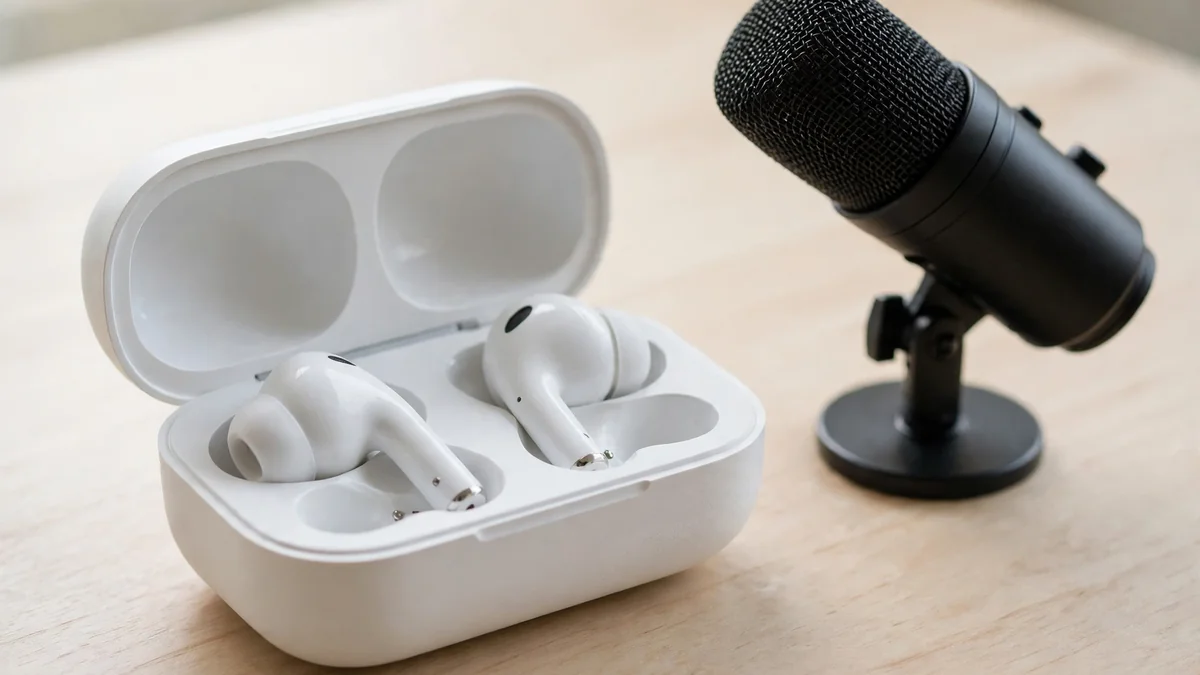
The best earbuds for commuting in 2027 do one job above all else: they make a crowded train, a noisy bus, or a busy street fade into the background so your journey feels shorter and calmer. Commuting earbuds live in your pocket, get used twice a day, and have to survive rain, sweat, and being dropped on a platform. Strong noise cancelling, a secure fit, and all-day battery life matter far more than any single specification on a box.
What separates a great commuting pair from an ordinary one is how it handles the real sounds of travel. Engine drone, announcements, wind, and fellow passengers all sit in different frequency ranges, and the best earbuds tackle the low rumble with active noise cancelling while a good seal blocks the rest. Add reliable multipoint pairing so a call on your phone does not fight with a podcast on your laptop, and you have a pair that earns its place in your bag.
This guide compares eight pairs that stood out for daily travel, from the Sony WF-1000XM5 and Apple AirPods Pro 2 at the top of the market to the Anker Soundcore Liberty 4 NC, a budget pick that punches well above its price. Every price below is an approximate starting price, so check current pricing before you buy.
Key takeaways
- Sony WF-1000XM5 is the best overall commuting earbud, with the strongest noise cancelling and a compact case.
- Apple AirPods Pro 2 is the best pick for iPhone commuters, thanks to seamless pairing and Adaptive Audio.
- Anker Soundcore Liberty 4 NC is the best budget option, offering solid noise cancelling from around $99.
- Look for at least 24 hours of total battery life with the case, plus quick charging for forgotten mornings.
- Skip earbuds without a secure fit or an IPX4 rating or better, since commuting means rain, sweat, and movement.
At a glance: the shortlist
| Product | Best for | Starting price | Standout limit |
|---|---|---|---|
| Sony WF-1000XM5 | Best overall | From $299 | Foam tips need replacing |
| Apple AirPods Pro 2 | iPhone commuters | From $249 | Best features need Apple devices |
| Bose QuietComfort Ultra Earbuds | Maximum quiet | From $299 | Case is larger than rivals |
| Samsung Galaxy Buds 2 Pro | Android commuters | From $229 | Some features need a Samsung phone |
| Jabra Elite 10 | Calls on the move | From $249 | Battery life is average |
| Google Pixel Buds Pro 2 | Pixel owners | From $229 | Noise cancelling trails Sony |
| Sennheiser Momentum True Wireless 4 | Sound quality | From $299 | Premium price |
| Anker Soundcore Liberty 4 NC | Budget commuting | From $99 | Microphones are weaker in wind |
Sony WF-1000XM5 — Best overall
The Sony WF-1000XM5 remains the benchmark for commuting earbuds in 2027. Its noise cancelling cuts train and bus drone more effectively than any rival here, and the foam ear tips create a seal that blocks the higher-frequency sounds active cancelling misses. Battery life runs to about eight hours per charge with noise cancelling on, and 24 hours with the case, while a three-minute charge adds roughly an hour of listening. Multipoint pairing works well, call quality is strong, and the companion app offers a detailed equalizer. The best wireless earbuds under $50 show how far budget options have come, but the Sony pair is the one to beat for daily travel.

Pros: Class-leading noise cancelling; compact and comfortable; strong call quality.
Cons: Foam tips wear out and need replacing; premium price.
Apple AirPods Pro 2 — Best for iPhone commuters
For anyone commuting with an iPhone, the AirPods Pro 2 feel less like an accessory and more like part of the phone. Pairing is instant, switching between an iPhone, iPad, and Mac is automatic, and Adaptive Audio blends noise cancelling with transparency so you hear a station announcement without pulling an earbud out. Noise cancelling is a step behind the Sony pair on deep engine rumble, but it is still excellent, and the fit is secure enough for a brisk walk between connections.
Pros: Seamless Apple integration; Adaptive Audio is genuinely useful; compact case.
Cons: Best features are limited to Apple devices; battery per charge is shorter than rivals.
Bose QuietComfort Ultra Earbuds — Best for maximum quiet
Bose built its reputation on noise cancelling, and the QuietComfort Ultra Earbuds live up to it. On a loud train or a busy bus, these earbuds create a sense of calm that few rivals match, and the Immersive Audio mode adds a spacious quality to music and podcasts. The fit uses stability bands that keep the earbuds secure without pressing hard into the ear, which suits long commutes.
Pros: Outstanding noise cancelling; comfortable secure fit; excellent call quality.
Cons: Bulky charging case; shorter battery per charge; premium price.
Samsung Galaxy Buds 2 Pro — Best for Android commuters
The Galaxy Buds 2 Pro are the natural choice for Android commuters, especially those with a Samsung phone. They pair quickly, support high-quality 24-bit audio on compatible Samsung devices, and their noise cancelling handles the low drone of a train well. The earbuds are small, light, and comfortable, with a fit that stays put during a walk or a run for a connection.
Pros: Compact and comfortable; strong noise cancelling; IPX7 water resistance.
Cons: Some features need a Samsung phone; battery life is average.
Jabra Elite 10 — Best for calls on the move
If your commute doubles as your first meeting of the day, the Jabra Elite 10 deserves attention. Its six-microphone array keeps your voice clear on calls even with traffic noise around you, and wind noise reduction works well on exposed platforms. The earbuds use a semi-open design with silicone tips that feel less sealed than foam tips, which some commuters find more comfortable over a long journey. If you are weighing a pair mainly for listening, the best headphones for iPhone guide covers over-ear alternatives that suit some commuters better.
Pros: Excellent call quality; comfortable semi-open fit; strong water and dust resistance.
Cons: Noise cancelling trails the leaders; battery life is average.
Google Pixel Buds Pro 2 — Best for Pixel owners
The Pixel Buds Pro 2 are smaller and lighter than the original, with a twist-to-adjust stabilizer that keeps them secure during a commute. Noise cancelling is noticeably improved, handling the low rumble of a bus or train well, and the Tensor A1 chip powers features like conversation detection, which pauses your audio when you start talking to someone.
Pros: Long battery life; secure comfortable fit; useful conversation detection.
Cons: Noise cancelling still trails Sony and Bose; some features need a Pixel phone.
Sennheiser Momentum True Wireless 4 — Best sound quality
The Sennheiser Momentum True Wireless 4 is the pair for commuters who care most about how music sounds. Support for aptX Lossless and high-resolution codecs delivers detail that cheaper earbuds miss, and the sound signature is rich and balanced straight out of the box. Noise cancelling is strong, though a touch behind Sony on the deepest rumble.
Pros: Excellent sound quality; strong battery life; good noise cancelling.
Cons: Premium price; noise cancelling slightly behind the leaders.
Anker Soundcore Liberty 4 NC — Best budget commuting earbuds
The Anker Soundcore Liberty 4 NC proves that good commuting earbuds do not have to cost $250 or more. At around $99, these earbuds offer noise cancelling that handles engine drone surprisingly well, a comfortable fit with a good range of tip sizes, and battery life of around eight hours per charge with noise cancelling on, and 50 hours with the case. If you hike as well as commute, the best headphones for hiking guide covers tougher outdoor options.
Pros: Excellent value; strong battery life; solid noise cancelling for the price.
Cons: Microphones struggle in wind; bass-heavy default tuning.
How to choose
Start with your phone. Apple users get the most from the AirPods Pro 2, Samsung owners from the Galaxy Buds 2 Pro, and Pixel owners from the Pixel Buds Pro 2, because each pair unlocks its best features on its home platform. If you switch between Android and iPhone, or between a phone and a laptop, the Sony WF-1000XM5 or the Jabra Elite 10 are safer choices, since their best features work everywhere.
Next, test the fit. Noise cancelling depends on a good seal, so try every tip size in the box and wear the earbuds for at least 20 minutes before deciding. Check the water resistance rating too: IPX4 is the minimum for commuting, and IPX7 or better is worth having if you walk in heavy rain. Finally, weigh battery life against your routine. A pair with 24 hours of total battery covers a working week of commuting, and quick charging matters more than most people expect. Check current pricing before you buy, as seasonal sales can cut $50 or more from the premium models.
Checklist: before you pay
- Try every ear tip size and wear the earbuds for at least 20 minutes to confirm comfort and seal.
- Confirm the noise cancelling handles low engine drone, not just office chatter.
- Check total battery life with the case, and whether quick charging is included.
- Confirm multipoint pairing if you switch between a phone and a laptop.
- Check the water resistance rating is at least IPX4 for rain and sweat.
- Confirm the return policy, so you can test the fit on your real commute.
Frequently asked questions
Are earbuds or over-ear headphones better for commuting?
Earbuds are better for most commuters because they are pocketable, lighter, and easier to wear with a coat or a hat. Over-ear headphones usually offer slightly stronger noise cancelling and longer battery life, but they are bulkier and harder to store. If your commute is short and your bag is small, earbuds win.
How important is active noise cancelling for commuting?
It matters a lot. Active noise cancelling targets the low-frequency drone of trains, buses, and planes that a passive seal alone cannot block. Without it, you will turn the volume up to unsafe levels to hear your audio. A good seal matters too, so the two work together.
Do I need multipoint pairing?
Multipoint pairing lets your earbuds stay connected to two devices at once, such as a phone and a laptop. It is useful if you take calls on your phone while watching videos on a laptop, or if you switch between devices during the day. If you only ever use one device, you can skip it.
How long should commuting earbuds last on a charge?
Look for at least six hours per charge with noise cancelling on, and at least 24 hours total with the case. That covers a working week of typical commutes without daily charging. Quick charging is a useful bonus for mornings when you forget to charge overnight.
Are expensive earbuds worth it for commuting?
Premium earbuds offer stronger noise cancelling, better call quality, and a more comfortable fit, which matters when you use them twice a day. Budget options like the Anker Soundcore Liberty 4 NC cover the basics well, so the premium is worth it mainly if your commute is long or loud.
Can I wear earbuds in the rain?
Yes, if they carry at least an IPX4 rating, which protects against splashes from any direction. Most pairs in this guide are rated IPX4 or better, and the Samsung Galaxy Buds 2 Pro are rated IPX7, which handles heavy rain. Avoid wearing earbuds in the shower or while swimming unless they are rated for it.
The bottom line
For most commuters, the Sony WF-1000XM5 is the best earbuds for commuting in 2027, with the strongest noise cancelling, a compact case, and a comfortable fit that holds up on long journeys. iPhone users should choose the AirPods Pro 2 for its seamless integration and Adaptive Audio, while budget buyers will be happy with the Anker Soundcore Liberty 4 NC at around $99.
Whichever pair you choose, test the fit on your real commute before the return window closes, and check current pricing before you buy. Prices change often, and a good sale can make a premium pair cost little more than a mid-range one.